Spain · Comunitat Valenciana
Where to Stay in Torrevieja, Comunitat Valenciana
Torrevieja is a salt town on the Costa Blanca, in the province of Alicante, where the Museo del Mar y de la Sal keeps the trade's record.
Hotel links are affiliate links: booking through them may earn us a commission, at no extra cost to you. It never affects how places are ranked. How this works


Where to stay in Torrevieja
The practical side of choosing where to sleep.
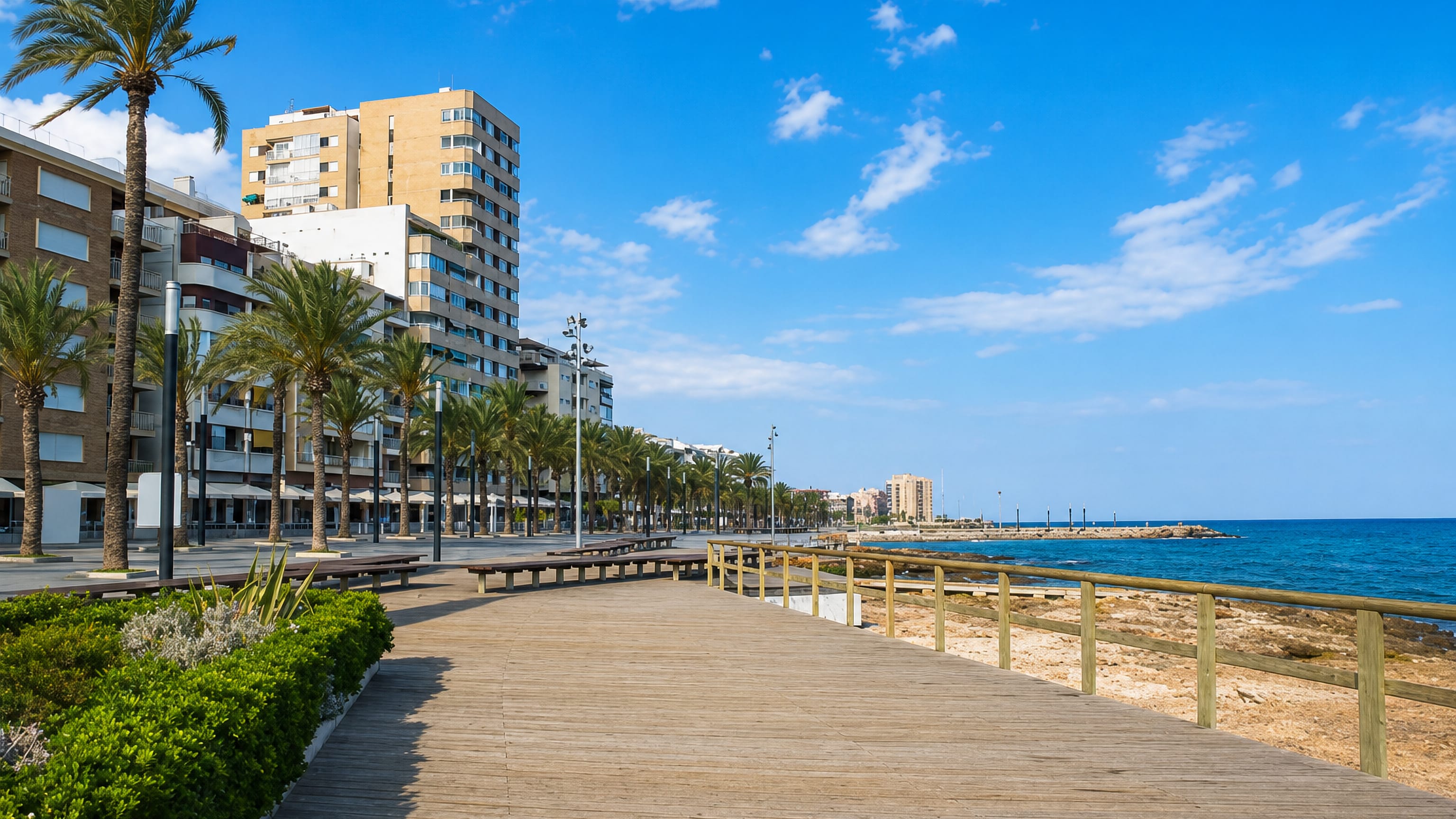
The shore sets the terms here. Rooms along the Costa Blanca frontage put Cervera Tower and the iglesia de la Inmaculada Concepción within a walk, and that stretch carries most of what a coastal town built for tourism in the south of Alicante province has to offer a visitor. It fills up.
Beds nearer El Acequión and the puentes sobre el Acequión trade the immediate water for a shorter walk into the working streets of the municipality. La Mata answers a different brief. Torre de La Mata, the Eras de la Sal de la Mata and the Canal de las Salinas de la Mata give that end of the municipality a subject of its own, and a bed there is quieter than the central frontage while still standing on the same coast.
The old railway quarter is the third. The Museo de las Habaneras and the Centro de Conferencias occupy the old station buildings, and rooms nearby suit anyone who wants the Museo del Mar y de la Sal and the Centro de Interpretación de la Indústria Salinera inside one afternoon. Distances stay walkable.
The church of the Sacred Heart and the Delfín both belong to the built centre, so the real choice is between the sea at the window and a street that keeps its own hours.
Find hotels in Torrevieja
Direct booking searches for these neighbourhoods.
The Costa Blanca frontage
This is the built seafront of the municipality, with Cervera Tower and the iglesia de la Inmaculada Concepción both inside a short walk of it.Find hotels in The Costa Blanca frontageSalt-pan quiet beside Torre de La MataLa Mata
Torre de La Mata, the Eras de la Sal de la Mata and the Canal de las Salinas de la Mata give this end of the coast a subject the central frontage does not have. Beds are limited here, so book early.Find hotels in La MataVisitors doing the Museo de las Habaneras and the salt museums in one afternoonThe old station quarter
The Museo de las Habaneras and the Centro de Conferencias occupy the buildings of the old Torrevieja to Albatera line, with the Museo del Mar y de la Sal close by.Find hotels in The old station quarterHotel links are affiliate links: booking through them may earn us a commission, at no extra cost to you. It never affects how places are ranked. How this works
About Torrevieja
Salt made Torrevieja.
What is Torrevieja known for?
The Eras de la Sal de la Mata and the Canal de las Salinas de la Mata belong to an industry that the Museo del Mar y de la Sal and the Centro de Interpretación de la Indústria Salinera between them explain. The coast does the rest. Torrevieja sits on the Costa Blanca as a centre of tourism in the south of Alicante province, and Cervera Tower and Torre de La Mata mark the shore it grew along.
What are the main landmarks in Torrevieja?
Two towers watch the coast. Cervera Tower and Torre de La Mata are the older marks, and the Delfín and the iglesia de la Inmaculada Concepción count among the newer ones. Salt supplies the rest.
The Museo del Mar y de la Sal, the Eras de la Sal de la Mata and the Oficinas y Muelles de la Compañía Arrendataria de la Sal record the trade, while the Casa de los Balcones and the Noria de Hierro de Villasalada belong to the older countryside.
What is the history of Torrevieja?
A founding year is one thing Torrevieja lacks. What Torrevieja has instead is an industrial record: the Eras de la Sal de la Mata and the Canal de las Salinas de la Mata mark the salt works, and the Oficinas y Muelles de la Compañía Arrendataria de la Sal stand for the company that held the trade. Defence came earlier.
Cervera Tower and Torre de La Mata belong to the line of coastal towers that preceded all of it, and El Acequión with its puentes sobre el Acequión fixes the water the town grew around. A railway followed the salt. The line from Torrevieja to Albatera left buildings that outlived it, and the Museo de las Habaneras, the Centro de Conferencias and the Centro de Interpretación de la Indústria Salinera occupy them.
Farmsteads filled the interior. The Ermita del Cerco de Casiano, the Aljibe Grande del Cerco de Casiano and the Aljibe Pequeño del Cerco de Casiano stand for the water and the worship of one estate, while the Ermita de la Casa de los Balcones and the Ermita de la Finca de Lo Ferris Alto do the same for others. Language marks the town too.
Torrevieja lies in one of the only Spanish-speaking areas within the Valencian Community, which sets it apart from much of the province of Alicante around it, and the iglesia de la Inmaculada Concepción and the church of the Sacred Heart serve that community.
Where is Torrevieja?
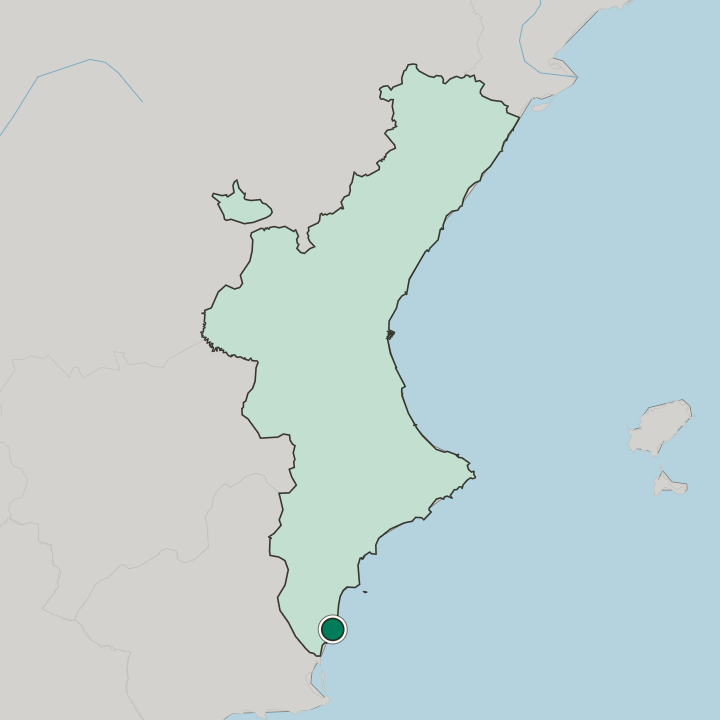
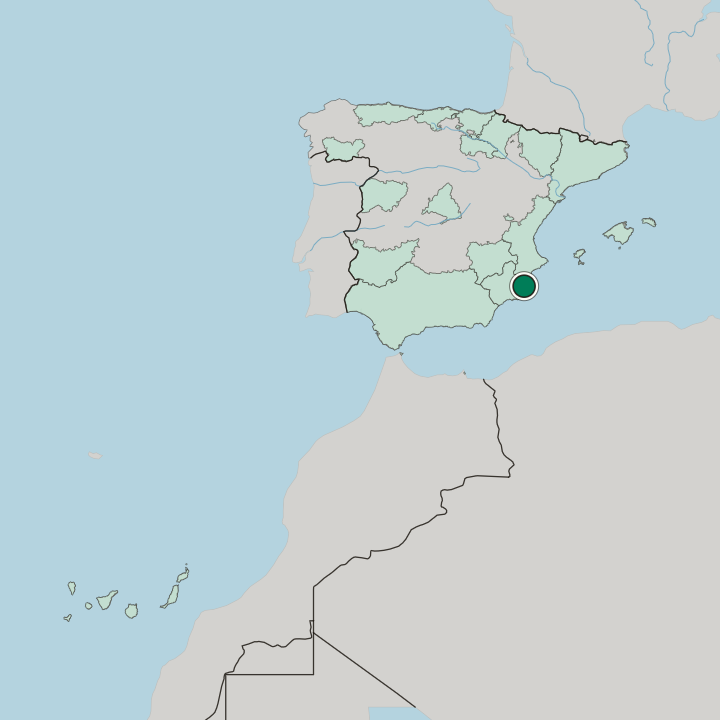
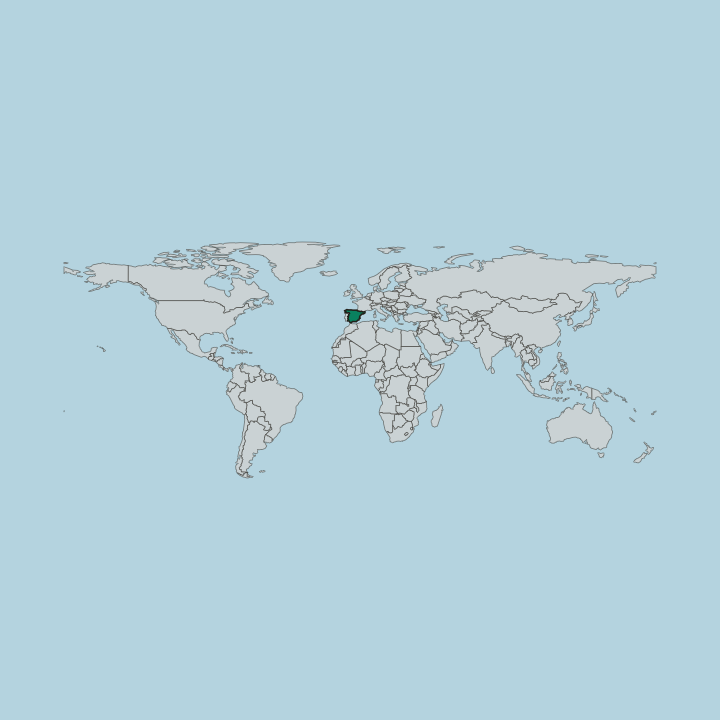
Torrevieja covers about 72 square kilometres. The municipality lies on the Costa Blanca in the district of Vega Baja, in the south of Alicante province, with the Mediterranean along one edge and the salt ground of La Mata behind it. Neighbours are not far.
Alicante stands 41 km off to the north, Elche 23 km to the northwest and Murcia 53 km to the southeast, so three larger cities fall within an ordinary drive of the coast road.
What is the climate of Torrevieja?
Evaporation is the local variable. Long warm months and a mild cool half come with a position on the Mediterranean, and the salt ground behind Torrevieja depends on exactly that balance of heat and sea air to work at all. Torrevieja sits in the temperate band.
Pans at La Mata and the Canal de las Salinas de la Mata were laid out to use exactly that, and the same conditions run on through the district of Vega Baja along the Costa Blanca.
How do you get to Torrevieja?
The road brings everyone in. Alicante lies 41 km to the north, Elche 23 km to the northwest and Murcia 53 km to the southeast, so an arrival is a drive along the Costa Blanca or across the district of Vega Baja rather than anything more involved. The railway is history.
The old line from Torrevieja to Albatera left the buildings that hold the Museo de las Habaneras and the Centro de Conferencias, and once in the town the iglesia de la Inmaculada Concepción and Cervera Tower are the marks to steer by.
Common questions
What is the best area to stay in Torrevieja?
The Costa Blanca frontage: Sea-facing rooms with Cervera Tower at the end of the walk. La Mata: Salt-pan quiet beside Torre de La Mata. The old station quarter: Visitors doing the Museo de las Habaneras and the salt museums in one afternoon.
Good for
More cities in Comunitat Valenciana
Updated September 2026