France · Île-de-France
Where to Stay in Clichy, Île-de-France
On the Seine at the northwestern edge of Paris, Clichy is a small, dense commune whose own landmark is the Maison du Peuple.
Hotel links are affiliate links: booking through them may earn us a commission, at no extra cost to you. It never affects how places are ranked. How this works


Where to stay in Clichy
Where the beds are, and what that means for the visit.
Beds in Clichy sell on one argument: the Paris boundary is a few streets off, and Montmartre lies close beyond it with Saint-Pierre de Montmartre and the Musée de Montmartre. The whole commune is compact. Rooms sit near the Seine and along the main streets, with the Maison du Peuple as the fixed point of the centre.
Along the Seine it stays calmer. If you are here for the city rather than the commune, Clichy buys you a short run in against a thinner choice on the doorstep. Inside Paris the choice widens sharply.
The Hyatt Regency Paris Etoile sits on the city side, the streets around Église Saint-Ferdinand-des-Ternes hold more, and the museum run of Musée Jacquemart-André, Musée Cernuschi and Musée Nissim de Camondo opens from there. Montmartre is the other magnet, with Sacré-Cœur, Saint-Jean-de-Montmartre and the Musée de la Vie romantique nearby. The Cité de l'économie et de la monnaie and the Chapelle expiatoire fill out the same short list of stops.
Dalí Paris draws its own crowd. Staying inside the boundary gives up the quiet that Clichy keeps, and that is the real shape of the choice.
Find hotels in Clichy
Direct booking searches for these neighbourhoods.
The Seine side of Clichy
River streets away from the through traffic, with the Maison du Peuple a few blocks inlandFind hotels in The Seine side of ClichyStays that want the commune's own centre rather than the cityAround the Maison du Peuple
The Maison du Peuple fixes the middle of Clichy, with the shops gathered around itFind hotels in Around the Maison du PeupleMuseum days built on Musée Jacquemart-André and Musée CernuschiThe Paris side toward the Ternes
Église Saint-Ferdinand-des-Ternes and the Hyatt Regency Paris Etoile mark this side of the boundaryFind hotels in The Paris side toward the TernesHotel links are affiliate links: booking through them may earn us a commission, at no extra cost to you. It never affects how places are ranked. How this works
Things to do in Clichy
Ranked by global recognition; descriptions from Wikidata (CC0).
Museums & Galleries
3- Musée Gustave Moreau Heritage
- Maison du Peuple Heritage
- Musée de la Vie romantique
Churches & Religious Sites
3- Sacré-Cœur Heritage
- Notre-Dame-de-Lorette (Paris) Heritage
- Église de la Sainte-Trinité Heritage
Stadiums & Sports
1- Stade de Paris
worth knowingacross 3 categories in Clichy
About Clichy
Clichy trades on proximity more than monuments.
What is Clichy known for?
The commune presses against the northwestern boundary of Paris on the Seine, so the museums and churches within easy reach, Musée Cernuschi, Musée Jacquemart-André, Musée Nissim de Camondo, belong to the city rather than to it. Maison du Peuple is the exception. That name belongs to Clichy itself, and the Stade de Paris stands close by.
What are the main landmarks in Clichy?
Clichy's own list is short. Maison du Peuple stands at the centre of it, and the Stade de Paris and Church of St Odile fill in around the commune. The city supplies the rest.
Sacré-Cœur, Saint-Pierre de Montmartre and Saint-Jean-de-Montmartre gather in Montmartre beyond the boundary, while La Madeleine, Saint-Augustin, Église de la Sainte-Trinité and Notre-Dame-de-Lorette (Paris) mark the streets running back into the centre. Museums are thick on that side, from Musée Gustave Moreau and Musée de la Vie romantique to Musée national Jean-Jacques Henner and Musée d'Ennery.
What is the history of Clichy?
Clichy grew as Paris ran out of room. The commune lies on the Seine only a few kilometres from the centre, close enough that the city's expansion turned a separate settlement into a dense inner suburb without ever absorbing it. Maison du Peuple belongs to that period.
The name marks a building put up for the people of a working commune rather than for the city's collectors. Across the boundary the story is entirely different. The quarters on the Paris side filled with grand houses, and their names survive on museums: Musée Jacquemart-André, Musée Nissim de Camondo and Musée Cernuschi.
Artists left the same trace. Musée Gustave Moreau, Musée national Jean-Jacques Henner, Musée de la Vie romantique and Musée d'Ennery keep the studios and rooms of the streets running toward Montmartre. Church building followed the growth, from La Madeleine and Saint-Augustin to Sacré-Cœur at Montmartre and Église Saint-Ferdinand-des-Ternes.
Older stone survives at Saint-Pierre de Montmartre. The Alexander Nevsky Cathedral, Paris served a Russian congregation, and Église Notre-Dame-de-Compassion and the Chapelle expiatoire stand among the memorials of the same city. The Cité de l'économie et de la monnaie sits among them.
Where is Clichy?
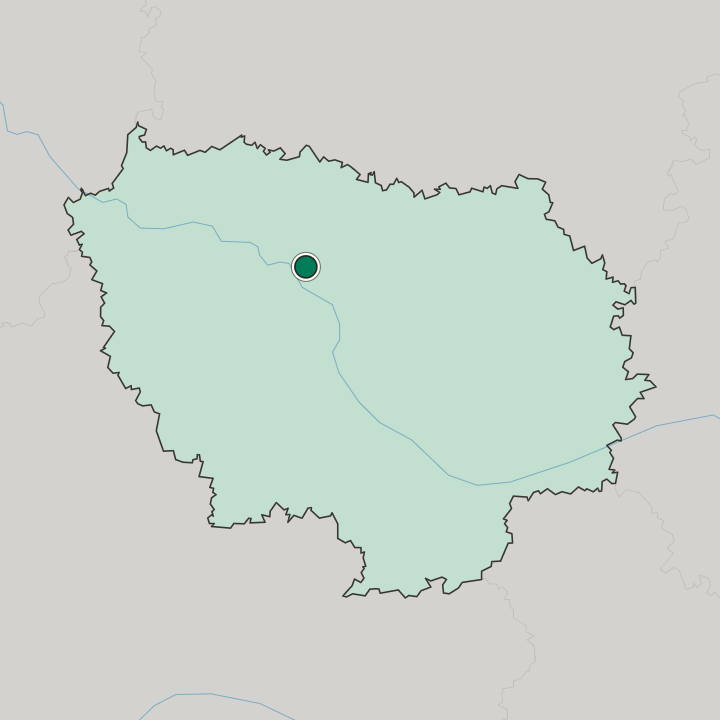
Clichy holds a small square of ground on the Seine, in the northwestern suburbs of Paris and inside Hauts-de-Seine. Paris begins across the street. Six kilometres and a little more separate the commune from the centre of the city, and the built-up ground runs unbroken between them, so the boundary is administrative rather than visible.
Montmartre sits on the far side of it. Île-de-France frames the whole of it, and the Seine carries the same suburban shore on past the commune in both directions.
What is the climate of Clichy?
Clichy takes the temperate weather of Île-de-France, and the Seine changes little about it. The year is even. Neither the cold nor the heat reaches the point of stopping anything, so Sacré-Cœur and the Montmartre streets keep their walkers through every month of the year.
Indoor days go to Musée Jacquemart-André or Dalí Paris.
How do you get to Clichy?
The city boundary is the whole story. Barely more than six kilometres of built-up city lie between Clichy and the centre of Paris, so arriving means crossing streets rather than country. Montmartre and the streets around Église Saint-Ferdinand-des-Ternes lie on the routes in from the city side.
The Seine gives the other line. Once here, the commune is small enough to cross on foot, and the Maison du Peuple marks the middle of it.
Common questions
What is the best area to stay in Clichy?
The Seine side of Clichy: Quiet nights within a short run of the Paris boundary. Around the Maison du Peuple: Stays that want the commune's own centre rather than the city. The Paris side toward the Ternes: Museum days built on Musée Jacquemart-André and Musée Cernuschi.
Good for
More cities in Île-de-France
Updated October 2026