France · Île-de-France
Where to Stay in Drancy, Île-de-France
Drancy is a commune of Seine-Saint-Denis in the northeastern suburbs of Paris, and the site of the Mémorial de la Shoah à Drancy.
Hotel links are affiliate links: booking through them may earn us a commission, at no extra cost to you. It never affects how places are ranked. How this works


Where to stay in Drancy
Where visitors usually base themselves, and why.
Few people sleep in Drancy for the scenery. The commune is residential Seine-Saint-Denis, and the honest reason to take a room here is the Mémorial de la Shoah à Drancy, which asks for a slower visit than an afternoon train back into Paris allows. Rooms near it are plain.
What they give is the walk to the site and a quiet evening in streets that do no tourist trade at all. Sport is the other reason to be here. Beds within reach of Stade Géo-André, stade Raoul-Montbrand and stade Henri Wallon suit anyone in the commune for a fixture, and the pools, the stade nautique Jacques-Brel, the piscine intercommunale du Bourget, sit inside the same short radius.
Walking covers most of Drancy. The Cité expérimentale de Merlan repays a detour by anyone curious about how this belt of suburbs was built. Neighbouring communes widen the choice.
Bobigny holds the stade Auguste Delaune de Bobigny and the église de Tous-les-Saints de Bobigny, Le Blanc-Mesnil has the complexe Jean Bouin de Blanc-Mesnil and the Église Saint-Charles du Blanc-Mesnil, and La Courneuve puts the Église Saint-Yves des Quatre-Routes de La Courneuve within the same reach. If you want a stay aimed at aviation rather than remembrance, take the Le Bourget side near the Musée de l'Air. Distances stay small throughout.
Find hotels in Drancy
Direct booking searches for these neighbourhoods.
Near the Mémorial de la Shoah à Drancy
Walking distance to the Mémorial de la Shoah à Drancy, in plain residential streets that keep the visit unhurried. Lodging is scarce in this area; reserve in advance.Find hotels in Near the Mémorial de la Shoah à Drancyfixtures at Stade Géo-André and stade Henri WallonThe sports-ground side
Close to stade Raoul-Montbrand and the stade nautique Jacques-Brel, with the Cité expérimentale de Merlan on the same walk. Lodging is scarce in this area; reserve in advance.Find hotels in The sports-ground sideaviation days at the Musée de l'AirToward Le Bourget
The edge nearest the Musée de l'Air, the église Saint-Nicolas du Bourget and the piscine intercommunale du Bourget.Find hotels in Toward Le Bourgeta wider choice a commune out from DrancyBobigny and Le Blanc-Mesnil
Neighbours holding the stade Auguste Delaune de Bobigny, the complexe Jean Bouin de Blanc-Mesnil and the Église Saint-Charles du Blanc-Mesnil.Find hotels in Bobigny and Le Blanc-MesnilHotel links are affiliate links: booking through them may earn us a commission, at no extra cost to you. It never affects how places are ranked. How this works
Things to do in Drancy
Ranked by global recognition; descriptions from Wikidata (CC0).
Museums & Galleries
1- Musée de l'Air Heritage
Churches & Religious Sites
5- église Saint-Nicolas du Bourget Heritage
- Église Saint-Yves des Quatre-Routes de La Courneuve Heritage
- église de Tous-les-Saints de Bobigny Heritage
- Église Saint-Charles du Blanc-Mesnil Heritage
- Église Saint-Jean-l'Évangéliste de Drancy Heritage
Stadiums & Sports
3- Stade Géo-André
- complexe Jean Bouin de Blanc-Mesnil
- stade Auguste Delaune de Bobigny
Landmarks & Notable Places
6- Cité expérimentale de Merlan Heritage
- Maison Jeep Heritage
- Maison Cimcap Heritage
- Maison Steba Heritage
- Maison Systac Heritage
Show 1 more →
- Maison T.C. King Heritage
worth knowingacross 4 categories in Drancy
About Drancy
One name carries the commune.
What is Drancy known for?
The Mémorial de la Shoah à Drancy commemorates the deportations that passed through here during the Second World War, and it is why most visitors reach this part of Seine-Saint-Denis at all. Two parish churches anchor the rest. The Église Sainte-Louise-de-Marillac de Drancy and the Église Saint-Jean-l'Évangéliste de Drancy stand among housing blocks and sports grounds, with the Musée de l'Air a short way beyond the commune boundary.
What are the main landmarks in Drancy?
The Mémorial de la Shoah à Drancy comes first and stands apart. After it the commune's marked places are modest and municipal: the Église Sainte-Louise-de-Marillac de Drancy, the Église Saint-Jean-l'Évangéliste de Drancy, the Cité expérimentale de Merlan, and a run of grounds and pools that includes Stade Géo-André, stade Raoul-Montbrand and the stade nautique de Coursaille. Maison Jeep, Maison Steba and Maison Cimcap appear in the same record.
The Musée de l'Air lies just beyond. Little of it draws a crowd.
What is the history of Drancy?
Drancy's heaviest chapter belongs to the Second World War. The Mémorial de la Shoah à Drancy stands on the commune's ground in remembrance of the people held here and deported from this site, and it is maintained as a place of memory rather than as a sight to be ticked off a list. Visitors come deliberately.
Anyone giving the commune a day should give the memorial the hours it asks for, and should treat the surrounding streets, which are ordinary occupied housing, with the discretion the subject deserves. What surrounds that record is the making of a Paris suburb. The Cité expérimentale de Merlan names an attempt at planned housing, and the parish churches carry the same phase: the Église Sainte-Louise-de-Marillac de Drancy and the Église Saint-Jean-l'Évangéliste de Drancy, matched across the boundary by the Église Saint-Charles du Blanc-Mesnil, the église Saint-Nicolas du Bourget and the église de Tous-les-Saints de Bobigny.
Industry left names of its own. Maison Cimcap, Maison Systac, Maison Steba and Maison T.C. King all sit in the same inventory.
Municipal building shows up plainly in the sports map. Stade Géo-André, stade Raoul-Montbrand and stade Henri Wallon serve the commune, the stade nautique Jacques-Brel and the stade nautique de Coursaille cover swimming, and the complexe Édouard Herriot and the piscine Michel Beaufort de Bondy extend the same provision into the neighbouring communes. The pattern repeats across Seine-Saint-Denis.
Where is Drancy?
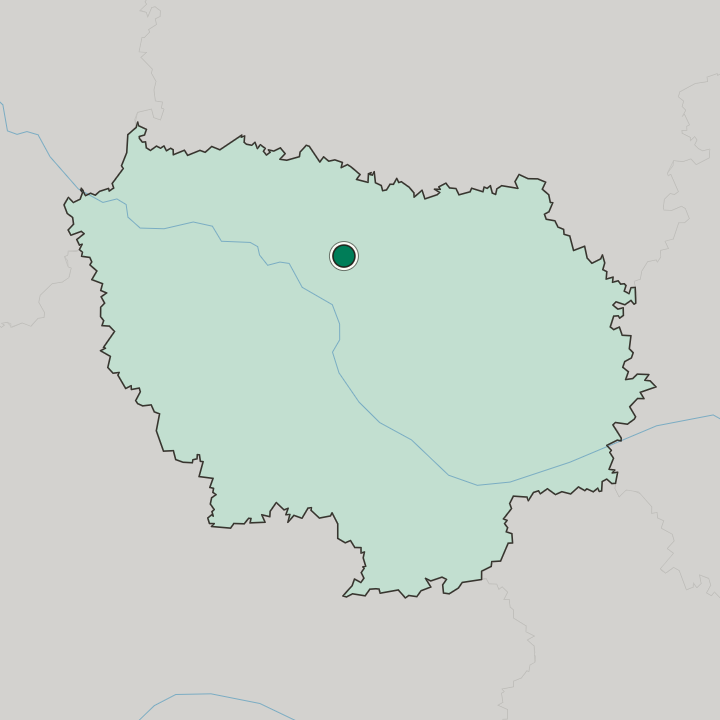
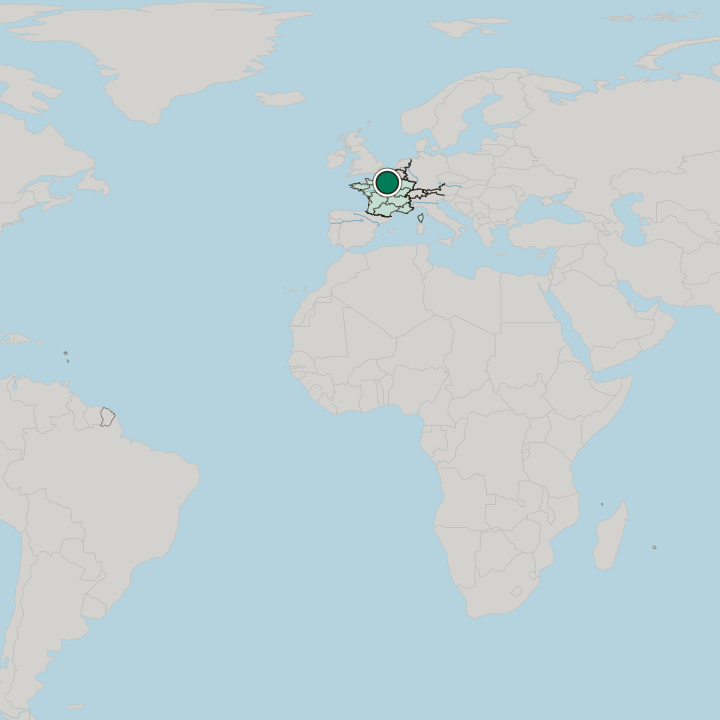
Eight square kilometres, give or take. Drancy occupies that much of the northeastern suburbs of Paris, inside the Seine-Saint-Denis department of Île-de-France, with La Courneuve, Le Bourget, Le Blanc-Mesnil, Bobigny and Bondy pressed against its boundaries. The ground is level and almost entirely built over.
No river or ridge divides it.
What is the climate of Drancy?
Nothing local shapes the weather: Drancy takes whatever crosses the Paris plain, the same air that reaches Bobigny or Le Bourget a few streets away, with no hill and no coast to alter it. Grey outnumbers bright. Summer can turn warm for a week and then hand the sky back to cloud, while winter across Seine-Saint-Denis is more often damp than freezing.
Rain seldom lasts long.
How do you get to Drancy?
Paris is eleven kilometres off. Drancy sits inside the built belt in the northeastern suburbs of the capital, so every approach runs through neighbours rather than open country: Bobigny and Bondy on one flank, Le Bourget and Le Blanc-Mesnil on the other, each a few minutes of suburban road away. Most arrivals come for the memorial.
Traffic is the usual suburban kind, heavy at the ends of the day and thin between them, and a car earns its keep only for the run out to the Musée de l'Air.
Common questions
What is the best area to stay in Drancy?
Near the Mémorial de la Shoah à Drancy: an unhurried visit to the memorial. The sports-ground side: fixtures at Stade Géo-André and stade Henri Wallon. Toward Le Bourget: aviation days at the Musée de l'Air. Bobigny and Le Blanc-Mesnil: a wider choice a commune out from Drancy.
Good for
More cities in Île-de-France
Updated October 2026