France · Île-de-France
Where to Stay in Fontenay-sous-Bois, Île-de-France
Fontenay-sous-Bois is a commune in the eastern suburbs of Paris, named for the wood on its edge, with the Château de Vincennes close by.
Hotel links are affiliate links: booking through them may earn us a commission, at no extra cost to you. It never affects how places are ranked. How this works


Where to stay in Fontenay-sous-Bois
How the choice of base plays out on the ground.
The old centre is small and easy. Streets around the Église Saint-Germain-l'Auxerrois de Fontenay-sous-Bois hold what passes for a town core in a commune of five and a half square kilometres, and a room there means dinner on foot rather than a drive to a neighbour. Weekday demand comes from offices.
The Tour Cityscope marks that side of the commune, where the buildings are newer, the streets wider and the stays mostly short. Vincennes changes the calculation. Rooms toward that edge put the Château de Vincennes, the Église Notre-Dame de Vincennes and the Statue of Pierre Daumesnil within an easy walk, and the wood in the commune's own name lies on the same side.
Gallery visits point the opposite way. The Musée de Nogent-sur-Marne, MABA and the Maison de la Fondation Albert-de-Mun sit toward Nogent-sur-Marne, near the Église Saint-Saturnin de Nogent-sur-Marne and the Monument à Antoine Watteau. Beyond those two edges the choice widens into Montreuil, Joinville-le-Pont, Le Perreux-sur-Marne and Neuilly-Plaisance, each a short run out and each easier on space than the centre.
Bry-sur-Marne is quieter again. If you want one base for the wooded side and the Marne-side towns at once, the eastern half of the commune covers both without a car. Nothing here is more than minutes apart.
Find hotels in Fontenay-sous-Bois
Direct booking searches for these neighbourhoods.
The old centre
The original core around the Église Saint-Germain-l'Auxerrois de Fontenay-sous-Bois, where dinner needs no drive.Find hotels in The old centreweekday work in the office quarterUnder the Tour Cityscope
Newer blocks by the Tour Cityscope, wider streets and shorter stays than the old centre offers.Find hotels in Under the Tour Cityscopewalks to the Château de Vincennes and the woodThe Vincennes edge
Closest to the Château de Vincennes, the Église Notre-Dame de Vincennes and the Statue of Pierre Daumesnil. Lodging is scarce in this area; reserve in advance.Find hotels in The Vincennes edgemuseum days at MABA and the Musée de Nogent-sur-MarneToward Nogent-sur-Marne
The Nogent-sur-Marne side, with the Église Saint-Saturnin de Nogent-sur-Marne and the Monument à Antoine Watteau on one walk.Find hotels in Toward Nogent-sur-MarneHotel links are affiliate links: booking through them may earn us a commission, at no extra cost to you. It never affects how places are ranked. How this works
Things to do in Fontenay-sous-Bois
Ranked by global recognition; descriptions from Wikidata (CC0).
Museums & Galleries
3- MABA
- Rosny-Rail
- Musée de Nogent-sur-Marne
Churches & Religious Sites
7- Église Saint-Saturnin de Nogent-sur-Marne Heritage
- Église Notre-Dame de Vincennes Heritage
- Église Saint-Germain-l'Auxerrois de Fontenay-sous-Bois Heritage
- Église Saint-Gervais-et-Saint-Protais de Bry-sur-Marne Heritage
- église Notre-Dame-de-l'Assomption de Neuilly-Plaisance Heritage
Show 2 more →
- Église Saint-Charles-Borromée de Joinville-le-Pont Heritage
- église Saint-Jean-Baptiste du Perreux-sur-Marne Heritage
Castles & Historic Sites
3- Château de Vincennes Heritage
- Statue of Pierre Daumesnil Heritage
- Monument à Antoine Watteau Heritage
Landmarks & Notable Places
1- Maison de la Fondation Albert-de-Mun Heritage
worth knowingacross 4 categories in Fontenay-sous-Bois
About Fontenay-sous-Bois
The name says most of it.
What is Fontenay-sous-Bois known for?
Fontenay-sous-Bois lies in the eastern suburbs of Paris beneath the wood that gives the commune its second half, with the Château de Vincennes and Stade Pershing on that side and the Église Saint-Germain-l'Auxerrois de Fontenay-sous-Bois marking the old centre. Museums cluster among the neighbours. The Musée de Nogent-sur-Marne, the Musée de l'Histoire vivante and MABA all sit within a few kilometres of the boundary.
What are the main landmarks in Fontenay-sous-Bois?
The Château de Vincennes dominates any list drawn around the commune. Closer in, the Église Saint-Germain-l'Auxerrois de Fontenay-sous-Bois marks the old parish while the Tour Cityscope marks the office years, and Stade Pershing sits over on the Vincennes side. Museums are thick here.
The Musée de l'Histoire vivante, the Musée Adrien Mentienne, the Musée de Nogent-sur-Marne and MABA are all within reach, and Rosny-Rail records the railway.
What is the history of Fontenay-sous-Bois?
The parish came first. The Église Saint-Germain-l'Auxerrois de Fontenay-sous-Bois is the commune's own church, and the Château de Vincennes stands a short way off, both of them older than the streets that surround them. Fields and wood filled the gap.
That wood survives in the second half of the commune's name, and it is why the approach from the Vincennes side still runs greener than the roads in from Montreuil. Then Paris arrived. The commune filled first with housing and later with offices, the Tour Cityscope among them, while the same expansion ran through Montreuil, Nogent-sur-Marne, Joinville-le-Pont and Le Perreux-sur-Marne, each keeping a parish of its own.
Local memory was collected rather than lost. The Musée de l'Histoire vivante, the Musée Adrien Mentienne and the Musée de Nogent-sur-Marne all hold that record, and MABA and the Maison de la Fondation Albert-de-Mun stand within the same few kilometres. Monuments mark what each period chose to remember.
The Statue of Pierre Daumesnil and the Monument à Antoine Watteau honour individuals, while the Monument à la gloire de l'expansion coloniale française ou à la plus grande France commemorates French colonial expansion, a subject its own century treated very differently from ours. Views of that period differ sharply. Churches at Bry-sur-Marne, Neuilly-Plaisance and the Bas-Montreuil round out a landscape assembled piece by piece rather than planned.
Where is Fontenay-sous-Bois?
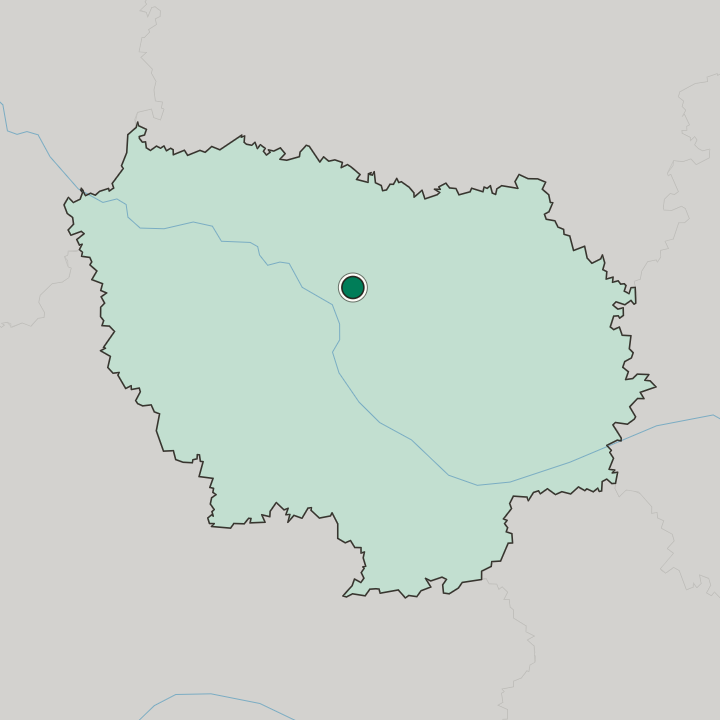
Five and a half square kilometres, in the eastern suburbs of Paris. Vincennes and Montreuil press against one side of Fontenay-sous-Bois, Nogent-sur-Marne, Le Perreux-sur-Marne and Joinville-le-Pont line another, and Bry-sur-Marne and Neuilly-Plaisance carry the same built ground further out across Île-de-France. The wood is the only real break.
Ground stays level.
What is the climate of Fontenay-sous-Bois?
Neither the wood nor the Marne-side towns change much about the air. Fontenay-sous-Bois gets the temperate run of the Île-de-France plain: damp winters that rarely bite, summers that warm in bursts, and long grey stretches that make the Musée de l'Histoire vivante a better plan than a walk toward Vincennes. Umbrellas travel well here.
Spring is the safer bet.
How do you get to Fontenay-sous-Bois?
Paris begins nine kilometres away, and the commune sits inside the unbroken built-up ring, so arriving means crossing Vincennes or Montreuil rather than any open country. Rail is in the record. Rosny-Rail names it among the neighbouring listings, and the Marne-side towns of Nogent-sur-Marne, Joinville-le-Pont and Le Perreux-sur-Marne are short hops on the same network.
Drivers should expect queues at both ends of the day.
Common questions
What is the best area to stay in Fontenay-sous-Bois?
The old centre: evenings on foot around the parish church. Under the Tour Cityscope: weekday work in the office quarter. The Vincennes edge: walks to the Château de Vincennes and the wood. Toward Nogent-sur-Marne: museum days at MABA and the Musée de Nogent-sur-Marne.
Good for
More cities in Île-de-France
Updated October 2026