France · Île-de-France
Where to Stay in Rueil-Malmaison, Île-de-France
Rueil-Malmaison is the largest commune in Hauts-de-Seine, a green town in the western suburbs of Paris built around the Château de Malmaison.
Hotel links are affiliate links: booking through them may earn us a commission, at no extra cost to you. It never affects how places are ranked. How this works


Where to stay in Rueil-Malmaison
The practical side of choosing where to sleep.
Start with the Château de Malmaison and work outwards. Beds within walking reach of the house and of the Château de la Petite Malmaison give the visit the slow morning it deserves, before the coaches arrive and after they leave, which is the only way to see either building properly. Stock is limited.
What exists is small and residential rather than corporate, and it fills early whenever an exhibition brings a weekend crowd out from Paris. Buzenval is the quiet alternative. Houses and gardens fill this part of Rueil-Malmaison, the église Saint-Joseph-de-Buzenval de Rueil-Malmaison marks its middle, and a room here suits you if the point of the trip is space and trees rather than a short walk to a station.
Green ground is everywhere. A quarter of the commune is park or garden, so almost any address in the town puts something open within a few streets. The Seine edge is the third option, and the prettiest.
Facing Chatou and Croissy-sur-Seine across the water, it puts maison Fournaise, the Église Notre-Dame de Chatou and the chapelle Saint-Léonard-et-Saint-Martin de Croissy-sur-Seine within an easy outing, with Bougival and its church a little further along. Look wider if the town is full. Nanterre, Suresnes and Puteaux all hold beds a short run away, and each brings its own sights, Nanterre Cathedral, the Mémorial de la France combattante on Mont-Valérien, the Église Sainte-Mathilde de Puteaux.
Find hotels in Rueil-Malmaison
Direct booking searches for these neighbourhoods.
Around the Château de Malmaison
Walking reach of the Château de Malmaison and the Château de la Petite Malmaison, on streets that go quiet the moment the coaches pull away. Rooms are few around here — worth securing early.Find hotels in Around the Château de Malmaisongardens and space rather than a short walk to anythingBuzenval
The house-and-garden quarter marked by the église Saint-Joseph-de-Buzenval de Rueil-Malmaison, well back from the Seine. Rooms are few around here — worth securing early.Find hotels in Buzenvalriver outings to maison Fournaise and Croissy-sur-SeineThe Seine edge facing Chatou
The water frontage opposite Chatou, with maison Fournaise, the Église Notre-Dame de Chatou and Bougival strung along the same bank. Lodging is scarce in this area; reserve in advance.Find hotels in The Seine edge facing Chatouoverflow beds near Nanterre Cathedral and Mont-ValérienNanterre, Suresnes and Puteaux
Neighbouring Hauts-de-Seine towns holding Nanterre Cathedral, the Mémorial de la France combattante and the Église Sainte-Mathilde de Puteaux.Find hotels in Nanterre, Suresnes and PuteauxHotel links are affiliate links: booking through them may earn us a commission, at no extra cost to you. It never affects how places are ranked. How this works
Things to do in Rueil-Malmaison
Ranked by global recognition; descriptions from Wikidata (CC0).
Museums & Galleries
3- maison Fournaise Heritage
- Chalet d'Ivan Tourgueniev et pavillon Viardot Heritage
- Caserne Guynemer Heritage
Churches & Religious Sites
8- church of St. Peter St. Paul Heritage
- Église Notre-Dame de Chatou Heritage
- Église Notre-Dame-de-la-Paix de Suresnes Heritage
- Église Notre-Dame-de-la-Salette de Suresnes Heritage
- église Saint-Léonard de Croissy-sur-Seine Heritage
Show 3 more →
- Chapelle Saint-Léonard-et-Saint-Martin de Croissy-sur-Seine Heritage
- Église Sainte-Mathilde de Puteaux Heritage
- église Saint-Joseph-de-Buzenval de Rueil-Malmaison Heritage
Castles & Historic Sites
2- Château de Malmaison Heritage
- Château de la Petite Malmaison Heritage
Stadiums & Sports
1- Golf de Saint-Cloud Heritage
Landmarks & Notable Places
1- Maison Joséphine Heritage
worth knowingacross 5 categories in Rueil-Malmaison
About Rueil-Malmaison
One house made the name.
What is Rueil-Malmaison known for?
The Château de Malmaison, with the Château de la Petite Malmaison beside it and Maison Joséphine in the same record, is why Rueil-Malmaison belongs to the network of Imperial Cities and why most day visitors come at all. Gardens do the rest. Some 350 hectares of the commune are green space, a full quarter of its ground, which is a proportion no other town of this size in Hauts-de-Seine can match.
What are the main landmarks in Rueil-Malmaison?
Two houses carry the town: the Château de Malmaison and the Château de la Petite Malmaison, with Maison Joséphine and the Chalet d'Ivan Tourgueniev et pavillon Viardot filling in the same theme of rooms kept as they were. Churches supply the older fabric. Église Saint-Jean-Baptiste and the église Saint-Joseph-de-Buzenval de Rueil-Malmaison serve the commune itself, La contemporaine and the Atelier de l'histoire hold collections, and Caserne Guynemer stands among them. The Golf de Saint-Cloud lies close by.
What is the history of Rueil-Malmaison?
Malmaison gave the town its second name and its standing. The Château de Malmaison, the Château de la Petite Malmaison and Maison Joséphine belong to one imperial chapter, and it is that chapter which puts Rueil-Malmaison in the network of Imperial Cities alongside the other towns France counts under that heading. Nothing else here competes.
Everything the commune shows a visitor is measured, one way or another, against those rooms and the gardens laid out around them. A second layer is military and modern. The Mémorial de la France combattante stands on Mont-Valérien in neighbouring Suresnes, the Musée colombophile militaire du Mont-Valérien keeps the record of the army's carrier pigeons on the same hill, and Caserne Guynemer carries a barracks name into the streets of the commune.
La contemporaine and the Atelier de l'histoire hold documents and collections rather than parade grounds. Together they make an unusually dense archive for a suburban town. The river drew a different crowd.
Maison Fournaise stands on the water at Chatou, the Chalet d'Ivan Tourgueniev et pavillon Viardot preserves a writer's retreat, and Bougival and Croissy-sur-Seine each keep churches from the years when this bend of the Seine was a resort for people escaping Paris. Parish building fills the gaps. Église Saint-Jean-Baptiste, the église Saint-Joseph-de-Buzenval de Rueil-Malmaison and Nanterre Cathedral mark the ordinary religious life of a commune that grew steadily rather than suddenly.
Where is Rueil-Malmaison?
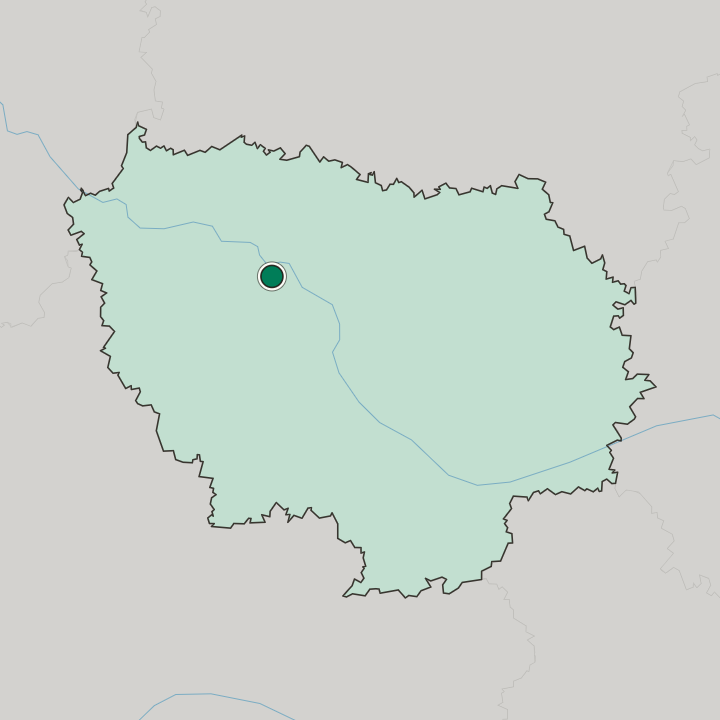
Fourteen and a half square kilometres make Rueil-Malmaison the largest commune in Hauts-de-Seine by area, in the western suburbs of Paris and about thirteen kilometres out from the centre. The Seine forms its far side. There the departmental boundary with Yvelines runs along the water, facing Chatou and Croissy-sur-Seine, while Nanterre, Suresnes and Puteaux press against the commune on the landward flanks.
Roughly 350 hectares stay green.
What is the climate of Rueil-Malmaison?
The Seine and the parkland between them keep Rueil-Malmaison a shade milder than the built-up communes inland, since a quarter of the ground here is green and the river runs along the whole Yvelines flank. Trees matter more than degrees. Summer is warm without being fierce, the gardens of the Château de Malmaison are at their best then, and autumn brings the damp grey weeks that settle over the western suburbs of Paris until spring.
Frost is occasional.
How do you get to Rueil-Malmaison?
Thirteen kilometres, give or take. That is the run between the centre of Paris and Rueil-Malmaison, and because the built-up ground never breaks, every approach passes through a neighbouring commune first: Nanterre or Puteaux on one side, Suresnes below Mont-Valérien on another, Bougival and Croissy-sur-Seine along the Seine. Most arrivals aim at the Château de Malmaison.
A car is worth having for the river crossings toward Chatou and for the Golf de Saint-Cloud, and worth little inside the town itself.
Common questions
What is the best area to stay in Rueil-Malmaison?
Around the Château de Malmaison: an early, unhurried hour at the Château de Malmaison. Buzenval: gardens and space rather than a short walk to anything. The Seine edge facing Chatou: river outings to maison Fournaise and Croissy-sur-Seine. Nanterre, Suresnes and Puteaux: overflow beds near Nanterre Cathedral and Mont-Valérien.
Good for
More cities in Île-de-France
Updated October 2026