Italy · Campania
Where to Stay in Cava Dè Tirreni, Campania
Porticoes line the main street. Cava de' Tirreni fills a cultivated valley near Salerno, wooded hills standing close on either side.
Hotel links are affiliate links: booking through them may earn us a commission, at no extra cost to you. It never affects how places are ranked. How this works


Where to stay in Cava Dè Tirreni
How the choice of base plays out on the ground.
The porticoed main street is the obvious base. Rooms along it leave the arcades, the Museo provinciale della ceramica and the chiesa di San Giovanni Battista within a few minutes on foot, and they keep the town's evening trade under cover when the weather closes in. The abbey side asks for legs.
Beds toward the Abbey of La Trinità della Cava mean a climb through the wooded hills, repaid by early access to the Museo dell'Abbazia della santissima Trinità and by the long view back down the valley floor. Monte Castello marks a third option. A room at that edge sits nearest the hill road toward the Amalfi Coast, eight kilometres over the ridge, and nearest the run down the valley to Salerno for anyone treating Cava de' Tirreni as a base rather than a destination.
Beds thin out past the built-up part. The chiesa di San Liberatore, the church of San Vincenzo Ferreri and the Museo delle ceramiche del castello medievale di Arechi stay reachable from all three, so the question is only whether you want the arcade at the door, the abbey above, or the exit road at hand.
Find hotels in Cava Dè Tirreni
Direct booking searches for these neighbourhoods.
Under the porticoes of the main street
The covered walks run the length of the main street here, with the Museo provinciale della ceramica and the chiesa di San Giovanni Battista inside the same few blocks.Find hotels in Under the porticoes of the main streetmornings that start with the climb to the abbey and its museumToward the Abbey of La Trinità della Cava
The Abbey of La Trinità della Cava and the Museo dell'Abbazia della santissima Trinità sit up in the wooded hills that close the valley on this side. Beds are limited here, so book early.Find hotels in Toward the Abbey of La Trinità della Cavatravellers using the valley as a base for the Amalfi Coast and SalernoThe Monte Castello edge
Monte Castello rises behind this rim of the town, and the hill road over to the Amalfi Coast leaves from here rather than from under the arcades. Lodging is scarce in this area; reserve in advance.Find hotels in The Monte Castello edgeHotel links are affiliate links: booking through them may earn us a commission, at no extra cost to you. It never affects how places are ranked. How this works
Things to do in Cava Dè Tirreni
Ranked by global recognition; descriptions from Wikidata (CC0).
Museums & Galleries
2- Museo dell'Abbazia della santissima Trinità Heritage
- Museo provinciale della ceramica
Churches & Religious Sites
3- Abbey of La Trinità della Cava Heritage
- chiesa di San Giovanni Battista
- San Vincenzo Ferreri
Castles & Historic Sites
1- Monte Castello Heritage
worth knowingacross 3 categories in Cava Dè Tirreni
About Cava Dè Tirreni
Two things carry the name outward.
What is Cava Dè Tirreni known for?
The Abbey of La Trinità della Cava stands above the valley, and the Museo dell'Abbazia della santissima Trinità holds the collection that the community built up beside it over the centuries. Ceramics make the second claim. The Museo provinciale della ceramica and the Museo delle ceramiche del castello medievale di Arechi both put fired clay at the centre of a visit, while the covered porticoes along the main street of Cava de' Tirreni count among the best preserved anywhere in Campania.
What are the main landmarks in Cava Dè Tirreni?
The Abbey of La Trinità della Cava is the anchor, set up in the hills with the Museo dell'Abbazia della santissima Trinità held inside its own walls. Churches fill the valley floor below it: the chiesa di San Liberatore, the chiesa di San Giovanni Battista and San Vincenzo Ferreri. Clay gets two museums.
The Museo provinciale della ceramica and the Museo delle ceramiche del castello medievale di Arechi split the subject between a provincial collection and one named for a medieval castle, and Monte Castello stands over the whole arrangement.
What is the history of Cava Dè Tirreni?
No founding year survives for Cava de' Tirreni. Its dating hangs instead on institutions, and the earliest of them is the Abbey of La Trinità della Cava, which stands in the wooded hills over the valley and shares the word Cava with the town spread along the floor below it. The abbey keeps its own museum.
The Museo dell'Abbazia della santissima Trinità holds what the community there accumulated, which puts the deepest layer of the local record inside one building instead of scattered through the streets. Three churches carry patrons' names. The chiesa di San Liberatore, the chiesa di San Giovanni Battista and San Vincenzo Ferreri each name a saint, and in the absence of a charter date they stand as the plainest surviving markers of the town's own age.
Clay makes the other thread. The Museo provinciale della ceramica gathers ceramic work from across the Province of Salerno, while the Museo delle ceramiche del castello medievale di Arechi ties a second collection to the medieval castle named in its own title, and Monte Castello repeats that castle word up in the hills. Porticoes finish the account.
The covered walks along the main street are the town's own contribution, and few in Campania have survived as well.
Where is Cava Dè Tirreni?
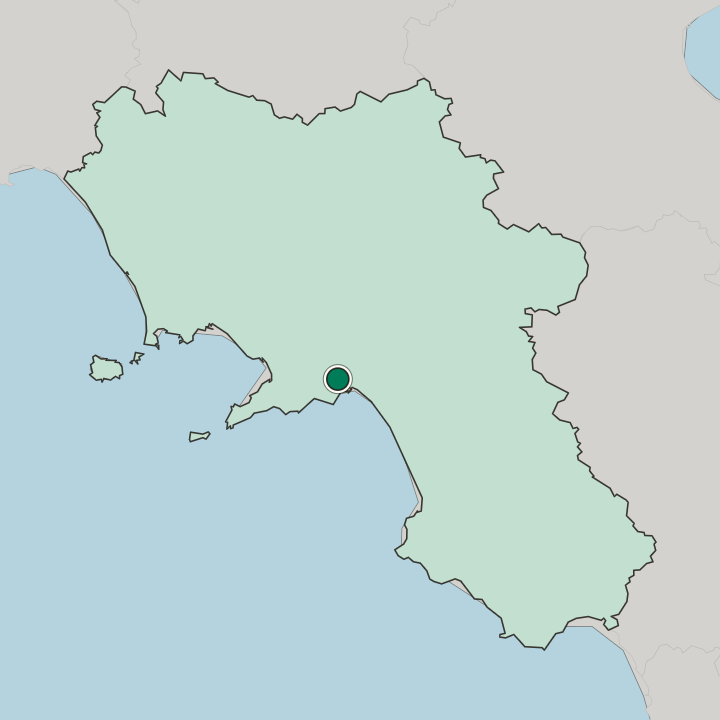
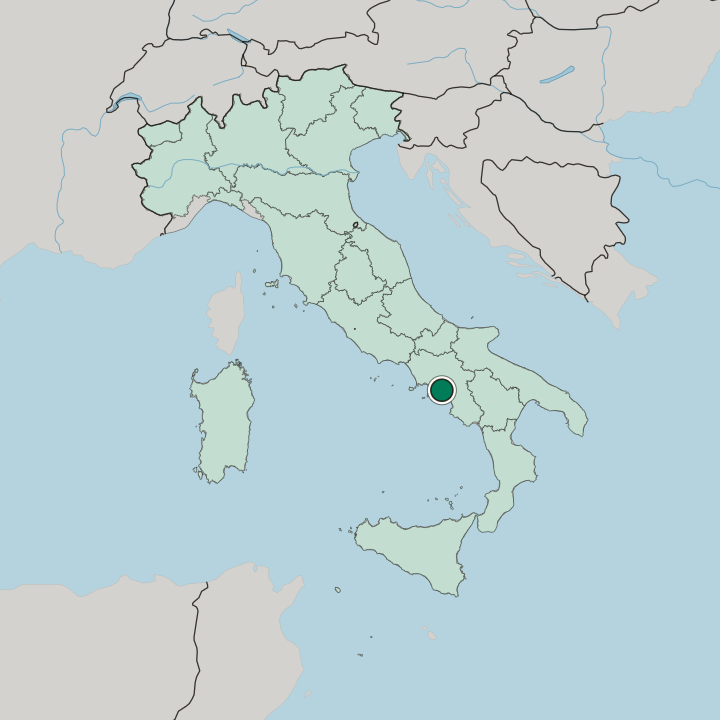
Wooded hills close the valley on both sides. Cava de' Tirreni spreads along the cultivated floor between them, some ten kilometres from Salerno and eight from the Amalfi Coast on the far side of the ridge, which keeps the town inland without putting it far from the sea. Monte Castello is the high point in view.
The Province of Salerno carries on past it, and Campania's coastal belt begins where the hills drop away.
What is the climate of Cava Dè Tirreni?
Wooded hills shelter the valley on both sides, and the sea past the Amalfi Coast lies near enough that Cava de' Tirreni sits in a mild temperate band rather than a hard inland one. Monte Castello takes the weather first. The cultivated floor between the ridges is evidence enough of the growing season, worked right up to the line where the woods begin above the Abbey of La Trinità della Cava.
How do you get to Cava Dè Tirreni?
Most routes in come by way of Salerno. Cava de' Tirreni sits roughly ten kilometres up the valley from that city, so the last stretch of any approach runs inland between wooded hills instead of along the water. Eight kilometres of hill road separate the town from the Amalfi Coast.
The Province of Salerno surrounds both ends of the journey.
Common questions
What is the best area to stay in Cava Dè Tirreni?
Under the porticoes of the main street: a stay spent walking the covered arcades and the ceramic rooms nearby. Toward the Abbey of La Trinità della Cava: mornings that start with the climb to the abbey and its museum. The Monte Castello edge: travellers using the valley as a base for the Amalfi Coast and Salerno.
Good for
More cities in Campania
Updated October 2026