Italy
Campania, Italy — Towns & Travel Guide
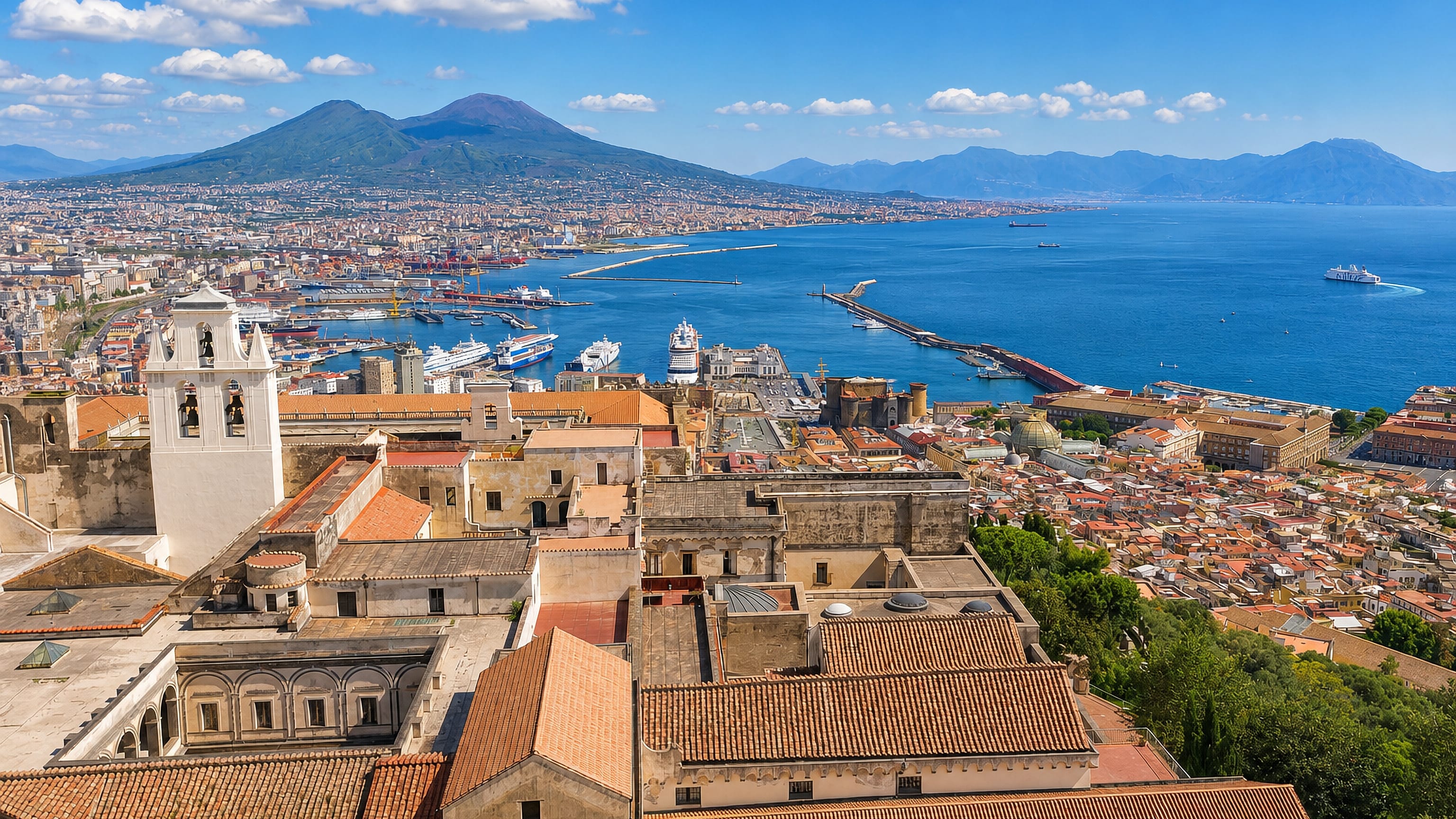
Campania is a region of southern Italy around Naples, with Mount Vesuvius, the Amalfi Coast and the island of Capri.
Hotel links are affiliate links: booking through them may earn us a commission, at no extra cost to you. It never affects how places are ranked. How this works


Towns & cities in Campania
Pick a town or city — each links to where to stay.

 Italy
Italy
Naples
Naples faces Vesuvius across its own bay, capital of Campania and a Greek foundation, known for the Centro Storico and the Cappella Sansevero.Where to stay →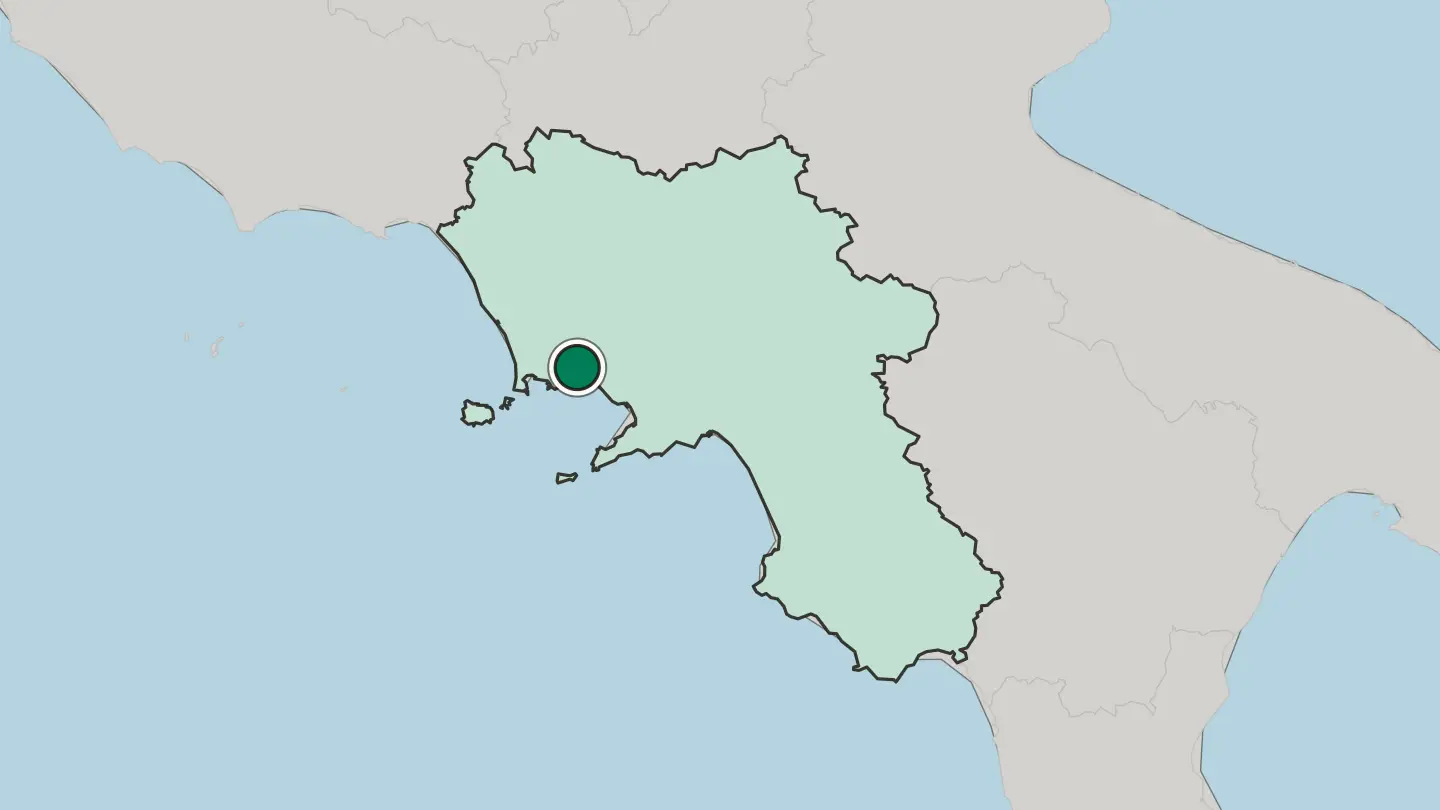
 Italy
Italy
Salerno
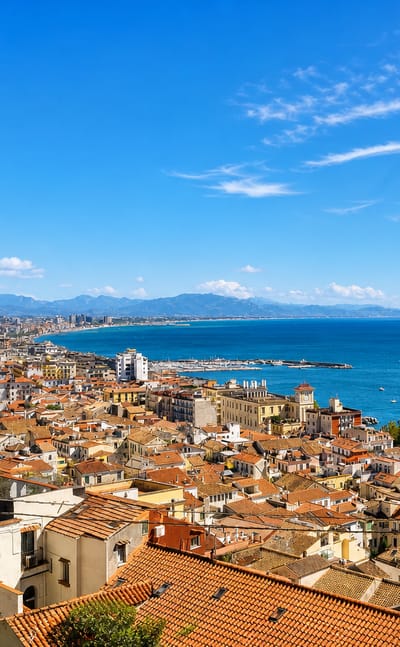
Salerno is a city in Campania, southern Italy, on the Gulf of Salerno, known for its medieval cathedral and the early Schola Medica Salernitana.Where to stay →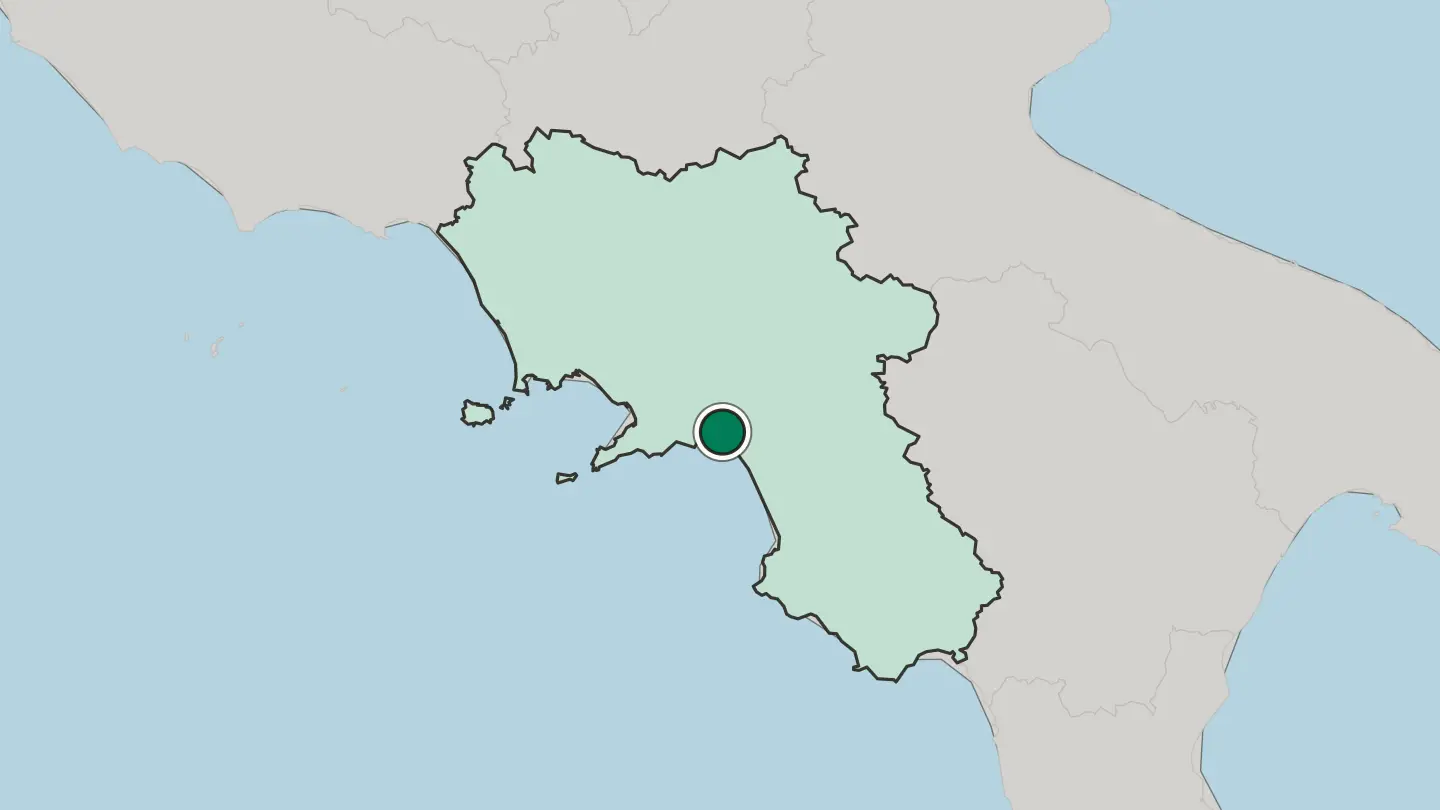
 Italy
Italy
Torre del Greco
Coral fills a private museum in Torre del Greco, a Campania comune inside the Metropolitan City of Naples.Where to stay →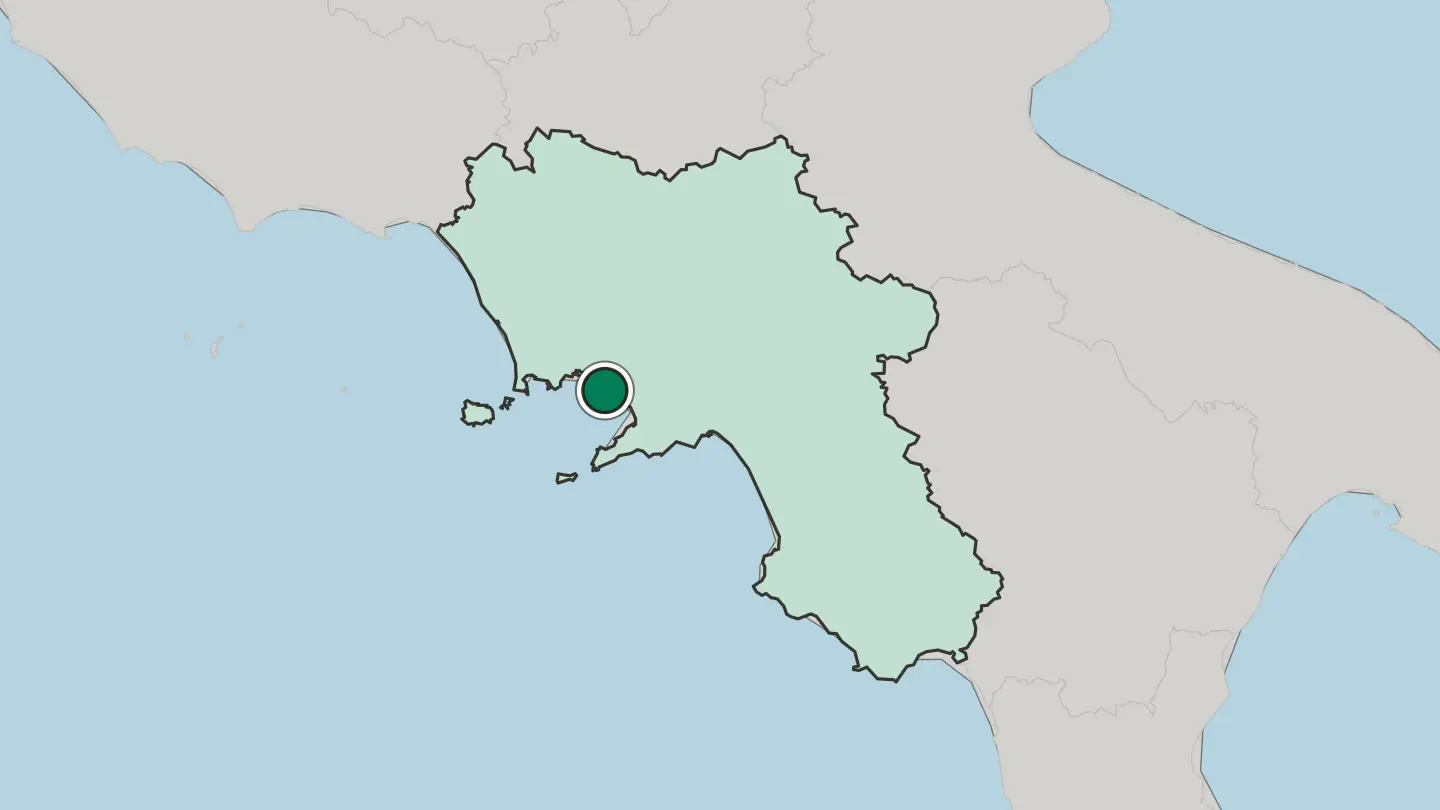
 Italy
Italy
Pozzuoli
Rome went under water here. Pozzuoli keeps the Flavian Amphitheater above ground and the parco sommerso di Baia beneath the sea.Where to stay →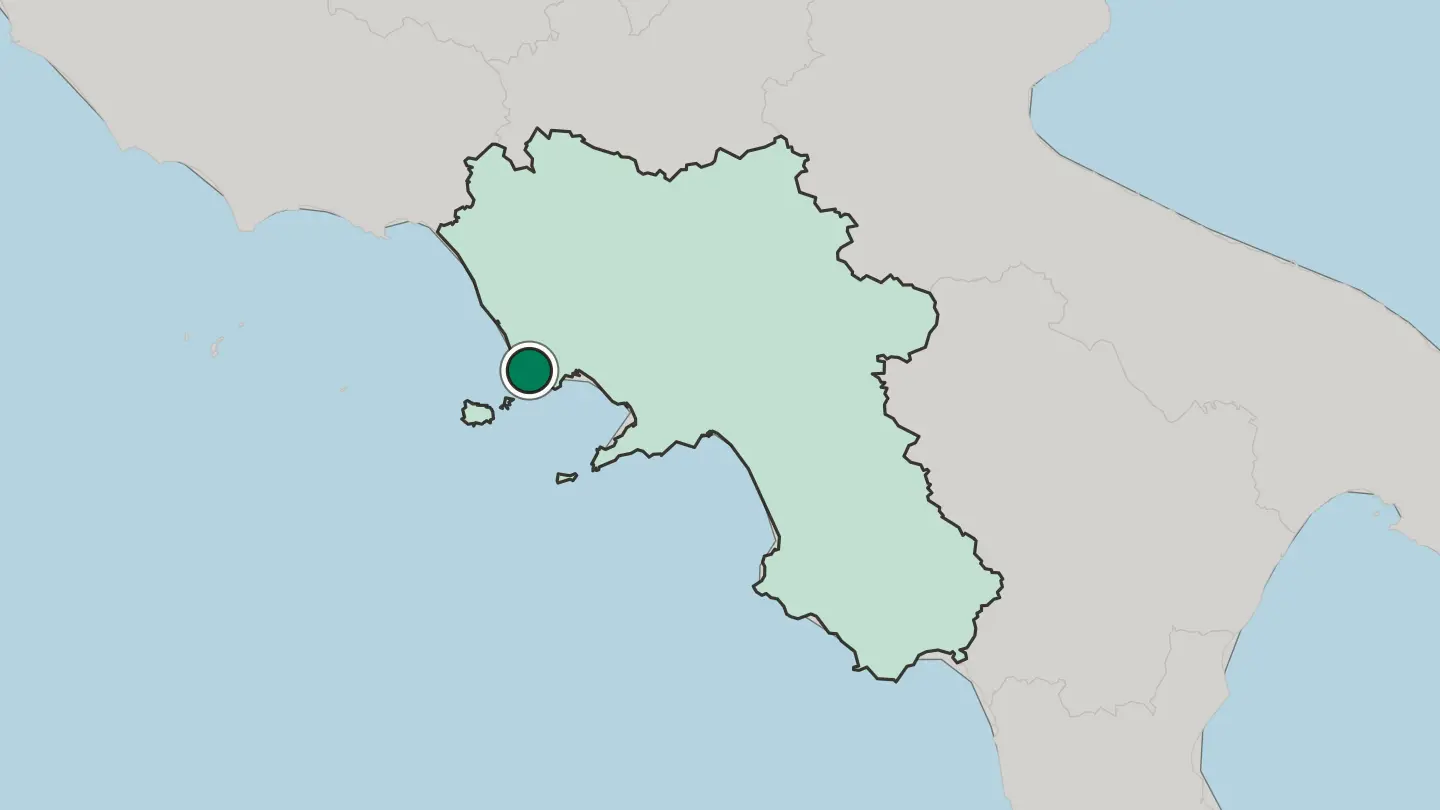 Italy
Italy
Giugliano in Campania
Sport takes up real space here. Giugliano in Campania keeps a stadium and two indoor arenas inside the Metropolitan City of Naples.Where to stay →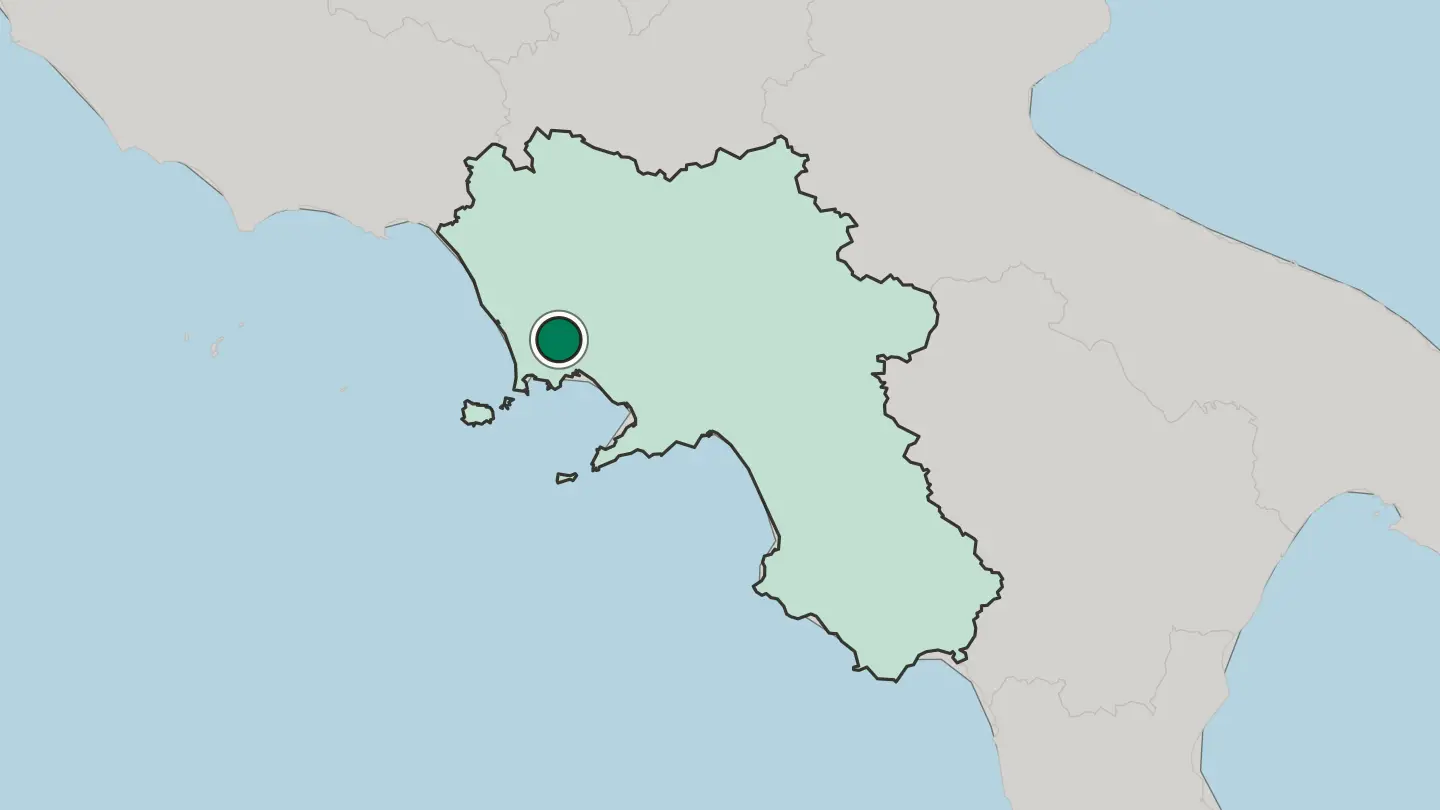
 Italy
Italy
Fuorigrotta
Fuorigrotta is a western quarter of Naples, the city's most populated suburb, and the ground that holds Città della Scienza and Edenlandia.Where to stay →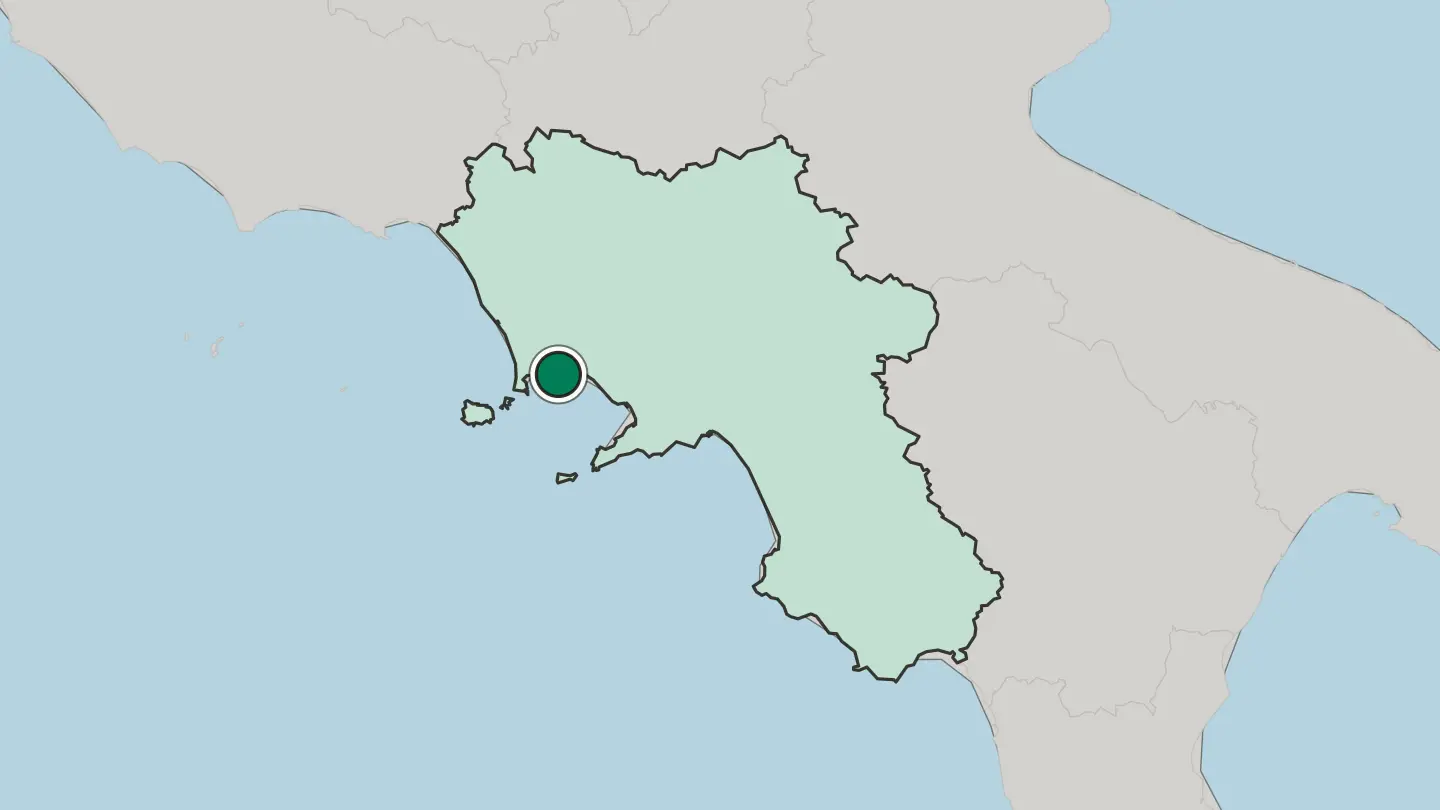
 Italy
Italy
Caserta
Caserta is the Campania city built around the Palace of Caserta, its royal gardens and the cathedral of Saint archangel Michael.Where to stay →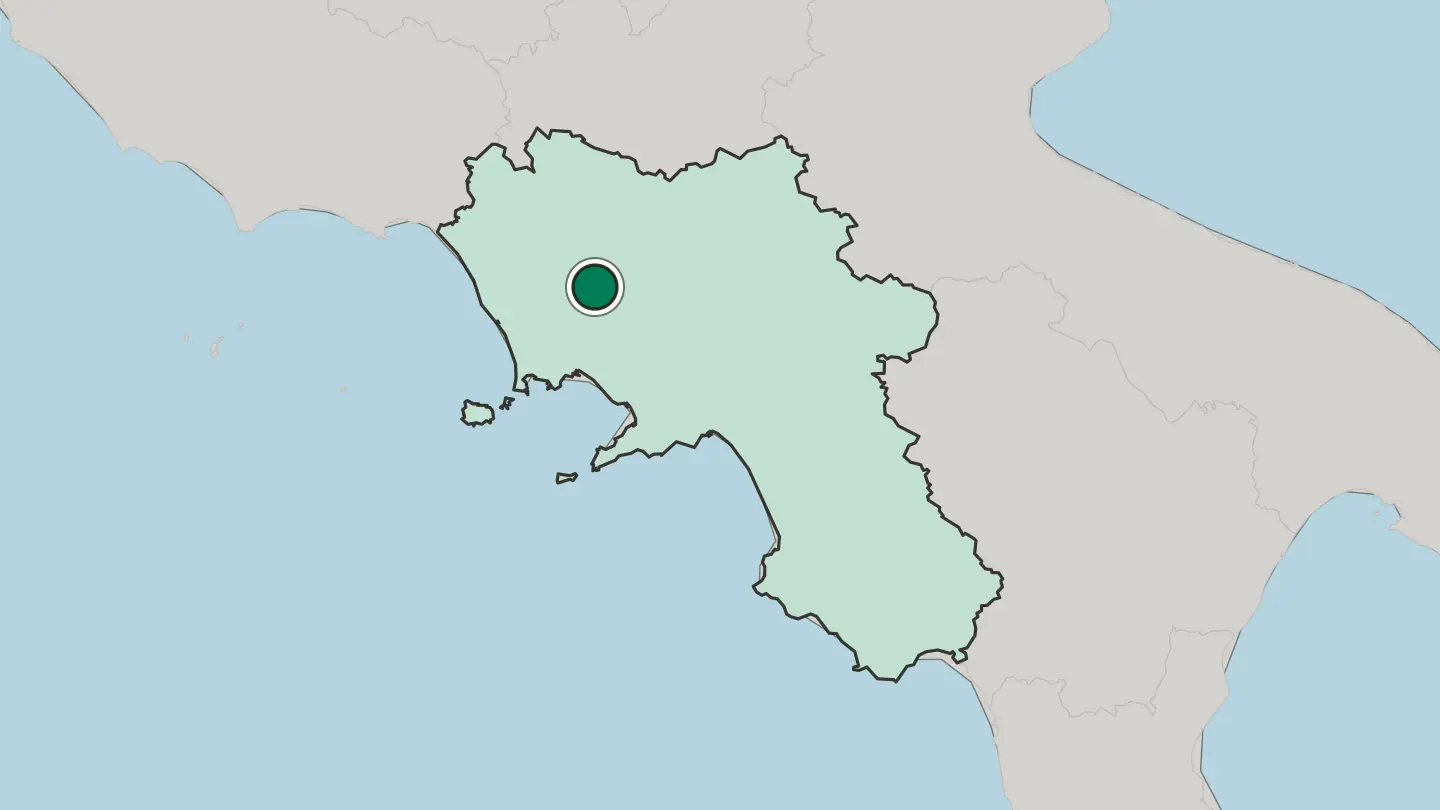 Italy
Italy
Castellammare di Stabia
Castellammare di Stabia is on the Bay of Naples in Italy, site of Stabiae buried by Vesuvius, with mineral springs and a shipyard below Monte Faito.Where to stay →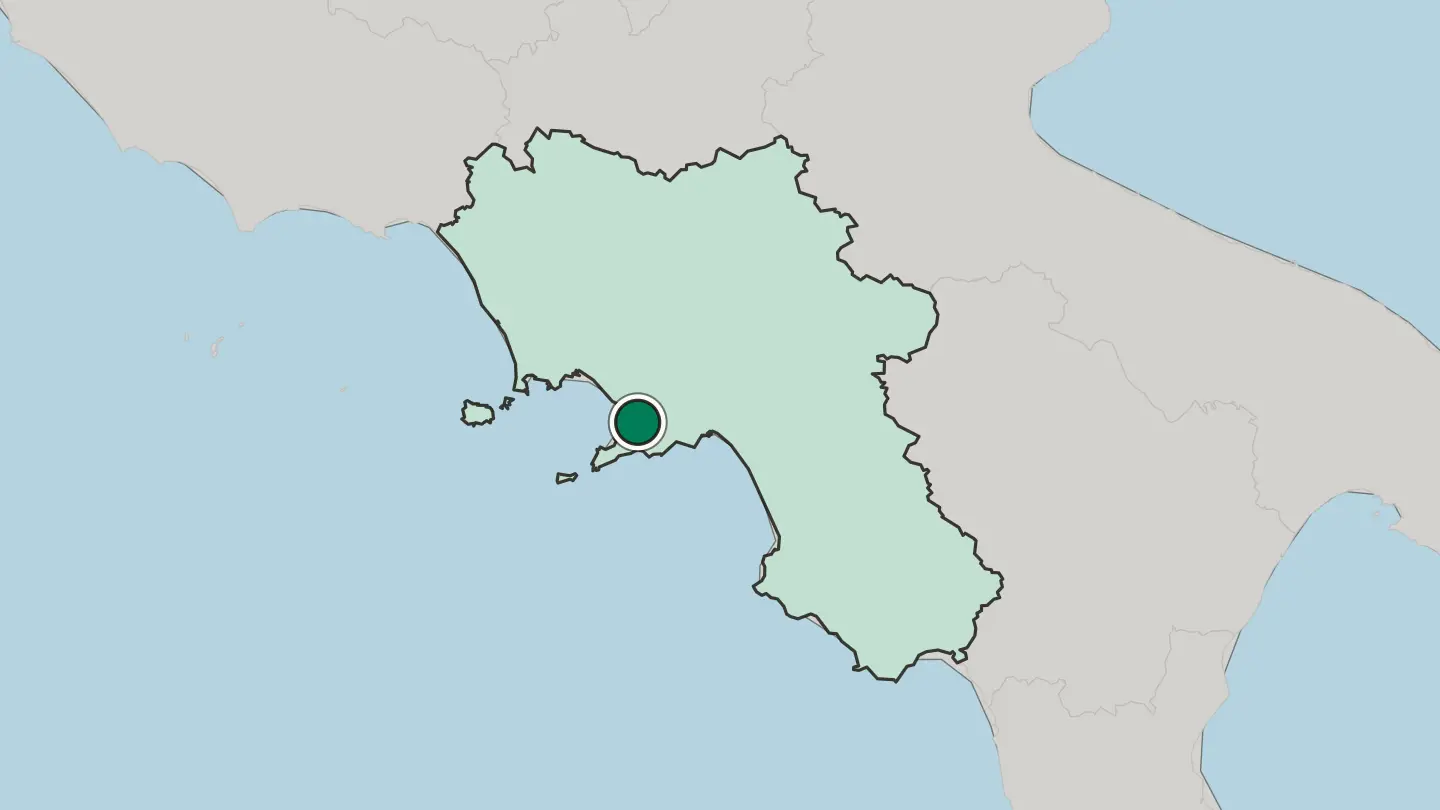
All towns & cities (14)
 Italy
Italy
Afragola
Afragola is a Campania town gathered around the basilica di San Mauro Abate, with two museums of farming life kept at its edges.Where to stay →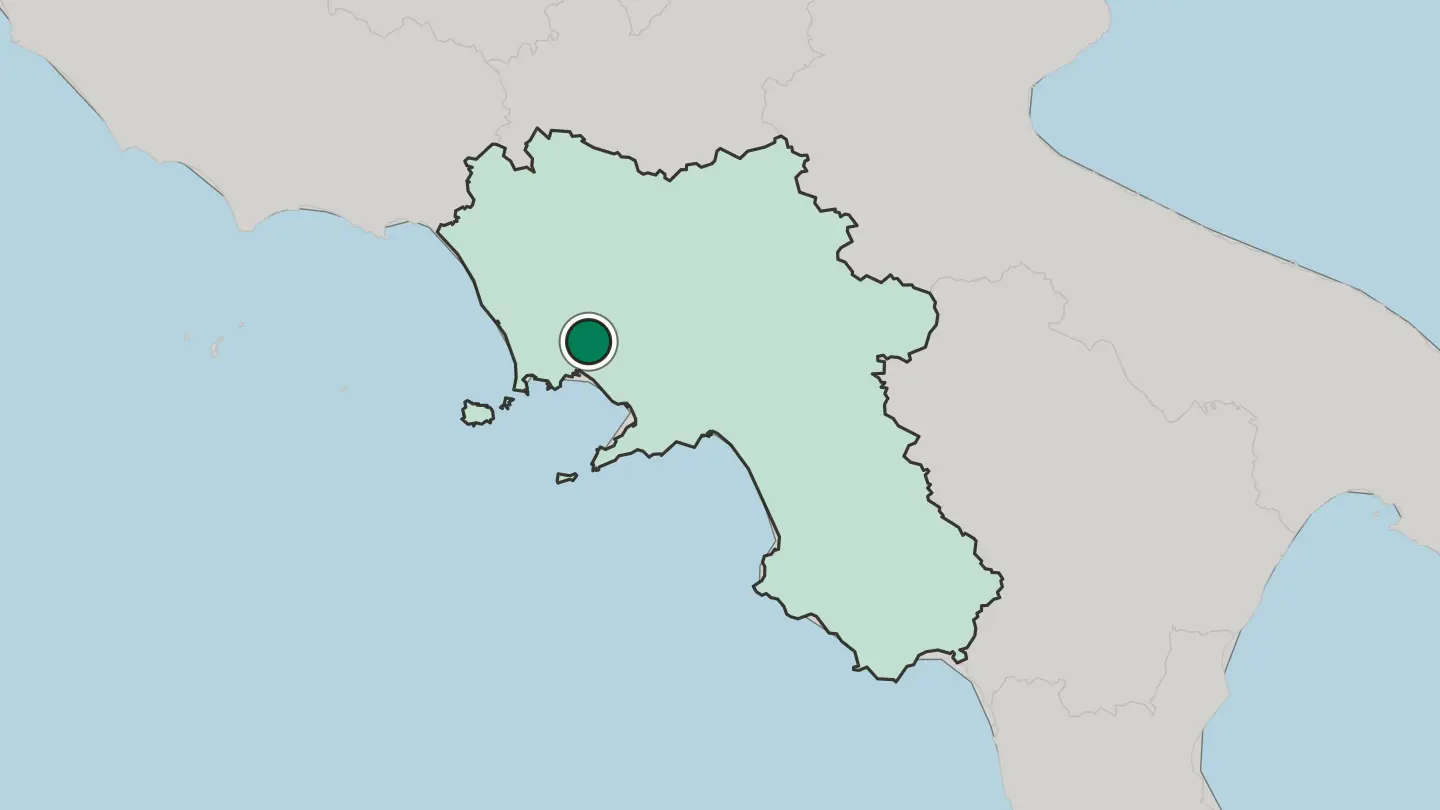
 Italy
Italy
Benevento
Benevento stands on a hill at the confluence of the Calore Irpino and the Sabato, a Campania city built around Santa Sofia Church.Where to stay →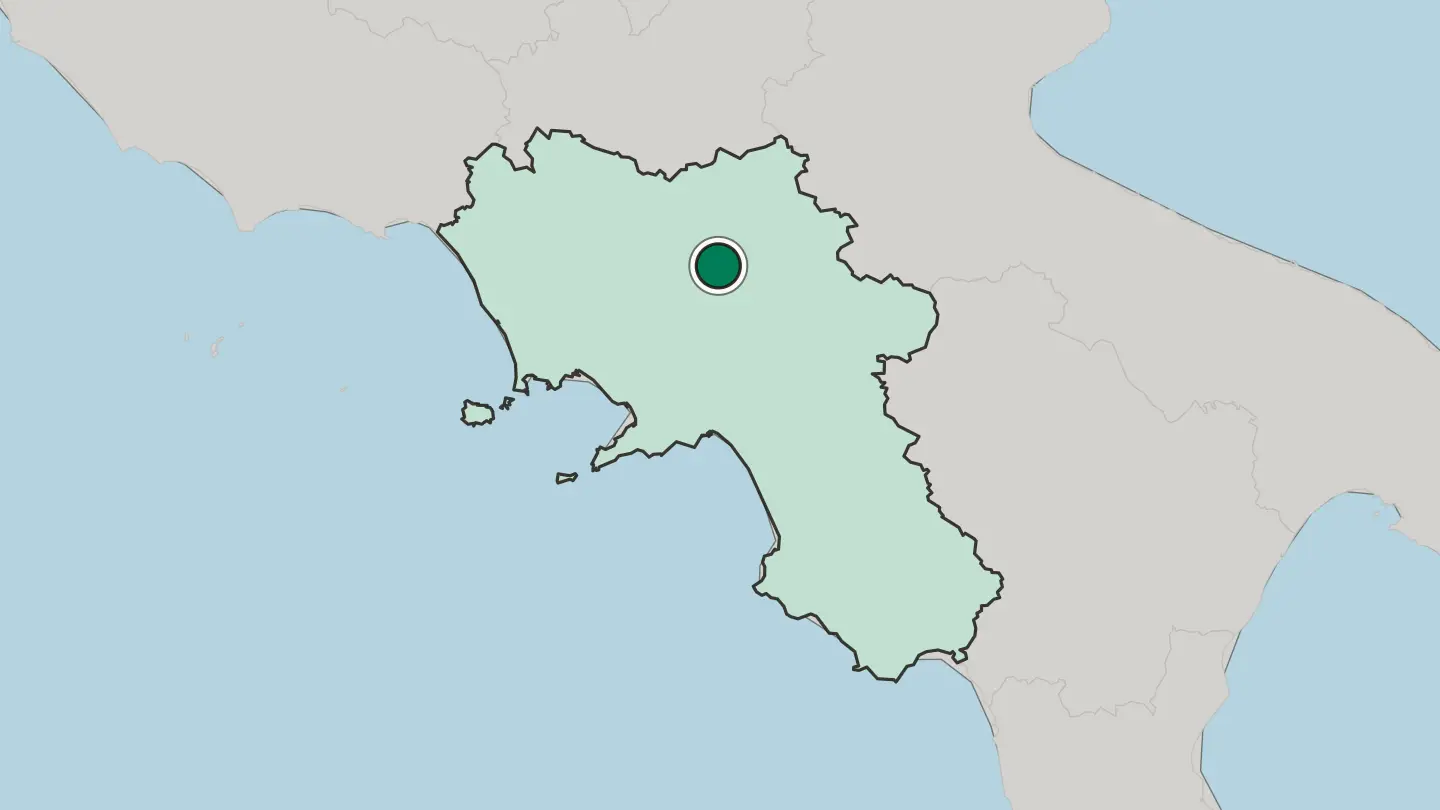
 Italy
Italy
Portici
Portici is small and dense. The Pietrarsa railway museum and the comune's churches fit inside barely four and a half square kilometres.Where to stay →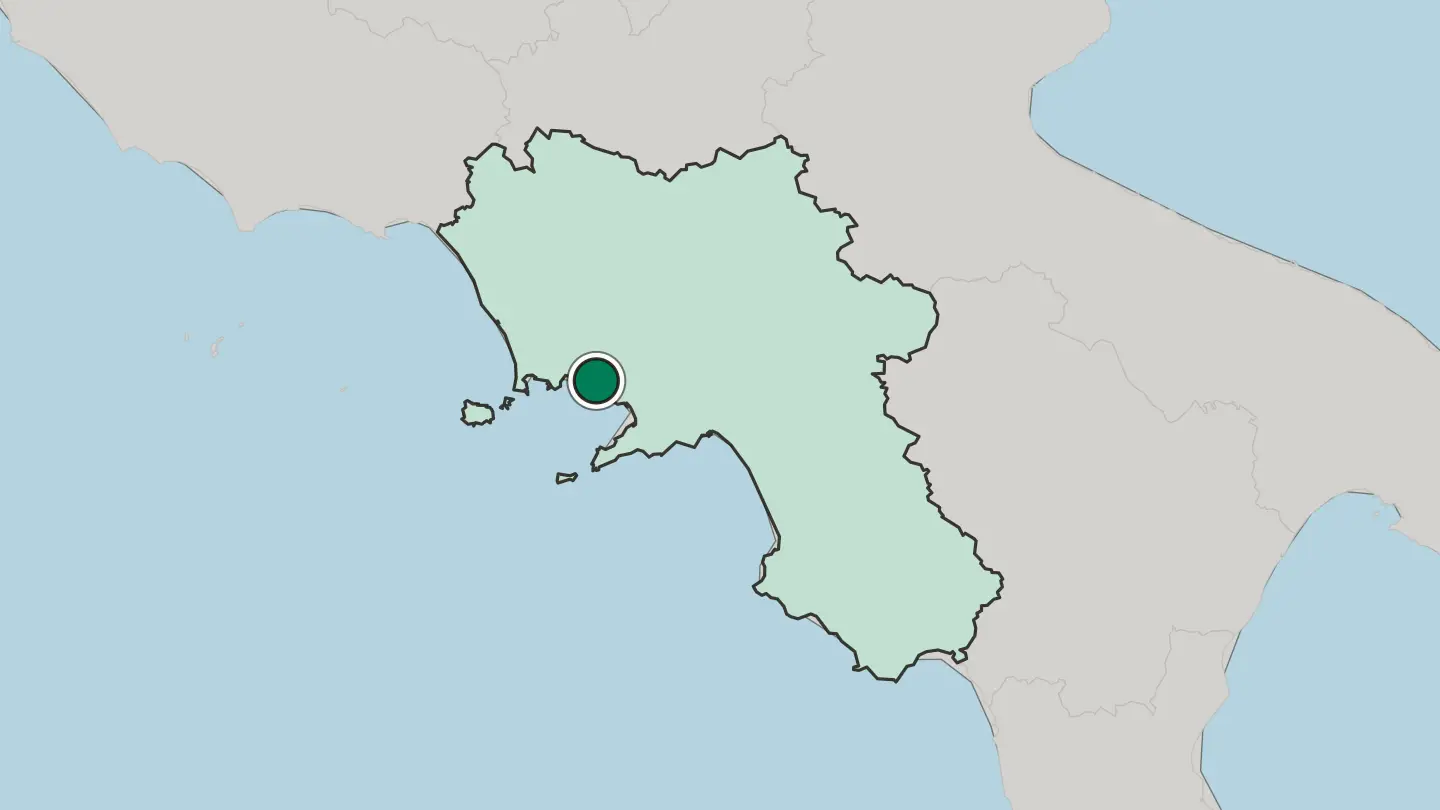
 Italy
Italy
Ercolano
Mount Vesuvius rises directly above. Ercolano holds the excavated Roman town of Herculaneum, on the Gulf of Naples at the volcano's western foot.Where to stay →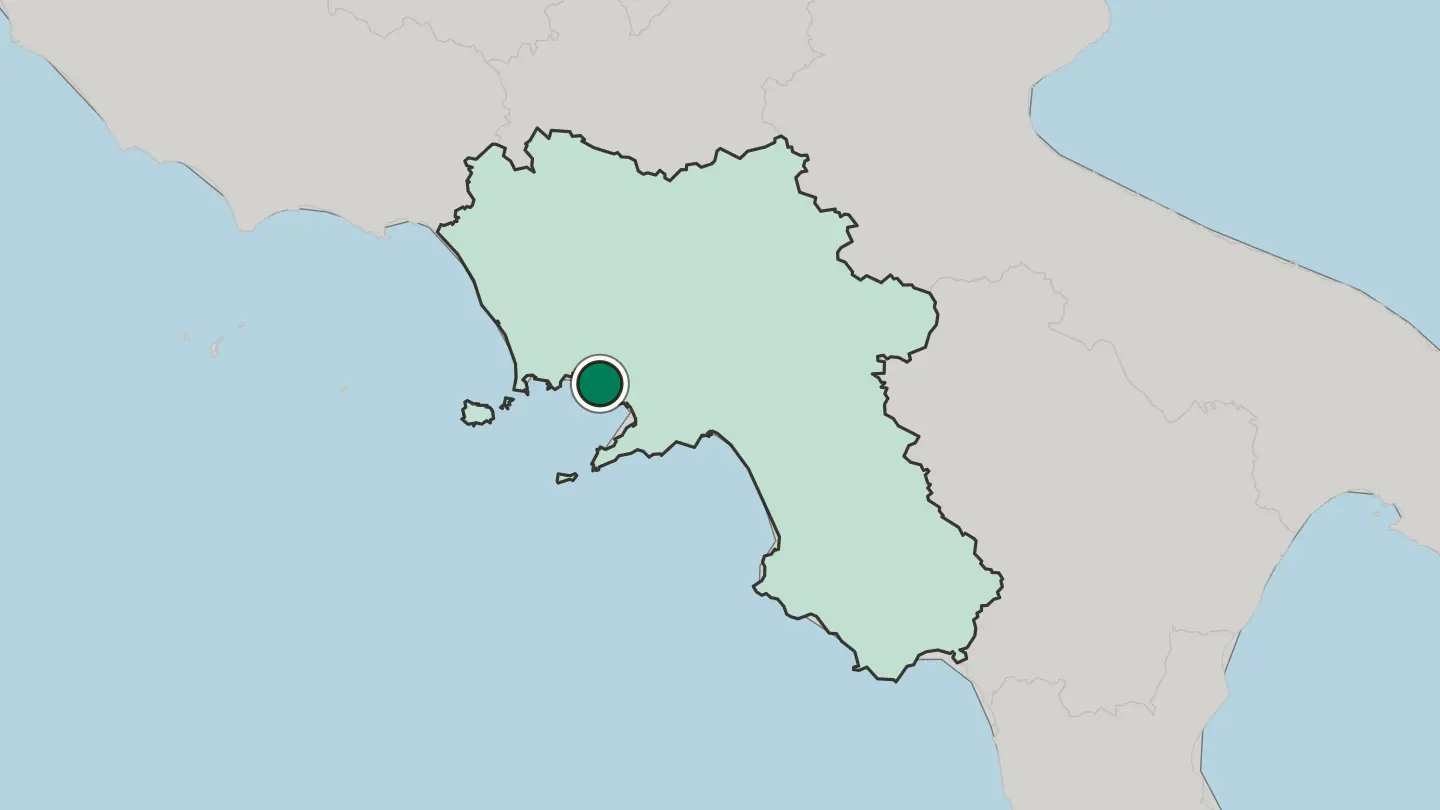 Italy
Italy
Cava Dè Tirreni
Porticoes line the main street. Cava de' Tirreni fills a cultivated valley near Salerno, wooded hills standing close on either side.Where to stay →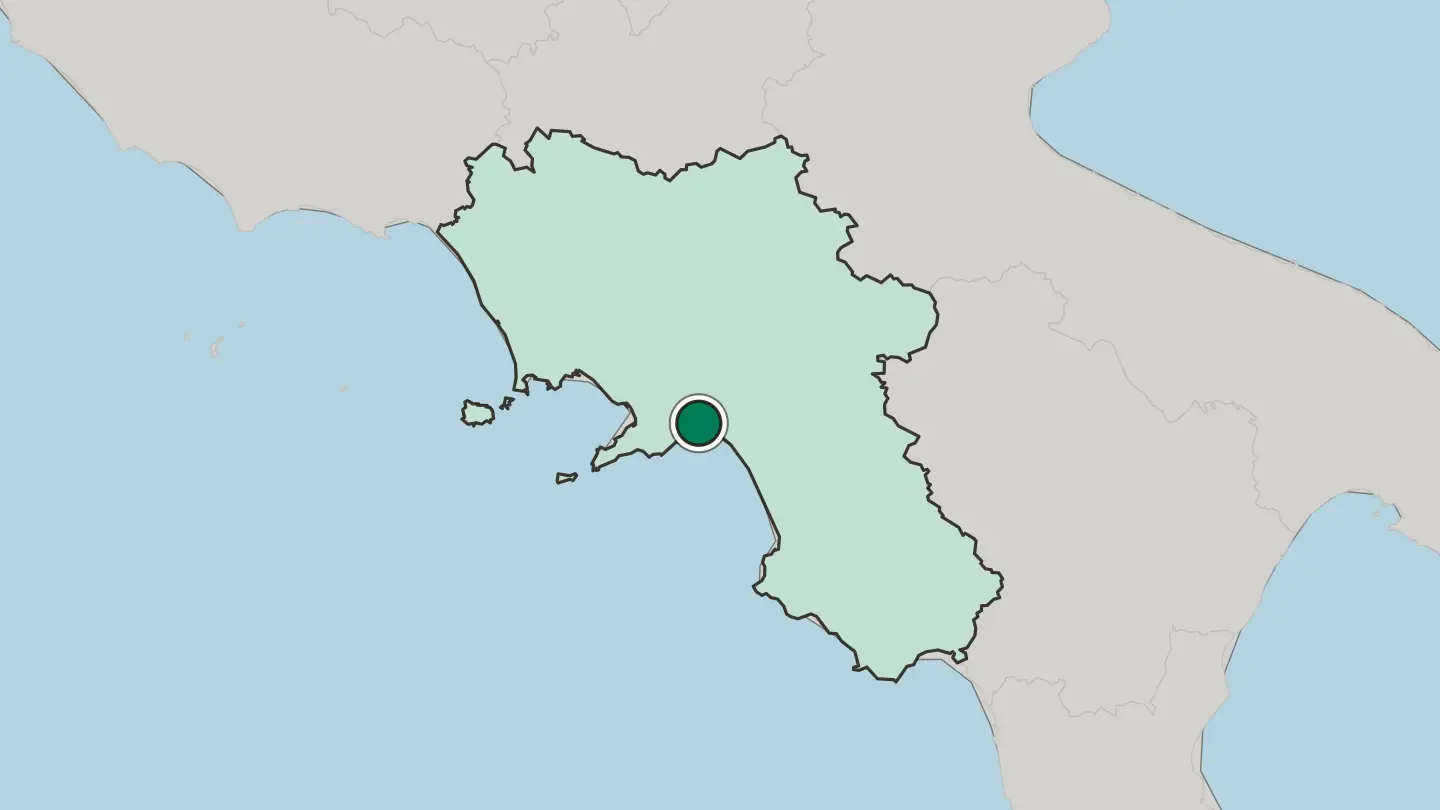 Italy
Italy
Aversa
Aversa stands north of Naples in the Province of Caserta, a cathedral city at the centre of the wine and cheese country of the Agro Aversano.Where to stay →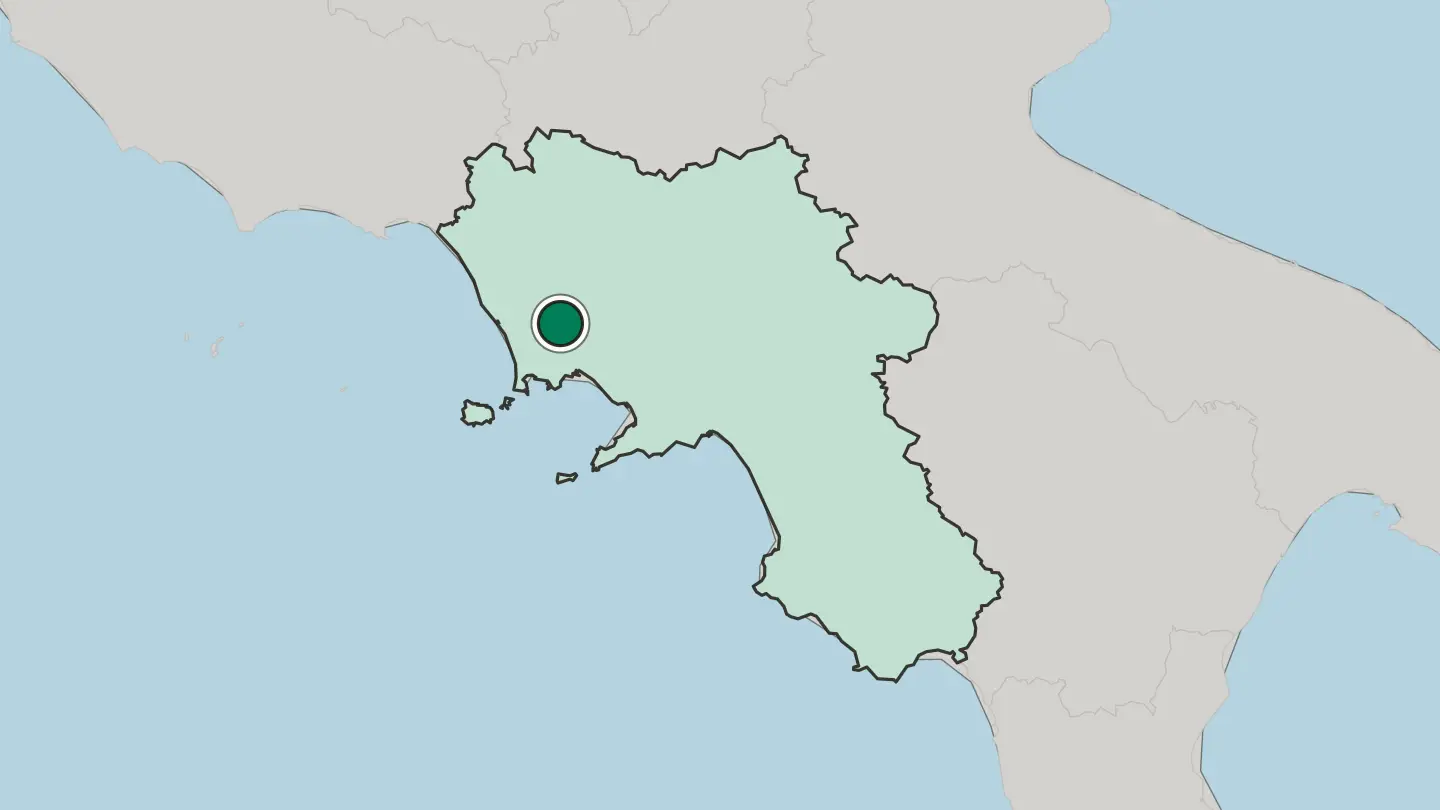
Hotel links are affiliate links: booking through them may earn us a commission, at no extra cost to you. It never affects how places are ranked. How this works
About Campania
What is Campania known for?
Campania draws its fame from the volcano and the ruins beneath it. Pompeii and Herculaneum were buried by Mount Vesuvius and later dug from the ash, and they remain among the most complete Roman towns anywhere, walked daily by visitors who come for the frescoes and streets. The Amalfi Coast lines the cliffs to the south.
Capri sits offshore. The Royal Palace of Caserta and the Historic Centre of Naples round out a region thick with old stone.
Where is Campania?
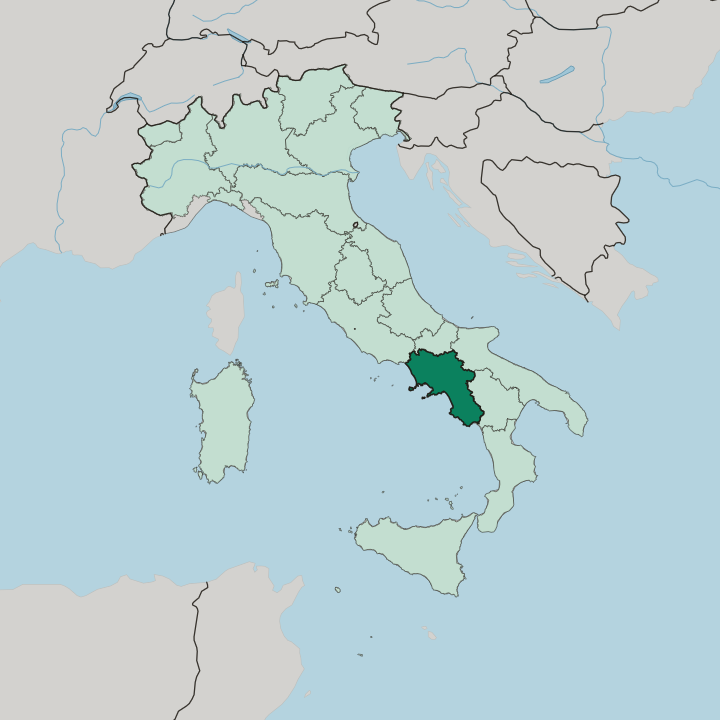
Campania occupies the south-western part of the Italian Peninsula, along the Mediterranean. Naples anchors the region. The capital stands on a broad bay, with the cone of Mount Vesuvius rising close behind it, the volcano whose ash and slopes have shaped the land and its farms over many centuries.
Most of Campania lies on the mainland, yet the region also reaches well out to sea. The small Phlegraean Islands and the island of Capri sit off the coast near the bay. At the foot of Mount Vesuvius lie Pompeii and Herculaneum, the two Roman towns the volcano buried and preserved.
South of Naples, the Amalfi Coast follows a line of cliffs that fall straight into the water, the shore road bending around one rocky headland after another. The terraces above it carry lemons and vines. Mount Vesuvius is held within the UNESCO World Network of Biosphere Reserves, a recognition of the volcano and the habitats on its flanks.
Inland, away from the sea, the land rises toward Benevento and Caserta and the quieter towns of the interior. The plain around the bay stays among the most worked farmland in southern Italy.
What is Campania like?
Campania carries more ancient history per mile than almost any region in Italy. Naples is the heart of it. The Historic Centre of Naples layers ancient streets, churches and palaces into one dense quarter that has been lived in without a break for a very long time.
Pompeii and Herculaneum hold the other side of that story, two Roman towns stopped mid-life by Mount Vesuvius and studied ever since as a record of the ancient day-to-day. Together they make one of the country's deepest concentrations of antiquity. Later rulers left their own marks.
The Royal Palace of Caserta stands inland as one of the grandest palaces the old kingdom built, its formal gardens stretching well beyond the long facade. At Benevento, the small Longobardian Church of Santa Sofia survives from the Lombard era. The Amalfi Coast adds a different register of lemon terraces, ceramics and sea-facing towns.
Campania also keeps a place on the wider stage, hosting NATO's Allied Joint Force Command and the Parliamentary Assembly of the Mediterranean near Naples. Churches, ruins and the sea run through all of it.
What is the history of Campania?
Layer on layer, Campania has been settled since deep antiquity. Roman towns like Pompeii and Herculaneum thrived beneath Mount Vesuvius until the volcano buried them, sealing their streets for the archaeologists who would later dig them out. Naples became a royal capital.
The Longobardian Church of Santa Sofia at Benevento and the Royal Palace of Caserta mark the long stretch of Lombard, then royal, rule that followed. Campania took its modern form as an administrative region of Italy in 1970.
What is the climate of Campania?
Campania has a Mediterranean climate, shaped by the sea on almost every side. Campania's summers turn hot and rainless. Along the bay and the Amalfi Coast, the water keeps the worst heat off and holds the warmth late into autumn, so the coastal towns stay mild while the inland plain bakes.
Winters are gentle and wetter, with rain rather than snow on the lowland. Higher ground near Mount Vesuvius and the interior turns cooler and cloudier.
How do you get to Campania?
Most travellers reach Campania through Naples. The capital is the regional hub for trains, roads and boats, and from its port the ferries fan out to Capri, the Phlegraean Islands and the towns of the Amalfi Coast. Trains run inland to Caserta and Benevento.
Buses and the cliffside road carry visitors along the coast, where parking is tight and the boat is often the easier way in. From Naples, the rest of southern Italy lies within easy reach.
Common questions
What is the best area to stay in Campania?
Naples: first base and onward ferries. Amalfi Coast: the cliff road and the sea. Capri: a quiet island night. Caserta: the Royal Palace at the gates.
Good for
More regions in Italy
Updated September 2026