Italy · Campania
Where to Stay in Naples, Campania
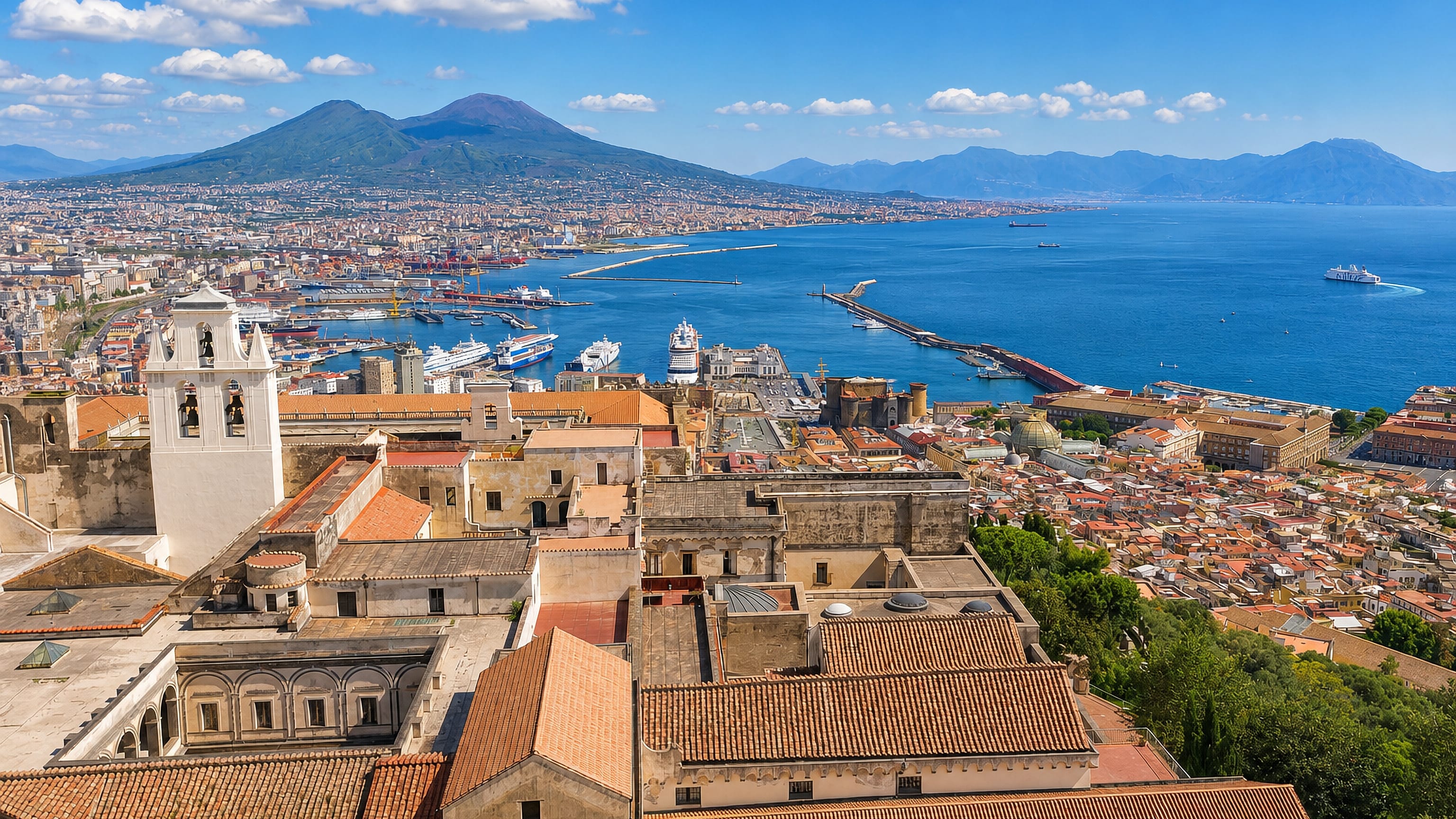
Naples faces Vesuvius across its own bay, capital of Campania and a Greek foundation, known for the Centro Storico and the Cappella Sansevero.
Hotel links are affiliate links: booking through them may earn us a commission, at no extra cost to you. It never affects how places are ranked. How this works


Where to stay in Naples
The right area depends on your trip — here's what each neighbourhood is best for.

 NaplesItalySleeping above the noise with a funicular down into it
Vomero
The hill quarter around Castel Sant'Elmo and the Certosa di San Martino, looking across the bay to VesuviusVomero → NaplesItaly
Mercato
Mercato is a compact quarter of south-eastern Naples, bounded on the south by the industrial port, with Santa Maria del Carmine among its churches.Where to stay →NaplesItalyPendino
Two obelisk fountains mark the ends of Piazza Mercato, the square that anchors Pendino, a quartiere of Naples under the Santa Maria del Carmine bell tower.Where to stay →NaplesItalyVicaria
Vicaria, also called Il Vasto, is one of the 30 quartieri of Naples, lying immediately east of the historical city centre around Castel Capuano.Where to stay →NaplesItalyZona Industriale
Zona Industriale is a quarter of Naples, grouped with Poggioreale, San Lorenzo and Vicaria in the Fourth Municipality.Where to stay → NaplesItaly
San Carlo All'Arena
San Carlo all'Arena is a district of Naples north-east of the historic centre, built around Piazza Carlo III and the Bourbon Hospice for the Poor.Where to stay →NaplesItalySan Giuseppe
San Giuseppe is the quarter of Naples holding Gesù Nuovo, via Benedetto Croce and Piazza San Domenico Maggiore on the historic centre's western side.Where to stay → NaplesItaly
Montecalvario
Montecalvario is the Naples quarter along via Toledo, taking in Piazza Carità and the northern end of the Quartieri Spagnoli.Where to stay → NaplesItaly
Avvocata
Avvocata is the Naples quarter just west of the Greco-Roman centre, built out under Spanish rule, with Piazza Dante its best-known square.Where to stay → NaplesItaly
San Ferdinando
San Ferdinando is a southern quarter of Naples holding the Royal Palace of Naples, Castel Nuovo and the church of San Francesco di Paola.Where to stay → NaplesItaly
Chiaia
Chiaia is the Naples seafront quarter running from Piazza Vittoria west to Mergellina, with Villa Pignatelli and luxury shopping along its main street.Where to stay →NaplesItalySan Pietro a Patierno
San Pietro a Patierno is a quarter of Naples, capital of Campania, where four parish churches and one farmhouse museum stand in for monuments.Where to stay →All neighbourhoods (16)
NaplesItalyArenella
Arenella is a quarter of Naples on the Vomero hill, set above the city near the Policlinico hospitals and the road up to Camaldoli.Where to stay →NaplesItalySecondigliano
Nineteenth-century mansion blocks line Corso Secondigliano, the main street of Secondigliano, a quarter in the north of Naples beside Miano and Scampia.Where to stay → NaplesItaly
Scampia
Scampia is a modern quarter in the far north of Naples, with the suburbs of Piscinola, Miano and Secondigliano lying to its south.Where to stay →NaplesItalyChiaiano
Chiaiano is a north-western quarter of Naples, its recorded landmarks three parish churches and the Torre del II Policlinico.Where to stay →Hotel links are affiliate links: booking through them may earn us a commission, at no extra cost to you. It never affects how places are ranked. How this works
Find hotels in Naples
Direct booking searches for these neighbourhoods.
Centro Storico
Inside the Greek grid where Spaccanapoli cuts past Santa Chiara and the Cappella SanseveroFind hotels in Centro StoricoA calmer seafront with the Via dei Mille shops at the cornerChiaia and Mergellina
The nineteenth-century blocks west of Piazza del Plebiscito, running out to the Mergellina boatsFind hotels in Chiaia and MergellinaRooms facing Castel dell'Ovo and the restaurants of Borgo MarinariSanta Lucia
The sea wall between the port and Chiaia, ten minutes on foot from the Royal Palace of NaplesFind hotels in Santa LuciaHotel links are affiliate links: booking through them may earn us a commission, at no extra cost to you. It never affects how places are ranked. How this works
Things to do in Naples
Ranked by global recognition; descriptions from Wikidata (CC0).
Museums & Galleries
8- Naples National Archaeological Museum Heritage
- Cappella Sansevero Heritage
- Museo di Capodimonte Heritage
- Certosa di San Martino Heritage
- Museum of the Treasure of St. Gennaro Heritage
Show 3 more →
- Pio Monte della Misericordia Heritage
- Naples underground geothermal zone Heritage
- Donnaregina Contemporary Art Museum, Madre Museum Heritage
Churches & Religious Sites
8- Naples Cathedral Heritage
- Santa Chiara Heritage
- San Francesco di Paola Heritage
- San Lorenzo Maggiore Heritage
- Santa Maria del Carmine Heritage
Show 3 more →
- Santa Caterina a Formiello Heritage
- Chiesa di Sant'Antonio a Posillipo Heritage
- Santa Maria del Parto a Mergellina, Naples Heritage
Castles & Historic Sites
6- Castel Nuovo Heritage
- Castel dell'Ovo Heritage
- Royal Palace of Naples Heritage
- Castel Sant'Elmo Heritage
- Castel Capuano Heritage
Show 1 more →
- Crypta Neapolitana Heritage
Parks & Gardens
1- Capodimonte park Heritage
Landmarks & Notable Places
1- Torre del II Policlinico
worth knowingacross 5 categories in Naples
About Naples
What is Naples known for?
Naples is the capital of Campania and the largest city of southern Italy. Pizza was invented in its lanes, the Naples National Archaeological Museum holds what was dug out of Pompeii and Herculaneum, and the Cappella Sansevero keeps the veiled Christ that Giuseppe Sanmartino cut from one block of marble. Vesuvius stands over the whole arrangement.
Three castles guard the waterfront, the blood of San Gennaro is brought out of Naples Cathedral to liquefy before the city, and the funiculars climb to Vomero.
What are the main landmarks in Naples?
Naples stacks its landmarks from the water up. Castel dell'Ovo sits on the islet where the Greeks landed, Castel Nuovo guards the port behind a white triumphal arch, and Castel Sant'Elmo holds the ridge with the Certosa di San Martino beside it. Between them lies the old city.
Naples Cathedral shelters the relic of San Gennaro, Pio Monte della Misericordia hangs a Caravaggio in its own church, and the Naples National Archaeological Museum keeps the bronzes and frescoes lifted from Pompeii.
What is the history of Naples?
Naples was founded by Greeks from Cumae as Neapolis, the new city beside an older settlement called Parthenope. Rome kept it Greek. Emperors learned the language here and built villas along the shore, and the street plan of the Centro Storico is still the grid the colonists laid out with three long decumani.
Byzantine dukes held out against the Lombards for centuries, and then the Normans took the whole south. Charles of Anjou made it a capital in 1266. Castel Nuovo went up for the new dynasty, the Aragonese followed, and Spanish viceroys ran the kingdom for two centuries, cutting Via Toledo through the hill and barracking their soldiers in the Quartieri Spagnoli above it.
The Bourbons built Teatro San Carlo and Capodimonte, dug Pompeii out of the ash and made Naples the largest city in Italy. Unification cost the city its crown. Cholera in 1884 brought the Risanamento, which drove Corso Umberto I straight through the lower town, and the war brought bombing, occupation and the four days in 1943 when the city threw the Germans out on its own.
Where is Naples?
Naples curves around the north side of its own bay in southern Italy, built on yellow tuff. Vesuvius closes the eastern end. West of the centre the ground turns volcanic again in the Campi Flegrei, a field of craters and steam that runs out to Pozzuoli, while the Posillipo ridge separates the city from that coast.
Capri and the Sorrento peninsula shut the bay to the south, and the tuff under the streets is quarried into cisterns, catacombs and the tunnels of the Crypta Neapolitana. The hills rise straight behind.
What is the climate of Naples?
Naples takes its weather off the Tyrrhenian. Summer is hot and rainless, and the sea breeze that comes in over Mergellina in the afternoon is the reason the seafront fills and the inland alleys empty. Autumn brings the rain in sheets.
Winter stays mild enough for lemons on the Sorrento slopes, though the scirocco drives grey swell against the sea wall at Santa Lucia and the storms come through in days rather than weeks. Snow on Vesuvius is news.
How do you get to Naples?
Naples sits at the southern end of the high-speed spine from Milan and Rome. Napoli Centrale on Piazza Garibaldi takes those trains, and the Circumvesuviana leaves from underneath it for Ercolano, Pompei and Sorrento. Boats go from Molo Beverello.
Hydrofoils cross to Capri, Ischia and Procida through the day, Capodichino airport lies inside the built-up area to the north-east, and Metro line 1 loops from the port up through Toledo to Vomero. The funiculars do the hills.
Common questions
What is the best area to stay in Naples?
Centro Storico: Pizzerias on Via dei Tribunali with Caravaggio one street away. Chiaia and Mergellina: A calmer seafront with the Via dei Mille shops at the corner. Santa Lucia: Rooms facing Castel dell'Ovo and the restaurants of Borgo Marinari. Vomero: Sleeping above the noise with a funicular down into it.
Good for
More cities in Campania
Updated October 2026