Japan · Chiba-ken
Where to Stay in Tateyama, Chiba-ken
Tateyama Bay, the Sunosaki Lighthouse and two castle names give this warm corner of Chiba Prefecture the shape a visitor sees.
Hotel links are affiliate links: booking through them may earn us a commission, at no extra cost to you. It never affects how places are ranked. How this works


Where to stay in Tateyama
The practical side of choosing where to sleep.
Shore or castle hill, that is the whole decision. Rooms along Tateyama Bay put the water outside the window and "Nagisa-no-Eki"Tateyama within reach on foot, which suits anyone whose reason for coming is the sea rather than the history, and the Tateyama City Municipal Museum is close enough to fill a wet afternoon. The bay is the constant.
Whatever else a day contains, it tends to begin and end with that water. Tateyama Castle pulls stays inland by a small margin. A base near it trades the immediate shoreline for a shorter walk up to the castle ground, and Inamura Castle sits within the same municipality for anyone who wants both names in one outing.
Sunosaki is the third option. Beds towards the Sunosaki Lighthouse are fewer and further apart, but the exchange is a quieter evening and a first look at the water before anyone else is up. Distances decide more than atmosphere does.
A hundred and ten square kilometres is a lot of municipality for a small place, and the Ōderayama Cave Site in particular is not something to attempt on the way to somewhere else in the same hour. Book with transport in mind. Chiba Prefecture keeps larger towns within reach for travellers who would rather sleep somewhere busier and drive in, though a night beside Tateyama Bay is the version of this city most people are actually after.
Find hotels in Tateyama
Direct booking searches for these neighbourhoods.
The Tateyama Bay shore
The bay frontage keeps the water and the Tateyama City Municipal Museum on the same short walkFind hotels in The Tateyama Bay shoreStays pairing Tateyama Castle with Inamura Castle in one outingUnder Tateyama Castle
The castle ground rises just inland of the bay frontage and shortens the climb. Rooms are few around here — worth securing early.Find hotels in Under Tateyama CastleQuiet evenings near the Sunosaki LighthouseOut towards Sunosaki
The lighthouse end trades town frontage for an early, empty view of Tateyama Bay. Few places to stay nearby — book ahead.Find hotels in Out towards SunosakiHotel links are affiliate links: booking through them may earn us a commission, at no extra cost to you. It never affects how places are ranked. How this works
About Tateyama
Water first, then walls.
What is Tateyama known for?
Tateyama Bay sets the terms for the whole municipality, and the Sunosaki Lighthouse is the marker that fixes its outer shore in the memory of almost everyone who comes this way. Two castle names survive here. Tateyama Castle and Inamura Castle carry them, while the Tateyama City Municipal Museum keeps what the ground and the households of the district left behind.
The Ōderayama Cave Site belongs to another era altogether.
What are the main landmarks in Tateyama?
Seven entries, split between shore and hill. The Sunosaki Lighthouse and "Nagisa-no-Eki"Tateyama belong to Tateyama Bay, Tateyama Castle and Inamura Castle to the raised ground behind it, and the Tateyama City Municipal Museum to the business of explaining both to anyone who asks. The Ōderayama Cave Site stands apart.
Cut ground of that kind carries the earliest part of the local record, long before either castle name was attached to a hill.
What is the history of Tateyama?
The Ōderayama Cave Site comes first in any honest account of this ground, because people sheltered and worked here long before anyone thought to raise a wall, and the record of that period survives in cut rock rather than in writing. Nothing else here is that old. Every wall, road and building raised in this municipality since has gone up on top of that layer without erasing it.
Castles gave the district its second identity. Tateyama Castle and Inamura Castle are two names on two pieces of high ground, and the survival of both, in a landscape where most such sites were dismantled or forgotten, is the clearest sign that this stretch of coast was worth holding. The bay explains why.
A sheltered body of water is an asset in any century, and Tateyama Bay put the settlement in a position that mattered to whoever controlled the shoreline. 1939 marks the modern turn. City status arrived in that year and Chiba Prefecture has counted Tateyama among its cities since, which is the frame within which the Tateyama City Municipal Museum was eventually able to gather the older material into one place. The shoreline was reworked later. "Nagisa-no-Eki"Tateyama belongs to that most recent layer, a waterfront facility rather than an inheritance, and the Sunosaki Lighthouse stands for the working side of the same relationship with the sea.
Light, wall, cave. Three ways of reading the same coast.
Where is Tateyama?
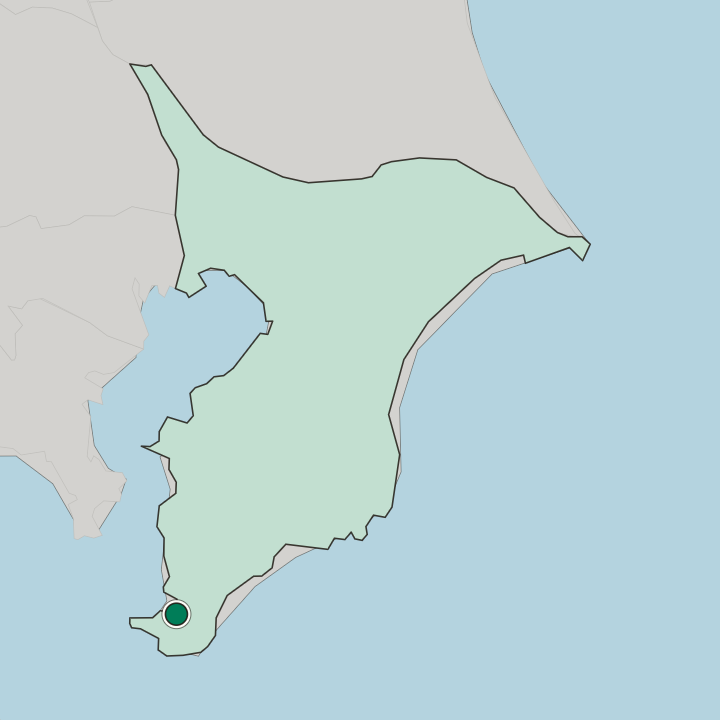
A hundred and ten square kilometres, with Tateyama Bay along one side of it. The subtropical band reaches this part of Chiba Prefecture, which is why the vegetation and the growing season here read differently from the prefecture's inland municipalities further from the water. Sunosaki marks the far end.
Between the lighthouse there and the raised ground under Tateyama Castle, the city covers shoreline, slope and the flat land in between.
What is the climate of Tateyama?
Tateyama Bay does the moderating. Water on the doorstep keeps winter mornings here softer than they run inland, and the subtropical band adds a summer humid enough that the climb to Inamura Castle is best attempted before the middle of the day. Sea air cuts both ways.
The Sunosaki Lighthouse takes the weather from the open water first, and an exposed shoreline in a strong wind is a colder place than the sheltered bay frontage.
How do you get to Tateyama?
Nothing here sits far from the water. Tateyama spreads over a hundred and ten square kilometres, so wheels of some kind close the gaps between the Sunosaki Lighthouse, Inamura Castle and the Tateyama City Municipal Museum far more comfortably than a day of walking manages. "Nagisa-no-Eki"Tateyama is the waterfront fixed point. Most visitors meet it early, which makes it the sensible place to reorient before heading up to either castle.
Common questions
What is the best area to stay in Tateyama?
The Tateyama Bay shore: Sea-facing nights with “Nagisa-no-Eki”Tateyama in walking range. Under Tateyama Castle: Stays pairing Tateyama Castle with Inamura Castle in one outing. Out towards Sunosaki: Quiet evenings near the Sunosaki Lighthouse.
Good for
More cities in Chiba-ken
Updated October 2026