Japan · Fukuoka Prefecture
Where to Stay in Nōgata, Fukuoka Prefecture
Nōgata, a city of Fukuoka Prefecture in Japan, keeps its coalfield record in the Nōgata Municipal Coal Mine Museum and its tulips in April.
Hotel links are affiliate links: booking through them may earn us a commission, at no extra cost to you. It never affects how places are ranked. How this works


Where to stay in Nōgata
The practical side of choosing where to sleep.
Nōgata is small, and the real split is between the Nōgata Municipal Coal Mine Museum end of the visit and anything happening at Global Arena. Most trips fall on the museum side. The Nōgata Tanio Art Museum and the Soldiers' and Ordinary People's War Museum sit on that same list, and a stay pitched near them covers the bulk of what the city has to show.
Both are quick stops. The Kyushu Maxell Red Brick Memorial Hall adds a third stop for anyone with an eye for industrial building. Events change the calculation.
Global Arena draws its own crowd, and a visit timed to something on there is a different trip from a museum weekend, which is worth settling before anything is reserved. April is the exception to everything. The Tulip Festival gives the city a season of its own, and anyone planning around it should treat Nōgata as the destination rather than a stop between other places in Fukuoka Prefecture.
If you want the quieter version, the Tateiwa Site and the Nakama City Museum of History and Folklore fill an afternoon that never goes near a mine. The Miyawaka City Coalmining Museum works the other way, for anyone who wants more of the coalfield rather than less of it. Book by interest.
Find hotels in Nōgata
Direct booking searches for these neighbourhoods.
The coal-museum end
The Nōgata Municipal Coal Mine Museum sets the tone for this part of the city, and the Kyushu Maxell Red Brick Memorial Hall keeps the brick evidence of the same industry nearby.Find hotels in The coal-museum endTrips built around a Global Arena fixtureThe Global Arena side
Beds here go to people who came for something on at Global Arena and who fit the Nōgata Tanio Art Museum around the fixture rather than the reverse. Rooms are few around here — worth securing early.Find hotels in The Global Arena sideThe Tateiwa Site and folklore at NakamaToward the Tateiwa Site
The quieter half of the list, where the Tateiwa Site and the Nakama City Museum of History and Folklore fill an afternoon with no mine in it. Rooms are few around here — worth securing early.Find hotels in Toward the Tateiwa SiteHotel links are affiliate links: booking through them may earn us a commission, at no extra cost to you. It never affects how places are ranked. How this works
Things to do in Nōgata
Ranked by global recognition; descriptions from Wikidata (CC0).
Museums & Galleries
3- 九州マクセル赤煉瓦記念館 Heritage
- Soldiers' and Ordinary People's War Museum
- Nōgata Tanio Art Museum
Stadiums & Sports
1- Global Arena
worth knowingacross 2 categories in Nōgata
About Nōgata
Two museums explain the coalfield.
What is Nōgata known for?
The Nōgata Municipal Coal Mine Museum keeps the record inside the city, while the Miyawaka City Coalmining Museum covers the same worked seam from the far side of the boundary. The Nōgata Tanio Art Museum answers a different interest. So does the Tateiwa Site.
Global Arena, the Soldiers' and Ordinary People's War Museum and the Tulip Festival each April round out what brings people here.
What are the main landmarks in Nōgata?
The list divides cleanly. Coal accounts for two of them, the Nōgata Municipal Coal Mine Museum inside the city and the Miyawaka City Coalmining Museum just beyond it. The Nōgata Tanio Art Museum accounts for another, the Soldiers' and Ordinary People's War Museum for a third, and the Nakama City Museum of History and Folklore for a fourth across the boundary.
Then there is Global Arena. The Tateiwa Site and the Kyushu Maxell Red Brick Memorial Hall close the list at its two far ends.
What is the history of Nōgata?
The municipal record begins in 1889. That is when Nōgata entered the municipal system of Fukuoka Prefecture, under the older form of the name that Japanese still writes as Nogata-machi. Habitation runs far deeper.
The Tateiwa Site holds ground that was in use long before any municipal boundary was drawn around it, and it stays the entry on the city's list that reaches furthest back. Everything after that is industrial. Coal is the thread running through everything after.
Two museums carry it: the Nōgata Municipal Coal Mine Museum and, past the boundary, the Miyawaka City Coalmining Museum, which between them hold the documentary side of that history. Industry left buildings too. The Kyushu Maxell Red Brick Memorial Hall keeps one of them, red brick and still standing.
War added a record of its own, and the Soldiers' and Ordinary People's War Museum carries it, with the Nakama City Museum of History and Folklore holding the everyday version next door in the same coalfield. The Tateiwa Site outlasts all of it. April is different.
The Tulip Festival belongs to a much shorter history than the pits or the Tateiwa Site, and it is the one April date that the city is known outside Fukuoka Prefecture for.
Where is Nōgata?
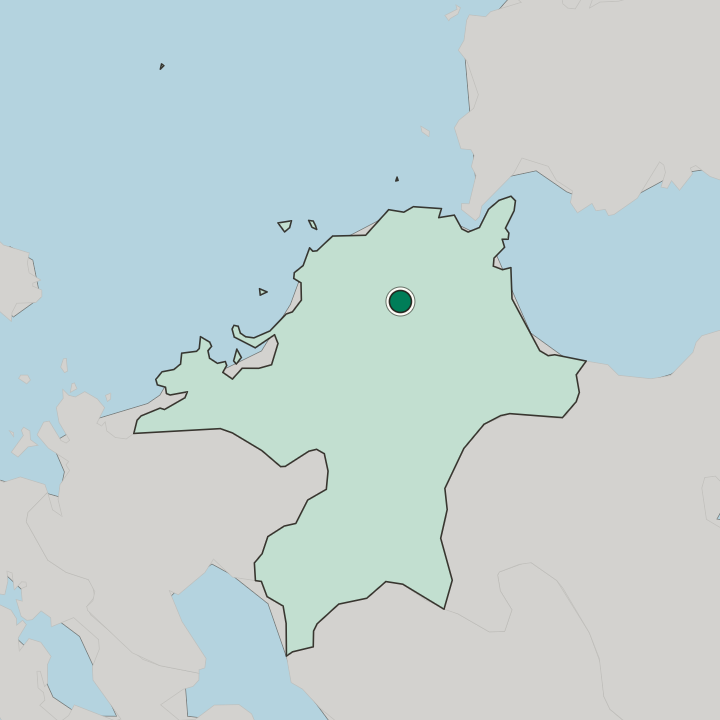
Nōgata is drawn tight around its coalfield. Its area runs to a little over sixty square kilometres of Fukuoka Prefecture, which is enough for a working city and its edges and not much more than that. The boundaries matter here.
Miyawaka and Nakama both keep museums of their own within reach, which is a measure of how tightly the towns of this coalfield sit against one another. A subtropical climate rules the year.
What is the climate of Nōgata?
April is the month the city plans around. The Tulip Festival lands then, in the gap between winter and the heavy subtropical summer that settles over Fukuoka Prefecture for months at a time. Indoor plans cover the rest.
The Nōgata Municipal Coal Mine Museum, the Nōgata Tanio Art Museum and the Soldiers' and Ordinary People's War Museum all work in weather that does not suit walking. Spring is the safe bet.
How do you get to Nōgata?
Arrival is a Fukuoka Prefecture matter. Nōgata sits among the towns of the old coalfield, close enough to Miyawaka and Nakama that their museums land on the same visitor list as its own. Global Arena is the exception.
Anyone travelling for an event there is arriving on a schedule set by the fixture rather than by the museums, and that changes what the rest of the day can hold. In April, plan for tulips.
Common questions
What is the best area to stay in Nōgata?
The coal-museum end: The Nōgata Municipal Coal Mine Museum and the seam it records. The Global Arena side: Trips built around a Global Arena fixture. Toward the Tateiwa Site: The Tateiwa Site and folklore at Nakama.
Good for
More cities in Fukuoka Prefecture
Updated October 2026