Japan · Ibaraki
Where to Stay in Ushiku, Ibaraki
Ushiku, or Ushiku, is a small city in Ibaraki, Japan, a municipality since 1889, with the Geological Museum and Gokakudo among its landmarks.
Hotel links are affiliate links: booking through them may earn us a commission, at no extra cost to you. It never affects how places are ranked. How this works


Where to stay in Ushiku
How the choice of base plays out on the ground.
Ushiku packs a lot into a small area. A stay here does not need a district chosen in advance, because the Geological Museum, the Yokaren Peace Memorial Museum and Kamiya Denbe Memorial Hall all belong to the same compact city rather than to opposite ends of a wide one. Gokakudo is the exception worth checking.
It appears on the register under its own name and nothing else, which makes it the one entry a visitor should locate before deciding where to sleep. Ushiku has been a municipality since 1889. The subject decides the stay.
Someone here for the Tsuchiura Archaeology Museum and the Torideshi Maizoubunkazai Center is planning around two names that belong to other municipalities, and that is a different trip from one built around Ushiku's own halls. Komorebi-no-Mori Ibaraido is the outdoor option. It suits you if the point of the trip is open ground rather than collections, and Yuki Sanbyakukoku Memorial Hall and The University Art Museum, Tokyo University of the Arts, are the indoor alternatives when the weather turns.
Ushiku Village is the form the record keeps, and a bed anywhere in Ushiku leaves the rest of that record inside a short journey.
Find hotels in Ushiku
Direct booking searches for these neighbourhoods.
Central Ushiku
The Geological Museum and Kamiya Denbe Memorial Hall are both Ushiku's own entries, and a city this compact keeps them inside a single afternoon.Find hotels in Central UshikuOpen ground instead of collectionsThe Komorebi-no-Mori Ibaraido end
Komorebi-no-Mori Ibaraido is the open-ground entry on Ushiku's list, and a base at that end trades museum walls for trees.Find hotels in The Komorebi-no-Mori Ibaraido endA stay planned around Gokakudo and Yuki Sanbyakukoku Memorial HallThe Gokakudo corner
Gokakudo and Yuki Sanbyakukoku Memorial Hall are the two entries Ushiku lists under Japanese names alone, and they make a quiet pair to build a stay on.Find hotels in The Gokakudo cornerHotel links are affiliate links: booking through them may earn us a commission, at no extra cost to you. It never affects how places are ranked. How this works
About Ushiku
Nine entries in a small city.
What is Ushiku known for?
The Geological Museum, the Yokaren Peace Memorial Museum, and the Tsuchiura Archaeology Museum give Ushiku three collections of entirely different subjects, and Gokakudo sits on the same list under its Japanese name alone. Memorial halls do the rest. Kamiya Denbe Memorial Hall carries a personal name, Yuki Sanbyakukoku Memorial Hall keeps another memorial under a Japanese label, and Komorebi-no-Mori Ibaraido, the Torideshi Maizoubunkazai Center and The University Art Museum, Tokyo University of the Arts, fill out a register that runs long for a city this compact.
What are the main landmarks in Ushiku?
The register is long for the map. The Geological Museum, the Tsuchiura Archaeology Museum, and the Yokaren Peace Memorial Museum cover geology, excavation and remembrance in turn, which is a wide spread for one small city in Ibaraki Prefecture. Two halls carry names.
Kamiya Denbe Memorial Hall and Yuki Sanbyakukoku Memorial Hall sit beside Gokakudo, with the Torideshi Maizoubunkazai Center, Komorebi-no-Mori Ibaraido and The University Art Museum, Tokyo University of the Arts, on the same register.
What is the history of Ushiku?
1889 fixes the municipal date. Ushiku Village is the form the record carries from that period, and the landmark register attached to Ushiku now runs to nine entries inside a city of modest area. Memory has its own museum here.
The Yokaren Peace Memorial Museum states its purpose in its title, and Kamiya Denbe Memorial Hall and Yuki Sanbyakukoku Memorial Hall each keep a memorial of a different kind, which gives three of the nine entries to remembrance rather than to display. Ushiku is written Ushiku. The other entries look outward.
The Tsuchiura Archaeology Museum, the Torideshi Maizoubunkazai Center and The University Art Museum, Tokyo University of the Arts, all reach past the city limits, which is how a compact place ends up with a register longer than its own ground. Gokakudo stands on its own. A hall listed under its Japanese name alone, it belongs to the same record as the Geological Museum, and the two of them show how far Ushiku's list ranges in subject.
Komorebi-no-Mori Ibaraido closes the account, and an open-ground entry beside eight named institutions is the last of the contrasts the register holds.
Where is Ushiku?
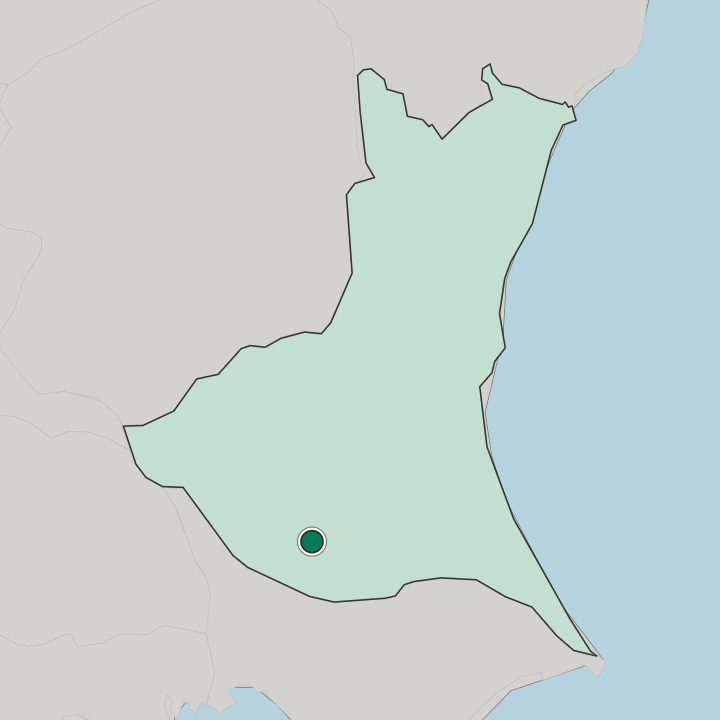
Ushiku occupies a small footprint. Ibaraki Prefecture surrounds a city whose own ground is small, and the nine entries attached to Ushiku are packed into that space rather than spread across a wide municipality. Komorebi-no-Mori Ibaraido is the open ground.
The Geological Museum, Gokakudo and Kamiya Denbe Memorial Hall take up almost none of it, which is why a day in Ushiku is measured in stops rather than in distance.
What is the climate of Ushiku?
Most of the list is indoors. Ushiku sits in the temperate band, where heat arrives with the summer and leaves with it, and the Geological Museum, the Yokaren Peace Memorial Museum and Yuki Sanbyakukoku Memorial Hall are unaffected by either end of that range. Komorebi-no-Mori Ibaraido is not.
An outdoor entry answers to the weather in a way that Kamiya Denbe Memorial Hall and the Tsuchiura Archaeology Museum never will, so a wet day moves the plan indoors without much loss.
How do you get to Ushiku?
Short hops, all of them. The Geological Museum, Gokakudo and Kamiya Denbe Memorial Hall fall inside a city small enough to cross without much planning, and a visitor without a car will still manage most of the register in a day. Three entries need transport.
The Tsuchiura Archaeology Museum, the Torideshi Maizoubunkazai Center and The University Art Museum, Tokyo University of the Arts, all carry other places' names, and reaching them is a separate errand from a walk around Ushiku.
Common questions
What is the best area to stay in Ushiku?
Central Ushiku: The Geological Museum and Kamiya Denbe Memorial Hall in one afternoon. The Komorebi-no-Mori Ibaraido end: Open ground instead of collections. The Gokakudo corner: A stay planned around Gokakudo and Yuki Sanbyakukoku Memorial Hall.
Good for
More cities in Ibaraki
Updated September 2026