Malaysia
Terengganu, Malaysia — Towns & Travel Guide
Terengganu is a Malay-Muslim sultanate on Peninsular Malaysia's east coast, fronting the South China Sea and the Perhentian and Redang islands.
Hotel links are affiliate links: booking through them may earn us a commission, at no extra cost to you. It never affects how places are ranked. How this works


Towns & cities in Terengganu
One town here has its own guide — it links to where to stay.

 Malaysia
Kuala Terengganu
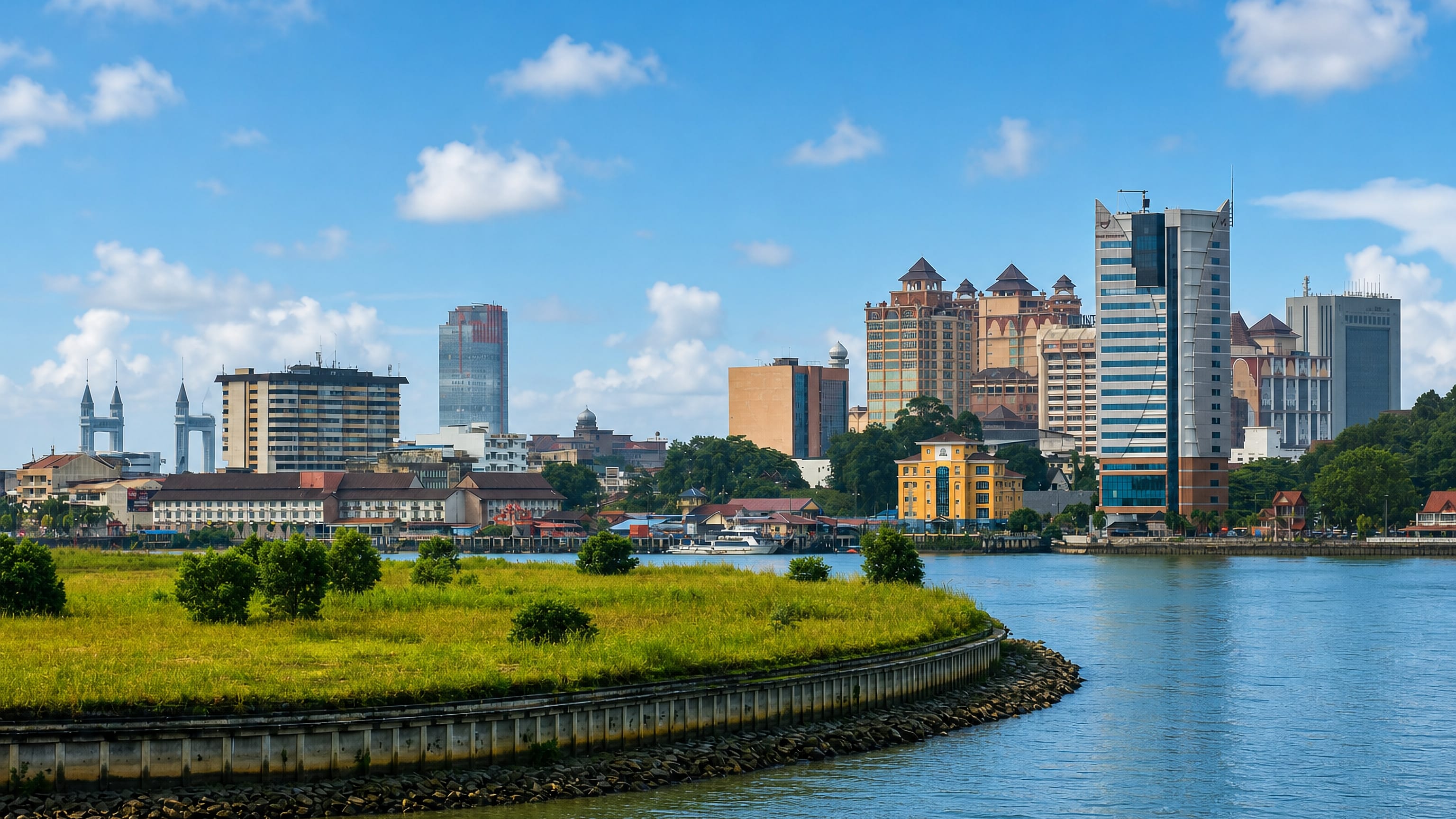
Kuala Terengganu is a coastal city of east Malaysia, the royal capital of Terengganu at the mouth of its river, a Malay town of mosques and boat-builders.Where to stay →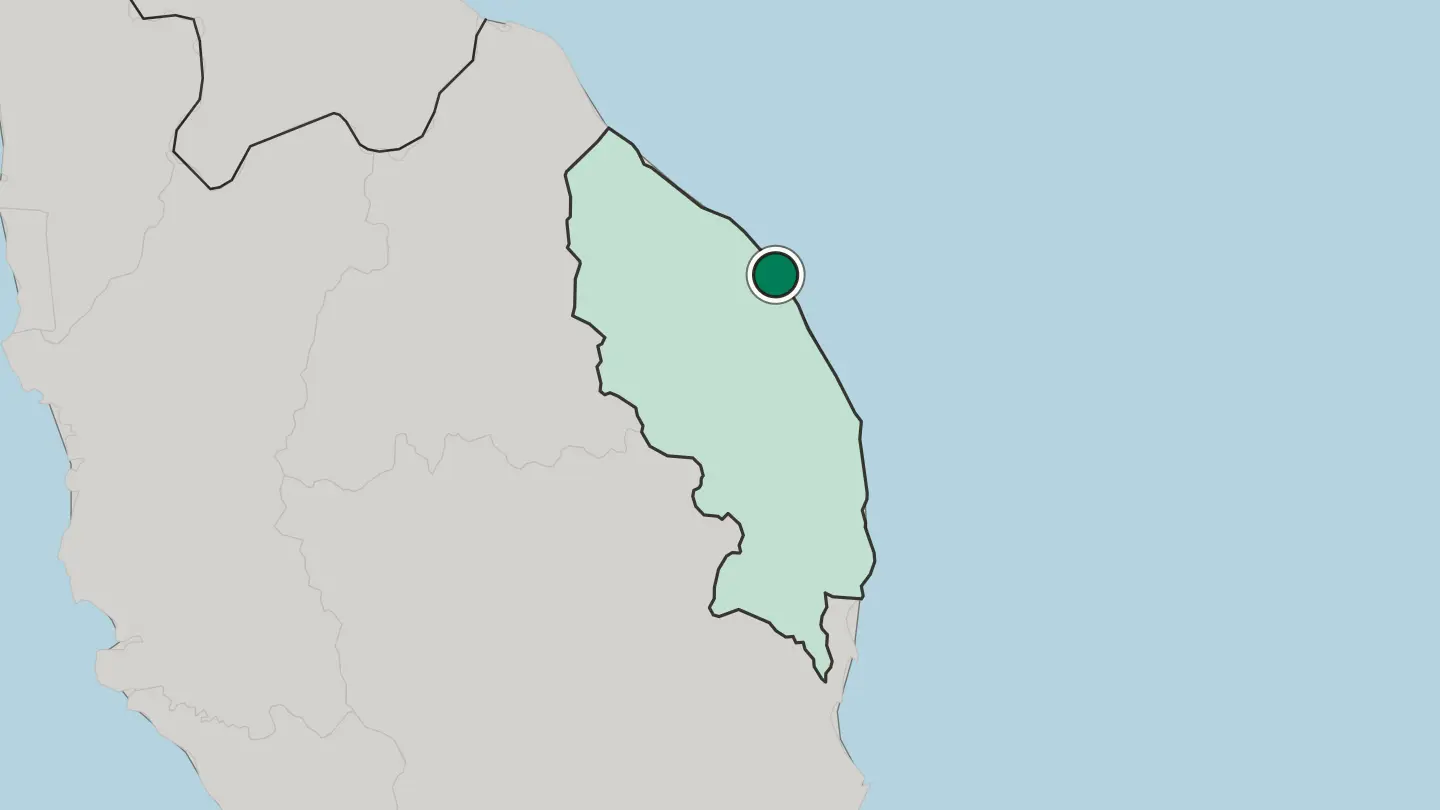
Hotel links are affiliate links: booking through them may earn us a commission, at no extra cost to you. It never affects how places are ranked. How this works
About Terengganu
Islands make the name.
What is Terengganu known for?
The Perhentian and Redang islands sit off the coast in a marine park, and their coral and clear water draw most of the travellers who come this far east. Kuala Terengganu, the state capital at the mouth of the Terengganu River, anchors the mainland with fishing jetties, a Chinatown, and craft workshops turning out songket brocade and batik. This is one of Malaysia's most Malay-Muslim corners, and it wears that identity openly in its food, dress, and daily rhythm.
Where is Terengganu?
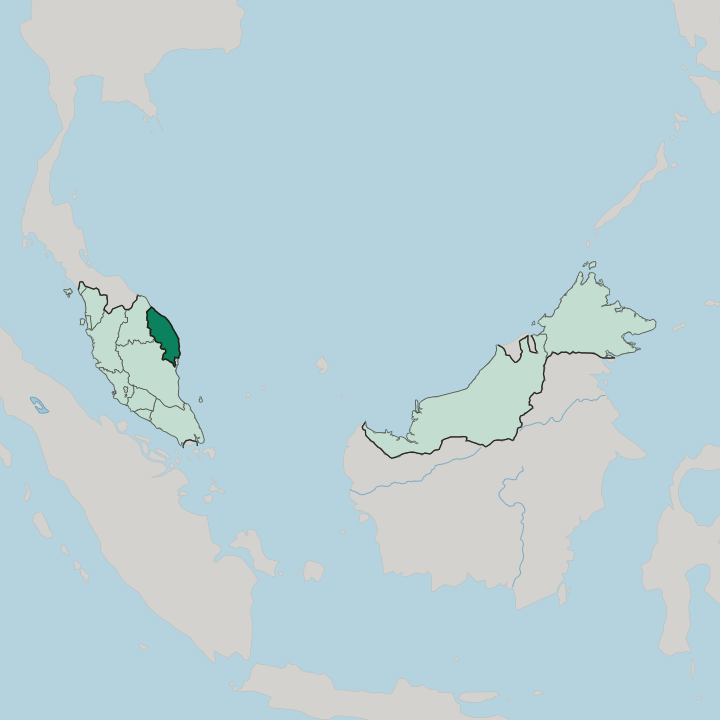
Terengganu runs along the east coast of Peninsular Malaysia, its whole eastern edge open to the South China Sea. The coastline stretches roughly 320 kilometres from the Kelantan border in the north down toward Pahang, which wraps around the state's western and southern sides. Kelantan lies to the north.
Pahang holds the rest of the land boundary. That leaves the sea as Terengganu's dominant edge, and life here has always faced it. The state is about 13,035 square kilometres of coastal plain backed by forested inland hills.
Those hills climb steeply behind the shore, and the interior stays thinly settled where the land rises into the peninsula's mountainous spine. Rivers do the organising instead. Most towns sit where a river meets the sea, and the longest of them, the Terengganu, empties at Kuala Terengganu, the state capital.
Offshore, the Perhentian and Redang islands rise from the South China Sea within sight of the coast on a clear day. The pattern is simple and old: a string of river-mouth settlements strung along a single seaward coast.
What is Terengganu like?
Terengganu is among Malaysia's most homogeneous states, with the large majority of its people ethnic Malay-Muslims who speak their own Terengganu dialect. That dialect marks the place instantly. It clips and softens words in ways the rest of the country teases and enjoys, and it carries a distinct cooking, dress, and craft tradition alongside it.
The state is a byword for handwork. Songket weaving interlaces silk with silver or gold thread for weddings and court ceremony, batik is drawn and block-printed on cloth, and smiths still forge the wavy-bladed keris dagger by hand. On the food side, keropok lekor tells you where you are: pounded mackerel and sago fried into chewy fish sausage, sold hot from roadside stalls with chilli sauce.
Kite-flying and top-spinning survive as village pastimes, the giant wau kite a local emblem. Faith sits at the centre of the calendar. Mosques set the daily rhythm, and Kuala Terengganu's waterfront carries both a state mosque and an old Chinatown of shophouses.
Craft, dialect, and religion together give the state a texture that is unmistakably its own.
What is the history of Terengganu?
Islam reached this coast early. The Terengganu Inscription Stone, unearthed near Kuala Berang up the Terengganu River, carries a Malay proclamation in Jawi script and stands as one of the oldest records of Islam adopted as law anywhere in the Malay world. The sultanate that governs to this day was founded in 1724, when Terengganu emerged as a state under its own ruler, with Kuala Terengganu as capital.
Trade in pepper, gold, and cloth tied it to the wider region for centuries before it became one of the federated states of modern Malaysia.
What is the climate of Terengganu?
The weather is tropical and hot year-round, but the sea sets the calendar. The northeast monsoon, roughly November to February, drives heavy rain in off the South China Sea and can flood the river towns, and boats to the Perhentian and Redang islands mostly stop while it blows. Seas calm from about March.
Warm, clearer waters through the middle of the year make the islands' coral and beaches the reason travellers time their trip for the drier stretch.
How do you get to Terengganu?
Most visitors fly into Sultan Mahmud Airport at Kuala Terengganu, an hour's hop from Kuala Lumpur on the domestic carriers. Driving works too. The East Coast Expressway now runs from Karak across Pahang to Kuala Terengganu, cutting the road trip from the capital to about four or five hours.
From the coast, ferries carry on to the islands. Boats to the Perhentian and Redang islands leave from jetties on the mainland, running when the monsoon is not shutting the sea down.
Common questions
What is the best area to stay in Terengganu?
Redang Island: an upmarket island stay. The Perhentian Islands: snorkelling and budget island travel. Kuala Terengganu: a mainland base near the ferries.
Good for
More regions in Malaysia
Updated September 2026