Malaysia
Kelantan, Malaysia — Towns & Travel Guide
Kelantan is Malaysia's north-eastern corner, an agrarian state of paddy and fishing villages on the South China Sea.
Hotel links are affiliate links: booking through them may earn us a commission, at no extra cost to you. It never affects how places are ranked. How this works


Towns & cities in Kelantan
One town here has its own guide — it links to where to stay.

 Malaysia
Kota Bharu
Kota Bharu is a city of northeast Malaysia, royal capital of Kelantan, an old Malay town of palaces, markets, and crafts near the coast and Thai border.Where to stay →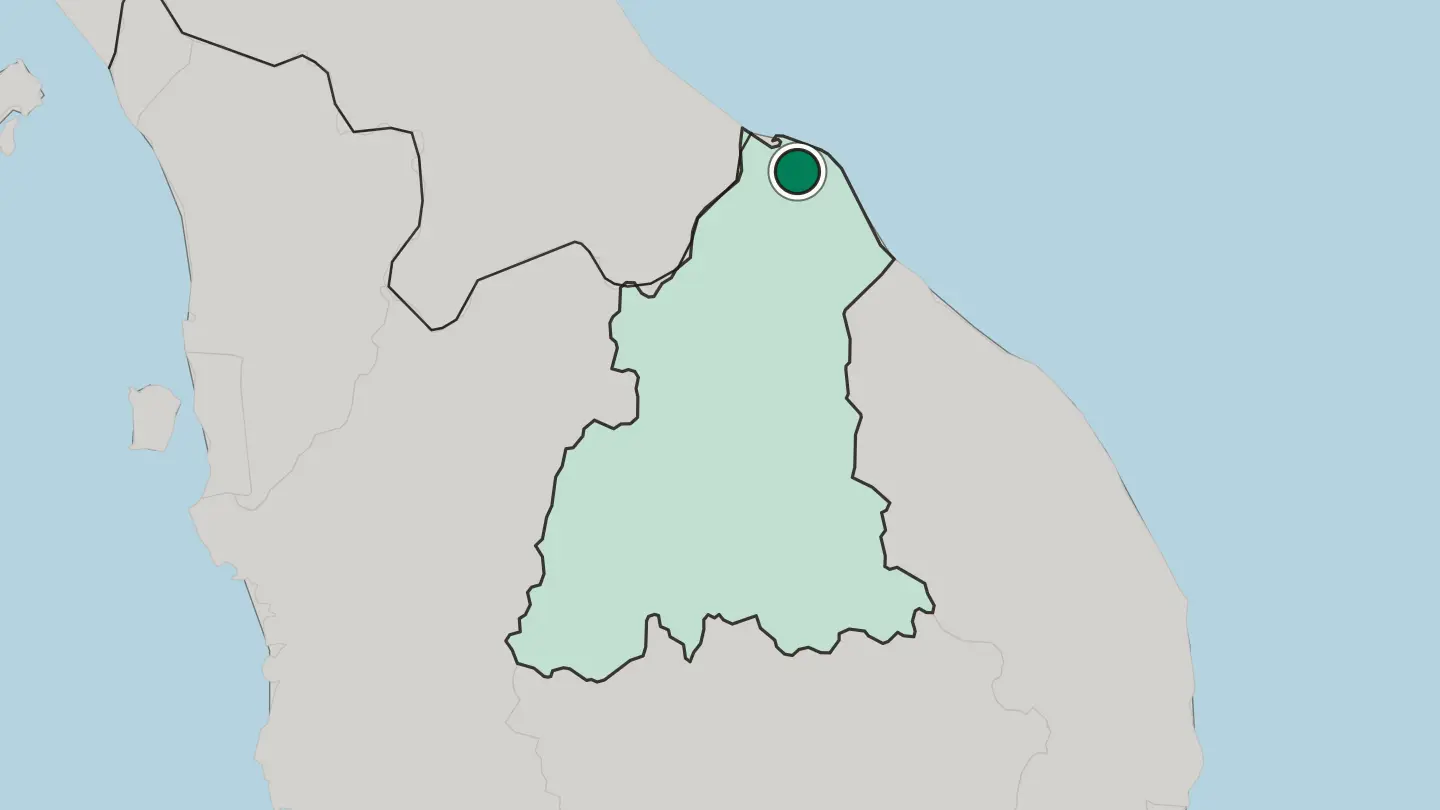
Hotel links are affiliate links: booking through them may earn us a commission, at no extra cost to you. It never affects how places are ranked. How this works
About Kelantan
Kelantan keeps a distinct Malay culture.
What is Kelantan known for?
The state sits apart. Cut off for centuries from the west coast by the Titiwangsa Mountains, it kept its traditions: giant wau bulan moon kites and the woven songket and batik cloth sold in the markets of Kota Bharu. Its cooking is its own, from nasi kerabu to nasi dagang.
Devoutly Muslim and Malay-speaking, it wears the old name Serambi Mekah, the Verandah of Mecca.
Where is Kelantan?
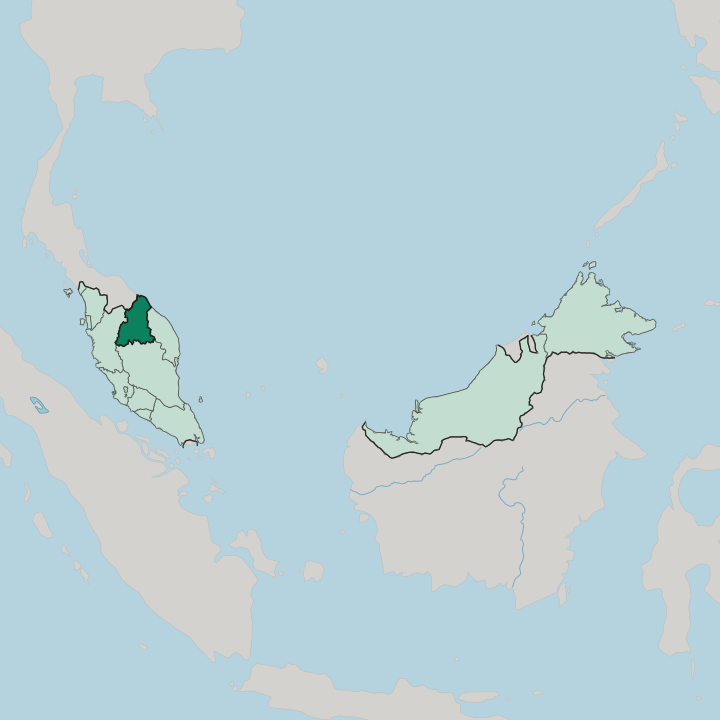
Kelantan fills the north-eastern corner of Peninsular Malaysia, facing the South China Sea. Thailand lies along its northern and western land border. The Titiwangsa Mountains wall it off to the south and west, the same range that for centuries kept the state turned toward the sea and toward its neighbours in Thailand rather than toward the rest of the peninsula. That barrier shaped everything.
Between the mountains and the coast runs the Kelantan River, the state's spine, gathering its two headwater branches, the Galas and the Lebir, at the inland town of Kuala Krai. From there the river flows north across a broad delta of paddy fields and villages, past the capital at Kota Bharu, and out into the South China Sea. The lowland north is flat, wet, and densely farmed.
The land rises the other way. South and west the country climbs into forested hills and the deep jungle of the interior, some of it protected within the national park that Kelantan shares with its neighbouring states. Coast to the north, mountains to the south, the river between them: that is the shape of Kelantan.
What is Kelantan like?
Kelantan feels more traditional than the Malaysia most travellers picture. Its isolation behind the Titiwangsa Mountains preserved a Malay culture that outsiders come specifically to see, and the state is part of the conservative Malay heartland. Craft is everywhere.
Kota Bharu's central market, run largely by women, piles up the batik and gold-threaded songket the state is known for, alongside brassware and the silverwork of local smiths. The food is its own school too, from the blue-tinted rice of nasi kerabu to the coconut-rich nasi dagang eaten at breakfast. Above the paddy fields, the enormous wau bulan moon kites still fly.
The old performing arts belong here too, though the state government has restricted or banned several of them. Wayang kulit shadow puppeteers work by lamplight behind a stretched screen, and dikir barat troupes trade sung verses in call and response. Faith runs through all of it.
About 97 per cent of the people are Malay Muslims, and the state has long carried the epithet Serambi Mekah, the Verandah of Mecca, for its schools and scholars. The rhythm of the markets, the prayer times, and the kite-flying seasons all belong to that same unhurried, deeply local grain.
What is the history of Kelantan?
Kelantan spent long stretches under Siamese influence before the modern border settled. Kota Bharu became the royal capital in 1844, when Sultan Muhammad II moved the seat of the state there. Under the Anglo-Siamese Treaty of 1909, Siam gave up its claims and Kelantan passed to British control as one of the Unfederated Malay States.
The 1940s broke that order. Kelantan was where Japanese forces first landed on Malayan soil, in December 1941, opening the invasion of Malaya hours before the wider Pacific war began.
What is the climate of Kelantan?
Kelantan is hot and humid the year round, like the rest of the lowland tropics. One season defines it. The north-east monsoon drives in off the South China Sea from about November to March, and its rains routinely flood the Kelantan River delta and the low ground around Kota Bharu, closing beaches and swelling the river.
The famous 1967 flood put much of the lowland under water. Outside those months the coast is drier and the sea calm enough for the fishing boats and the islands offshore.
How do you get to Kelantan?
Most visitors fly straight to Kota Bharu. Sultan Ismail Petra Airport, on the edge of the capital, has links to Kuala Lumpur and other cities. The slow way is the great one.
The jungle railway climbs down the length of the interior through the forested heart of Peninsular Malaysia, reaching the state near Kota Bharu. Overland roads also cross the Titiwangsa Mountains from the west and run north to the Thailand border.
Common questions
What is the best area to stay in Kelantan?
Kota Bharu: getting your bearings in Kelantan for the first time. The South China Sea coast: beaches and fishing-village life. The Kelantan interior: jungle and the railway south.
Good for
More regions in Malaysia
Updated October 2026