Malaysia
Sarawak, Malaysia — Towns & Travel Guide
Sarawak is Malaysia's largest state, spread across the rainforests and rivers of northwest Borneo, with Kuching as its capital.
Hotel links are affiliate links: booking through them may earn us a commission, at no extra cost to you. It never affects how places are ranked. How this works


Towns & cities in Sarawak
Pick a town or city — each links to where to stay.

 Malaysia
Kuching
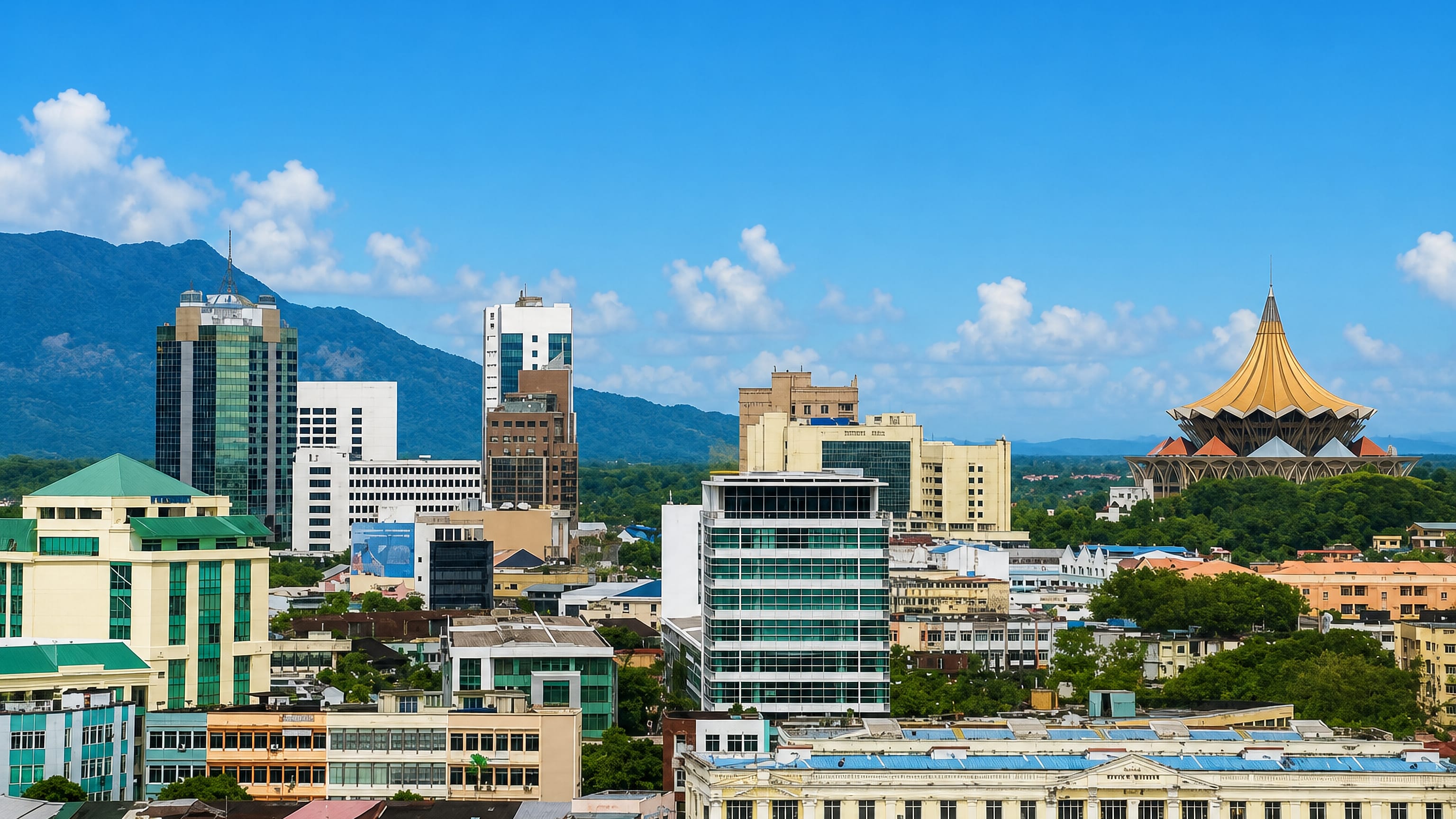
Kuching is the capital of Sarawak on the island of Borneo, a riverside city in Malaysia long known as the Cat City.Where to stay →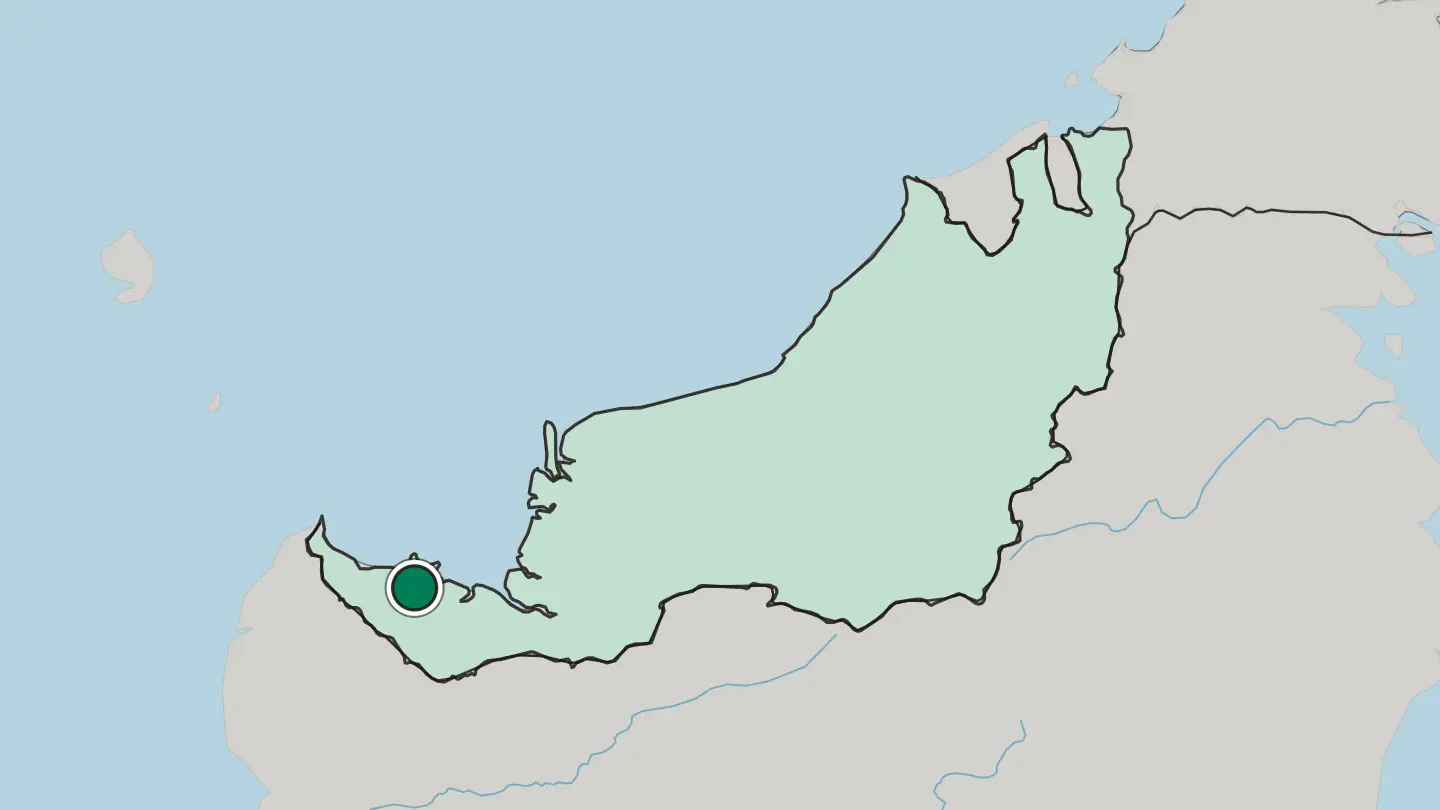 Malaysia
Miri
Miri is a coastal Sarawak city on Borneo, close to the Brunei border and the usual base for the national parks inland.Where to stay →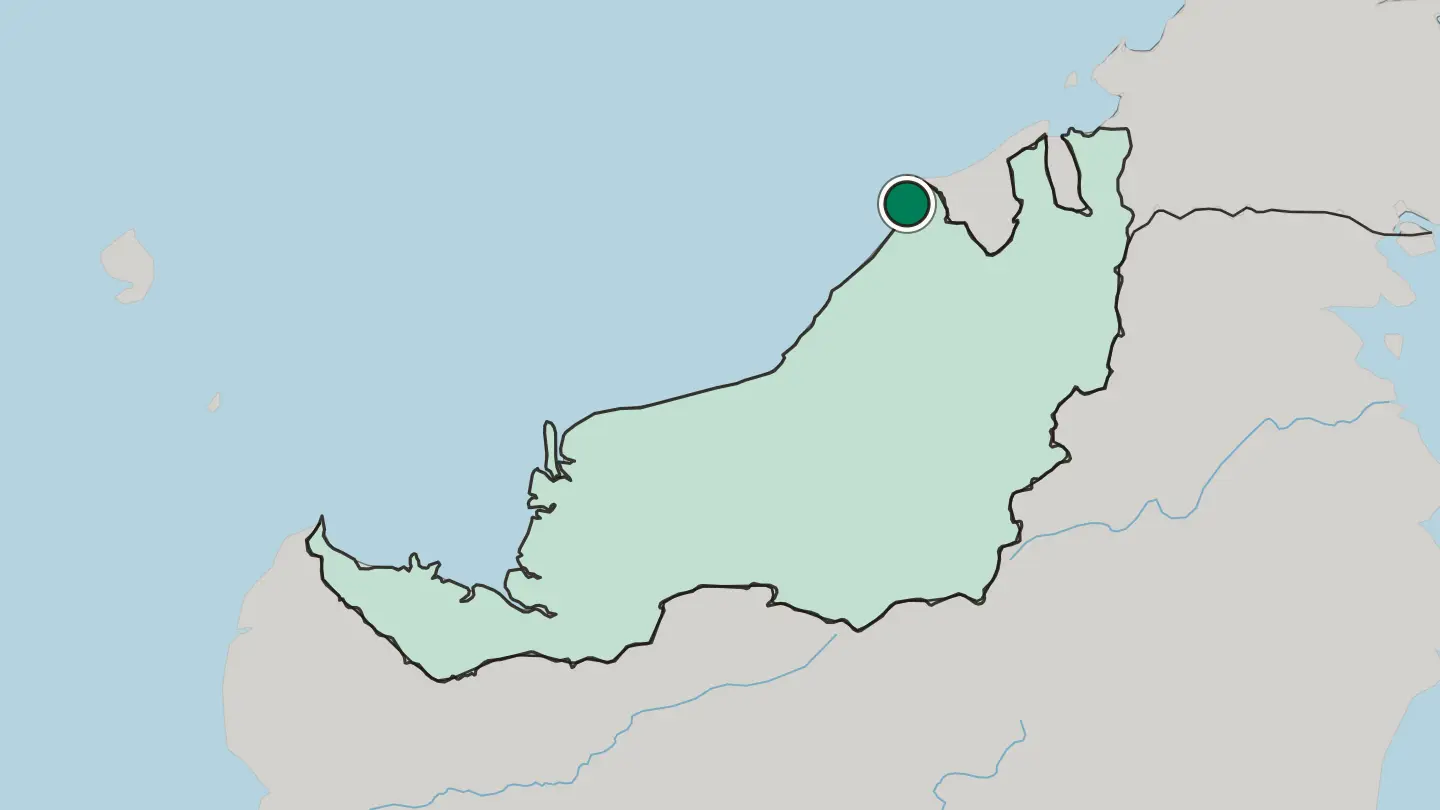
 Malaysia
Sibu
Sibu stands at the confluence of the Rajang and Igan rivers in Sarawak, a Borneo river city whose founding is dated to 1862.Where to stay →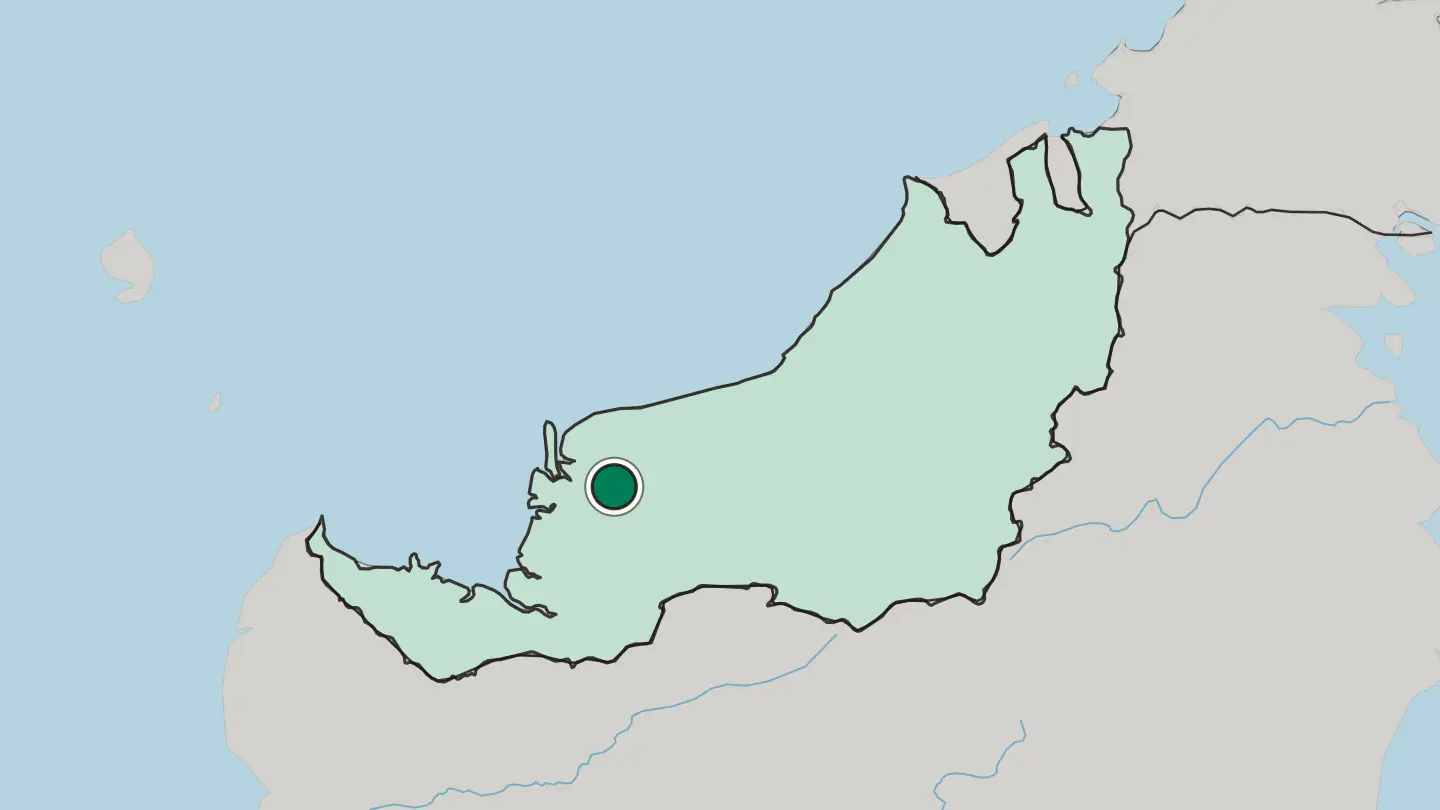
 Malaysia
Bintulu
Bintulu is a coastal and riverine town on Borneo, seat of Bintulu District in Sarawak, with its founding recorded in 1862.Where to stay →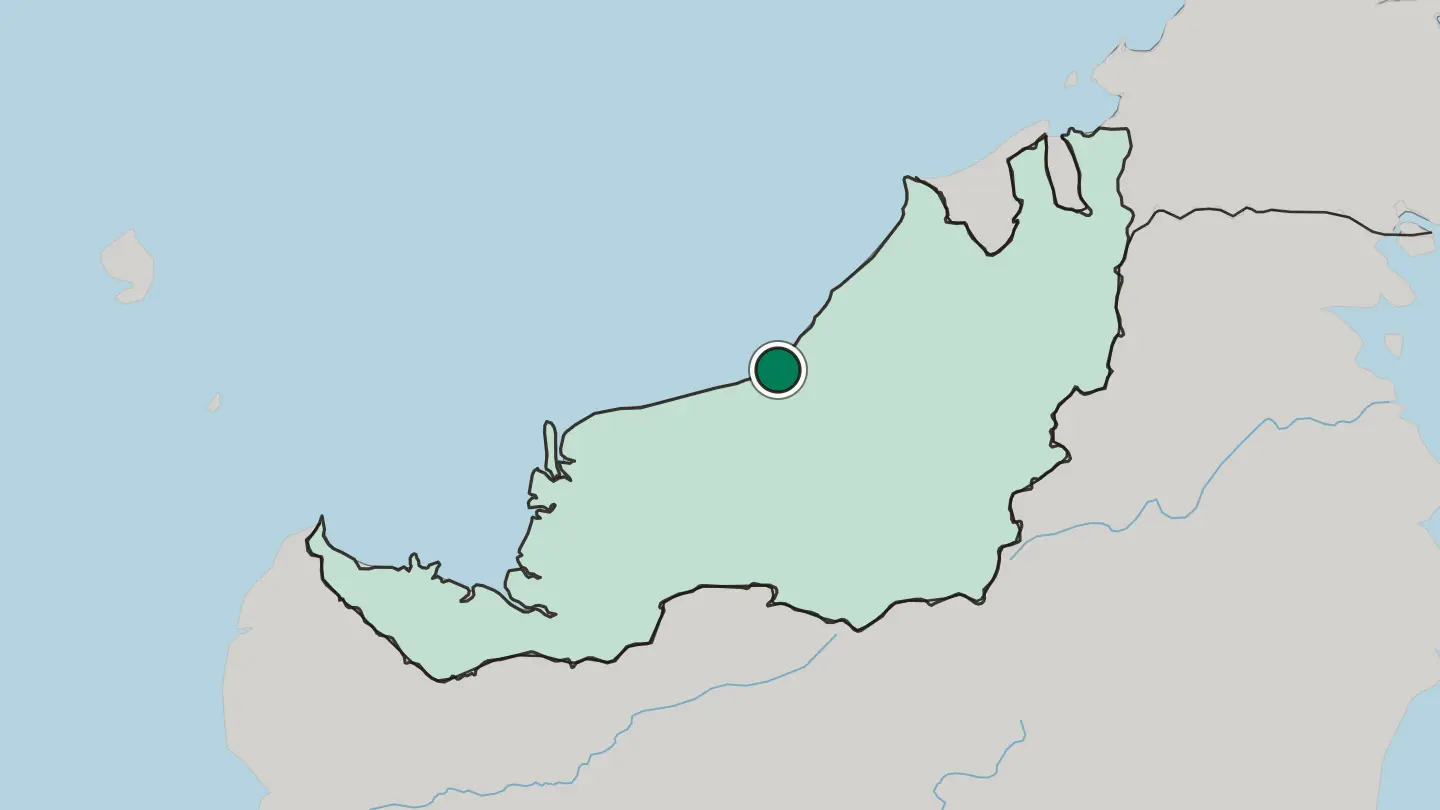
Hotel links are affiliate links: booking through them may earn us a commission, at no extra cost to you. It never affects how places are ranked. How this works
About Sarawak
What is Sarawak known for?
Sarawak is the biggest of Malaysia's states, filling the northwest of the island of Borneo. Rivers define it. The Rajang, the longest in the country, once carried timber and travellers deep inland long before any road did.
The Iban and other Dayak peoples still keep longhouse communities strung along those waterways, and their harvest festival draws visitors each June. Gunung Mulu, a UNESCO-listed park of caves and karst near Miri, holds several prominent cave systems. Kuching, the riverside capital, is where most trips begin.
Where is Sarawak?
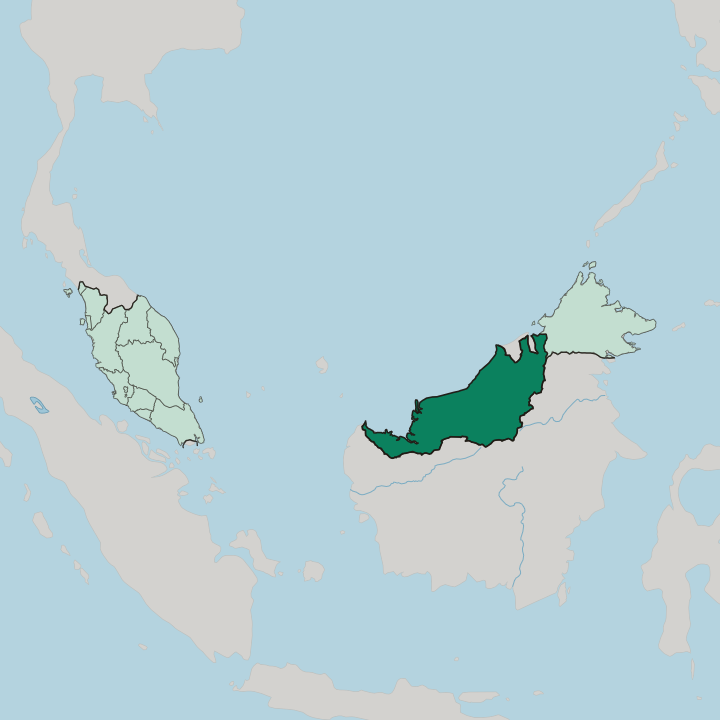
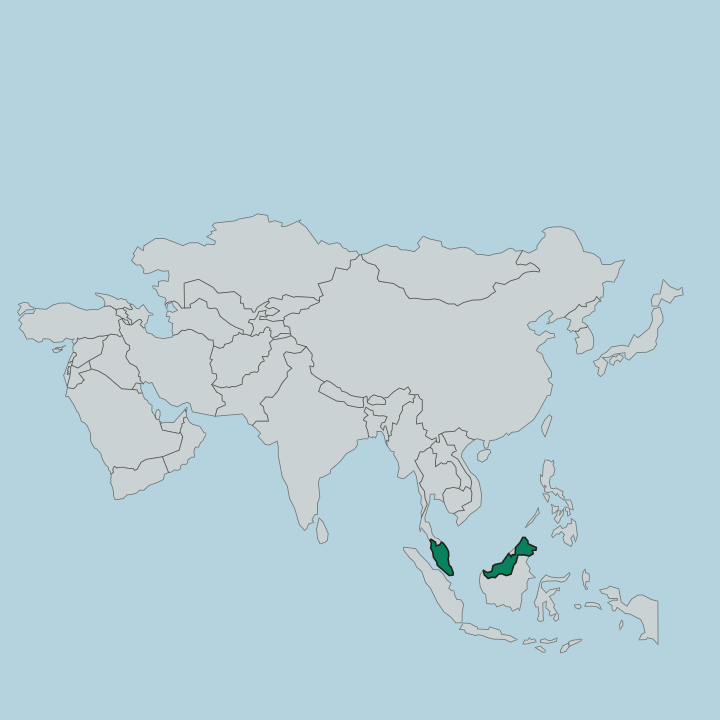
Sarawak occupies the northwest of the island of Borneo, the largest of Malaysia's thirteen states and almost the size of the whole peninsula on the mainland. It faces water and shares land in equal measure. The South China Sea washes a long and deeply indented coastline to the northwest, backed by swampy alluvial plains.
Behind the plains the land rises into rolling hills and then a mountainous, forested interior that climbs toward the Indonesian border. Sabah, the other Malaysian state on Borneo, lies to the northeast. The small sultanate of Brunei bites into the northern coast, nearly splitting Sarawak in two around it. To the south stretches Kalimantan, the vast Indonesian portion of the island.
Rivers cut through all of it. Dozens are navigable, and for centuries they served as the roads into a country where the hills reach nearly to the sea. The Rajang, the longest in Malaysia, drains the central highlands and empties into the South China Sea past Sibu.
The ports of Kuching and Sibu sit some way up their rivers rather than on the open coast, while Miri and Bintulu stand where the hills run right down to the shore. That blend of sea and swamp, of river and forested upland, has shaped Sarawak far more than any drawn border has.
What is Sarawak like?
Sarawak is ethnically, culturally and linguistically diverse, and that mix runs through everything. The Dayak peoples, upriver communities of Borneo, make up much of the population. Among them are the Iban, whose language most local people speak, once feared across the island as headhunters and river raiders and long since turned farmers and hosts.
Many still live in longhouses, single raised timber structures that shelter a whole village of families side by side under one roof, ranged along the riverbanks where the boats tie up. Thousands of these longhouses stand across the state. Bidayuh communities cluster in the hills near Kuching, Orang Ulu groups such as the Kayan and Kenyah live far up the Baram and Rajang, and Malay and Chinese quarters fill the coastal towns.
Kuching, the capital, is where these strands sit closest together. Its old bazaar, temples and riverfront mirror centuries of trade in and out of the interior. Every June the whole state turns to Gawai Dayak, the harvest thanksgiving, and longhouse doors open to guests, kin and strangers alike.
Rice wine flows freely. Food follows the same pattern of mixing, drawing on Dayak, Malay and Chinese kitchens in one market. The result is a culture rooted upriver as much as in any town.
What is the history of Sarawak?
From the 16th century Sarawak's coast lay under the influence of the Bruneian Empire. That changed in 1841. James Brooke, a British adventurer, was made rajah in return for helping put down a revolt, and he founded a private dynasty that would rule from Kuching for a hundred years.
Three of these White Rajahs held the country in turn. They pushed its borders steadily up the coast and along the rivers. After Japanese occupation in the Second World War, the last rajah ceded Sarawak to Britain, and it became a Crown Colony in 1946.
Self-government and then federation followed in 1963, when Sarawak joined Malaya, Sabah and Singapore to form Malaysia. A private raj had become a Malaysian state.
What is the climate of Sarawak?
Sarawak sits close to the equator, and its weather is hot, humid and wet the year round. There is no real dry season. Temperatures barely shift, hovering in the low thirties by day whatever the month, while rain falls in every one of them.
What changes is the volume. The northeast monsoon soaks the coast from November through February, and in Kuching the heaviest downpours land in January. Even the drier months still see afternoon storms roll in off the South China Sea.
Pack for rain whenever you come.
How do you get to Sarawak?
Nearly all visitors fly in. Kuching International Airport is the usual door into the state, a hop across the South China Sea from Kuala Lumpur on the mainland. Sarawak sits on Borneo, so arriving from the peninsula always means crossing the sea.
Once you have landed, the rivers take over as they always have. Boats run up the Rajang from Sibu into the interior, and smaller planes reach remote strips like Mulu that no road serves. Road and air tie Kuching to Miri, Sibu and Bintulu along the coast.
Common questions
What is the best area to stay in Sarawak?
Kuching: an opening taste of Sarawak. Sibu: boats up the Rajang into the interior. Miri: reaching the Mulu caves and the far coast.
Good for
More regions in Malaysia
Updated October 2026