Malaysia
Kedah, Malaysia — Towns & Travel Guide
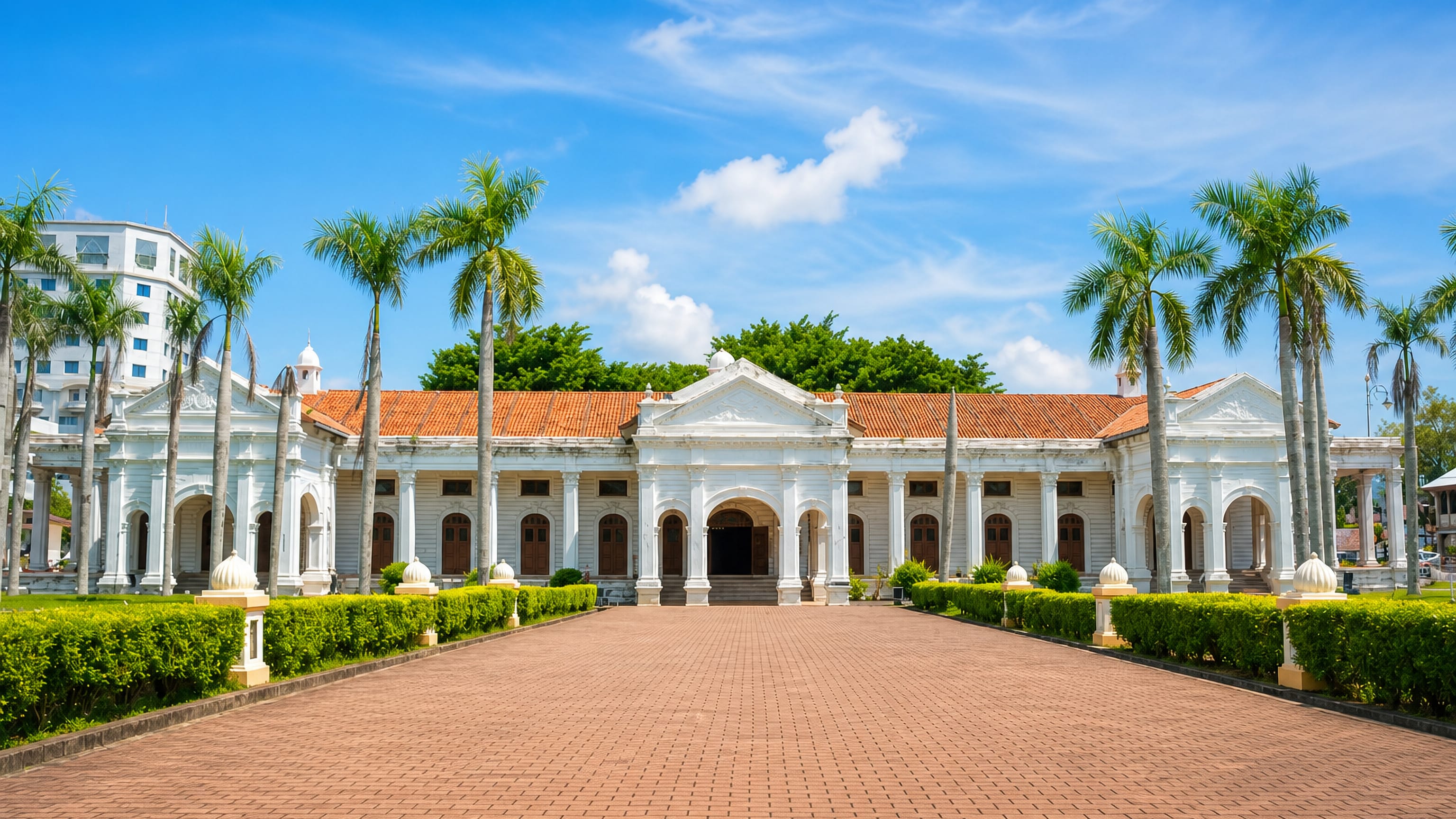
Kedah is Malaysia's rice bowl, a flat green state in the northwest that also owns the Langkawi islands offshore.
Hotel links are affiliate links: booking through them may earn us a commission, at no extra cost to you. It never affects how places are ranked. How this works


Towns & cities in Kedah
Pick a town or city — each links to where to stay.
 Malaysia
Sungai Petani
Sungai Petani is the working centre of Kuala Muda District in Kedah, Malaysia, a market town whose municipal area outgrew the state capital.Where to stay →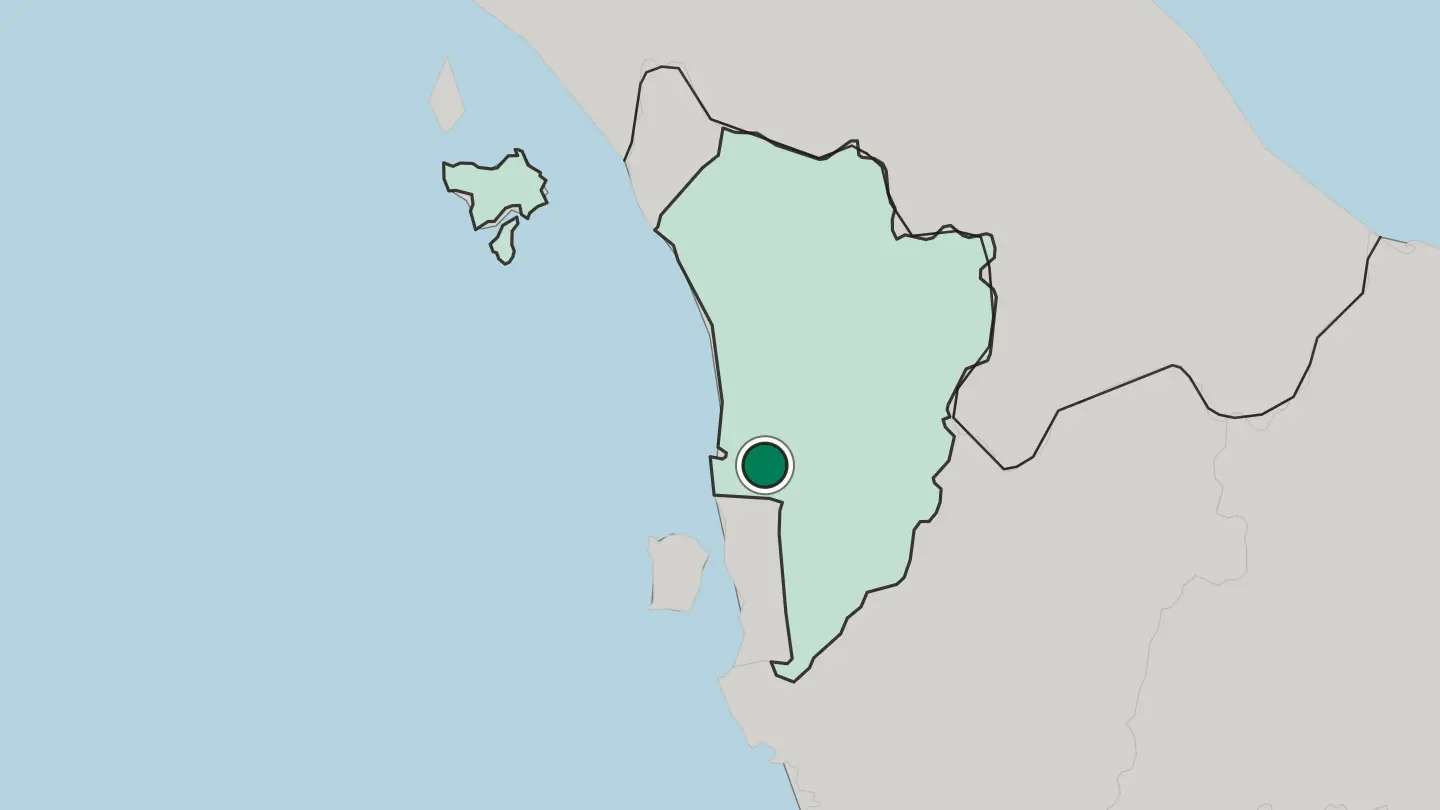
 Malaysia
Alor Setar
Alor Setar is a city of northwest Malaysia, the royal capital of Kedah, a town of paddy fields and a black-domed mosque in the rice bowl of the country.Where to stay →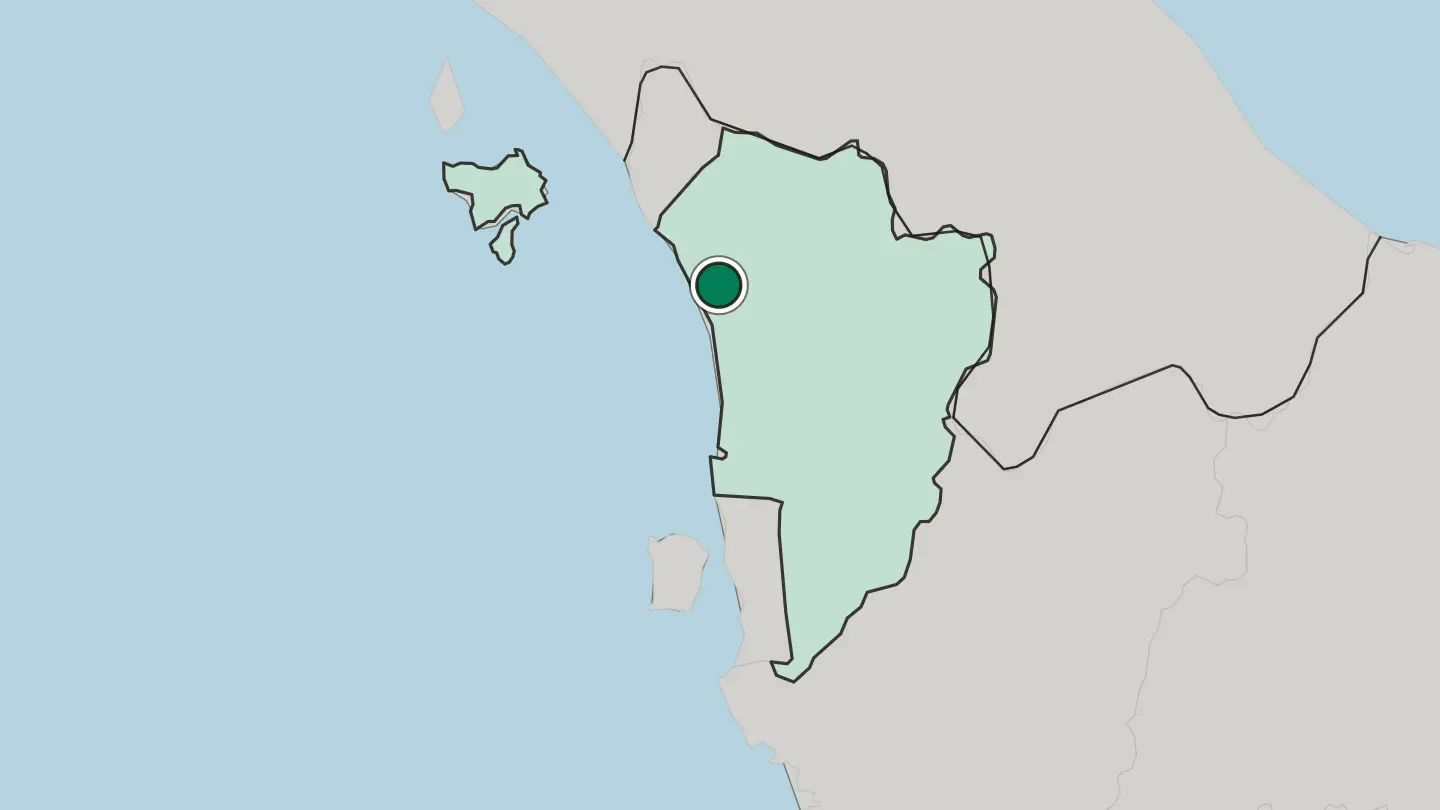
Hotel links are affiliate links: booking through them may earn us a commission, at no extra cost to you. It never affects how places are ranked. How this works
About Kedah
Kedah grows the rice.
What is Kedah known for?
Its western plain is one long chessboard of paddy fields, worked from the Muda River granary that feeds much of the country. Offshore lies its other half. Langkawi is an archipelago of 99 islands ringed by limestone cliffs and mangrove creeks.
Between plain and islands sits Gunung Jerai, the isolated peak that rises straight off the flat fields. Deep history rounds it out, because the Bujang Valley may be the most ancient settlement in Southeast Asia.
Where is Kedah?
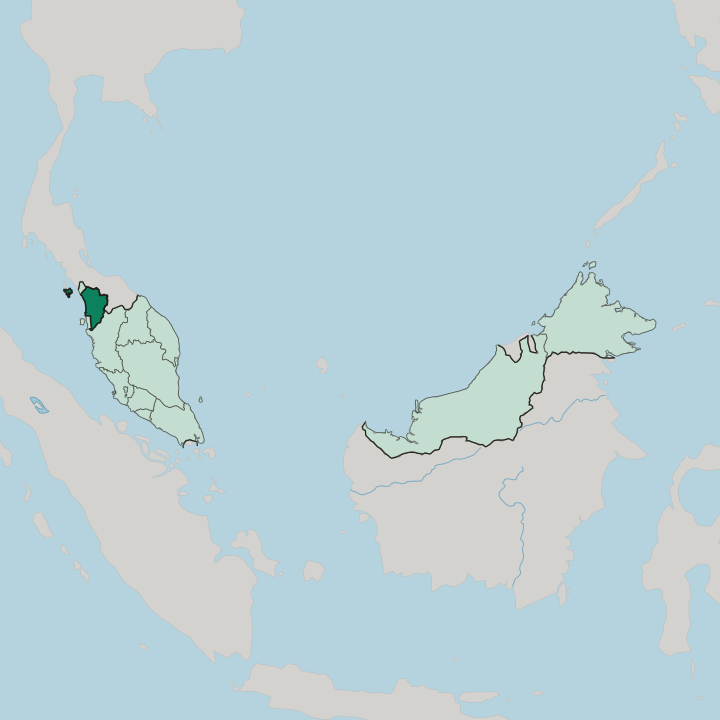
Kedah occupies the northwestern corner of Peninsular Malaysia, where the peninsula narrows toward the Thai border. It has two very different halves. The mainland is a broad coastal plain, flat and low, given over almost entirely to rice and drained by the Muda River as it runs west to the Strait of Malacca.
The plain barely rises above the paddy, so the one exception stands out sharply: Gunung Jerai, a 1,217-metre massif that lifts off the flat land and can be seen far across the fields. Offshore, some 30 kilometres out in the strait, lies the second half of the state. Langkawi is an archipelago of 99 islands, most of them uninhabited, edged with jungle-topped limestone and tidal mangrove.
The land borders wrap the mainland on three sides. Perlis sits to the north. Kedah also shares a border with the Thai provinces of Songkhla and Yala. Perak lies to the south, and Penang to the southwest across a short stretch of water. Only the west is open, facing the Strait of Malacca and the open sea.
That mix of plain, mountain and islands defines Kedah.
What is Kedah like?
Kedah wears its honorific plainly: Darul Aman, the Abode of Peace. The name fits a state whose rhythm still follows the paddy calendar rather than the clock. Malay is the everyday language, and the culture is strongly Malay and Muslim.
Village life on the plain revolves around the rice year, from the flooding of the fields to the harvest, and much of the local food and craft traces back to it. Older layers show through too. Long before the sultans, the Bujang Valley was a Hindu-Buddhist trading settlement in touch with the kingdoms of southern India, and its brick temple ruins still stand among the rubber and oil palm at the foot of Gunung Jerai.
Islam later reshaped court and village alike. Langkawi adds a lighter strand. The islands trade heavily on legend, and the story of Mahsuri, a woman said to have been wrongly executed and to have cursed the island for seven generations, is still told on the island.
Old faith, old trade, and old myth sit close together across the state.
What is the history of Kedah?
Kedah is very old. The Bujang Valley shows a Hindu-Buddhist trading state on the Merbok and Muda rivers more than a thousand years before the sultans, linked by sea to the Tamil kingdoms of southern India. The Kedah Sultanate that followed dates its conversion to Islam to 1136, when its ruler took the title of sultan.
Siam long claimed influence over the state, and in 1909 Kedah passed under British protection. It joined the Federation of Malaya, and later Malaysia, keeping its own sultan through every change.
What is the climate of Kedah?
Kedah is hot and humid the year round, sitting close to the equator on the tropical northwest coast. Days stay warm and nights barely cool. The wettest stretch runs from about September into November, when afternoon storms sweep in off the Strait of Malacca and flood the paddy fields, while the early months of the year are drier and easier for travel.
Langkawi runs a touch sunnier than the mainland plain. There is no cold season at all.
How do you get to Kedah?
Most visitors fly to Langkawi. The island's international airport takes direct flights from Kuala Lumpur and abroad. On the mainland, Alor Setar has its own smaller airport for domestic hops, and the ferry to Langkawi leaves from the jetty at nearby Kuala Kedah.
Trains and the north-south expressway run up the plain from Kuala Lumpur and Penang, and carry on to the Thai border just beyond Kedah. From there the roads cross into Thailand.
Common questions
What is the best area to stay in Kedah?
Langkawi: Kedah's island resorts and beaches. Alor Setar: the capital and the Thai-border approach. Sungai Petani: the south and the Bujang Valley.
Good for
More regions in Malaysia
Updated October 2026