Netherlands
Provincie Friesland, Netherlands — Towns & Travel Guide
Friesland is a province of lakes and grassland in the north of the Netherlands, with its own language and its capital at Leeuwarden.
Hotel links are affiliate links: booking through them may earn us a commission, at no extra cost to you. It never affects how places are ranked. How this works


Towns & cities in Provincie Friesland
One town here has its own guide — it links to where to stay.

 Netherlands
Leeuwarden
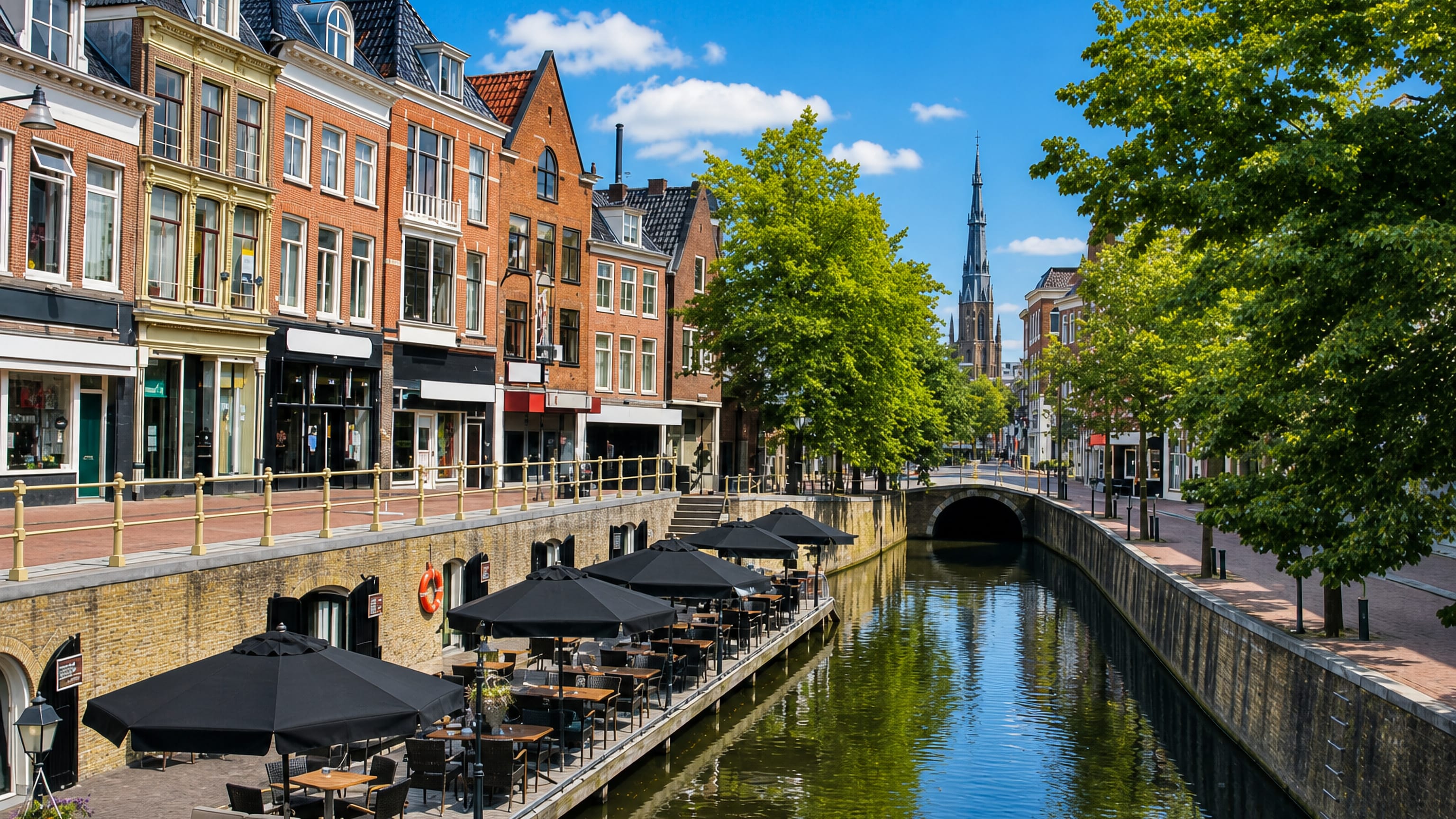
Leeuwarden is the capital of Friesland in the northern Netherlands, a canal city on the flat Frisian plain.Where to stay →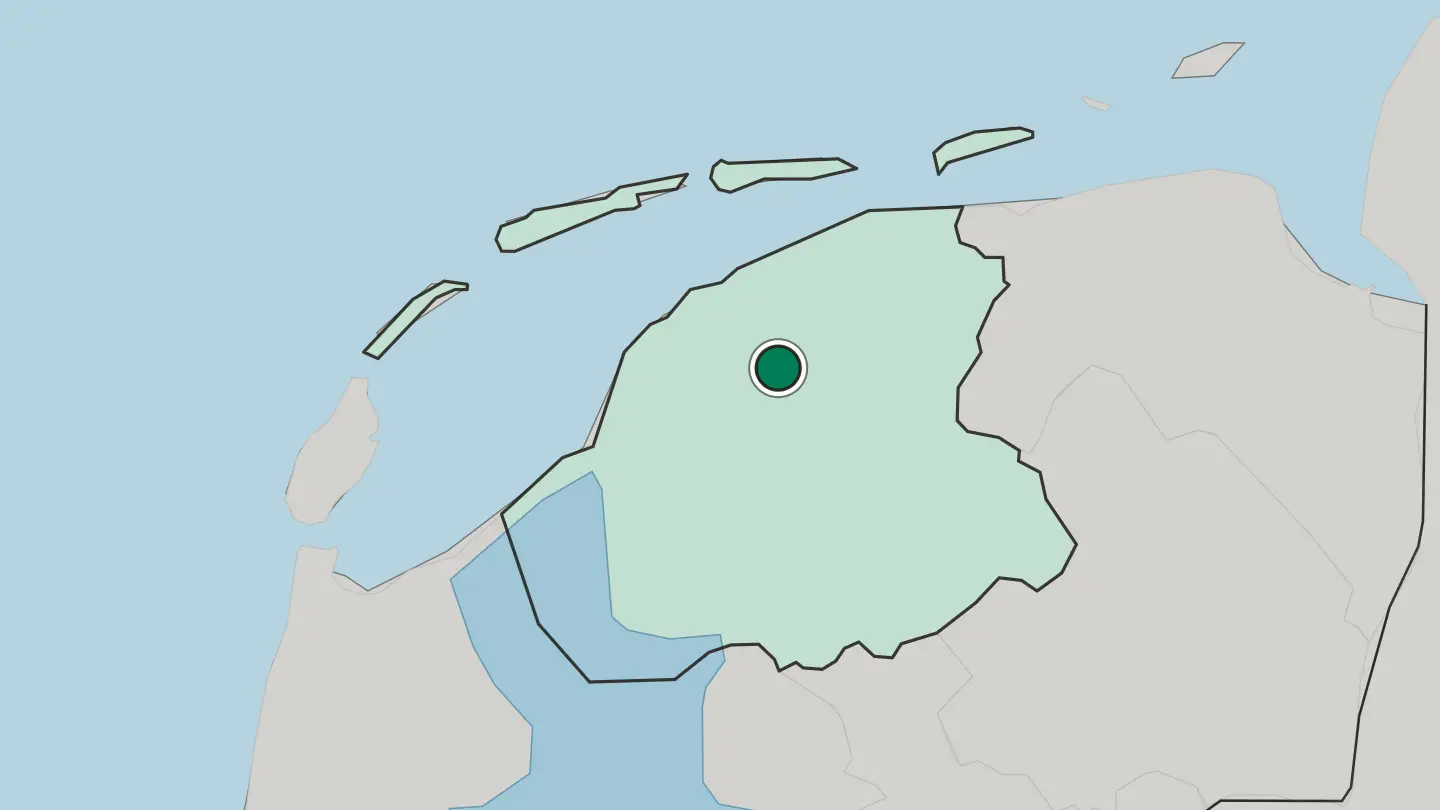
Hotel links are affiliate links: booking through them may earn us a commission, at no extra cost to you. It never affects how places are ranked. How this works
About Provincie Friesland
What is Provincie Friesland known for?
Friesland is the home of the Frisian people and their own tongue, West Frisian, spoken alongside Dutch. Ice is part of the identity too. When the canals freeze hard enough, the Elfstedentocht skating tour threads roughly 200 kilometres past all eleven of the province's historic cities.
Water fills the rest of the year, with the Frisian Lakes drawing sailors around Sneek and the ferry ports carrying visitors out to the West Frisian Islands in the Wadden Sea to the north. Leeuwarden, the capital, was a European Capital of Culture in 2018.
Where is Provincie Friesland?
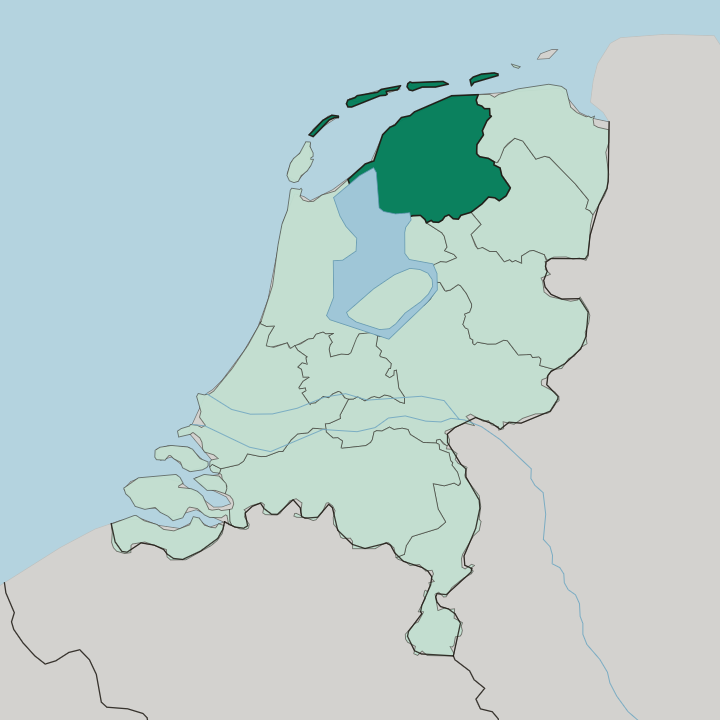
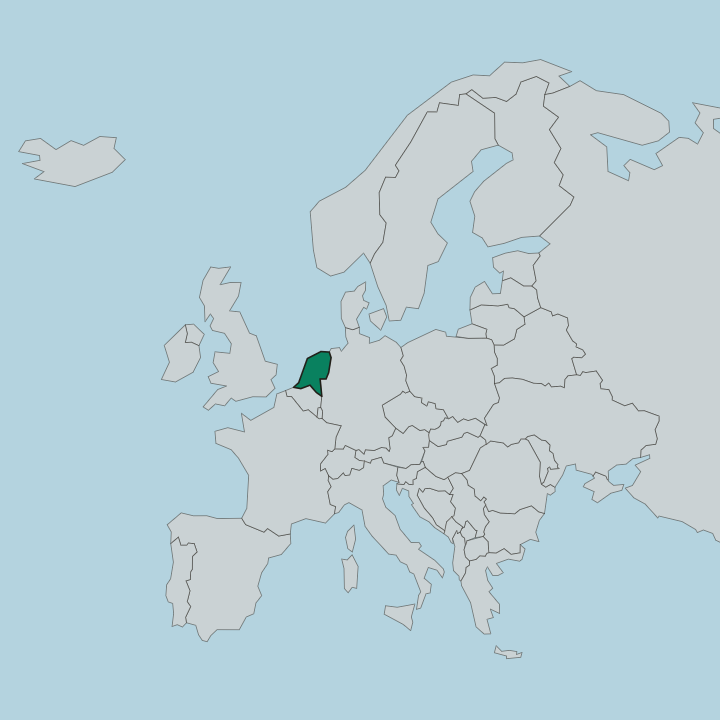
Friesland sits in the north of the Netherlands, a low country of grassland and water that rarely rises far above the sea. Groningen lies to its east. Flevoland is to the south across the water, and North Holland to the south-west beyond the IJsselmeer, the great freshwater lake that the province looks onto along its western edge.
The Afsluitdijk, a barrier dam finished in 1932, runs across the mouth of that water and ties Friesland to North Holland by road. The north is where the land meets the Wadden Sea, a shallow expanse of tidal flats that is the largest unbroken system of its kind in the world. Four inhabited islands guard that coast: Vlieland, Terschelling, Ameland and Schiermonnikoog, strung along the seaward edge as part of the wider West Frisian Islands.
Between the coasts the interior is drained by a dense web of canals and lakes, and the largest of them, among them the Sneekermeer and the Tjeukemeer, gather in the south-west. Little of the province stands high. Dikes hold much of the low ground, and the water is never far from the road.
What is Provincie Friesland like?
Friesland keeps a strong sense of itself, and language sits at the centre of that. West Frisian is the second official tongue beside Dutch, taught in the schools and spoken by most of the province. It is the closest living relative of English on the continent, closer to it than to Dutch, and the two share old words that surprise a visitor's ear.
Bilingual road signs are the ordinary sight. Sport carries the identity as much as speech does. The frozen-canal skating of the Elfstedentocht is the famous one, but summer brings older games.
In fierljeppen a jumper pole-vaults across a canal into a sandbank. Skûtsjesilen races old flat-bottomed cargo sailboats, while kaatsen pits three-man teams against each other in a handball game struck with the palm. Leeuwarden gathers much of the cultural weight, holding the museums and galleries that carried the province through its year as a European Capital of Culture in 2018.
Beyond the capital the culture lives in the eleven old cities and the villages between them, in market squares and church towers and the water that links them all.
What is the history of Provincie Friesland?
Friesland takes its name from ancient Frisia, the coastal land the Frisians held long before the Netherlands existed. In the Middle Ages the region governed itself under an arrangement remembered as the Frisian Freedom, without counts or dukes and by elected representatives instead, which gave rise to the old boast that every Frisian was a nobleman. Feudal lords never took hold.
That independence ended in 1523, when Frisia was drawn into the Habsburg Netherlands. Leeuwarden, chartered in 1435, became the seat of the province and later the residence of the Frisian stadtholders.
What is the climate of Provincie Friesland?
Friesland has a temperate maritime climate, shaped by the North Sea winds and the open water of the Wadden Sea along its northern edge. Winters are mild and summers stay cool, and the westerlies keep the weather changeable through the day. Rain falls in every season rather than in one.
The exposed islands and the flat, dike-held coast feel the wind hardest, and hard frosts deep enough to freeze the canals for the Elfstedentocht come only in the rarest winters. Grey, breezy skies are the usual bargain.
How do you get to Provincie Friesland?
Most visitors reach Friesland by train. A direct line runs north from Amsterdam to Leeuwarden in roughly two hours, and the same station links on to Groningen and down through Sneek to the lakes. The nearest airport is at Groningen, over the eastern border.
To reach the islands you change to a boat: ferries leave Harlingen on the Wadden coast for Terschelling and Vlieland, crossing the tidal flats of the Wadden Sea. By road, the Afsluitdijk carries the motorway across the IJsselmeer from North Holland.
Common questions
What is the best area to stay in Provincie Friesland?
Leeuwarden: a first base in Friesland. Sneek: the Frisian Lakes and boating. The West Frisian Islands: beaches and Wadden Sea nature. Harlingen: the ferry ports and Wadden coast.
Good for
More regions in Netherlands
Updated September 2026