Poland · Lower Silesian Voivodeship
Where to Stay in Jelenia Góra, Lower Silesian Voivodeship
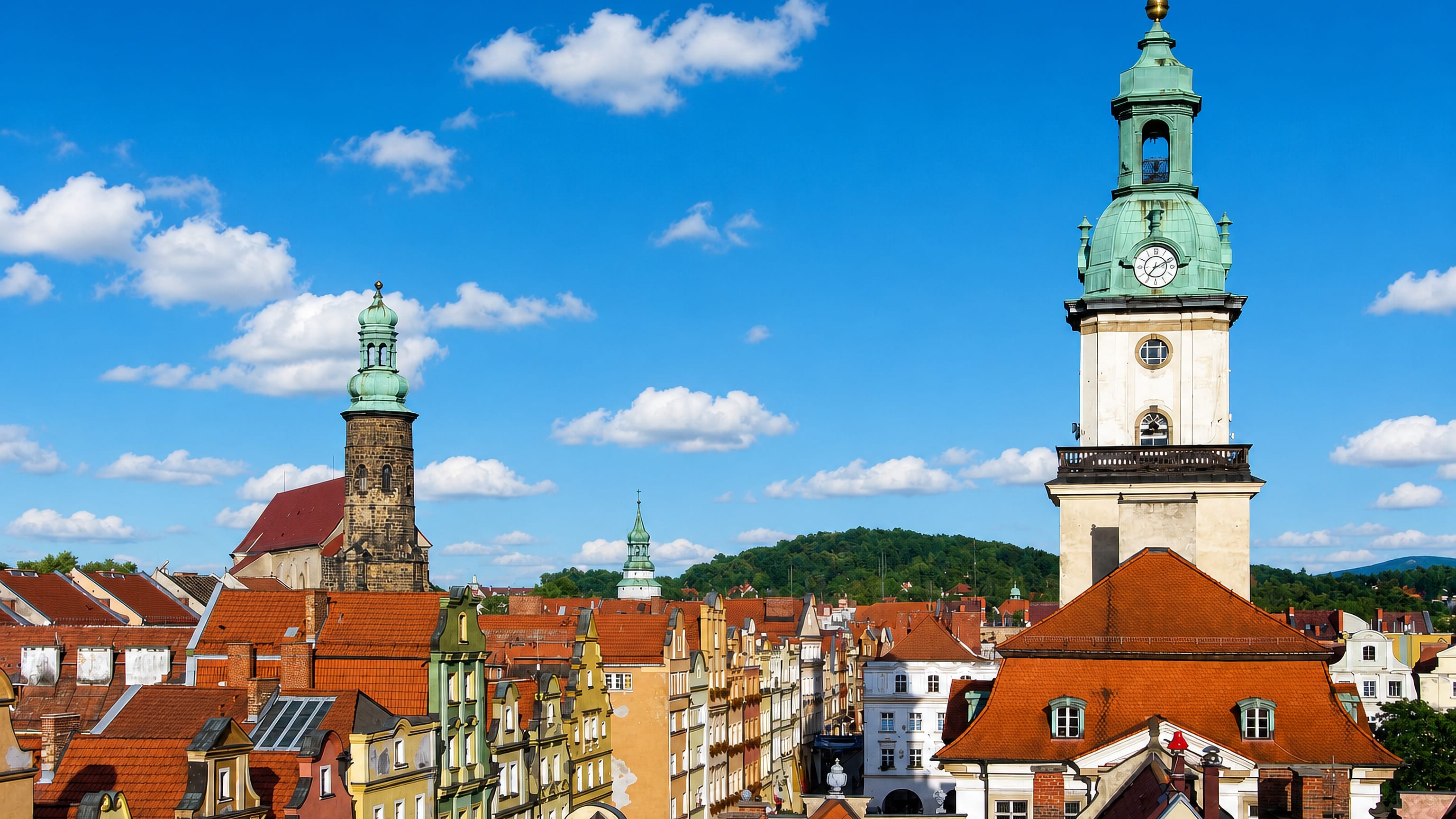
Jelenia Góra is a historic city in Lower Silesia, southwestern Poland, set below the Karkonosze mountains and rich in old churches and towers.
Hotel links are affiliate links: booking through them may earn us a commission, at no extra cost to you. It never affects how places are ranked. How this works


Where to stay in Jelenia Góra
How the choice of base plays out on the ground.
Where you stay in Jelenia Góra means the old square, for most visitors. The historic centre gathers around the Church of the Exaltation of the Holy Cross and the arcaded market houses, and rooms here open onto the old streets within a walk of the churches and the Karkonoskie Museum. The square stays lively into the evening.
This is the base for anyone here to see the town on foot. Toward the mountains, the valley spreads into quieter, greener districts. A room on the edge of town trades the market square for garden streets and the first slopes of the Karkonosze, better for walkers heading up than for a night in the centre.
The peaks stand close from here. If you want the churches and the square, stay in the old town; if you want the mountains, take a room toward the hills. Either way, the Karkonosze are a short climb away.
Find hotels in Jelenia Góra
Direct booking searches for these neighbourhoods.
Old town
Around the Church of the Exaltation of the Holy Cross and the arcaded market houses, near the Karkonoskie MuseumFind hotels in Old townWalkers bound for the Karkonosze and the slopesMountain edge
On the town's edge toward the Karkonosze, with garden streets and quick access to the trailsFind hotels in Mountain edgeHotel links are affiliate links: booking through them may earn us a commission, at no extra cost to you. It never affects how places are ranked. How this works
Things to do in Jelenia Góra
Ranked by global recognition; descriptions from Wikidata (CC0).
Churches & Religious Sites
7- Exaltation of the Holy Cross church in Jelenia Góra Heritage
- Church of Saints Erasmus and Pancratius in Jelenia Góra Heritage
- Orthodox church in Jelenia Góra Heritage
- Polish Catholic church in Jelenia Góra Heritage
- Church of Saint Adalbert in Jelenia Góra Heritage
Show 2 more →
- Saint Archangel Michael Church, Jeżów Sudecki Heritage
- 1 Kopernika Street in Jelenia Góra Heritage
Landmarks & Notable Places
8- 13 Długa Street in Jelenia Góra Heritage
- 1 Grodzka Street in Jelenia Góra Heritage
- 11 Długa Street, Jelenia Góra Heritage
- 16 Kilińskiego Street in Jelenia Góra Heritage
- 21 Długa Street in Jelenia Góra Heritage
Show 3 more →
- 45 1-go Maja Street, Jelenia Góra Heritage
- 7 Długa Street in Jelenia Góra Heritage
- 8 Długa Street in Jelenia Góra Heritage
worth knowingacross 2 categories in Jelenia Góra
About Jelenia Góra
Jelenia Góra guards the way to the mountains.
What is Jelenia Góra known for?
A historic town in Lower Silesia, it sits in a wide valley below the Karkonosze, the range Poles call the Giant Mountains, and its old streets hold the churches and merchant houses of centuries. The Karkonoskie Museum tells the range's story. Peaks close the view to the south.
What are the main landmarks in Jelenia Góra?
Old churches crowd the centre of Jelenia Góra. The Church of the Exaltation of the Holy Cross and the Church of Saints Erasmus and Pancratius rise over the market square, while the Church of Saint Adalbert and the town's Orthodox church mark other quarters. Towers guard the heights and the old walls.
The Kaiser Tower looks down from its hill, the Baszta Perła Zachodu holds a corner of the ramparts, and the Karkonoskie Museum gathers the mountains' story.
What is the history of Jelenia Góra?
Jelenia Góra grew in the shadow of the mountains. A medieval town in Lower Silesia, it prospered on the trade that crossed the passes and on the crafts of its valley, and its wealth still shows in the churches and manors of the old core. The Church of Saints Erasmus and Pancratius has stood at the heart of the town for centuries, and the Church of the Exaltation of the Holy Cross rose later in grander form.
Walls once ringed the whole. Linen and glass from the region travelled far, carried down from the hills to the markets of the plain. Fragments of those defences remain.
The tower called Baszta Perła Zachodu still stands, and the Kaiser Tower crowns a hill above the streets as a later lookout over the valley. Faiths gathered here in numbers, and Catholic, Polish Catholic, and Orthodox churches share the modern town with the older parishes. The Czarne manor keeps the country-house past on the edge of the built-up ground.
History and border-change reshaped the town more than once. Above it all, the Karkonoskie Museum reads the mountains that shaped the place.
Where is Jelenia Góra?
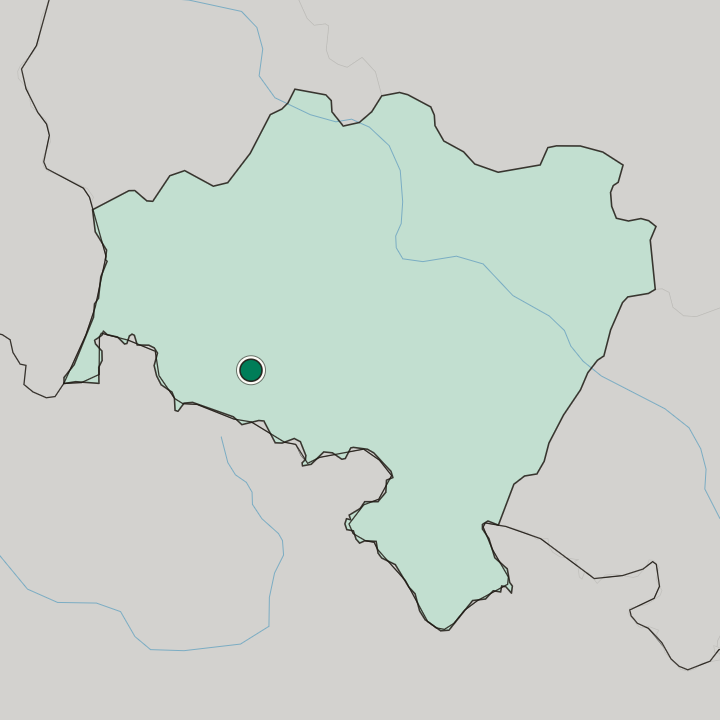
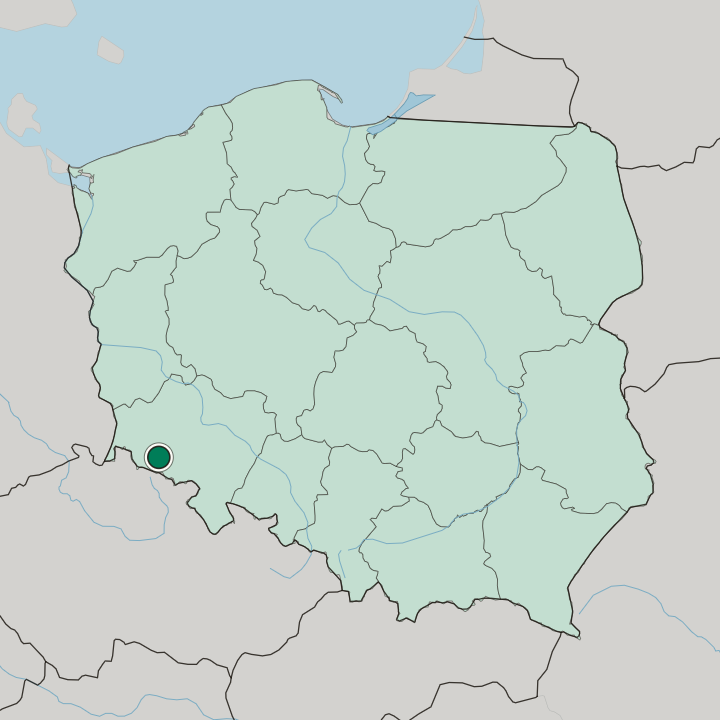
Mountains ring the valley of Jelenia Góra. The town lies in a broad basin in southwestern Poland, where several rivers meet before the land climbs south into the Karkonosze, the highest range of the Sudetes. Forested slopes rise on every side.
The hills shape the weather and the roads alike.
What is the climate of Jelenia Góra?
The mountains set the weather here. Cooler and wetter than the Polish lowlands, Jelenia Góra draws cloud and rain off the Karkonosze, with cold snowy winters that feed the ski slopes above the town. Mist often fills the valley.
Summers stay green and mild.
How do you get to Jelenia Góra?
Roads climb to Jelenia Góra through the hills. Rail and highway run down from the Silesian cities to the north and on toward the mountain resorts above the town, making it the base for the Karkonosze. Buses fan out to the trailheads.
Most come for the peaks, pausing in the valley on the way up.
Common questions
What is the best area to stay in Jelenia Góra?
Old town: Visitors here for the market square, churches, and museum. Mountain edge: Walkers bound for the Karkonosze and the slopes.
Good for
More cities in Lower Silesian Voivodeship
Updated October 2026