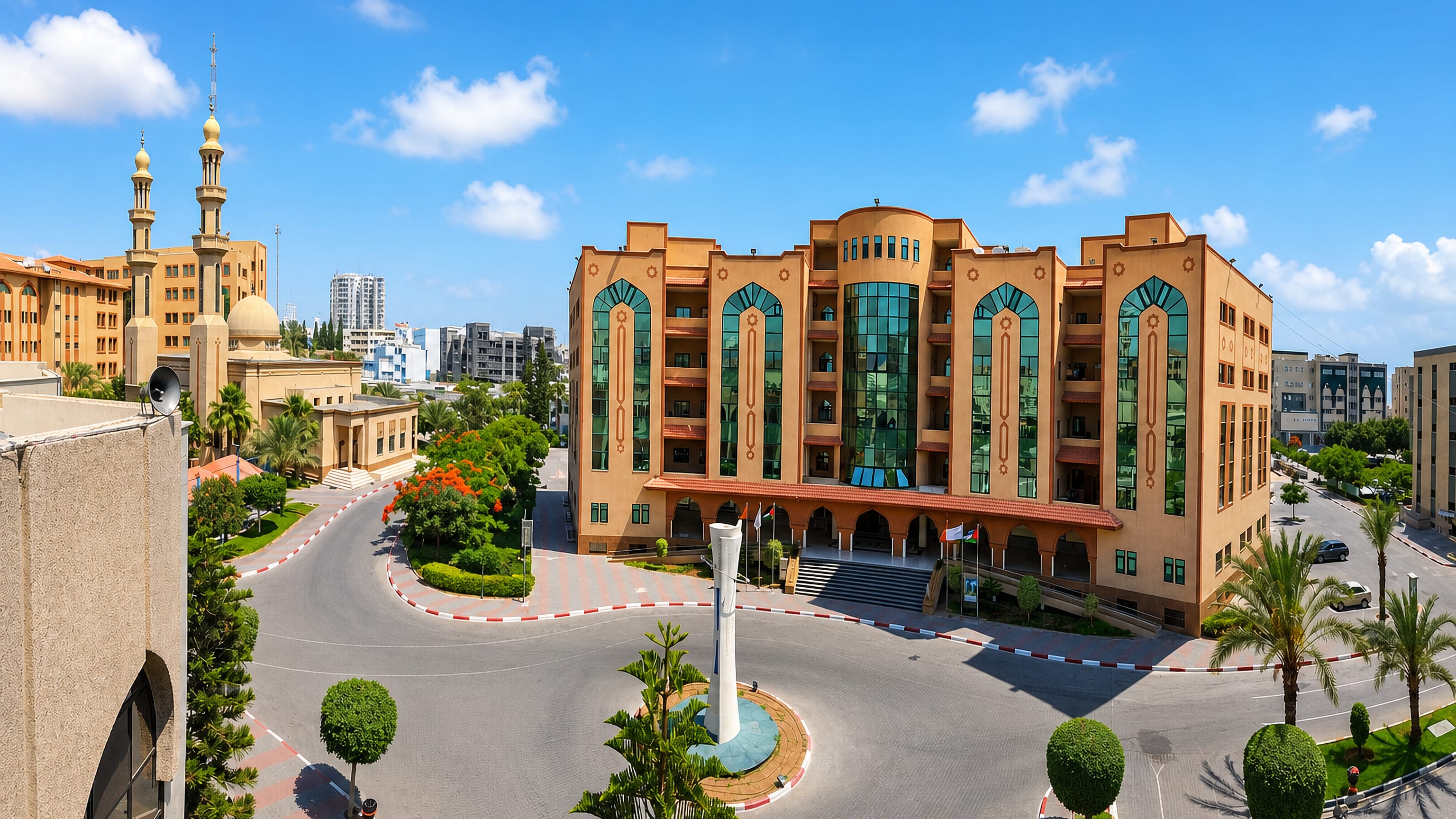
Palestine: Regions, Cities & Travel Guide
Palestine spans the West Bank and the Gaza Strip in the Southern Levant, a Holy Land of ancient cities proclaimed a state in 1988.
Top destinations →

Top destinations in Palestine
Cities to start from, then drill into areas and hotels.
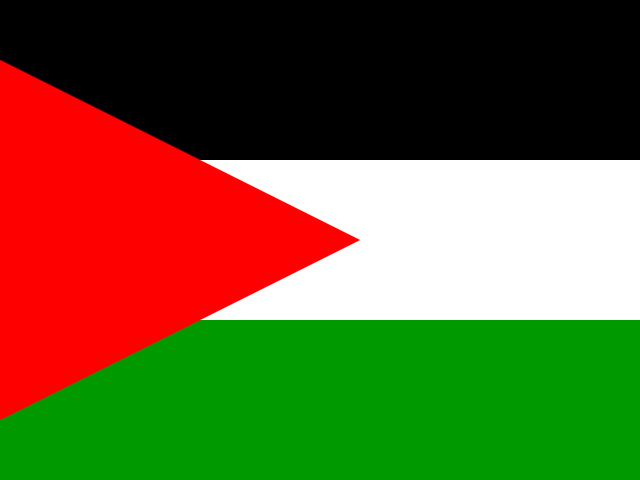 Palestine
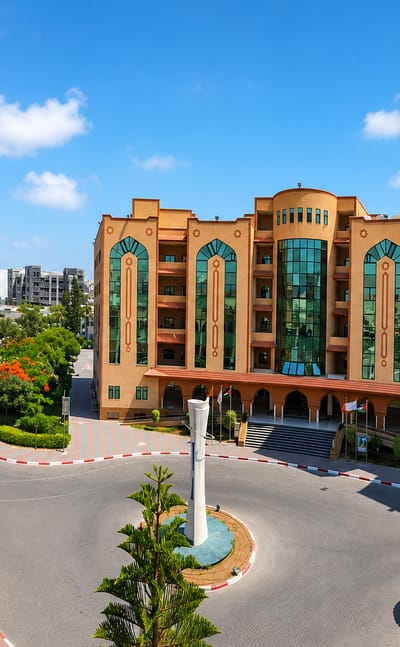
Gaza
The Mediterranean edges the shore at Gaza, the largest city of the Gaza Strip, known for the Church of Saint Porphyrius and Tell Ali Muntar.Where to stay →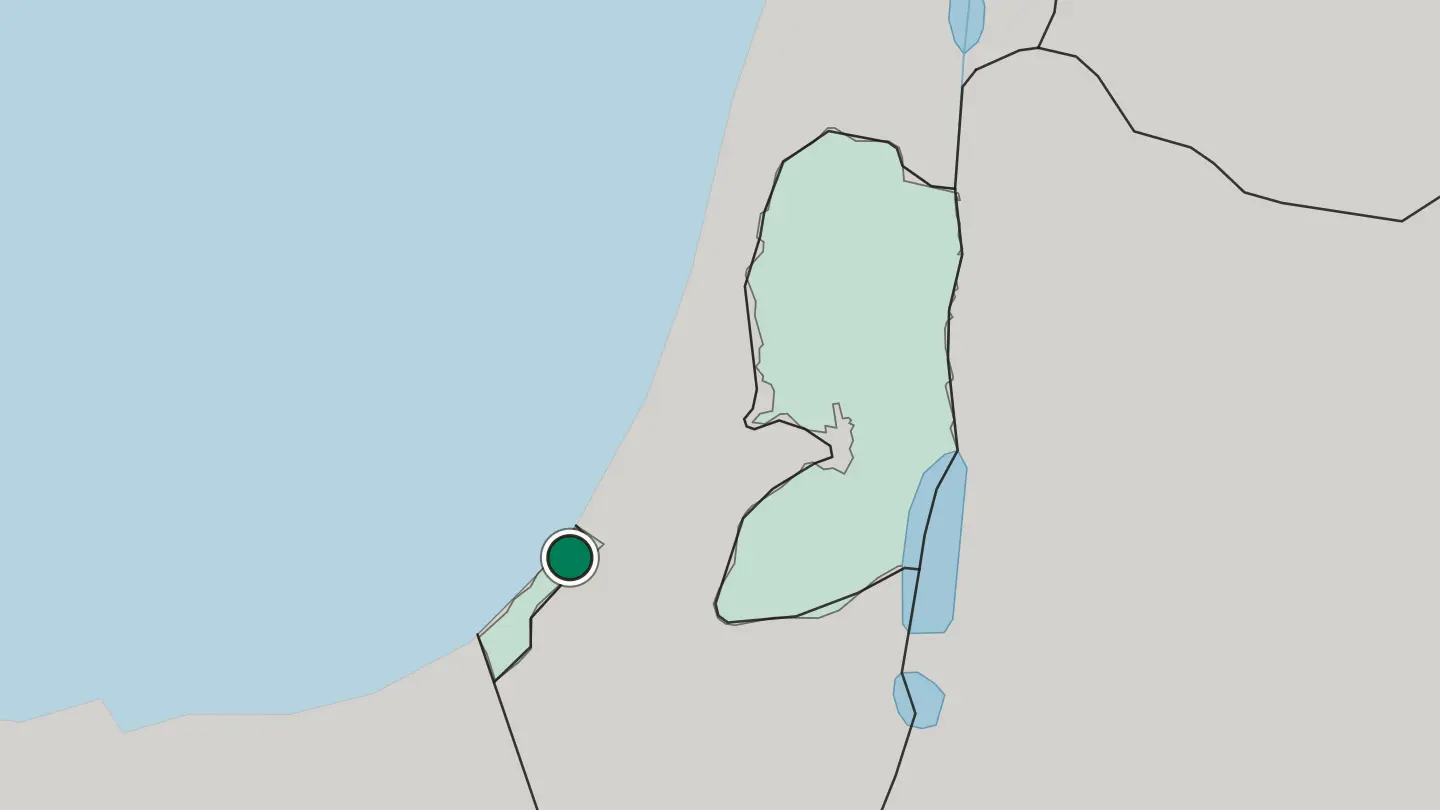
 Palestine
East Jerusalem
Stone lanes climb to the Church of the Holy Sepulchre in East Jerusalem, the part of Jerusalem east of the Green Line, walled, ancient and contested.Where to stay →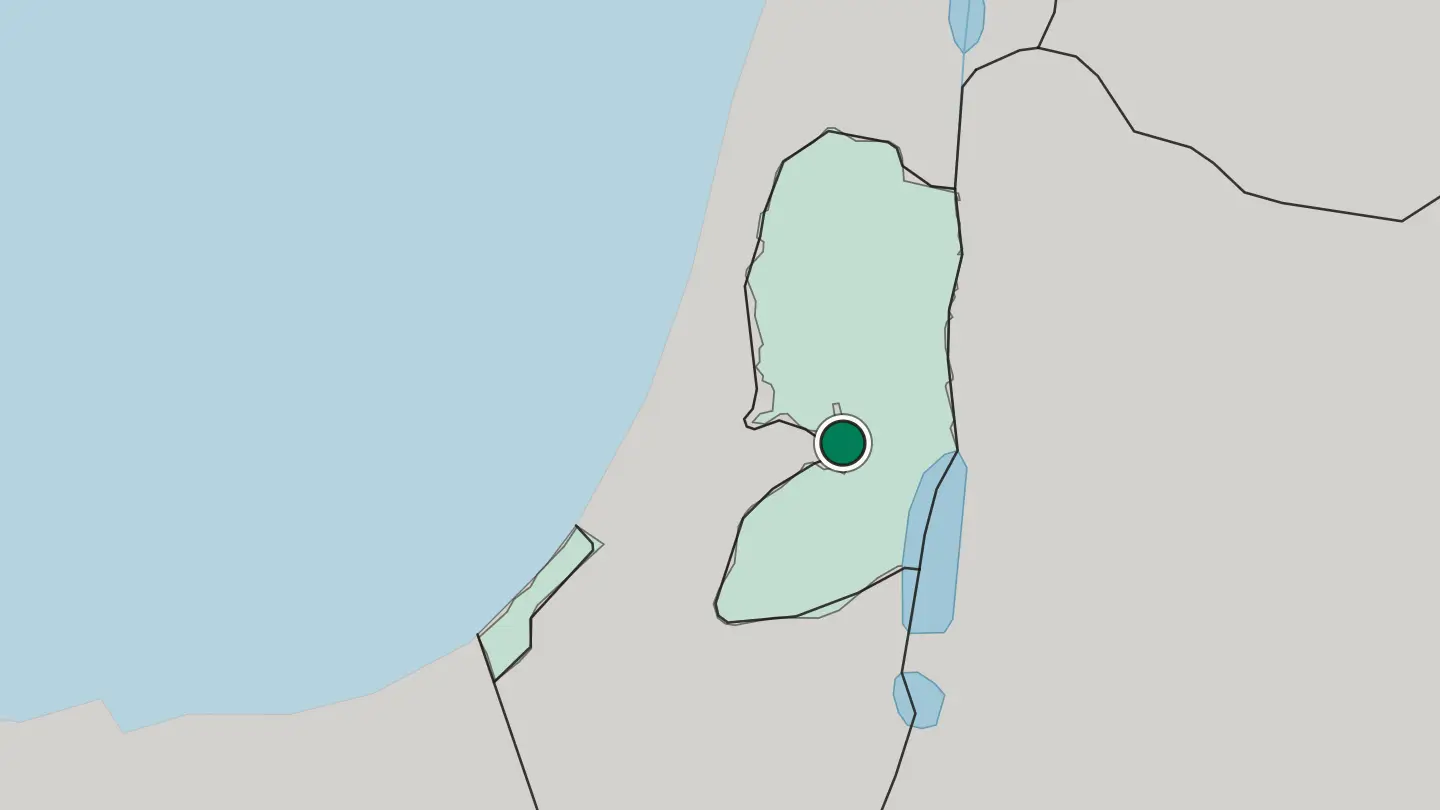
 Palestine
Hebron
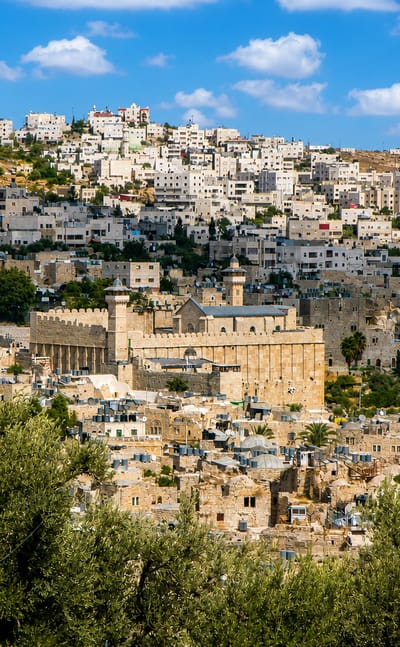
Stone lanes climb the hills at Hebron, an ancient city in the southern West Bank, seat of the Hebron Governorate, known for the Cavern of the Patriarchs.Where to stay →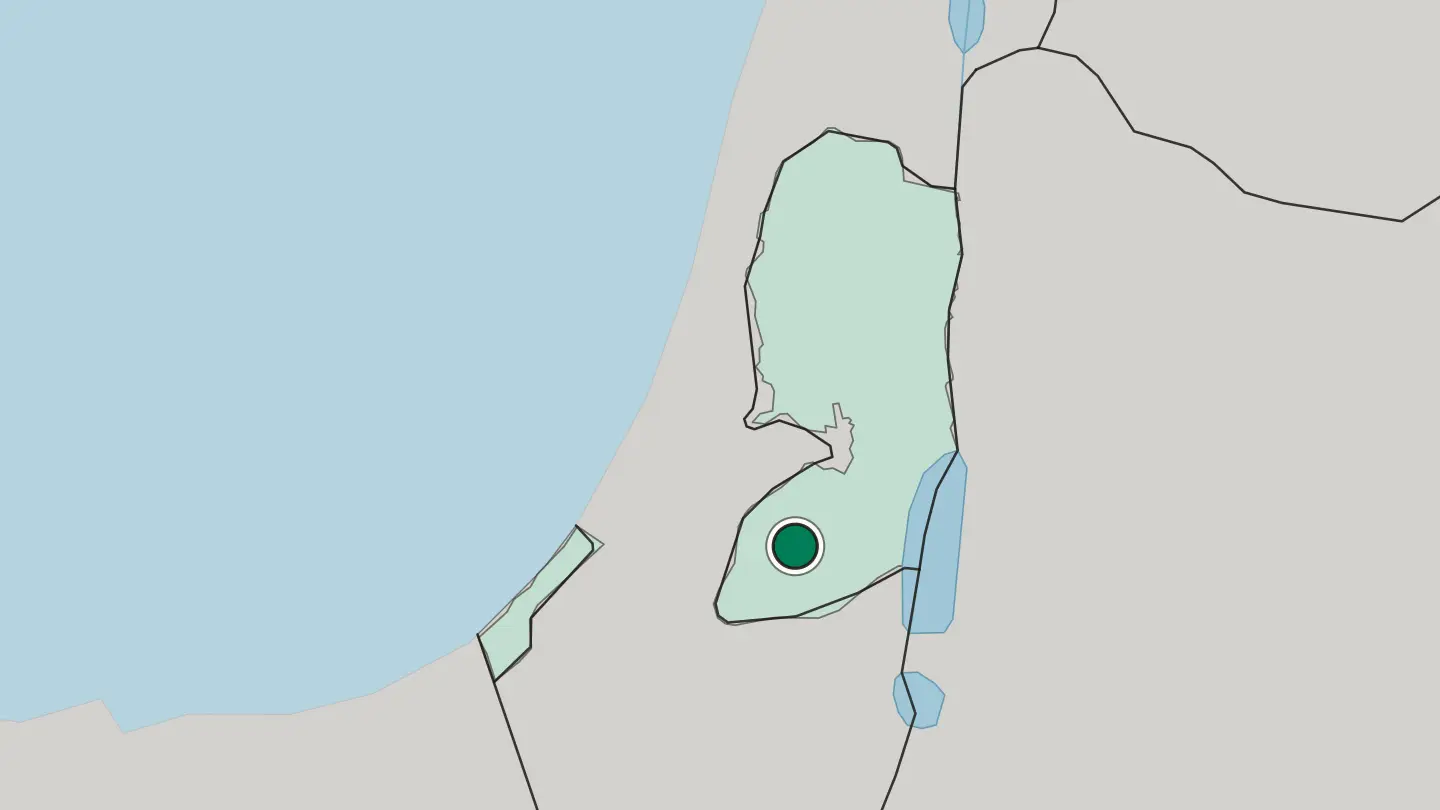 Palestine
Rafaḩ
Rafah stands on the coastal plain of the southern Gaza Strip, seat of the Rafah Governorate, marked by the ancient mounds of Tel Zourob and Tell Ridan.Where to stay →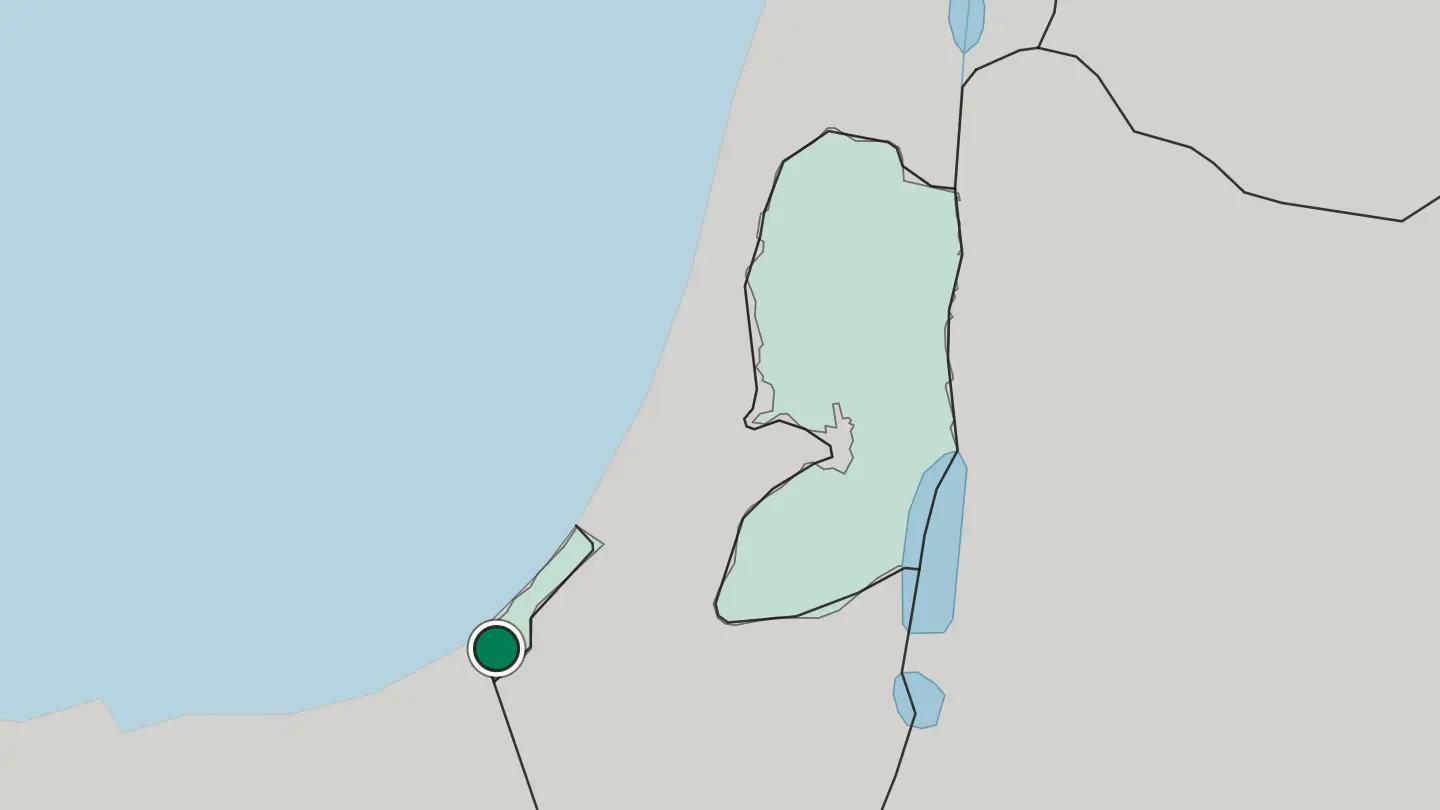 Palestine
Jabālyā
Jabālyā lies four kilometres north of Gaza City; its municipality takes in the town of Nazla and the Jabalia refugee camp.Where to stay →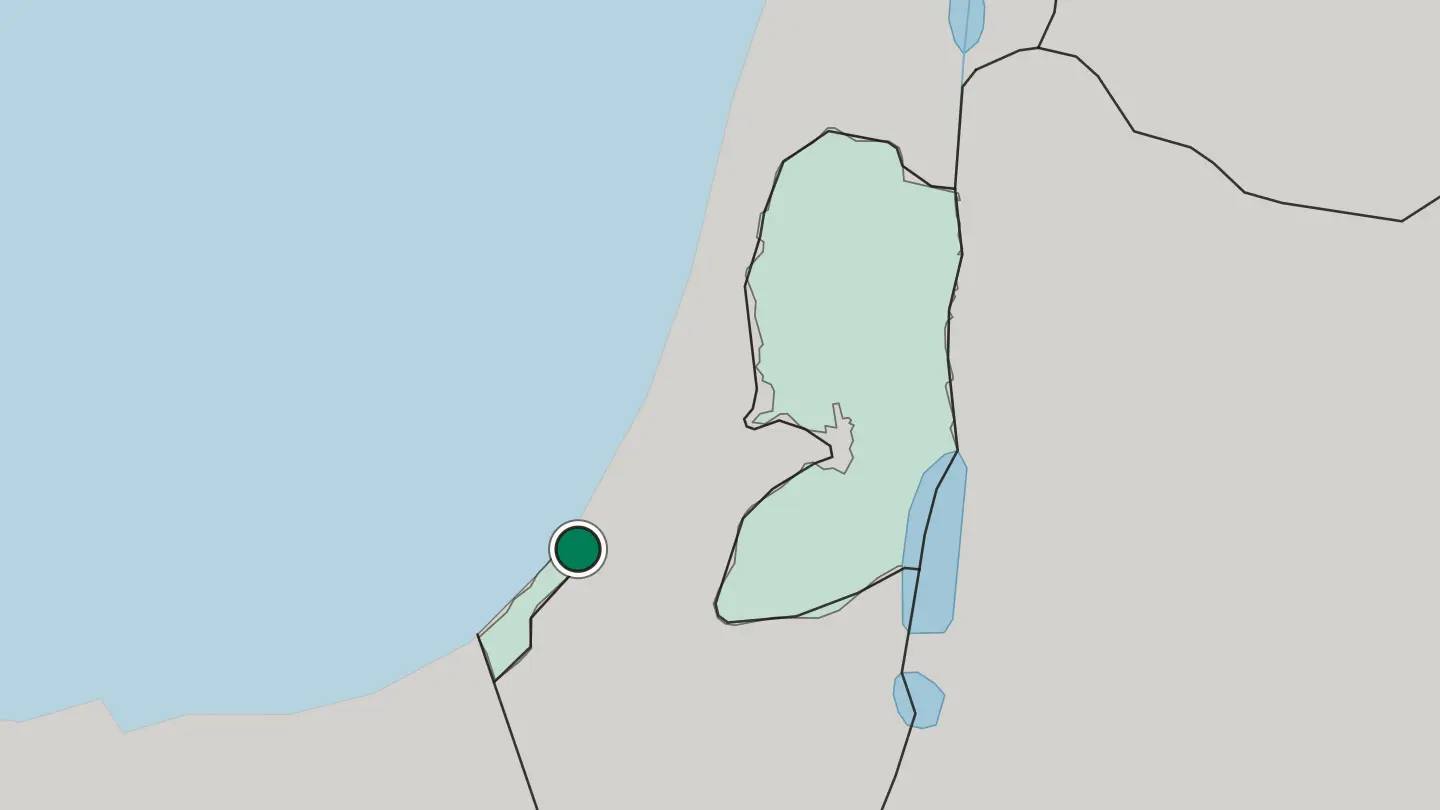 Palestine
Dayr al Balaḩ
Dayr al Balaḩ takes its name from its date palms, a governorate capital in the centre of the Gaza Strip, south of Gaza City.Where to stay →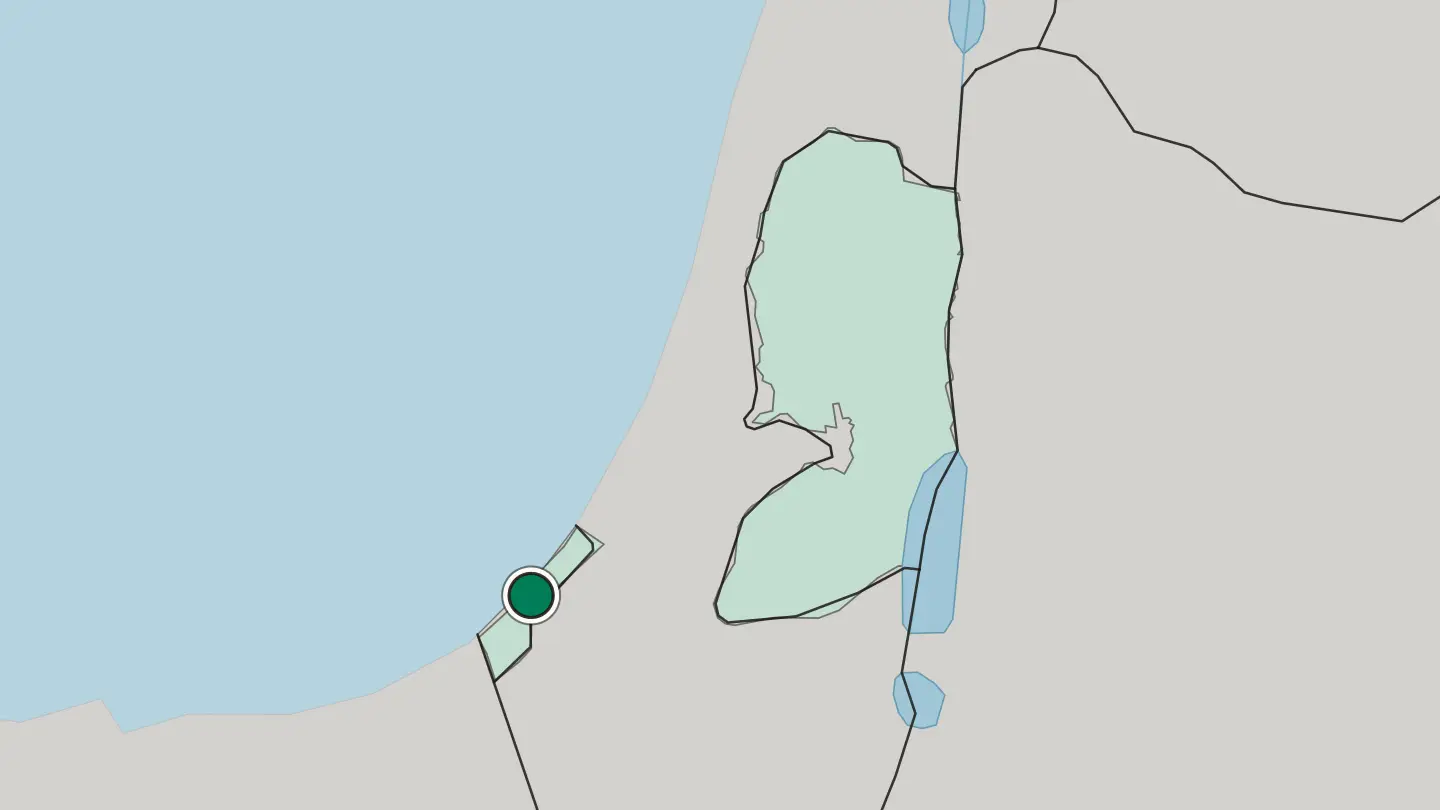 Palestine
Bayt Lāhyā
Bayt Lāhyā stands north of Jabalia and next to Beit Hanoun, a town of the North Gaza Governorate near the border with Israel.Where to stay →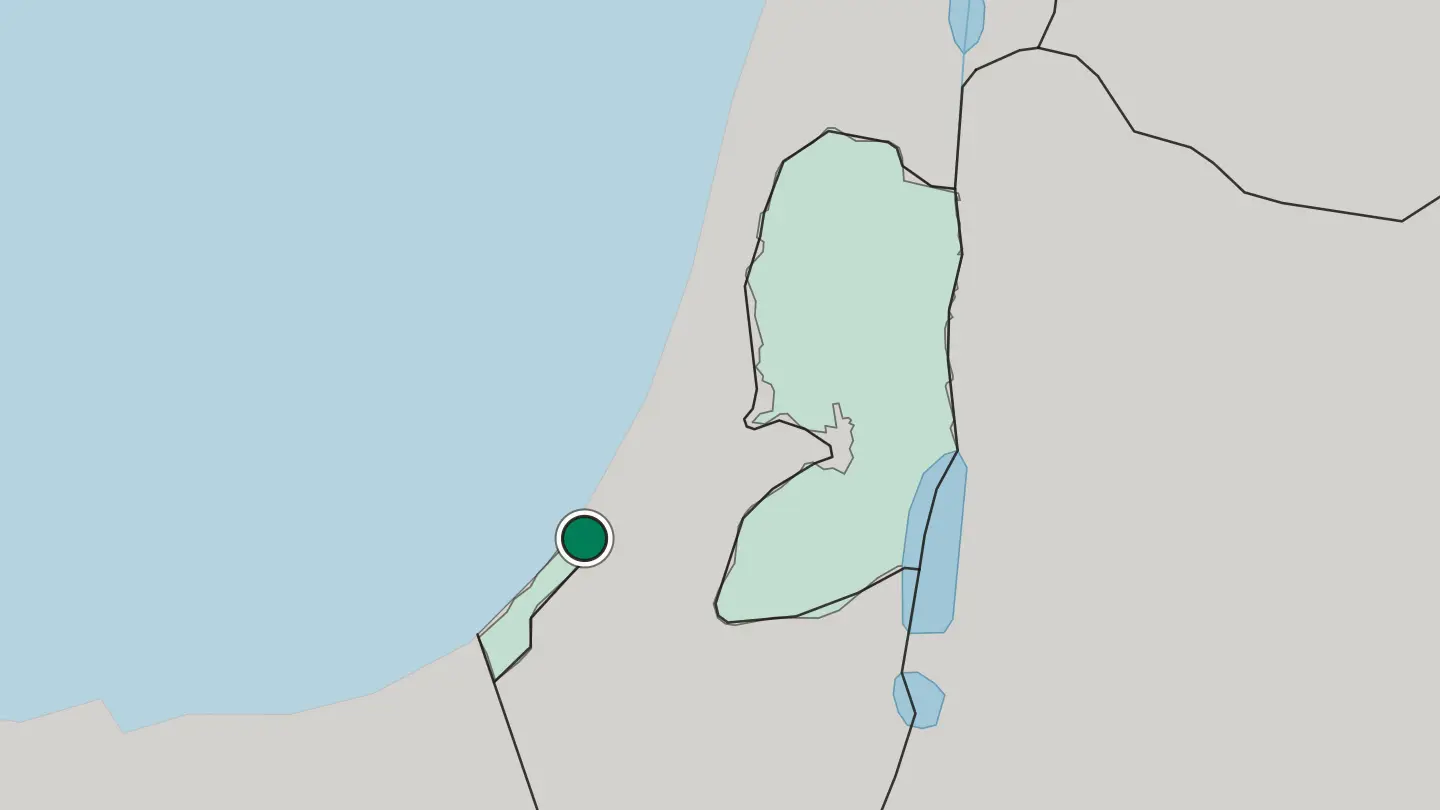
Regions of Palestine
Palestine
Gaza Strip
The Mediterranean washes the Gaza Strip, a narrow Palestinian territory between Egypt and Israel, with Gaza City at its heart.Towns & cities →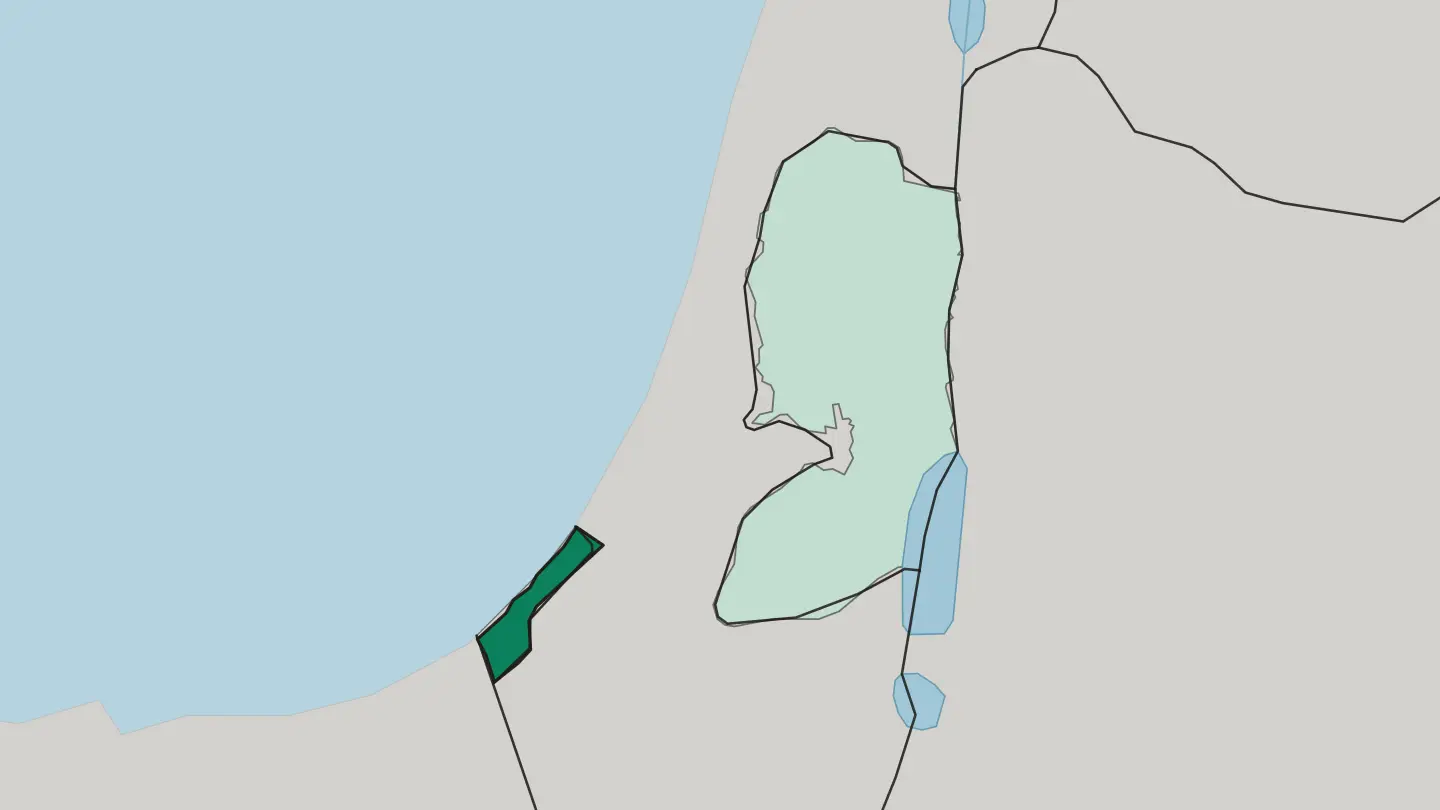 Palestine
West Bank
The West Bank rises above the Jordan River, the larger of the two Palestinian territories of Palestine, set between Israel and Jordan.Towns & cities →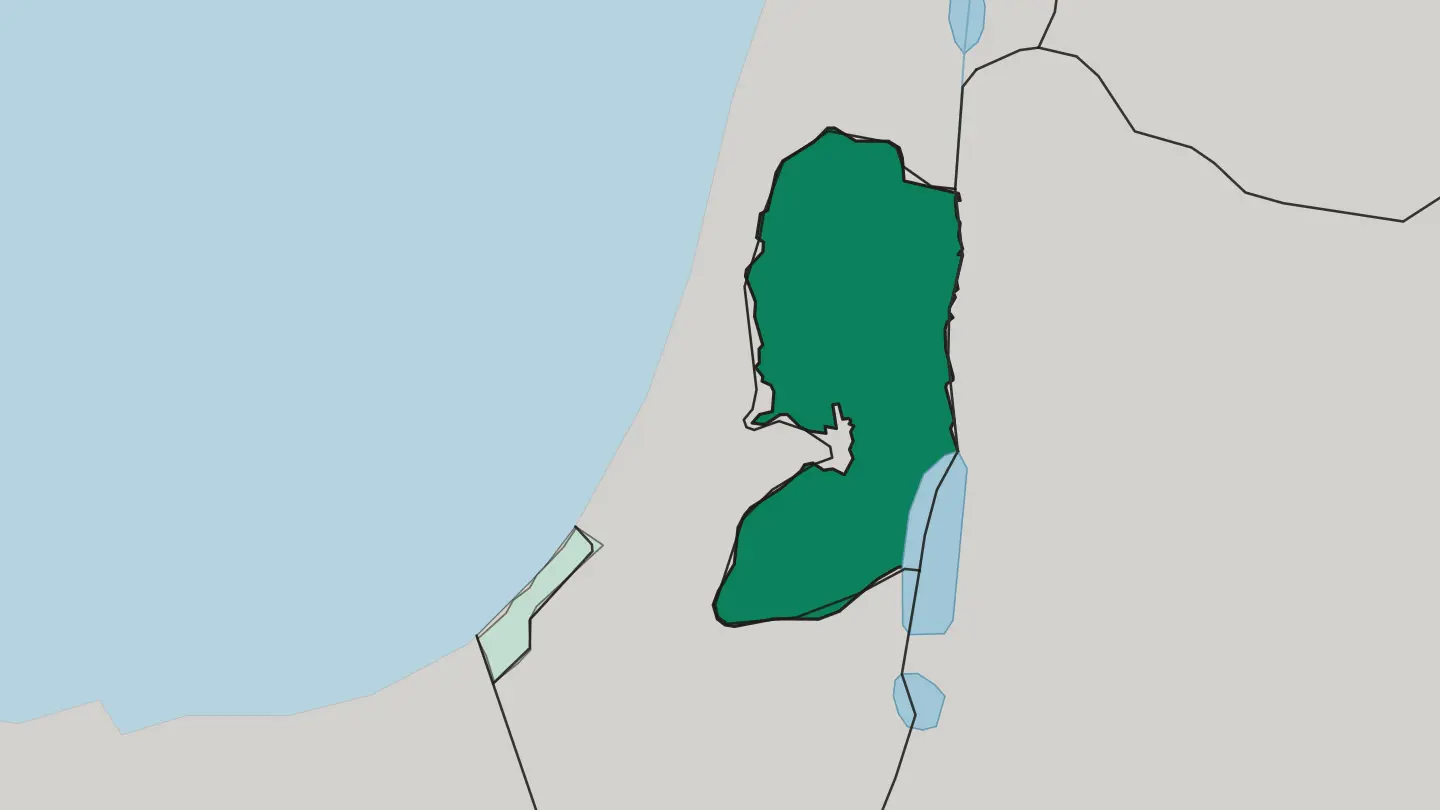
Explore by experience
Not sure which place? Start from how you want to travel.

About Palestine
What is Palestine known for?
Palestine is known as the land of two territories, the West Bank and the Gaza Strip, set in the Southern Levant of West Asia. Its cities are old. Pilgrims have long travelled to its Holy Land sites, and Jerusalem stands as its proclaimed capital while Ramallah serves as the administrative centre of the West Bank.
Where is Palestine?
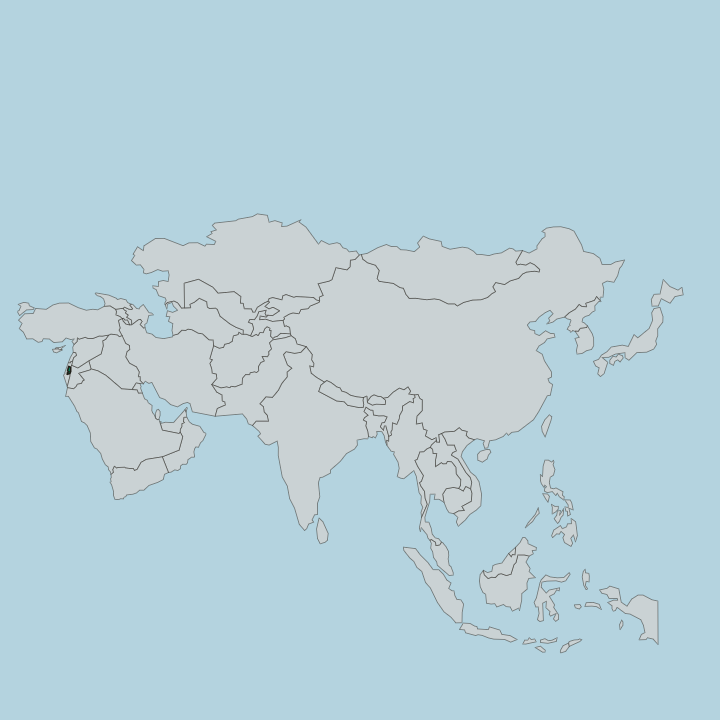
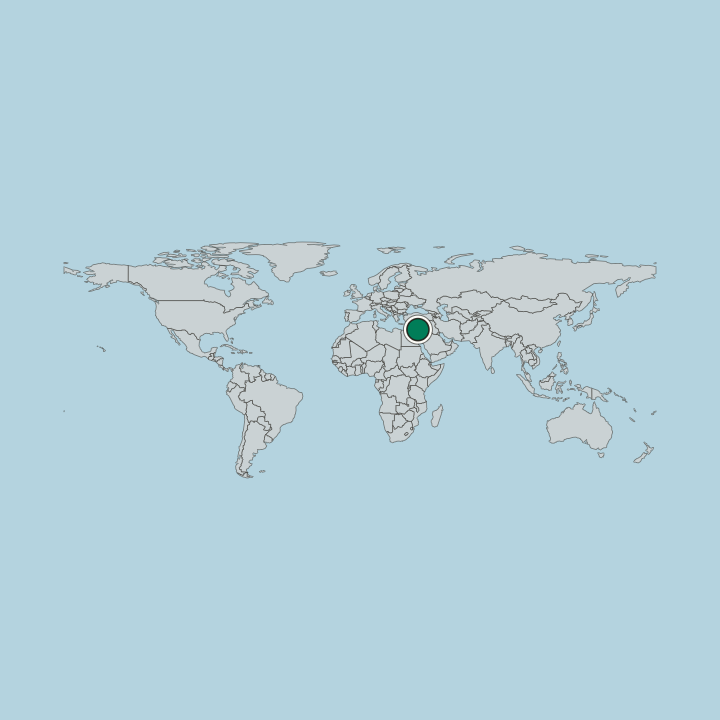
Palestine falls into two separate parts, the West Bank and the Gaza Strip, held apart by the land of Israel that lies between them. They do not touch. The West Bank is the larger of the two and lies inland, bordering Jordan along its eastern edge, while the smaller Gaza Strip sits away to the south-west and runs down to the border with Egypt.
Both share most of their remaining boundaries with Israel, which wraps around each on nearly every side. Together the two make up the Palestinian territories of the Southern Levant, set in the western reaches of West Asia. There is no land bridge between them.
The country lies in the warm subtropical belt of the Middle East, where long rainless summers give way to short, wetter winters. Sun rules the year. The old Holy Land cities that have drawn pilgrims for centuries lie mostly across the West Bank, among them Jerusalem, named as the proclaimed capital, while nearby Ramallah serves as the working administrative centre of the territory.
Gaza remains the principal city of the Gaza Strip. From the border with Jordan in the east to the edge of Egypt in the south-west, Palestine gathers some of the oldest continuously settled ground in all of West Asia, a small land crossed by long history.
What is the history of Palestine?
Palestine took its modern political shape in the twentieth century, though the land itself has been settled for thousands of years. Its roots run deep. The Southern Levant holds some of the oldest continuously inhabited cities on earth, and the Holy Land towns of the West Bank have drawn pilgrims across many faiths since antiquity.
Empires and peoples have passed through it in turn. Long before any modern border, trade and worship crossed this ground between Jordan, Egypt, and the wider Middle East. The present territories, the West Bank and the Gaza Strip, were defined in the mid-twentieth century.
Borders were drawn and redrawn. Both areas came under Israeli control after the war of 1967, and their political status has remained the subject of a long-running international dispute ever since. The State of Palestine was proclaimed in 1988, claiming both the West Bank and the Gaza Strip together.
Governance is split between them, administered separately in the West Bank and in the Gaza Strip, with Ramallah serving as the working administrative centre and Jerusalem named as the proclaimed capital. The question of the land endures.
What is Palestine like?
Palestine speaks Arabic, the language of its towns and its daily life across both the West Bank and the Gaza Strip. One tongue binds two territories. The culture is rooted in the Holy Land, a ground held sacred by pilgrims of several faiths, whose ancient cities have drawn worshippers and travellers for many centuries.
That long religious heritage still shapes the calendar and the character of the region. Faith and antiquity sit side by side. Distance marks the culture too.
The West Bank and the Gaza Strip sit apart, separated by the land of Israel, and each has grown its own rhythm within the shared Palestinian identity. In the West Bank, Ramallah and the ancient pilgrimage towns carry the everyday life of the territory, while Gaza anchors the life of the Gaza Strip to the south-west. Arabic ties them together across the gap.
From the old streets of the Holy Land cities to the ordinary routines of home, the traditions of Palestine belong to the wider world of the Middle East and the Southern Levant, one people speaking one language across two divided lands.
What is the climate of Palestine?
Palestine sits in the warm subtropical band of the Middle East, a dry land of long summers. Rain keeps to winter. Hot, cloudless months stretch across the West Bank and the Gaza Strip, broken only by the cooler, wetter spell that greens the Southern Levant before the heat returns.
How do you get to Palestine?
Palestine is reached overland through its neighbours, across the borders it shares with Israel, Jordan, and Egypt. There is no open frontier between its halves. The West Bank is entered from the east through Jordan or across the line with Israel, while the Gaza Strip is reached separately from Egypt in the south-west, each territory served by its own crossings into the Middle East.
Good for
Updated September 2026