Jordan: Regions, Cities & Travel Guide
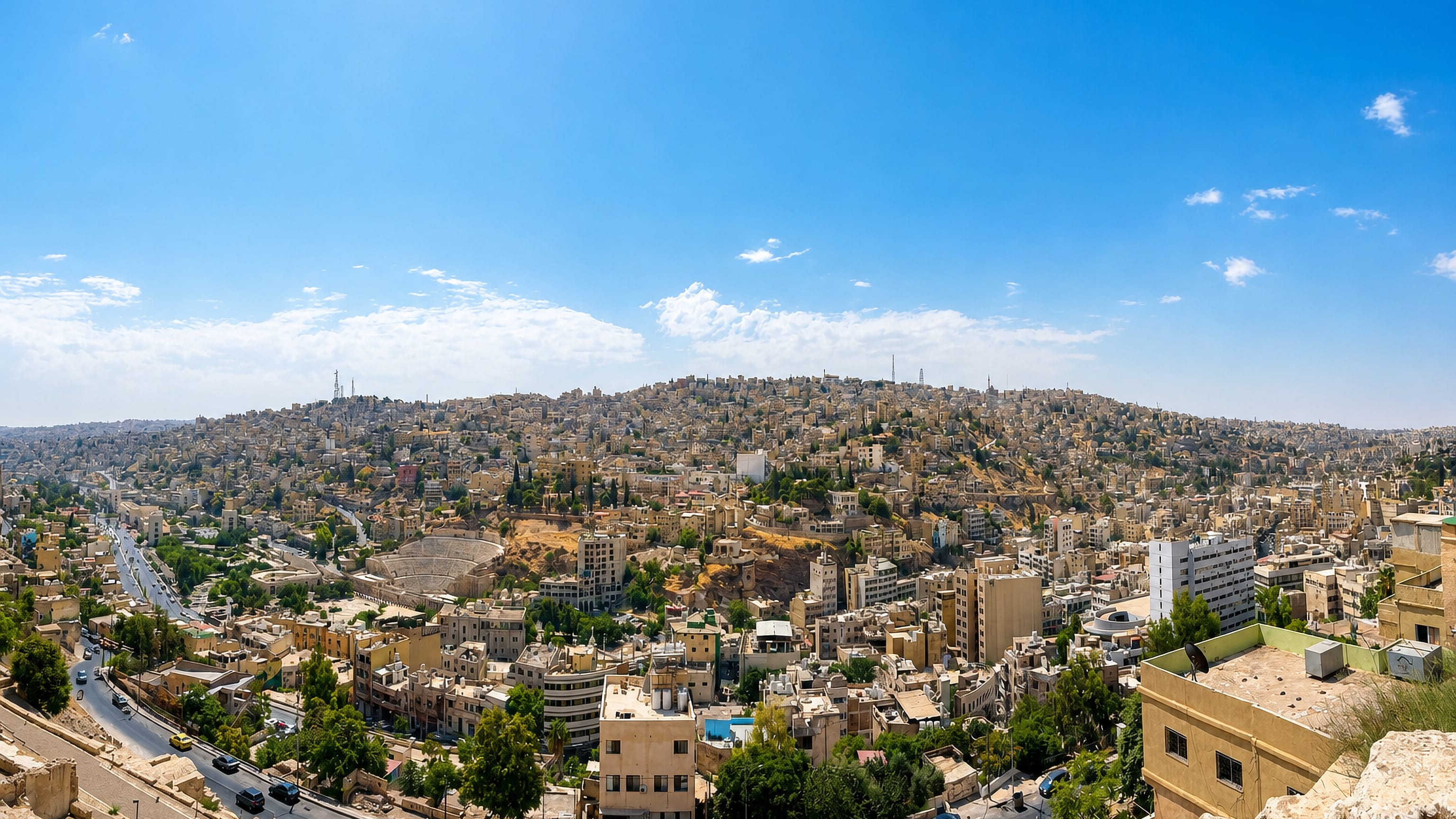
The Hashemite Kingdom of Jordan is an Arab country in the Middle East, between the Jordan River and the Red Sea, with Amman as its capital.
Hotel links are affiliate links: booking through them may earn us a commission, at no extra cost to you. It never affects how places are ranked. How this works


Top destinations in Jordan
Cities to start from, then drill into areas and hotels.
 Jordan
Amman
Amman is the capital and largest city of Jordan, where the Roman Theatre and the Amman Citadel rise at its heart.Where to stay →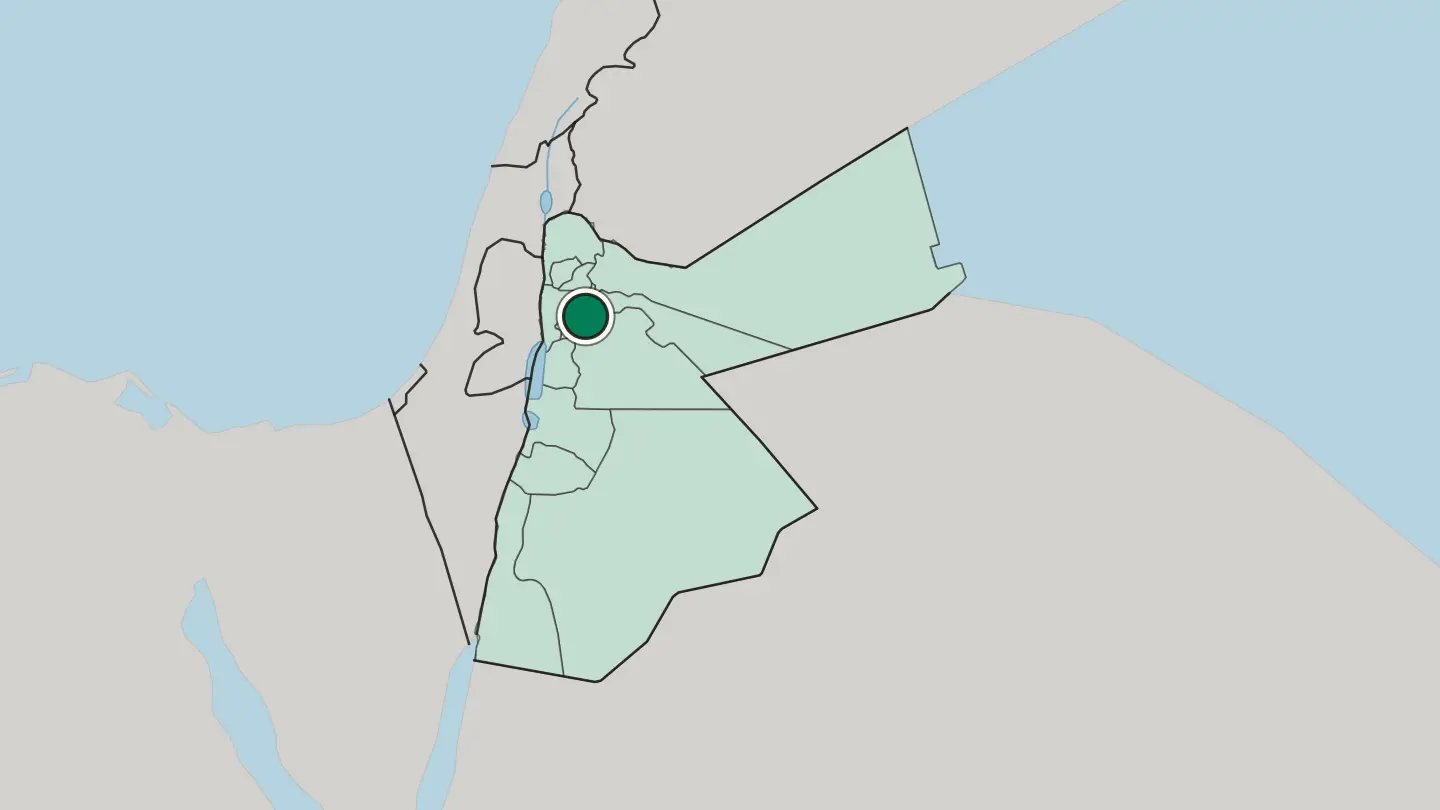
 Jordan
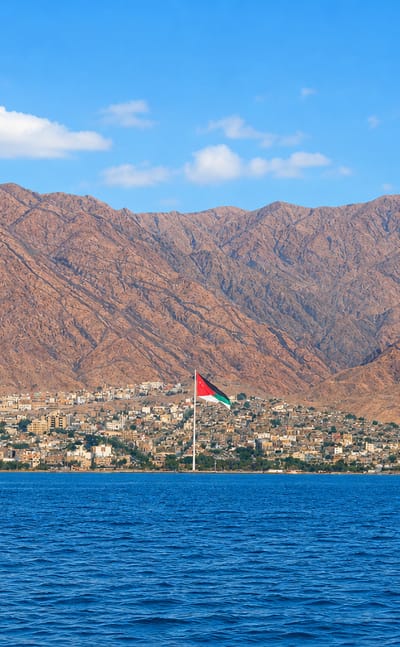
Aqaba
Warm reef water laps the quays of Aqaba, Jordan's only coastal city, set on the Gulf of Aqaba in the far south of the country.Where to stay →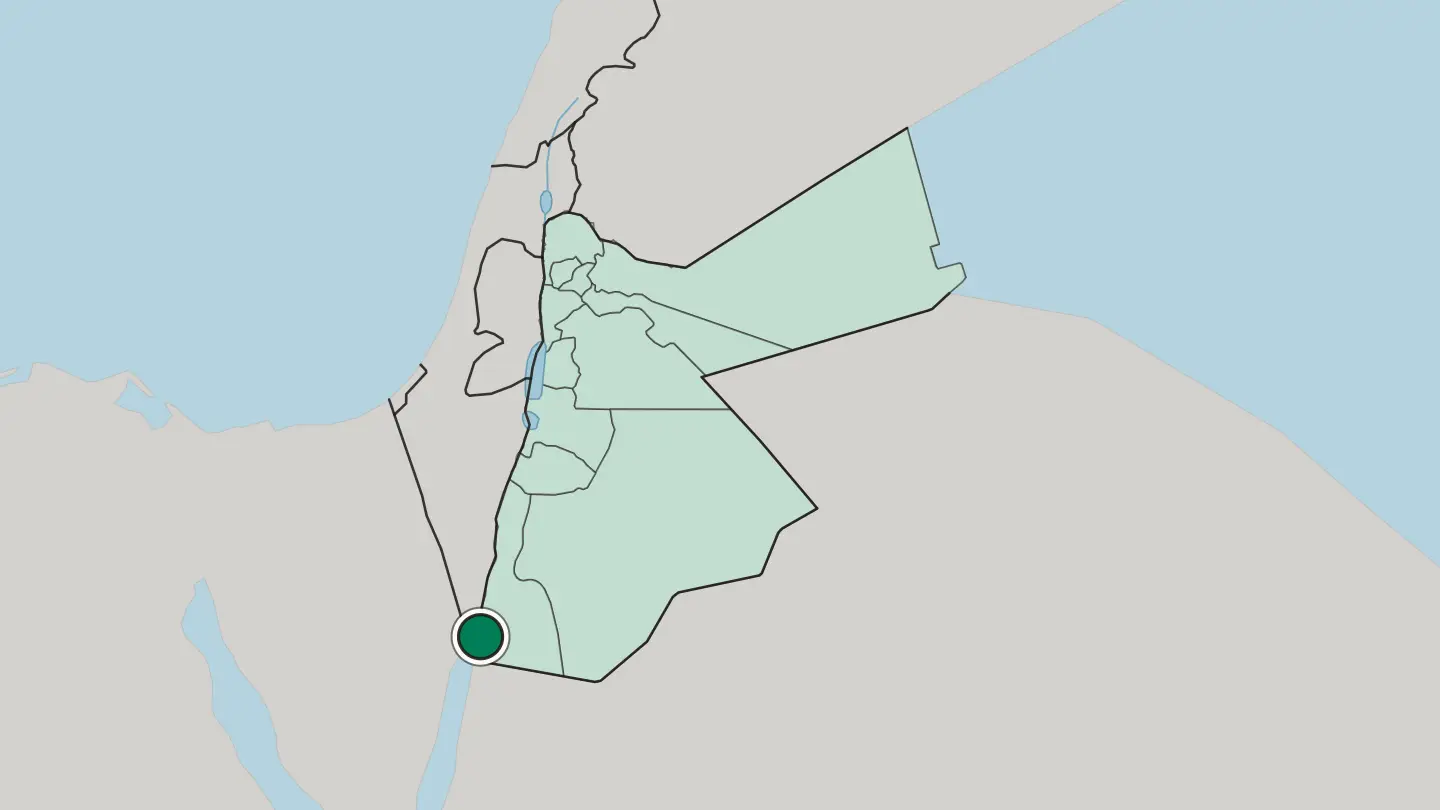 Jordan
Jarash
Jarash in northern Jordan stands beside Gerasa, the excavated Roman city whose ruins draw more visitors than anywhere in the country but Petra.Where to stay →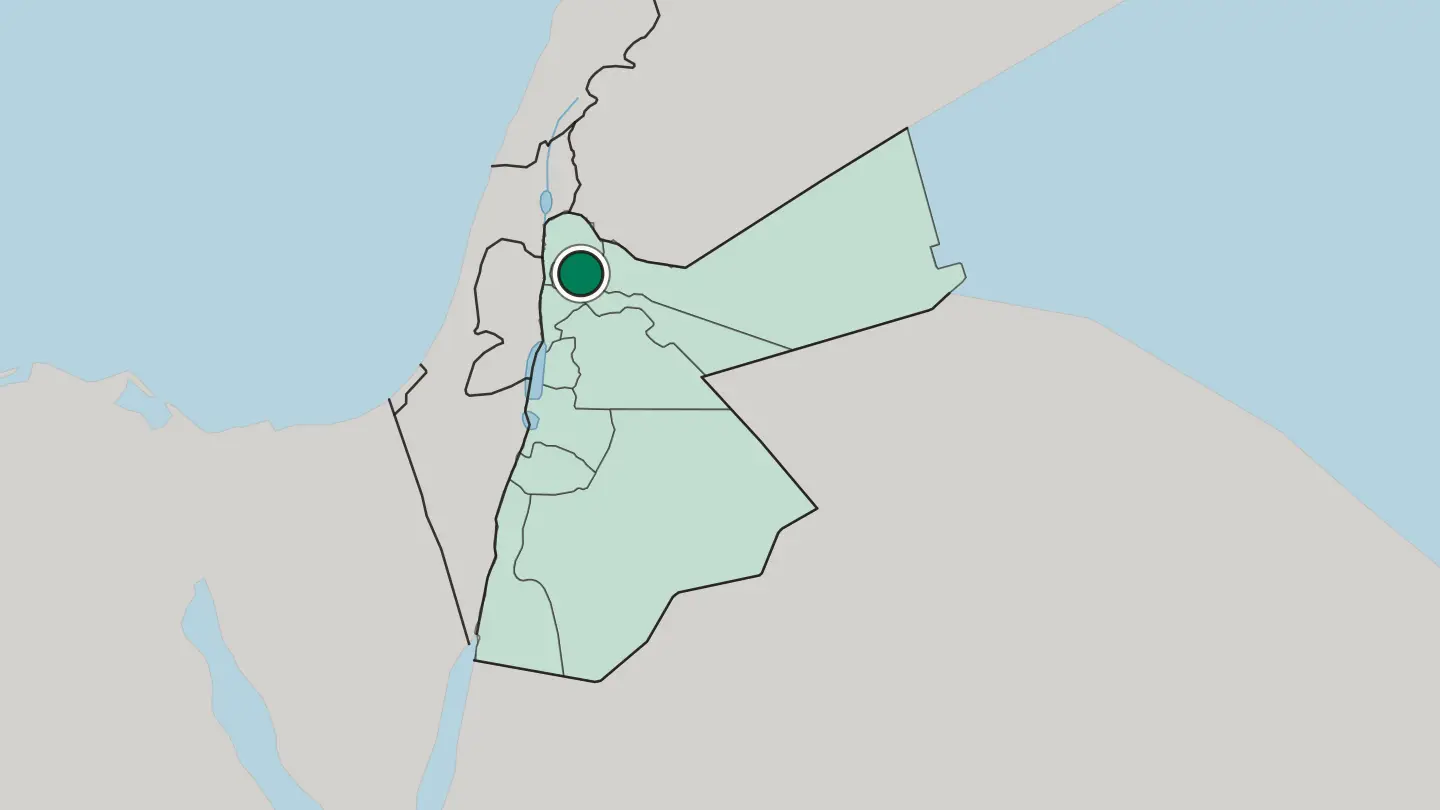 Jordan
Irbid
Irbid is a city of north Jordan near the Syrian border, a university town on the fertile highlands, near the old Decapolis ruins above the Jordan valley.Where to stay → Jordan
Mādabā
Madaba is a town of central Jordan, the City of Mosaics, famed for an ancient mosaic map of the Holy Land and for nearby Mount Nebo.Where to stay →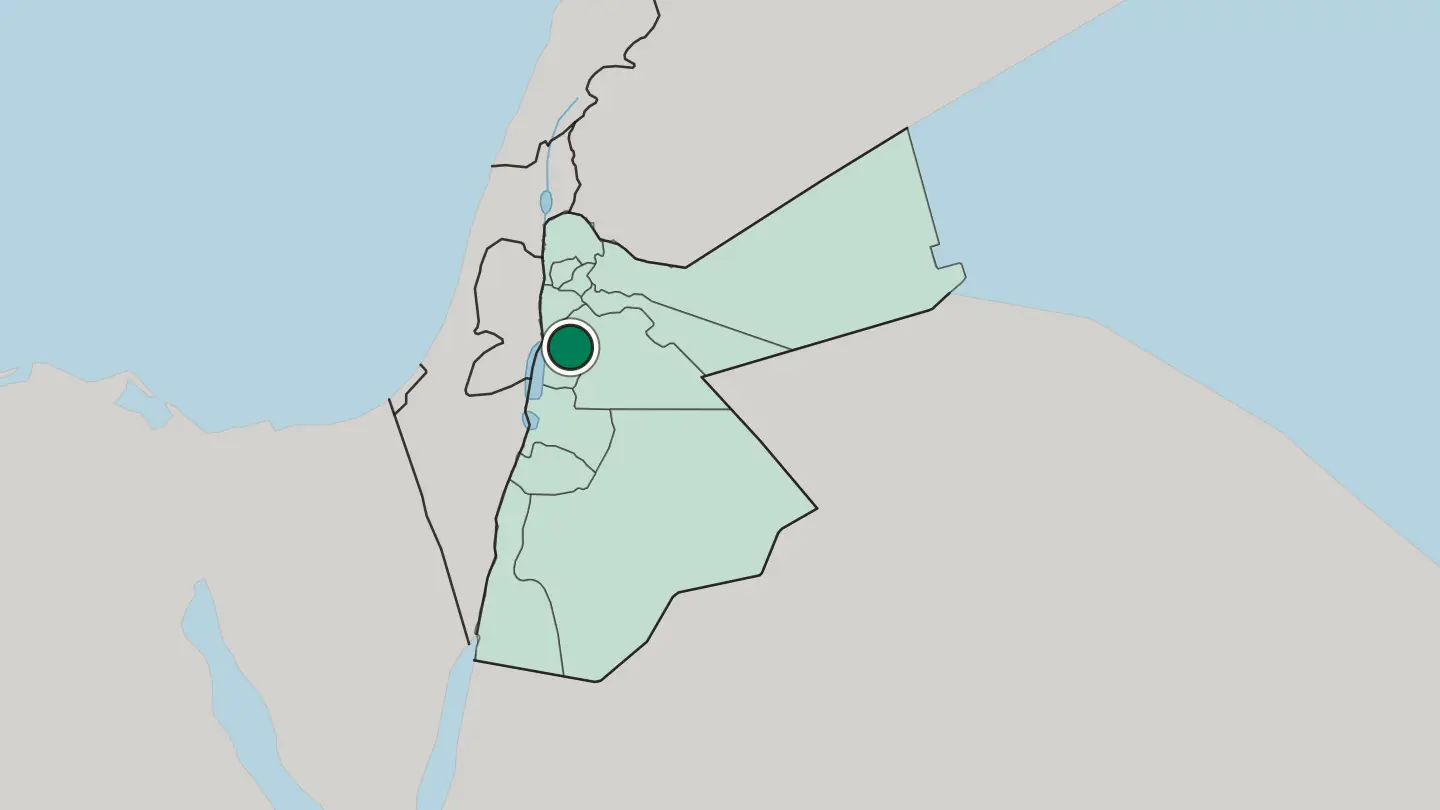
 Jordan
Zarqa
Zarqa is the capital of Zarqa Governorate and the second largest city in Jordan after Amman, its Arabic name الزرقاء meaning the blue one.Where to stay →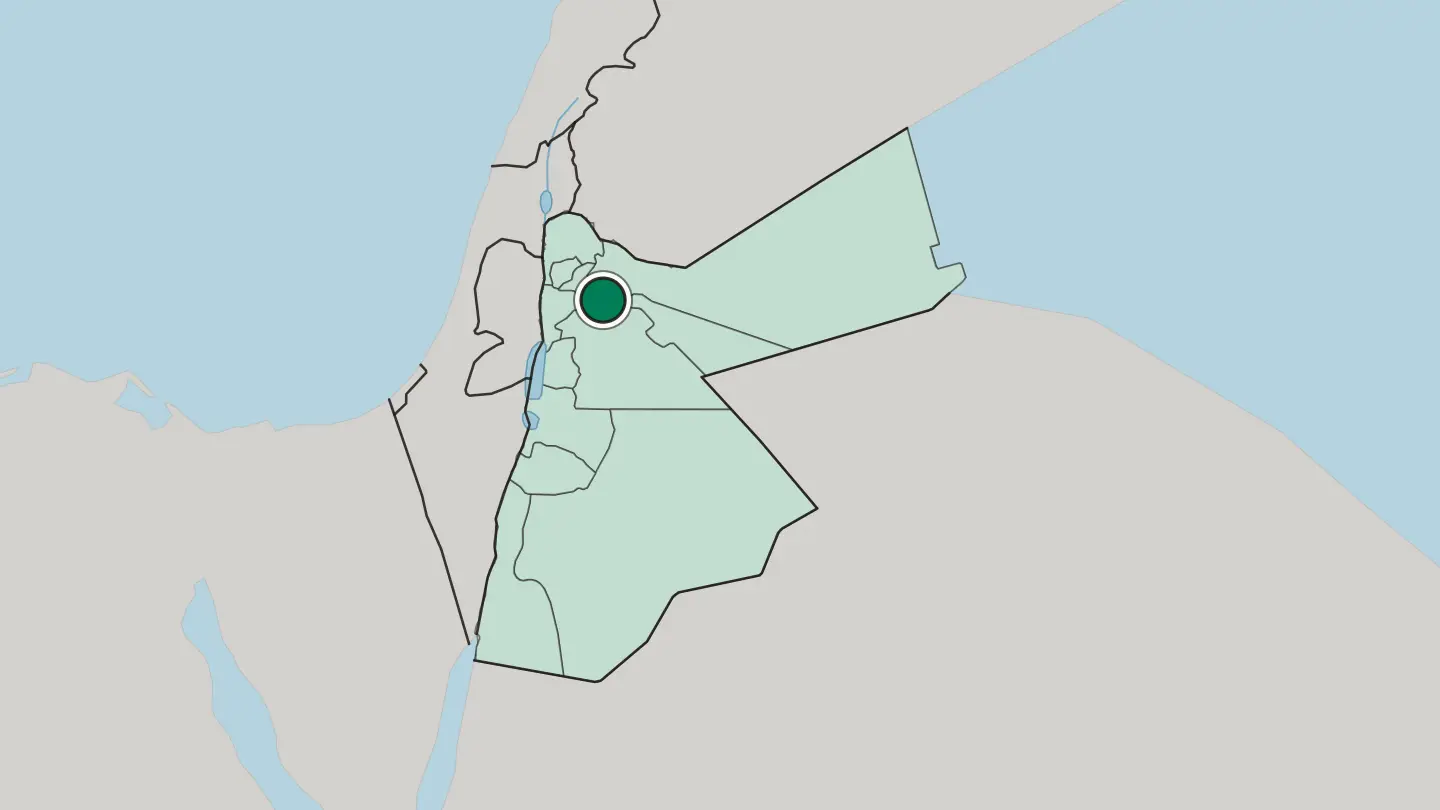 Jordan
As Salţ
As Salt is a town of west-central Jordan above the Jordan Valley, a golden-stone Ottoman town famed for its old houses and its church-and-mosque harmony.Where to stay →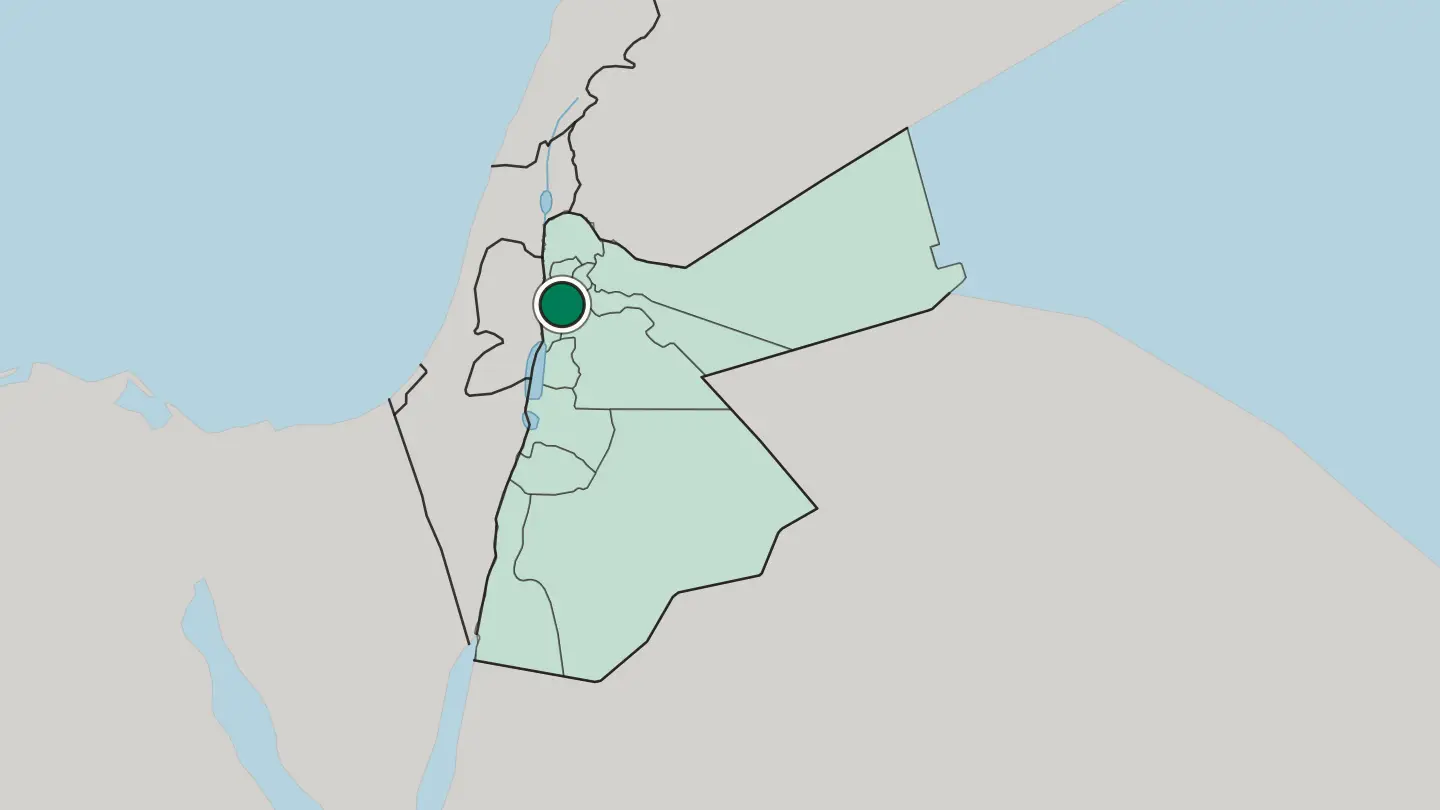
 Jordan
‘Ajlūn
'Ajlūn is the hill-country capital of the Ajloun Governorate in Jordan, known for the ruined twelfth-century castle on the height above its streets.Where to stay →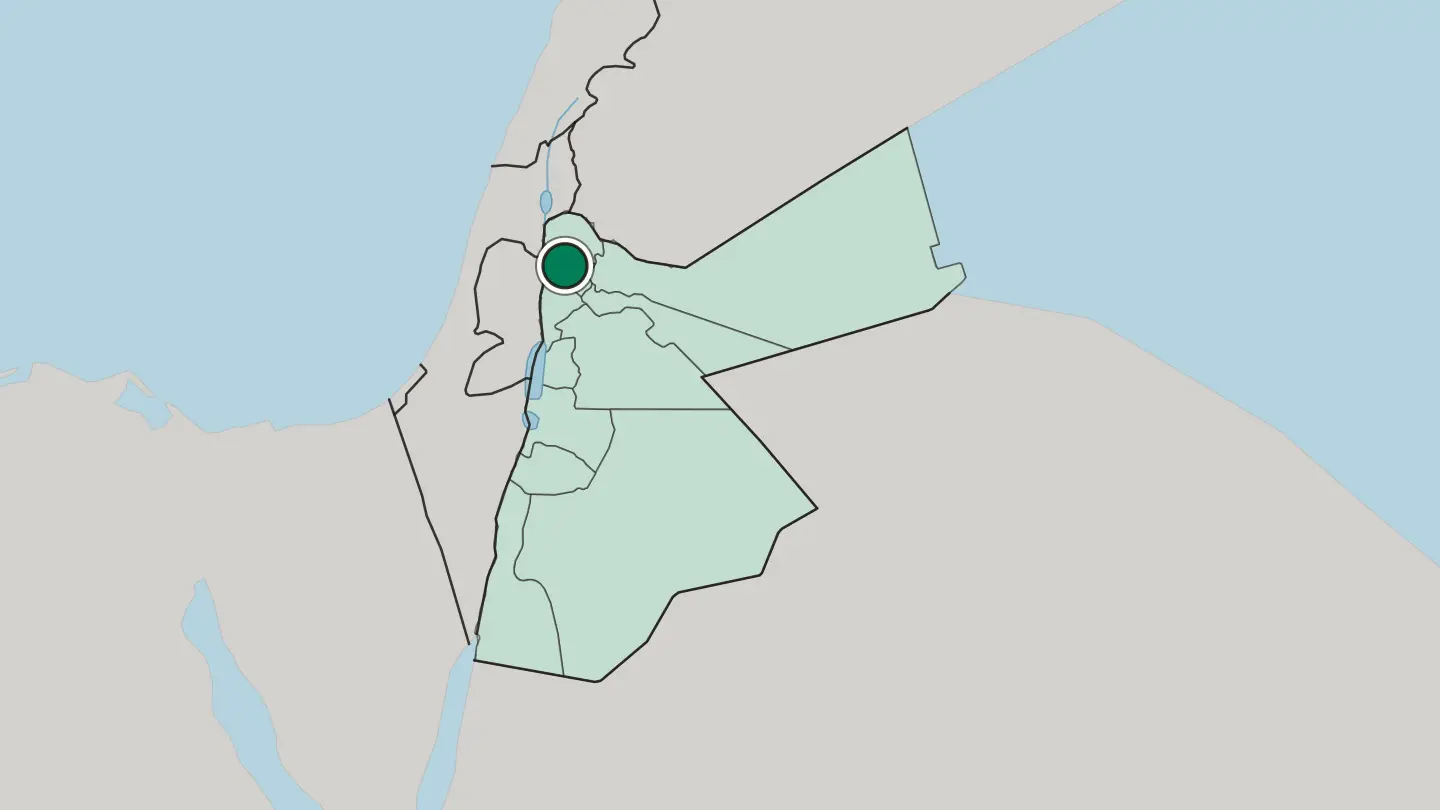
 Jordan
Ma'an
Ma'an is a city of Jordan, capital of the Ma'an Governorate, 218 kilometres south-west of Amman on the Desert Highway.Where to stay →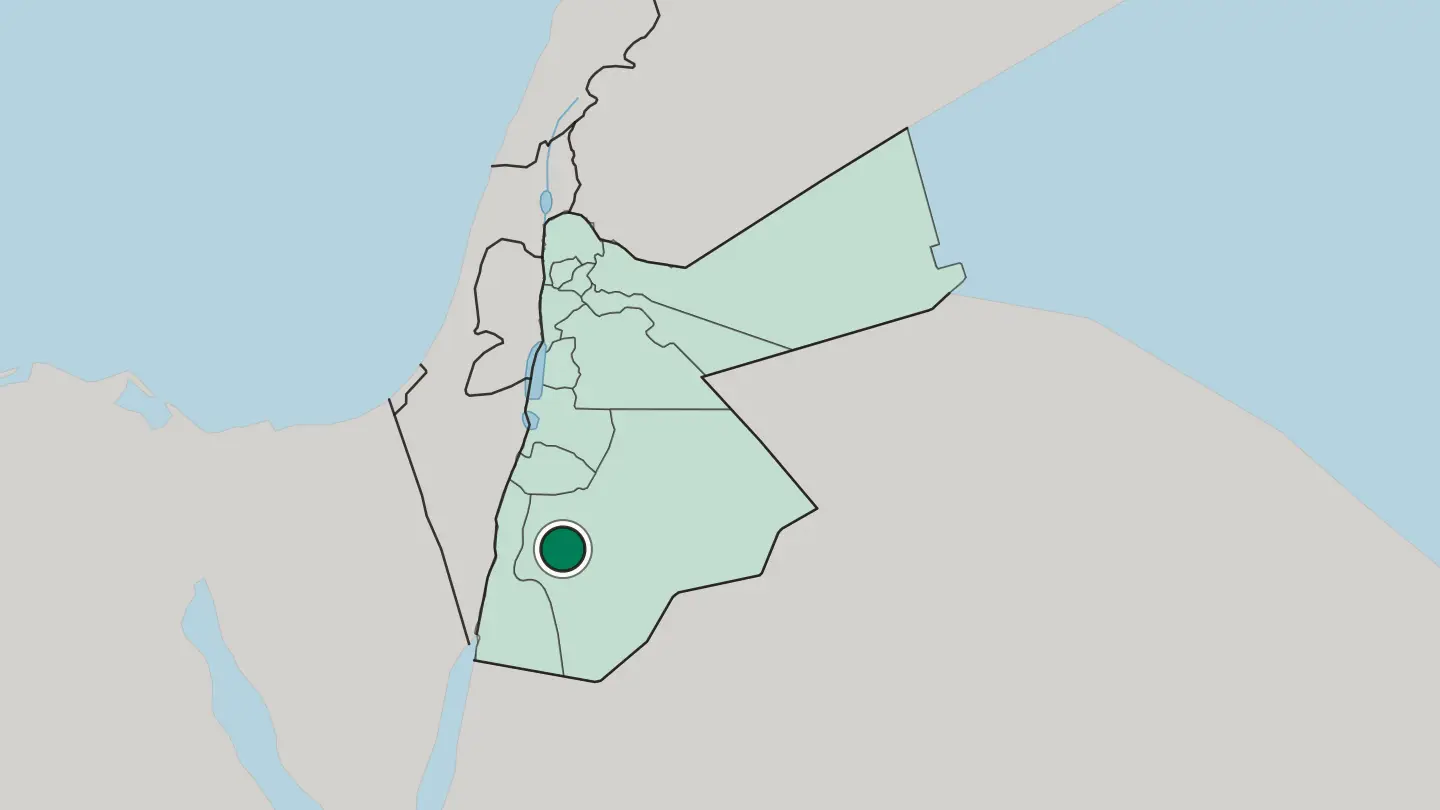
Hotel links are affiliate links: booking through them may earn us a commission, at no extra cost to you. It never affects how places are ranked. How this works
Regions of Jordan
Jordan
Ajloun
Ajloun is a hilly region in north-west Jordan, where oak forest and a 12th-century Ayyubid castle crown the northern highlands above Amman.Towns & cities →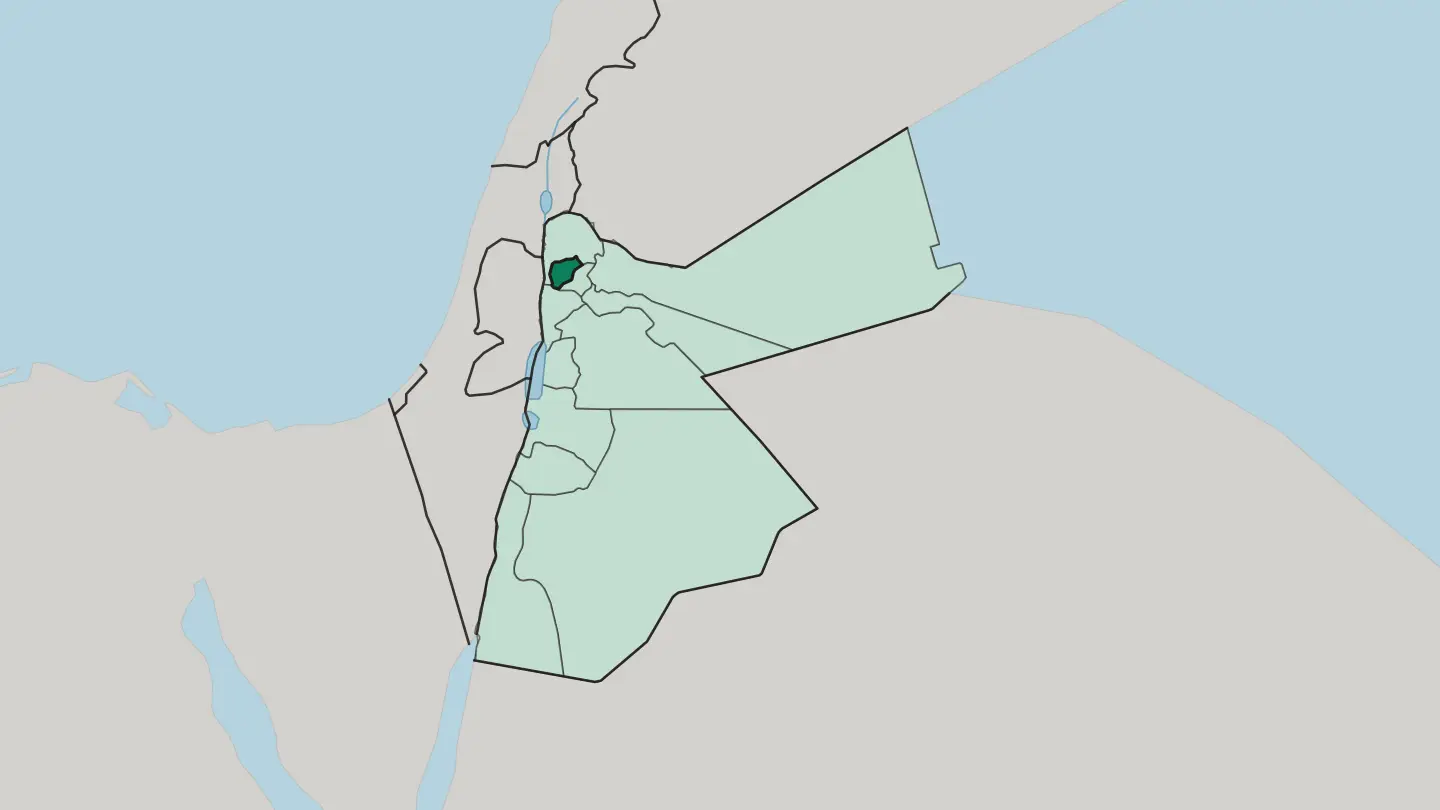 Jordan
Al Karak
Al Karak is a governorate of southern Jordan on the Moab highlands, ruled by the great medieval Kerak Castle above the Dead Sea.Towns & cities →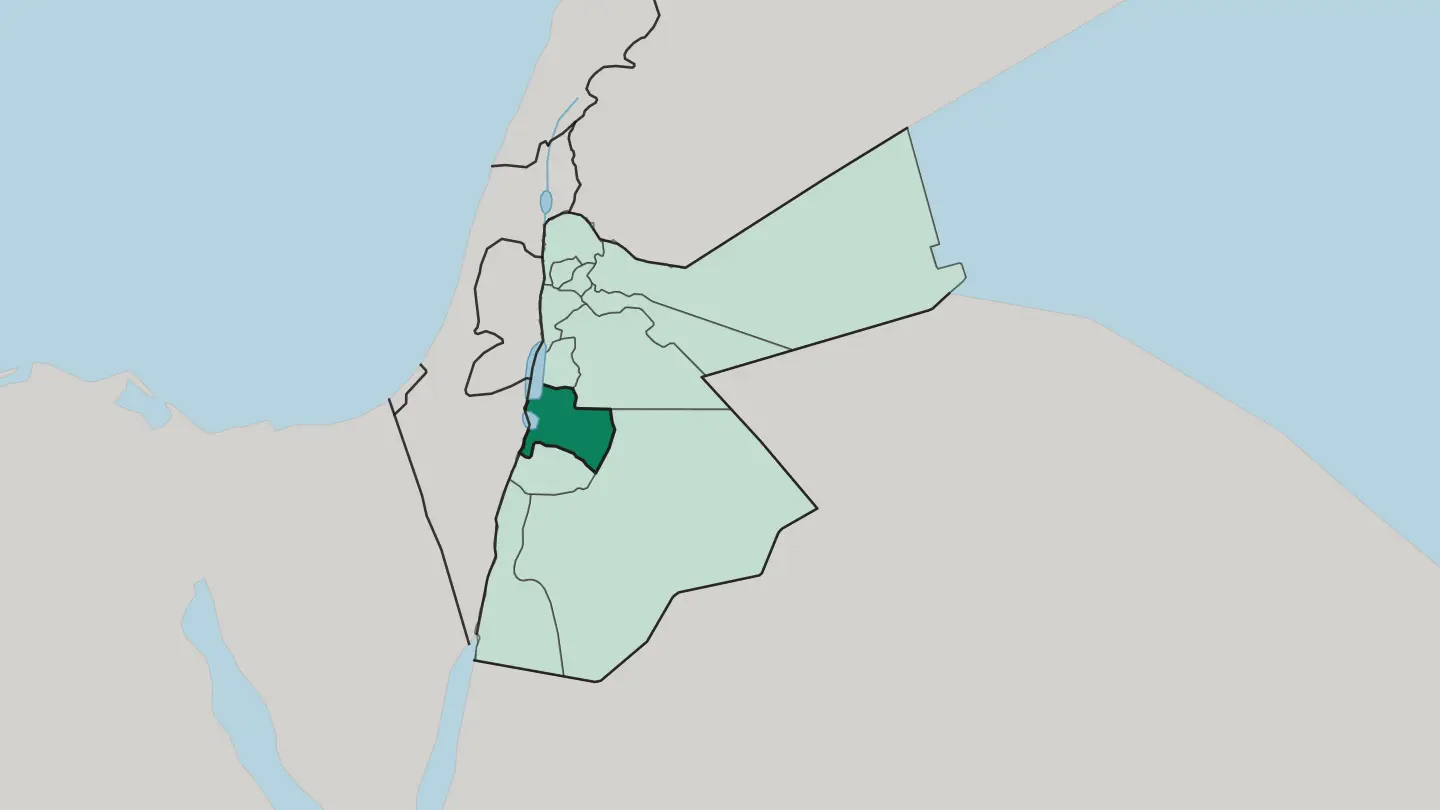 Jordan
Al Mafraq
Al Mafraq is Jordan's north-eastern corner, where the Hauran plateau's black basalt gives way to the open Syrian Desert.Towns & cities →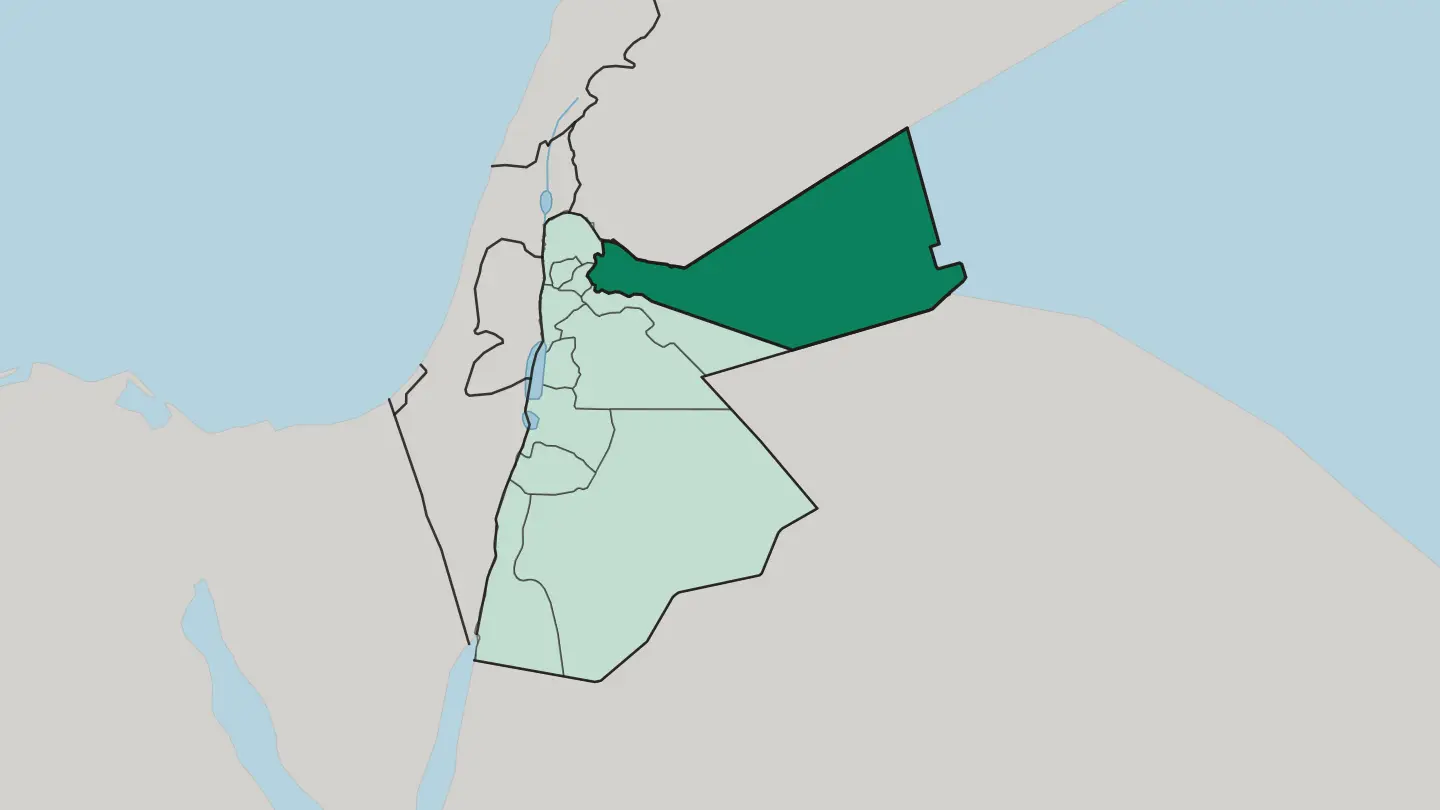 Jordan
Amman Governorate
Amman Governorate, officially Muhafazat al-Asima, is a governorate of Jordan built around Amman, the national capital.Towns & cities →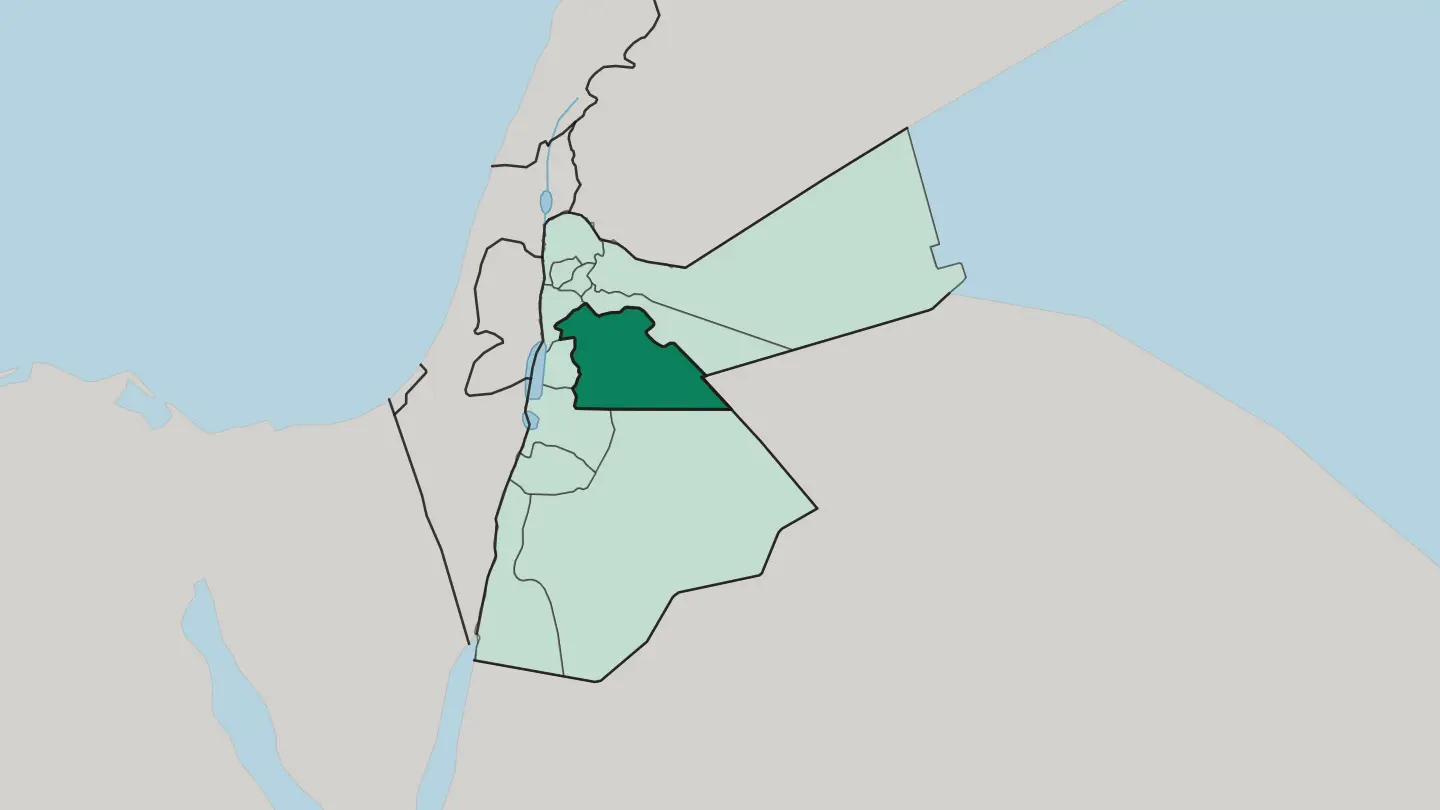 Jordan
Irbid
Irbid is Jordan's green northern governorate, a plateau of olive groves and Roman ruins above the Yarmouk River.Towns & cities →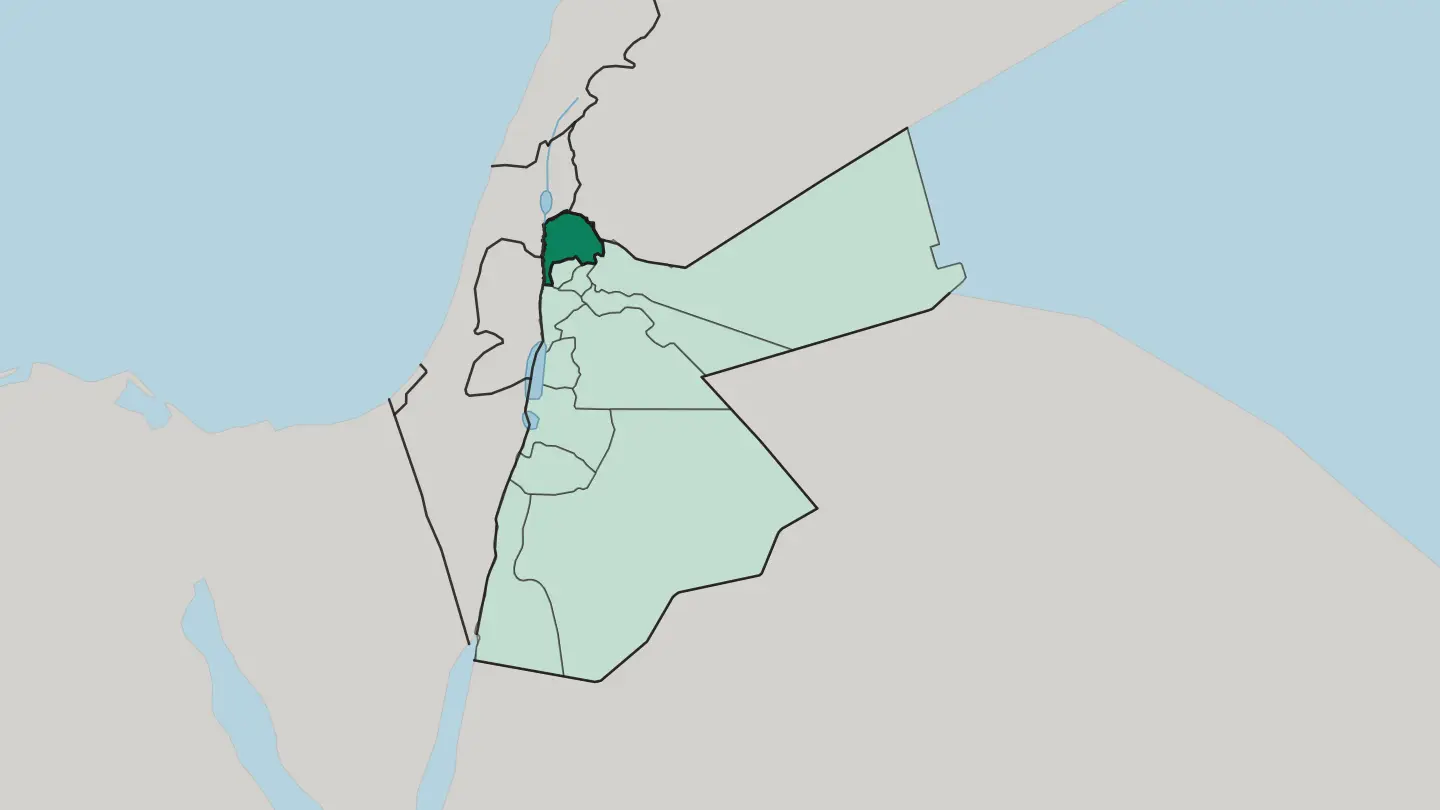 Jordan
Jerash
Jerash is a small governorate in northern Jordan, built around Gerasa, whose Roman ruins draw tourists second only to Petra.Towns & cities →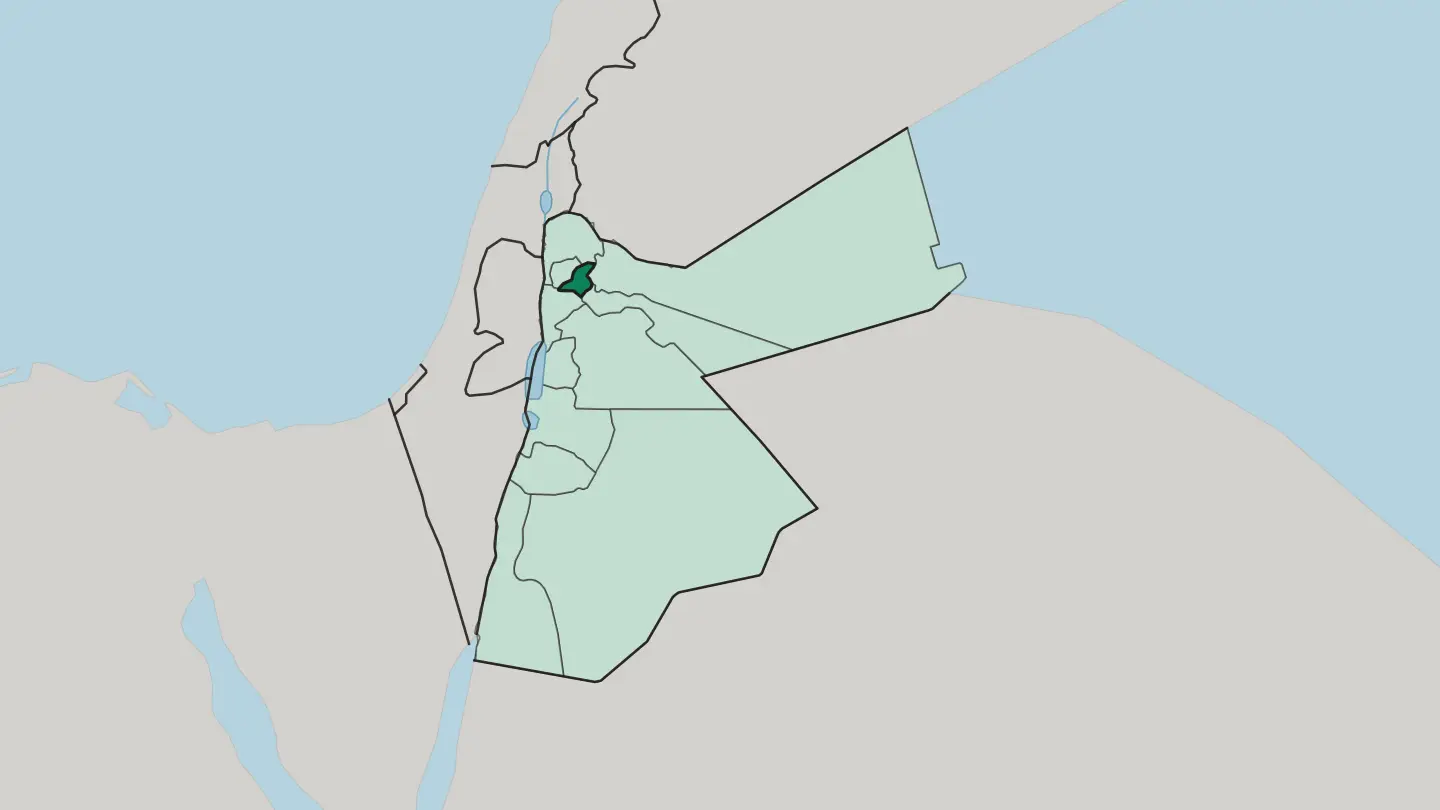 Jordan
Muḩāfaz̧at Ma‘ān
Jordan's largest and emptiest governorate, holding the rose-red city of Petra, the sands of Wadi Rum, and the town of Ma'ān.Towns & cities →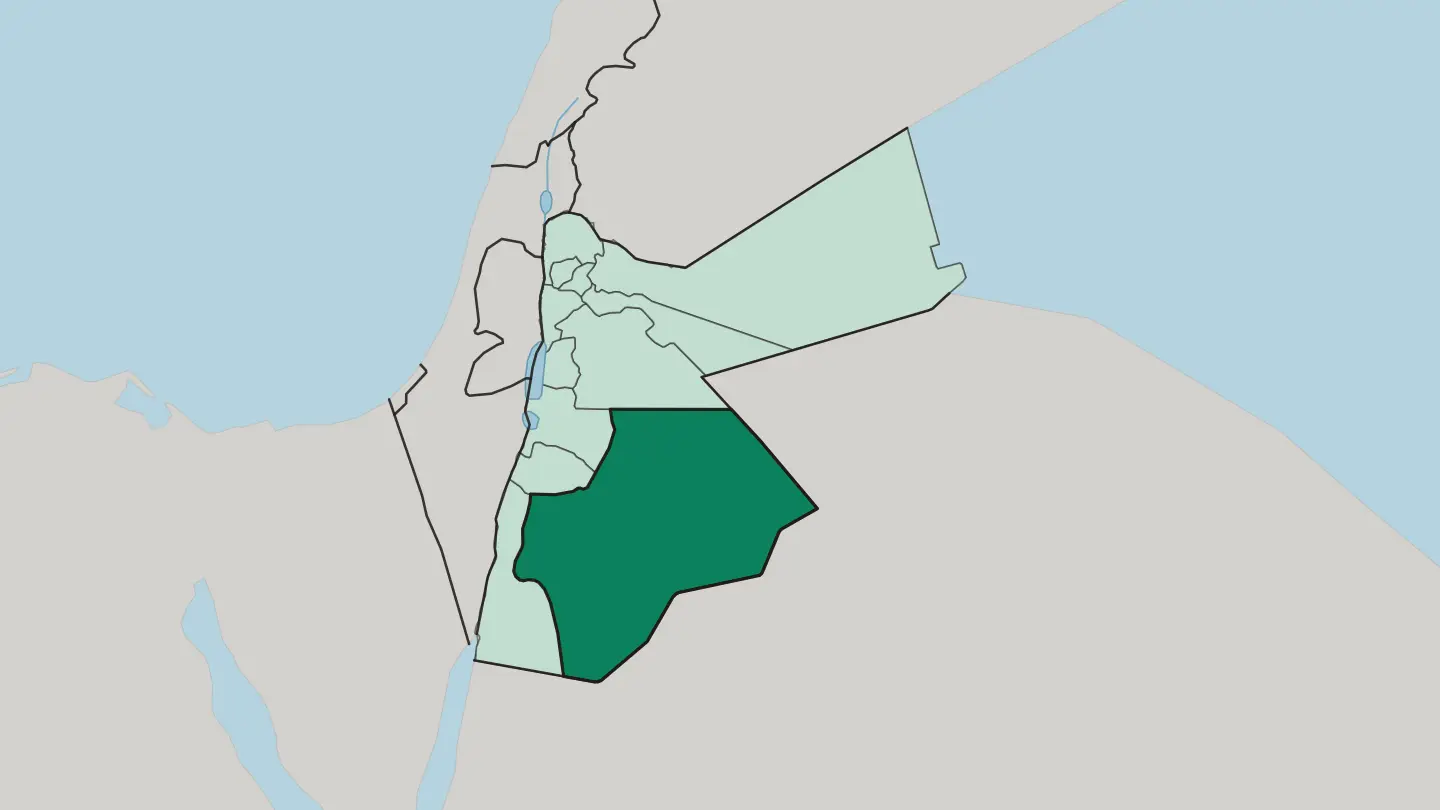 Jordan
Muḩāfaz̧at Mādabā
Madaba Governorate spreads across a highland plateau south-west of Amman, its capital city famous for Byzantine mosaic floors.Towns & cities →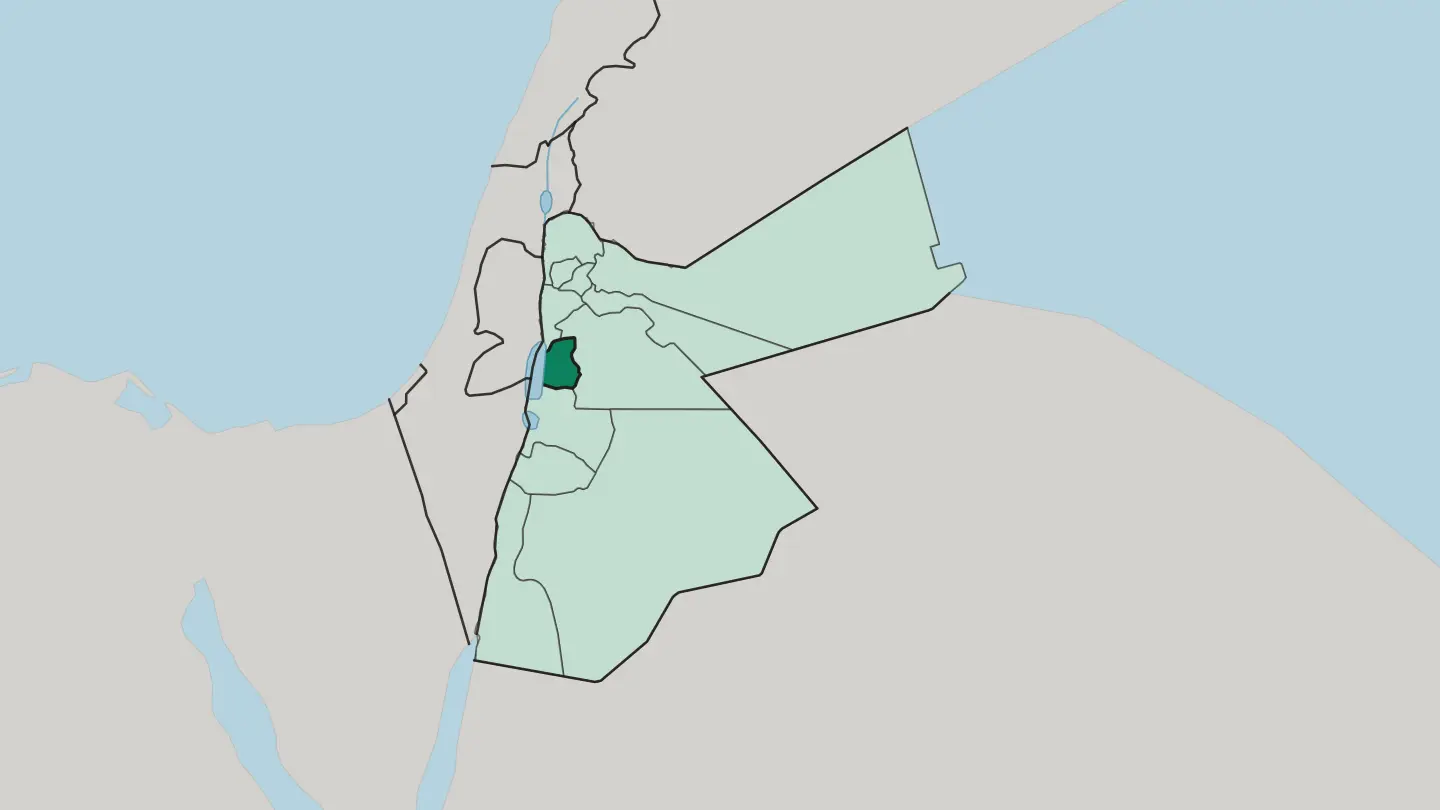 Jordan
Muḩāfaz̧at al Balqā’
Balqa is the Jordanian governorate northwest of Amman, dropping from the As-Salt highlands to the Jordan River and the Dead Sea.Towns & cities →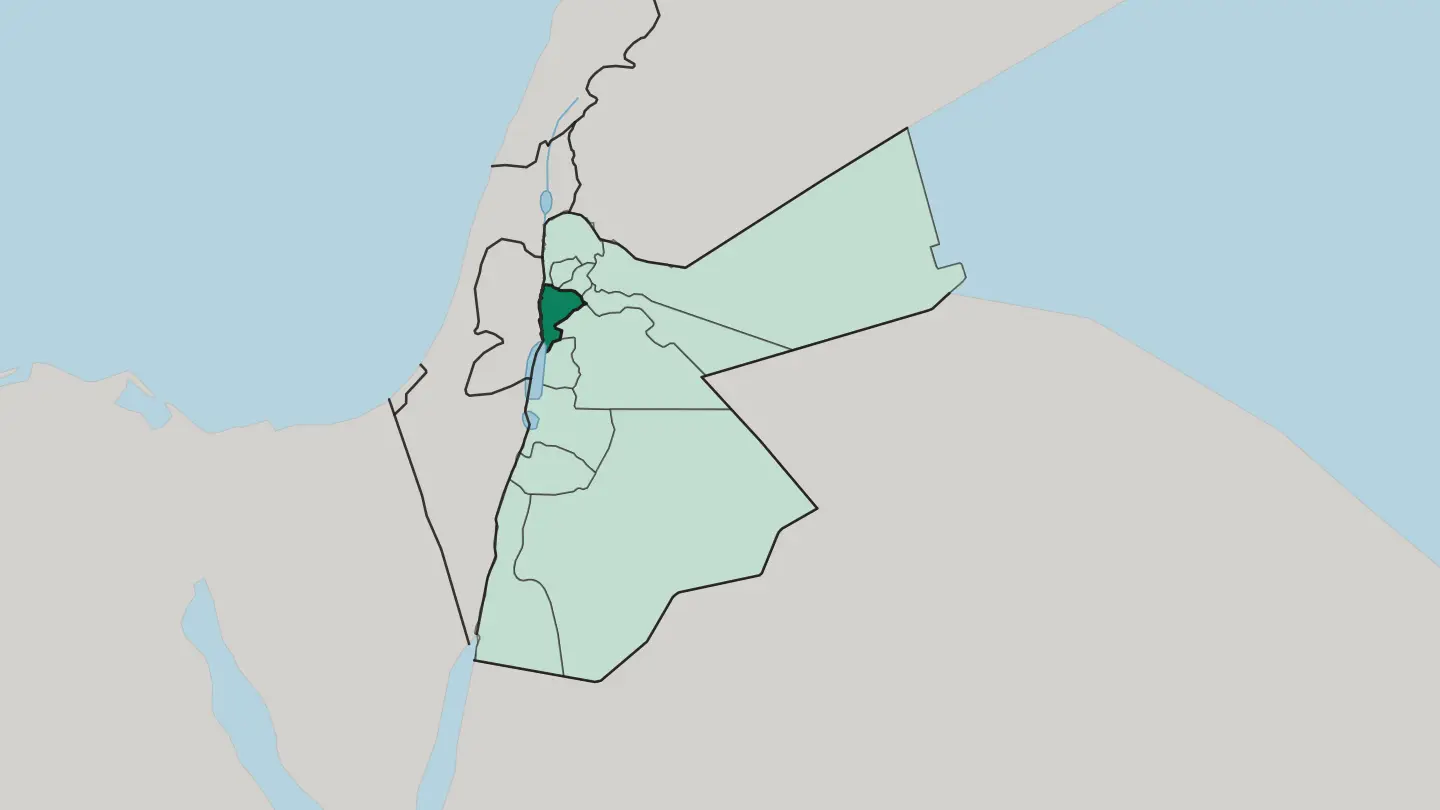 Jordan
Muḩāfaz̧at al ‘Aqabah
Muḩāfaz̧at al 'Aqabah is Jordan's southern corner on the Gulf of Aqaba, home to the port city of Aqaba and to Wadi Rum.Towns & cities →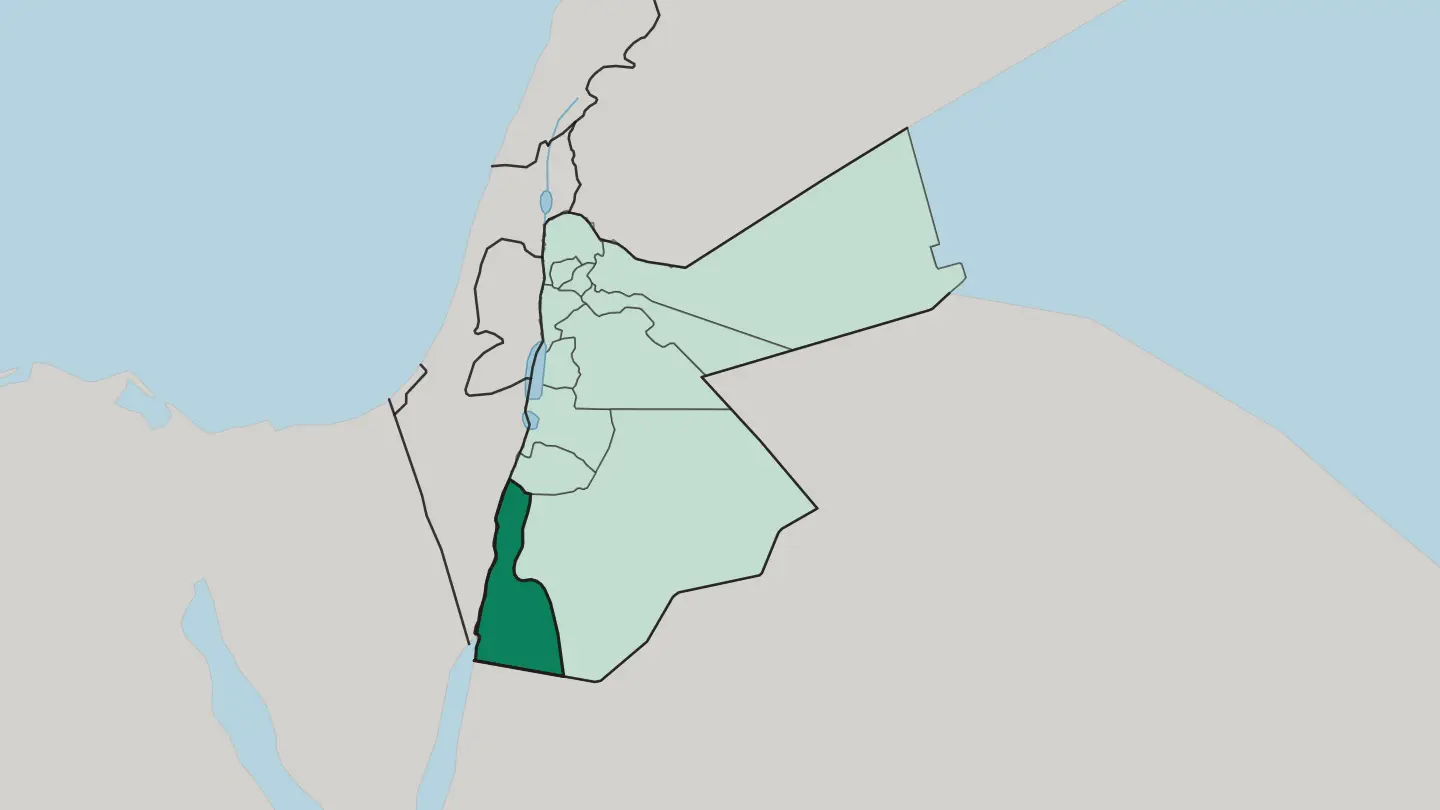 Jordan
Muḩāfaz̧at az Zarqā’
Muḩāfaz̧at az Zarqā' is Jordan's industrial heartland east of Amman, built around the Zarqa River and its refinery and phosphate towns.Towns & cities →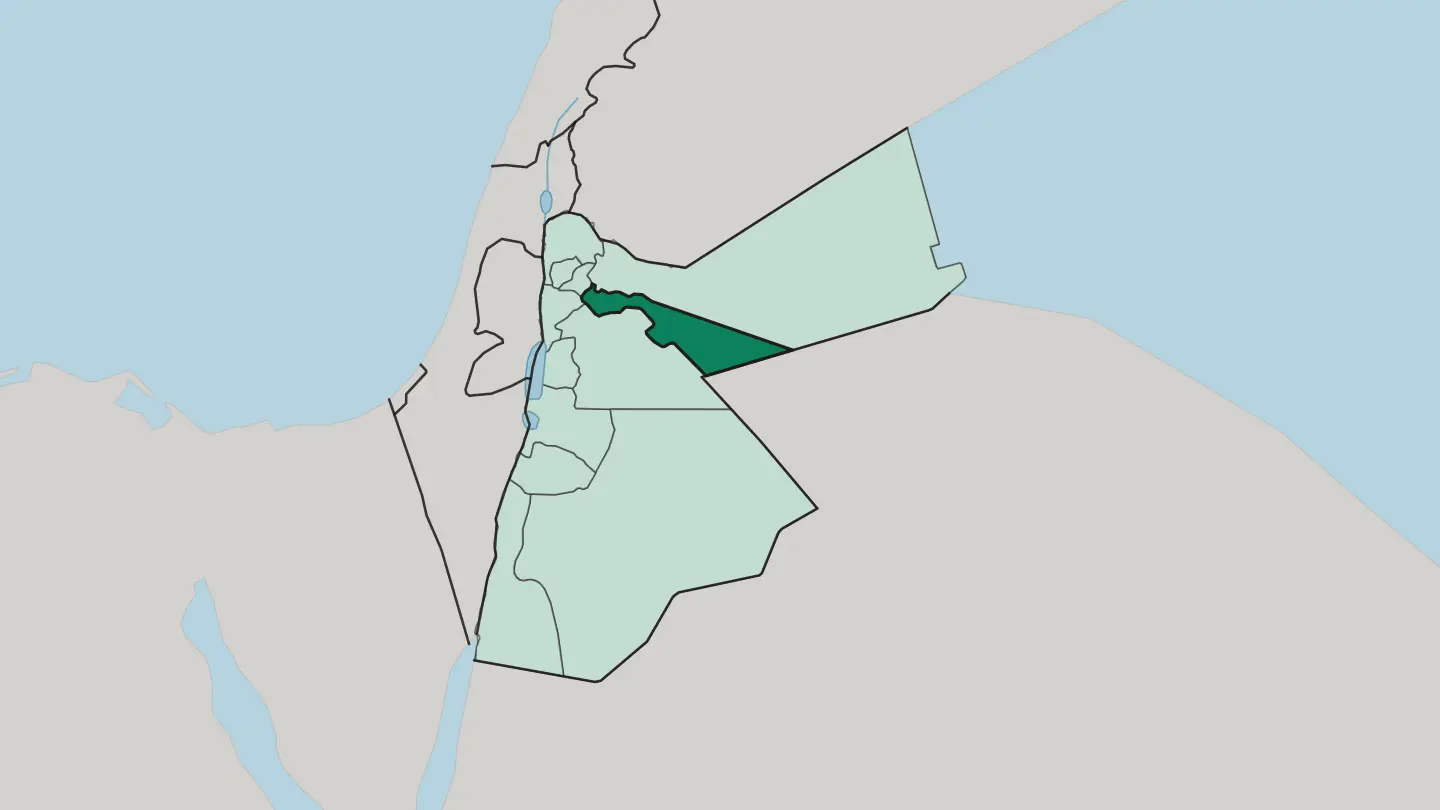 Jordan
Muḩāfaz̧at aţ Ţafīlah
Muḩāfaz̧at aţ Ţafīlah is Jordan's least-peopled governorate, a high olive-country plateau falling west into the Dana gorge and Wadi Araba.Towns & cities →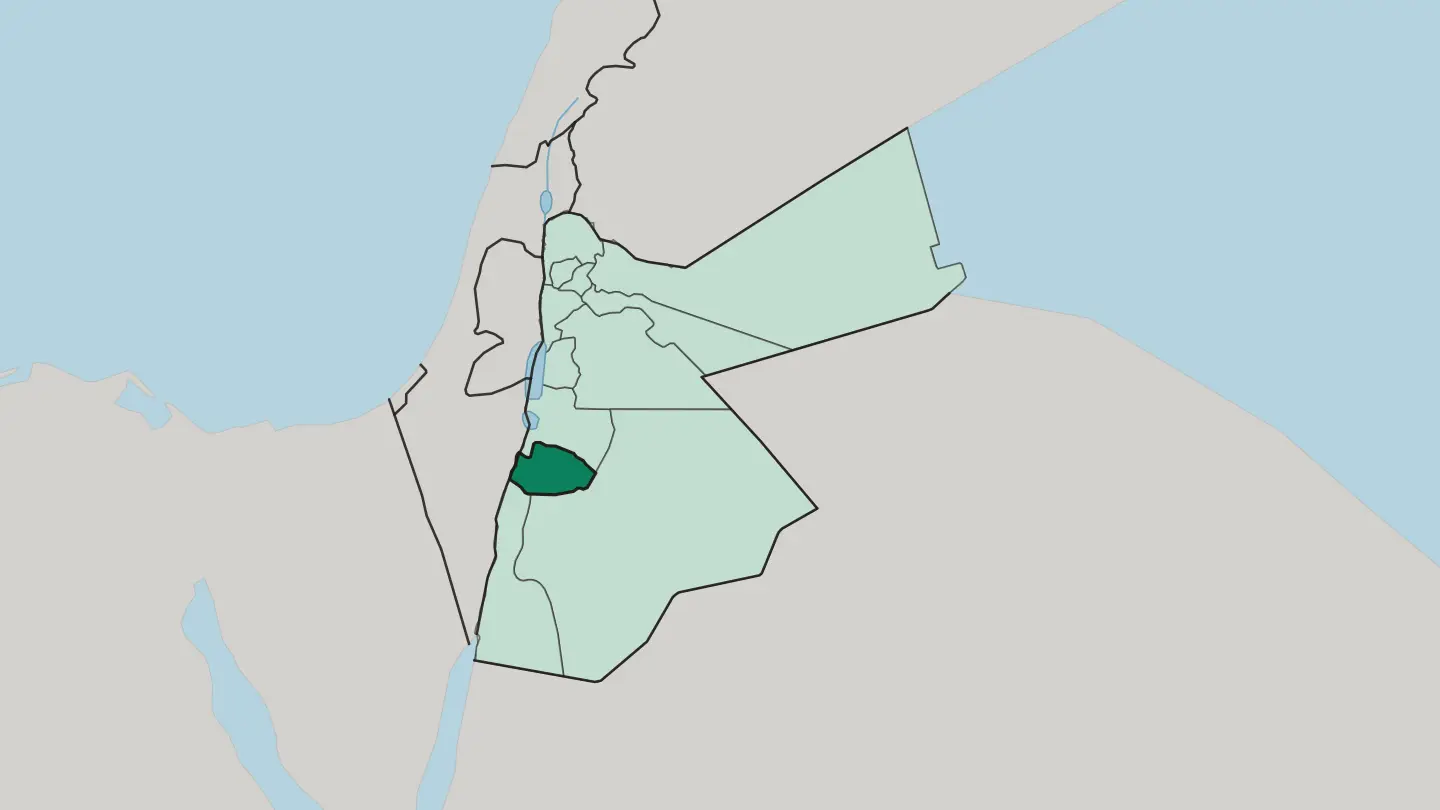
Explore by experience
Not sure which place? Start from how you want to travel.
About Jordan
What is Jordan known for?
Jordan is an Arab kingdom in the Middle East, standing at the crossroads of Asia, Africa, and Europe. The land is famous for old sites. Its attractions range from biblical places in the Jordan Rift Valley to the seaside on the Red Sea, and Amman, the capital, serves as the base from which travellers reach them.
The sea reaches only one corner. From the shores of the Dead Sea to the Gulf of Aqaba, Jordan packs a wide sweep of country into a compact kingdom.
Where is Jordan?
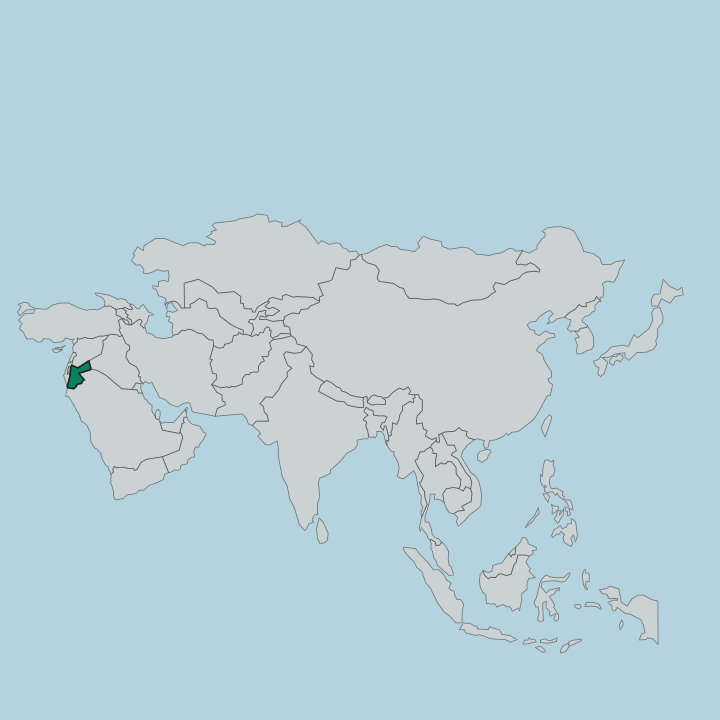
Jordan lies in the Southern Levant, part of West Asia, and shares long land borders on three sides. Syria lies to the north. Iraq is to the east and Saudi Arabia to the south, ranging Jordan alongside three larger neighbours across this corner of the Middle East.
To the west, the land drops into the Jordan Rift Valley. The Jordan River runs along that western border and flows into the Dead Sea, and beyond the valley lie Israel and the Palestinian territories. The valley marks the western edge.
In its southwest, Jordan reaches the sea. A short coastline meets the Red Sea at the Gulf of Aqaba, the country's only saltwater shore, set across that gulf from Egypt. This narrow window on the Red Sea is the kingdom's single outlet to open water.
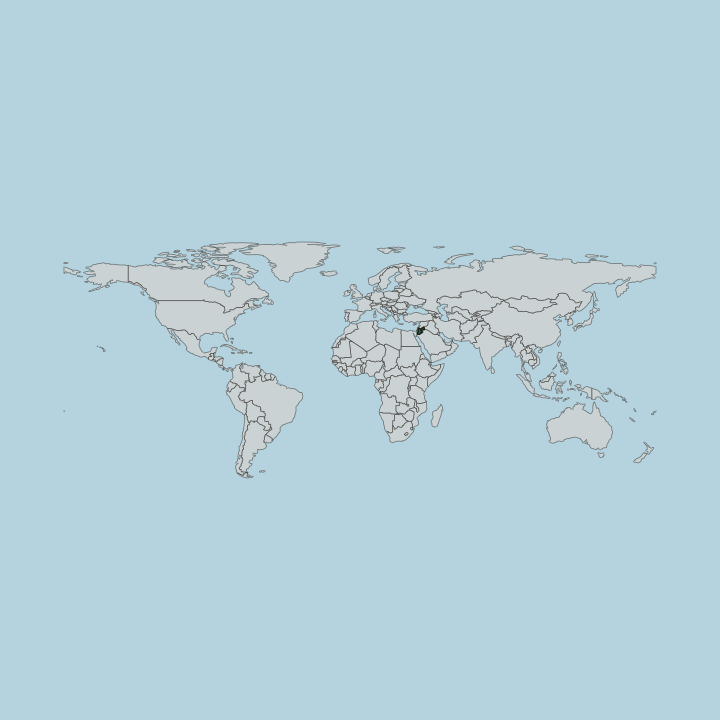
Inland from the coast and the Rift Valley stands Amman, the capital and largest city, near the heart of the country. From the Jordan River in the west to the borders with Iraq and Saudi Arabia, Jordan holds a compact place at the meeting of Asia, Africa, and Europe, the crossroads the country has long occupied.
What is the history of Jordan?
The Hashemite Kingdom of Jordan took its modern form in 1946, when the country became an independent kingdom. Independence came that year. Long before it, the land of the Southern Levant lay at the crossroads of Asia, Africa, and Europe, a corridor between continents and a route toward the biblical sites that still draw travellers.
It belongs to West Asia, within the wider Middle East. The ground is far older than the state. What became Jordan carried a deep human past well before 1946 gave it a modern name.
Since 1946, the kingdom has carried the name of the Hashemite dynasty at its head. The monarchy defines the modern state. Amman grew into the national capital and the largest city, the seat of government for the young kingdom and the anchor of its life in the Southern Levant.
The capital led the way. As an Arab kingdom in West Asia, Jordan has held the Hashemite name through its modern decades, tying a long past in the Levant to a national story that runs from 1946 onward. From an ancient crossroads to a modern state, the country keeps both threads.
What is Jordan like?
Jordan is an Arab country, and Arabic is the language of daily life across the kingdom. Arabic shapes the culture. As a land of the Southern Levant, Jordan shares the food, faith, and customs of the wider Arab Middle East, its people living at the crossroads of Asia, Africa, and Europe.
The language is the thread. Custom is shared across the region. Arabic ties Jordan to the whole Arab world of the Middle East, and the culture of the country reads as that of the Levant, carried in its own national way.
The kingdom's place between continents has left it open to many currents. Faith runs through the calendar. Jordan holds biblical sites honoured across more than one religion, and pilgrims as well as travellers come to the places named in scripture.
Amman, the capital, gathers the civic and cultural life of the nation, the largest stage for a culture rooted in Arabic and in the traditions of the Southern Levant. Old and modern sit side by side here. In the capital and beyond, the Southern Levant sets the rhythm of Jordanian life.
What is the climate of Jordan?
Jordan has a broadly subtropical climate, dry and warm for much of the year. By high summer the heat across Jordan turns fierce. The greatest heat settles over the interior and the Jordan Rift Valley, while the short winters can turn cooler and bring some rain toward the west of the country.
The seasons are clearly marked. Down by the Red Sea at the Gulf of Aqaba, the south stays warm even when the rest of the kingdom cools.
How do you get to Jordan?
Most visitors arrive in Jordan through Amman, the capital and largest city, which draws the country's main air links. The capital is the main way in. From Amman the roads run out across the kingdom, north toward the border with Syria, east toward Iraq, and south toward Saudi Arabia and the Red Sea coast at the Gulf of Aqaba.
Overland routes cross the frontiers. Travellers can also reach the kingdom by sea, at its short Red Sea coast on the Gulf of Aqaba.
Good for
Updated September 2026