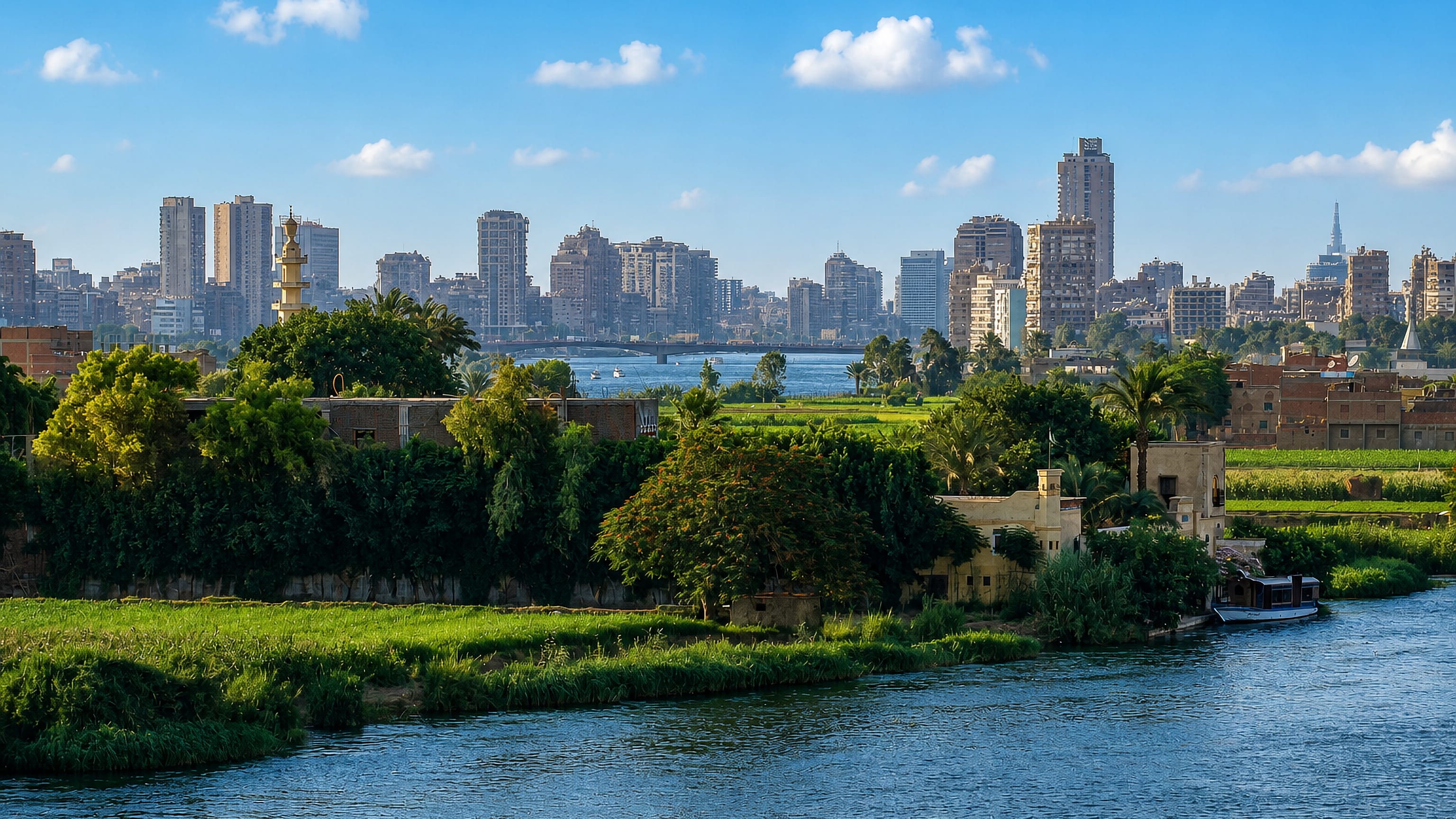
Egypt: Regions, Cities & Travel Guide
Egypt reaches from the Mediterranean Sea across desert to the Red Sea, an African country of pyramids, temples, and the Sinai Peninsula.
Hotel links are affiliate links: booking through them may earn us a commission, at no extra cost to you. It never affects how places are ranked. How this works


Top destinations in Egypt
Cities to start from, then drill into areas and hotels.
 Egypt
Egypt
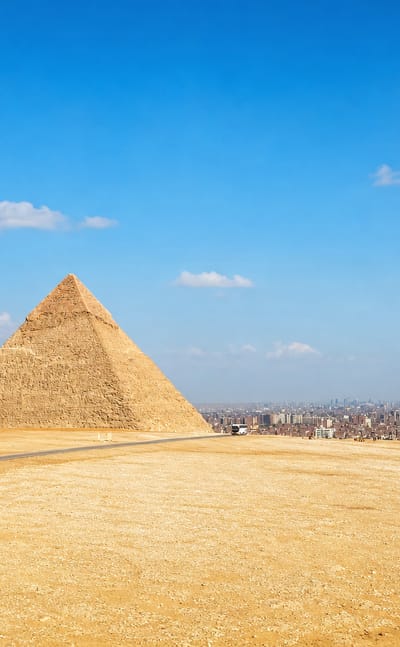
Cairo
Cairo is the capital and largest city of Egypt, a dense old city of mosques and museums reaching out to the Giza pyramids.Where to stay →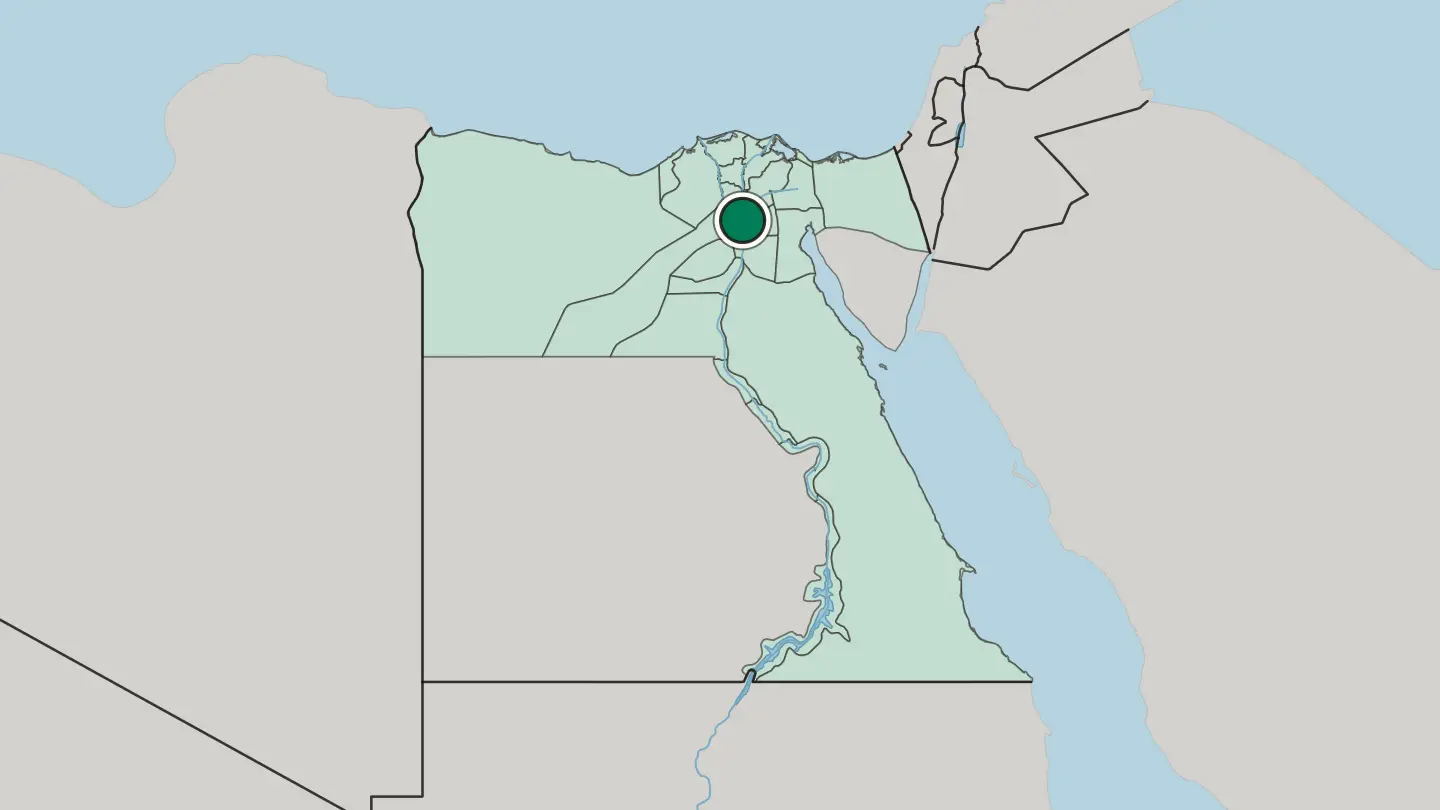
 Egypt
Egypt
Alexandria
Alexandria is a Mediterranean port in Egypt, the ancient seat of the Pharos lighthouse and a lost library reborn as the Bibliotheca Alexandrina.Where to stay →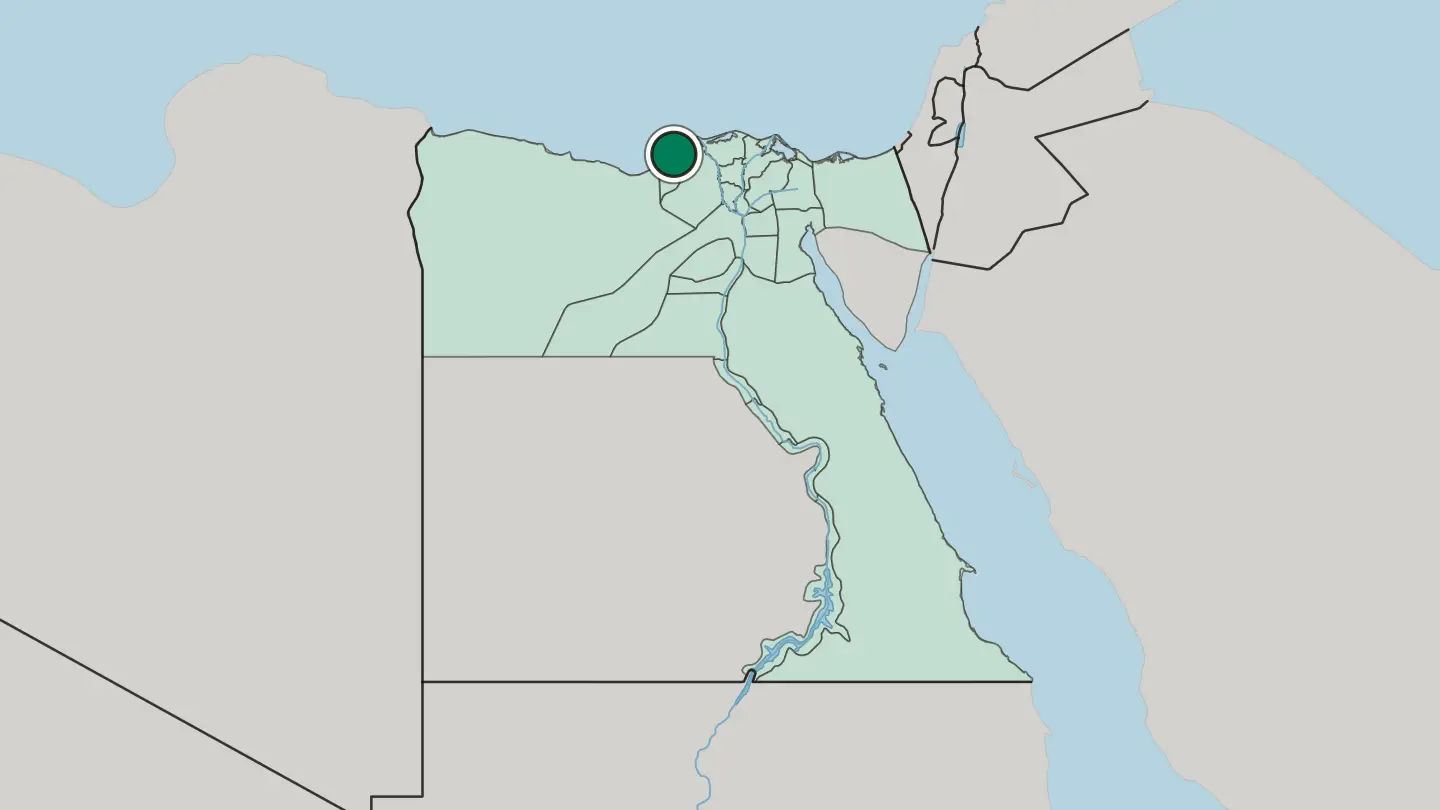
 Egypt
Egypt
Hurghada
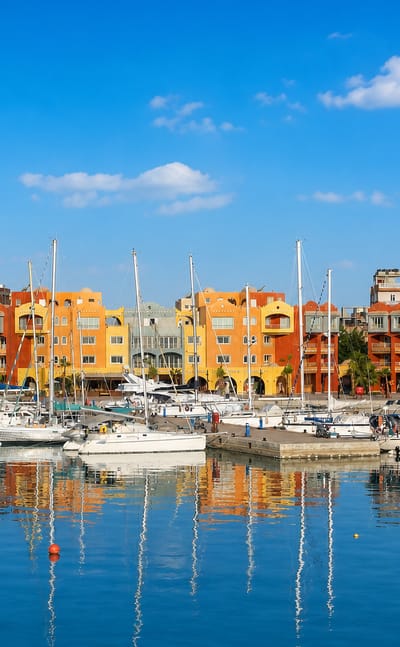
Reefs shelve off the shore at Hurghada, a Red Sea resort city in the Red Sea Governorate of Egypt, known for its diving and the Hurghada Museum.Where to stay →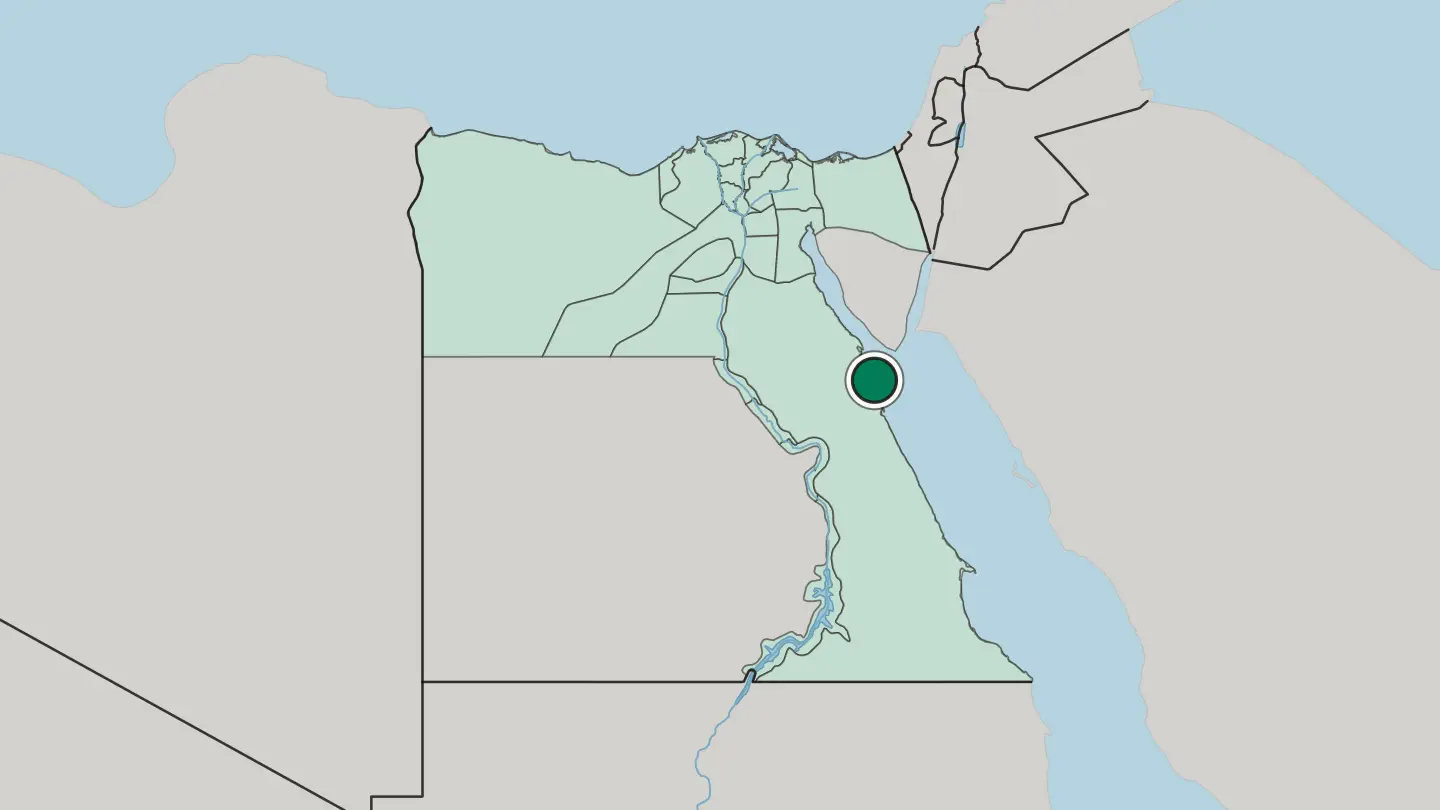
 Egypt
Egypt
Luxor
Temple pylons rise over the Nile at Luxor, a city in Upper Egypt on the site of ancient Thebes, known for Karnak Temple Complex and Luxor Temple.Where to stay →
 Egypt
Egypt
Giza
Desert plateau meets river at Giza, a city on the west bank of the Nile opposite Cairo, known for the Pyramids and the Sphinx.Where to stay →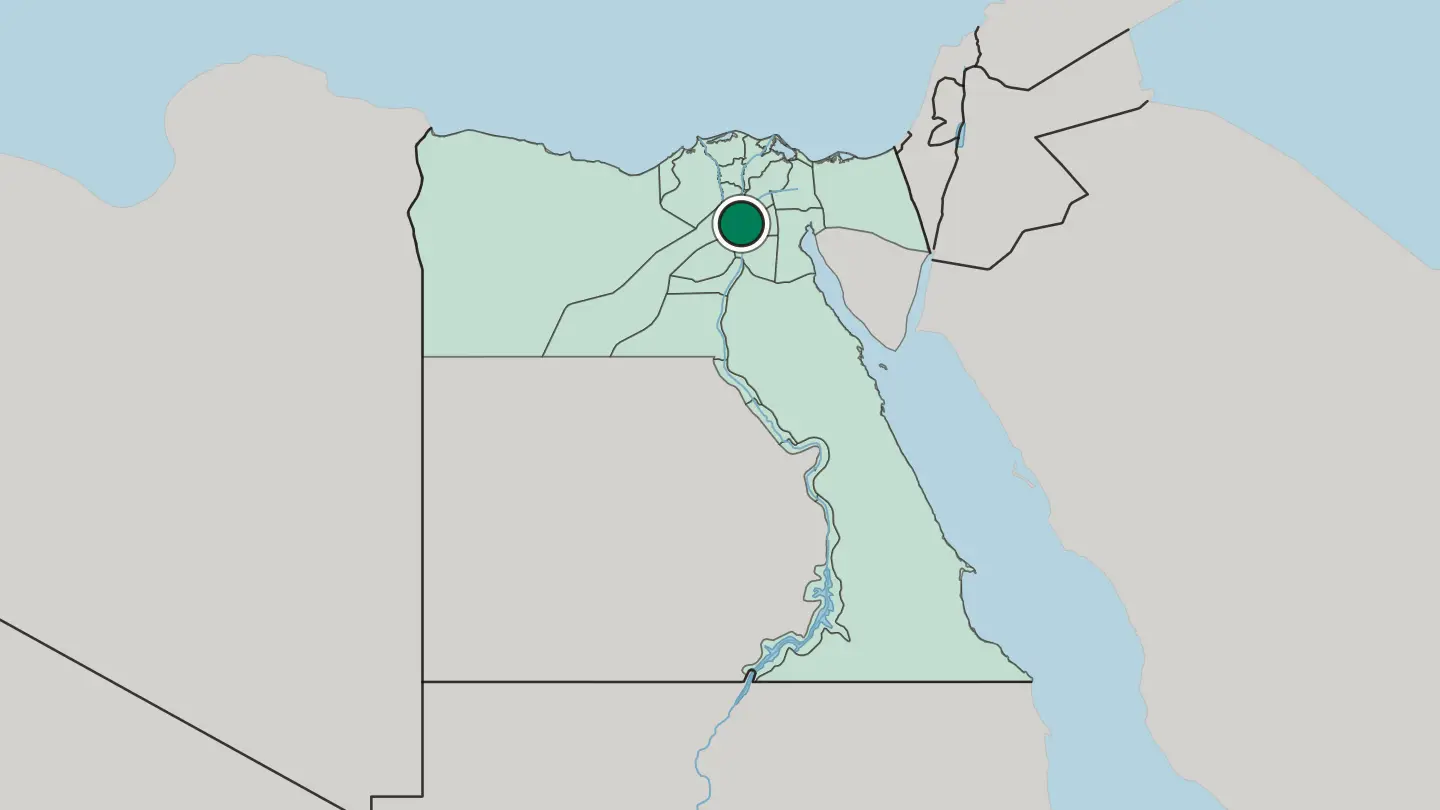
 Egypt
Egypt
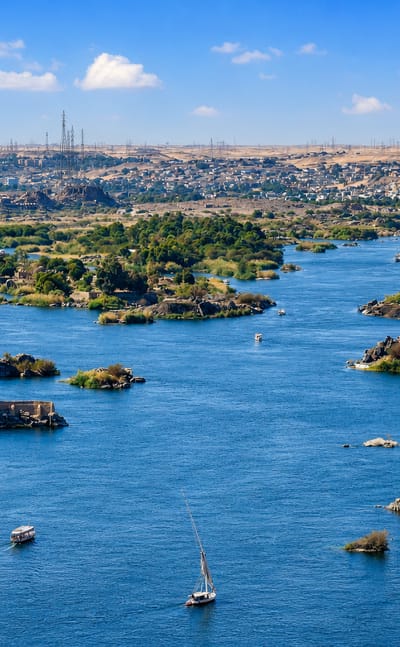
Aswān
Granite and river water frame Aswān, the southernmost city of Egypt, set on the Nile in Upper Egypt below the Aswan Dam.Where to stay →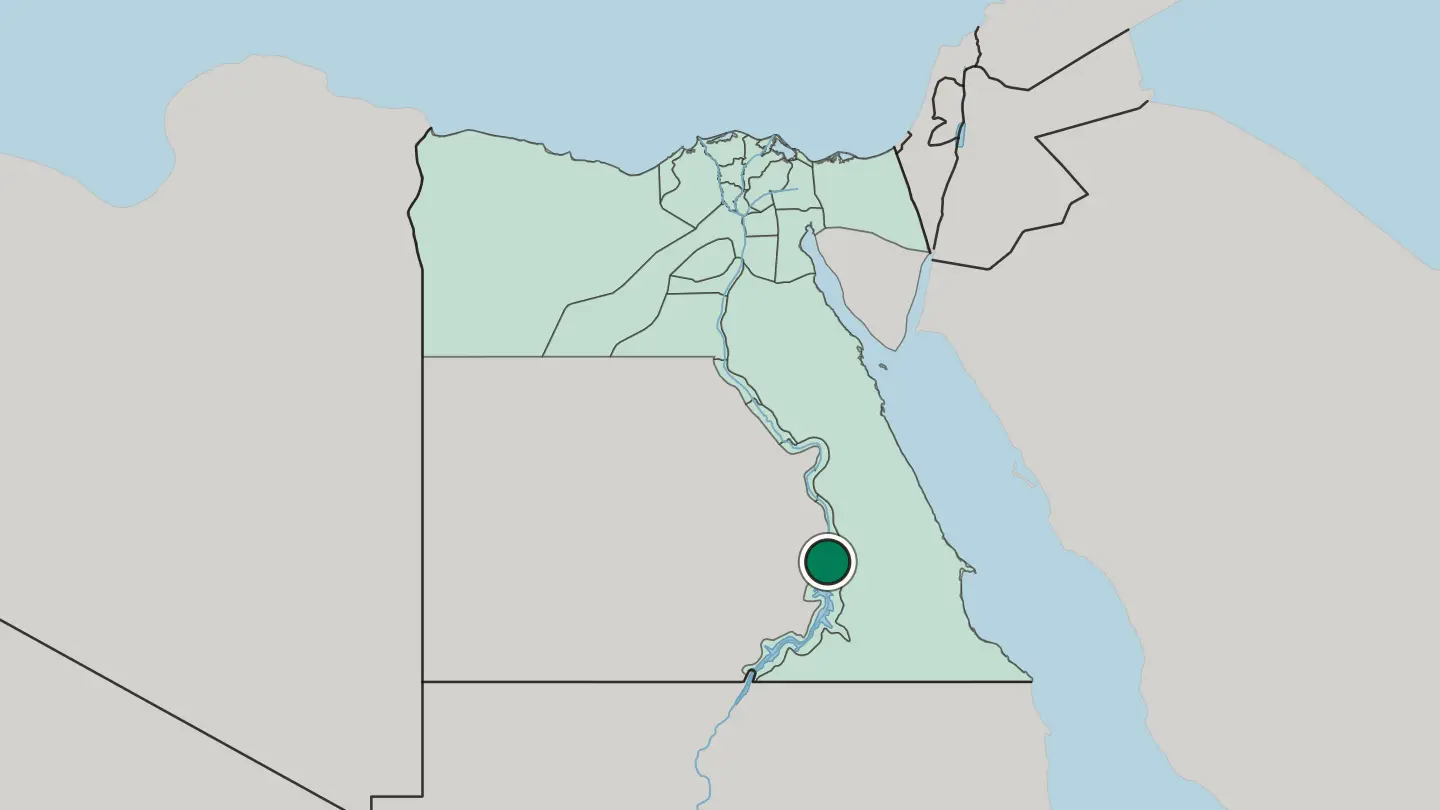
 Egypt
Egypt
Port Said
Salt air meets canal water at Port Said, a Mediterranean port on the northern mouth of the Suez Canal in northeast Egypt.Where to stay →
 Egypt
Egypt
Suez
Suez is a city of northeast Egypt at the southern end of the Suez Canal, a great port on the Gulf of Suez where ships pass between the seas.Where to stay →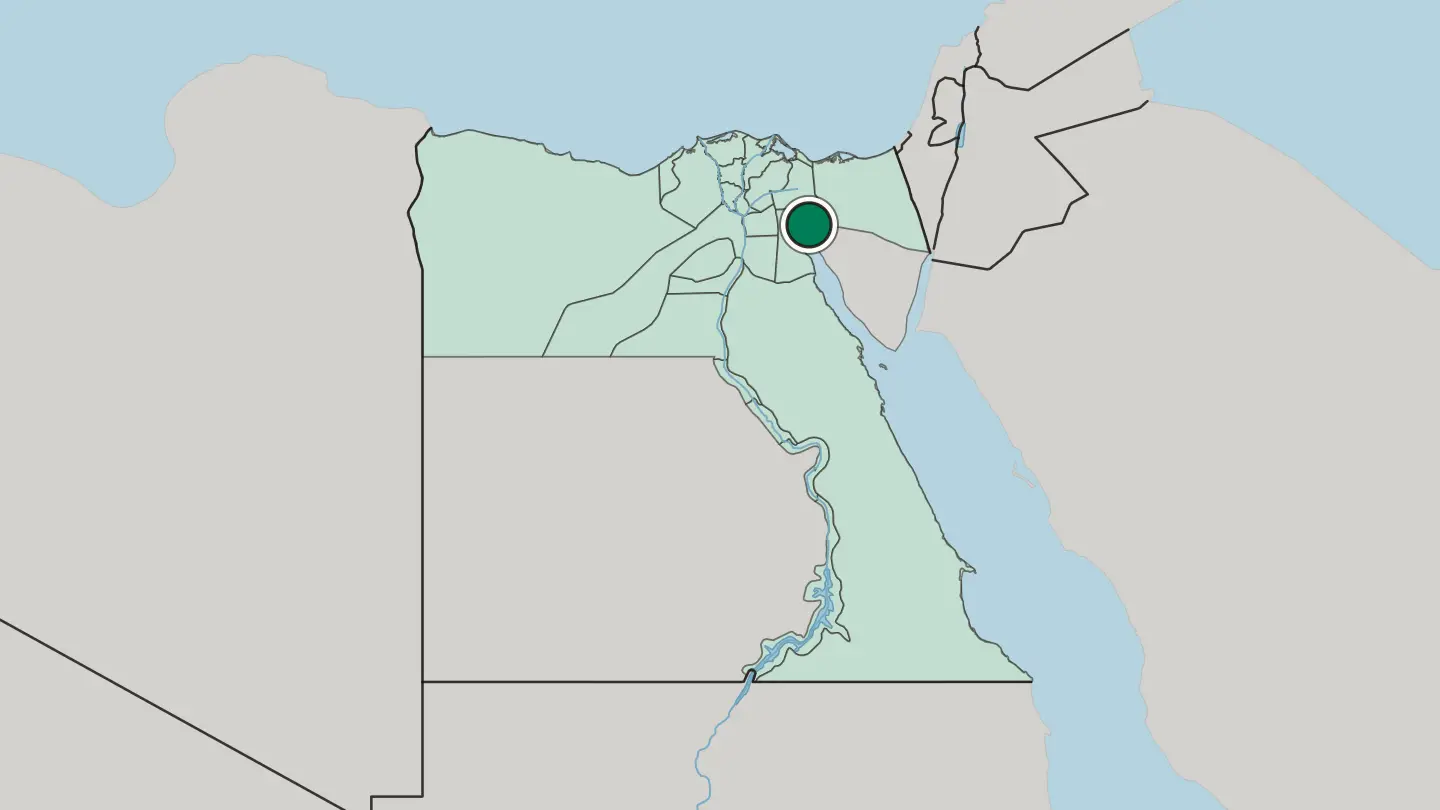 Egypt
Egypt
6th of October City
6th of October City is a satellite city of the Giza Governorate in Egypt, laid out on desert ground beside Giza in 1979 within Greater Cairo.Where to stay →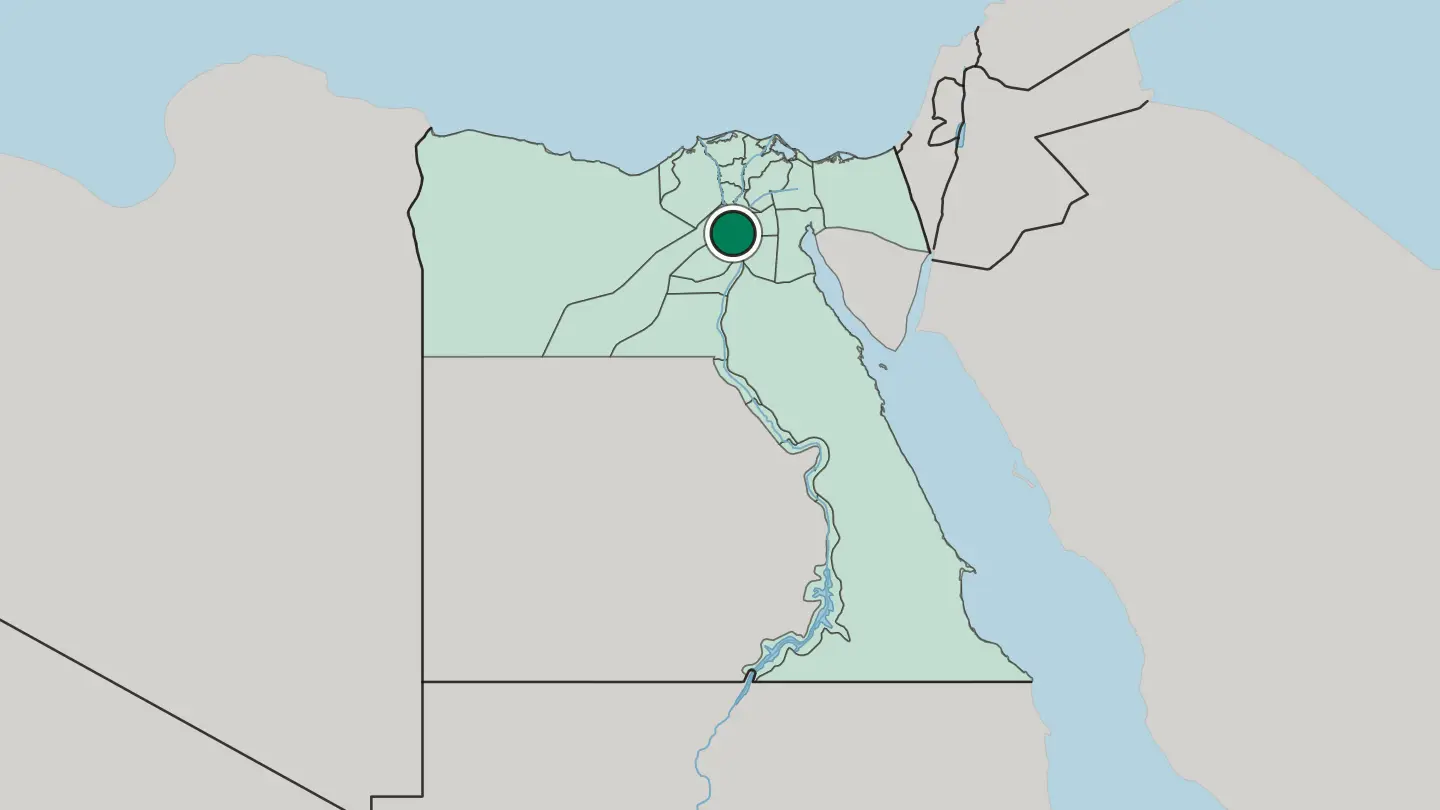
Hotel links are affiliate links: booking through them may earn us a commission, at no extra cost to you. It never affects how places are ranked. How this works
Regions of Egypt
Egypt
Alexandria
Alexandria Governorate is the Mediterranean coastal province of Egypt, wrapped around the city of Alexandria itself.Towns & cities →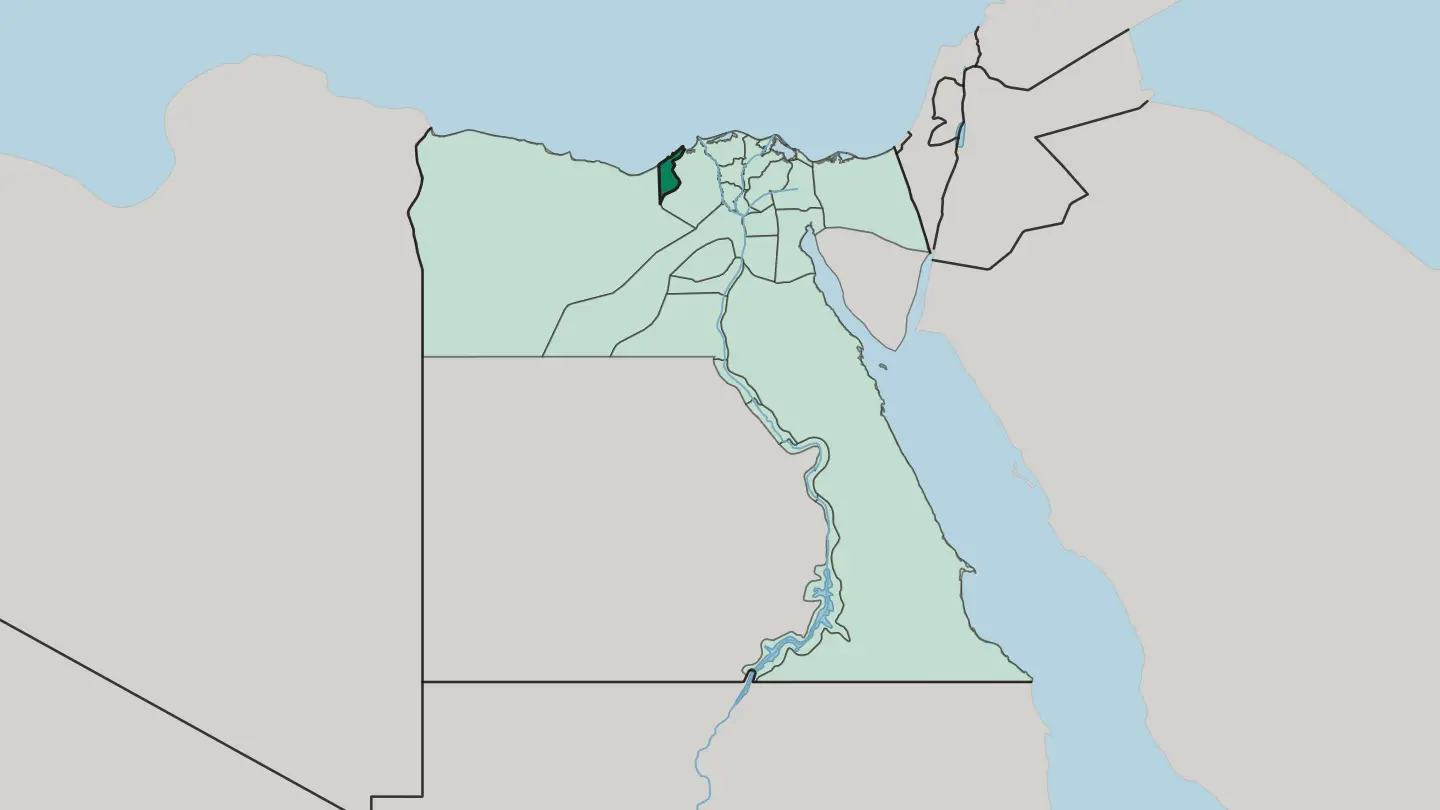
 Egypt
Egypt
Beheira Governorate
Beheira is Egypt's western Delta governorate, cotton country west of the Rosetta branch, with its capital at Damanhur.Towns & cities →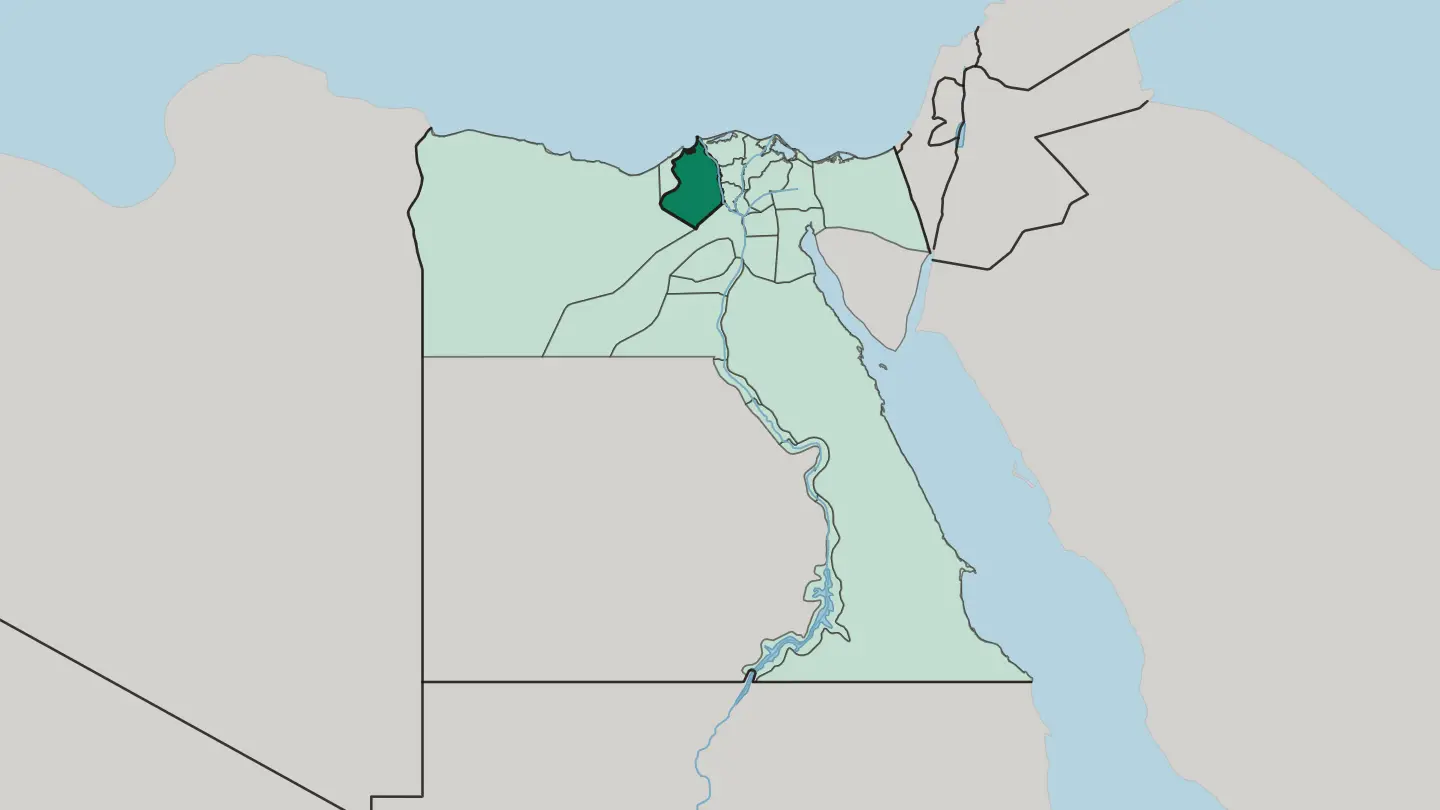 Egypt
Egypt
Cairo Governorate
Cairo Governorate is the capital province of Egypt, built around the city of Cairo and its ring of satellite towns.Towns & cities →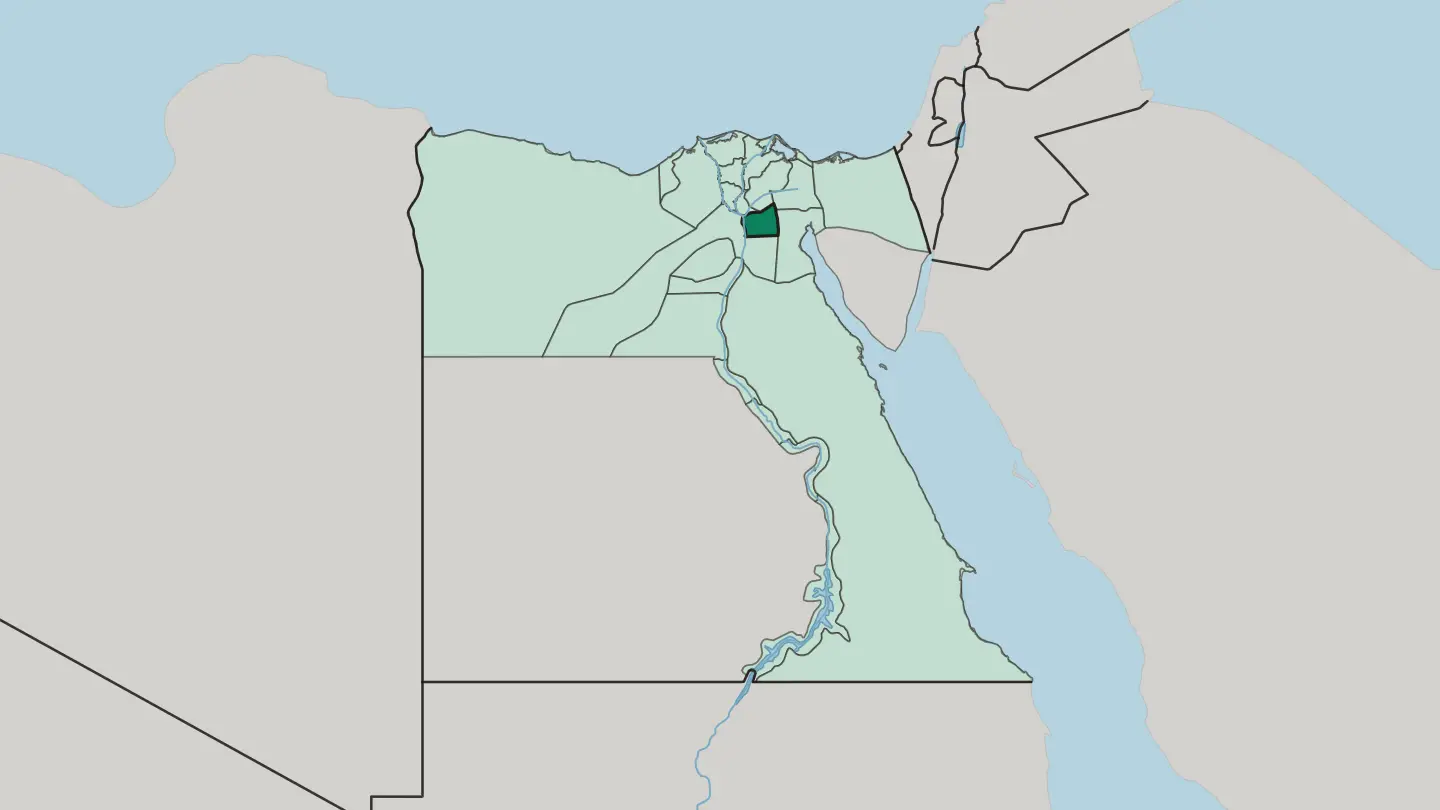
 Egypt
Egypt
Damietta Governorate
Damietta Governorate sits on Egypt's Mediterranean coast, where the eastern branch of the Nile reaches the sea.Towns & cities →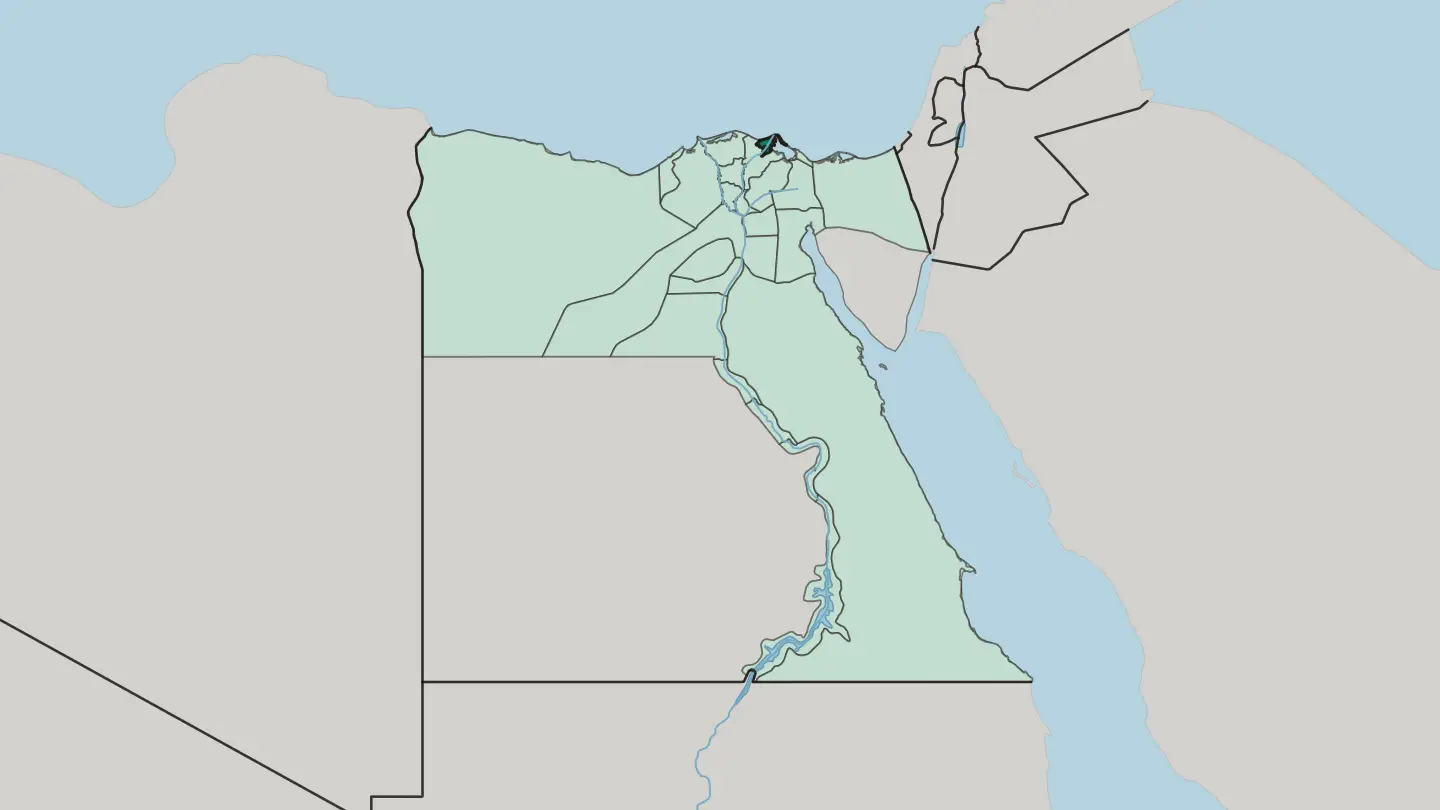
 Egypt
Egypt
Ismailia Governorate
Ismailia Governorate holds the middle of the Suez Canal, its garden capital set on the shore of Lake Timsah in north-eastern Egypt.Towns & cities →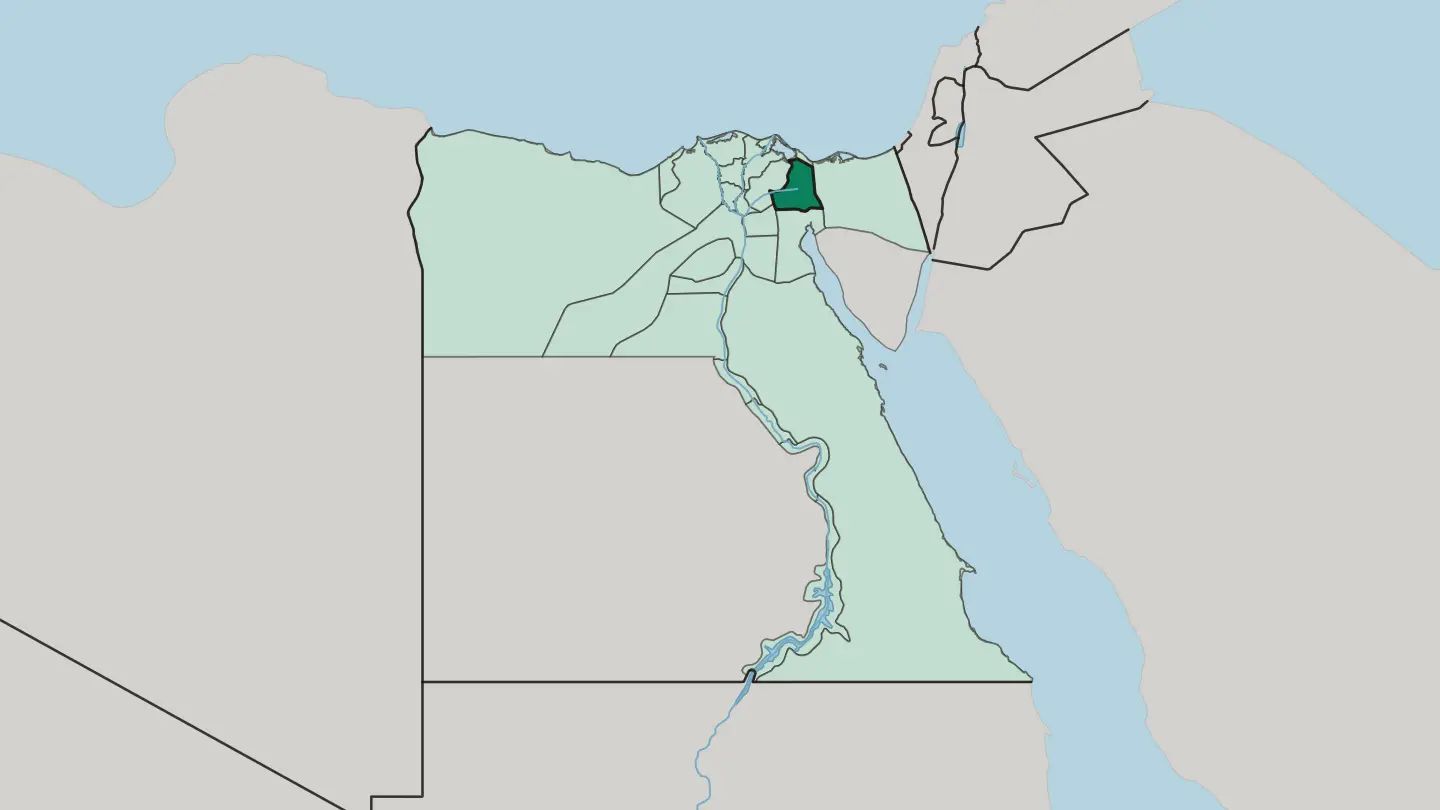
 Egypt
Egypt
Kafr ash Shaykh
Kafr ash Shaykh is a governorate of the northern Nile Delta, between the Rosetta branch and the Mediterranean coast.Towns & cities →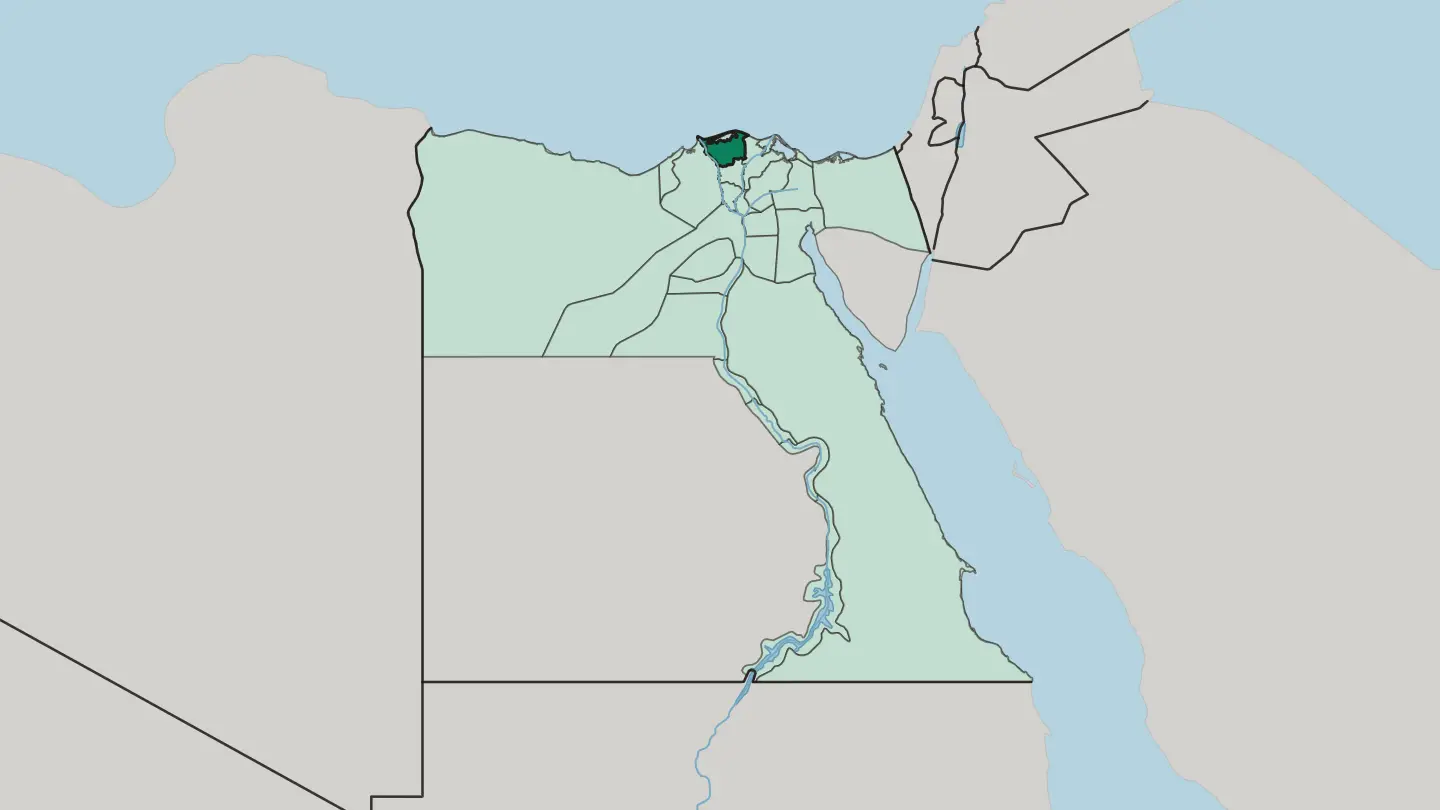 Egypt
Egypt
Luxor
Luxor is the Upper Egypt region built over ancient Thebes, where the Nile splits temple town from royal tombs.Towns & cities → Egypt
Egypt
Muḩāfaz̧at Aswān
Egypt's southernmost governorate, where the Nile narrows through the First Cataract at Aswan and Lake Nasser fills the desert beyond.Towns & cities →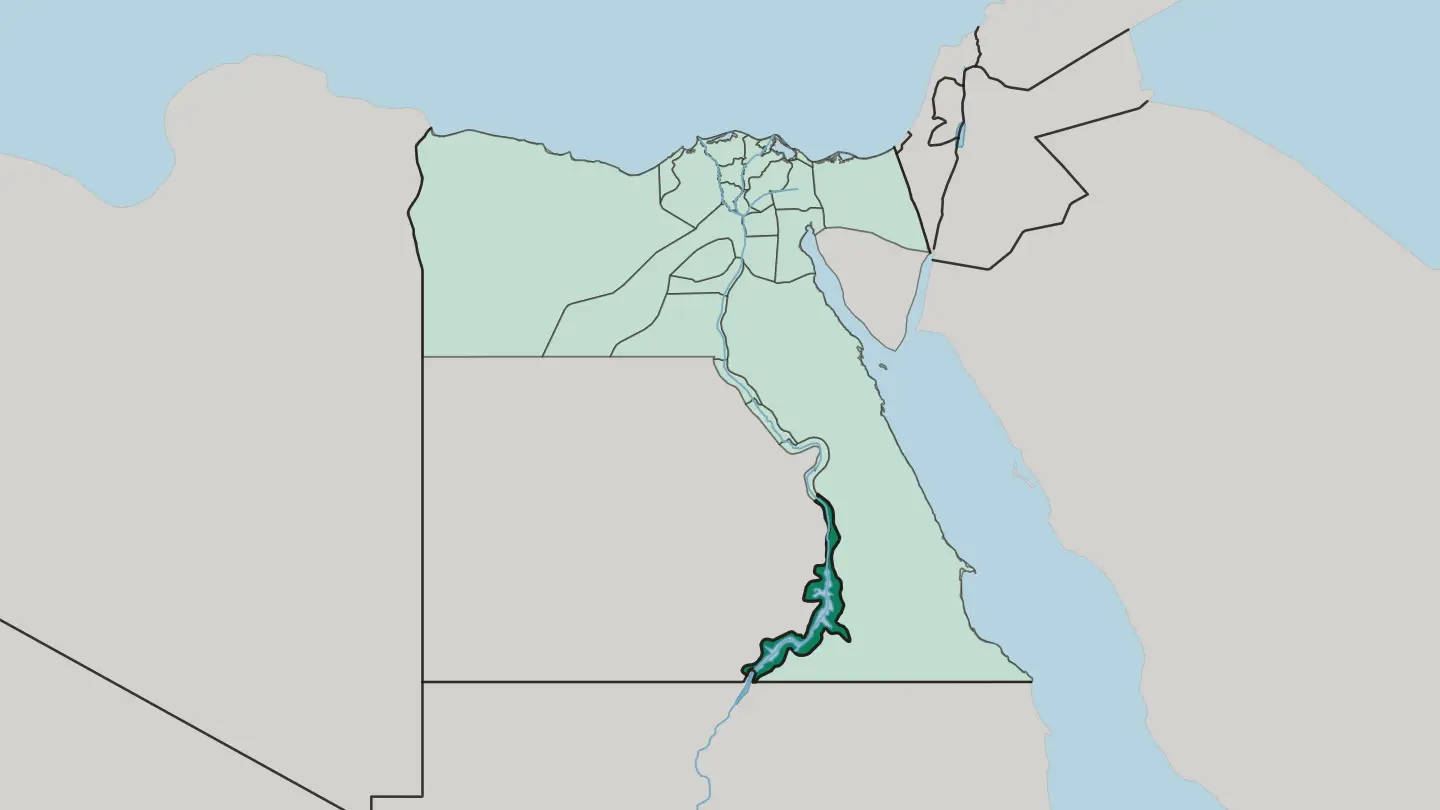
 Egypt
Egypt
Muḩāfaz̧at Asyūţ
Asyut is Upper Egypt's central governorate, a fertile Nile strip around the city of Asyut, midway between Cairo and Aswan.Towns & cities →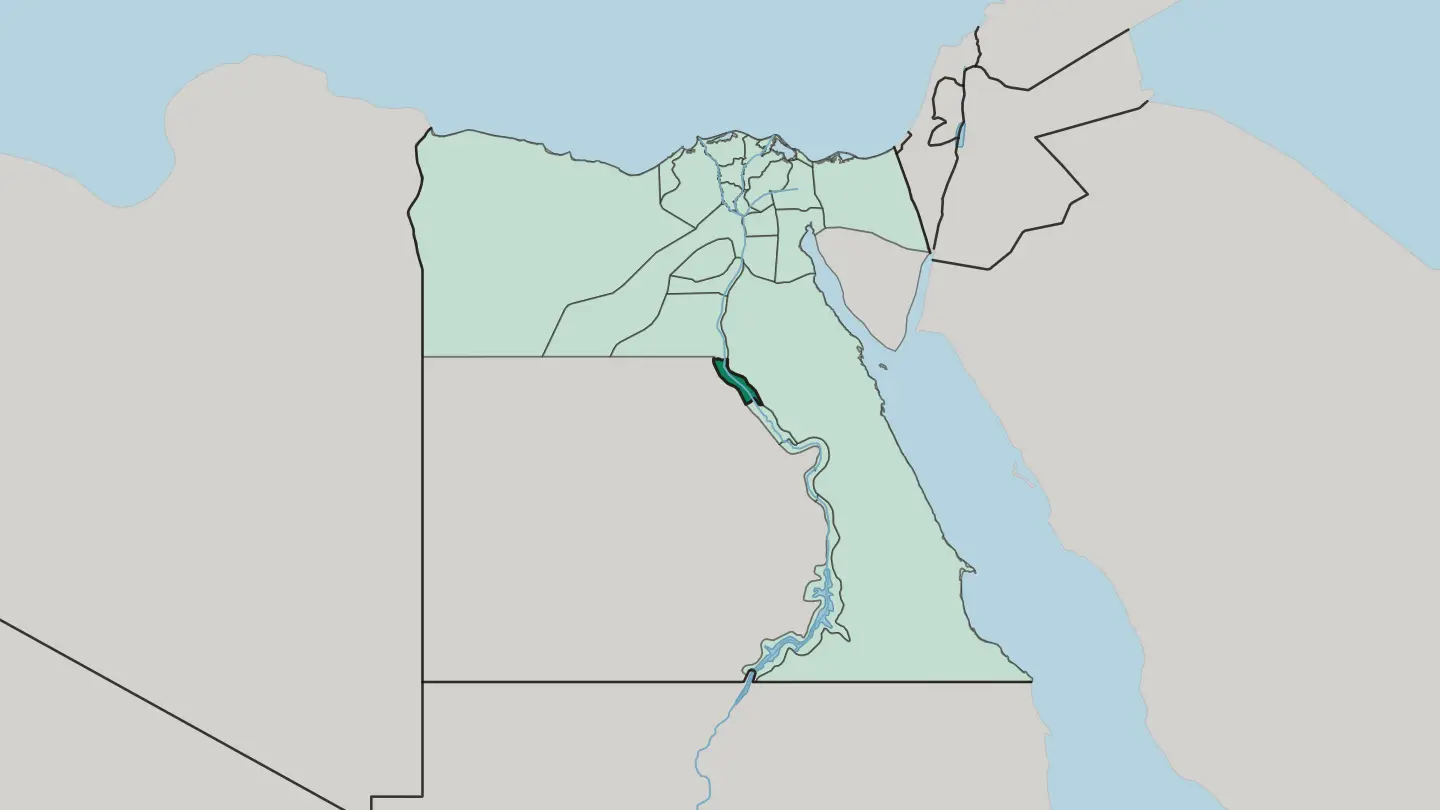 Egypt
Egypt
Muḩāfaz̧at Banī Suwayf
Beni Suef is a governorate of northern Upper Egypt, a strip of the Nile Valley about 110 km south of Cairo.Towns & cities →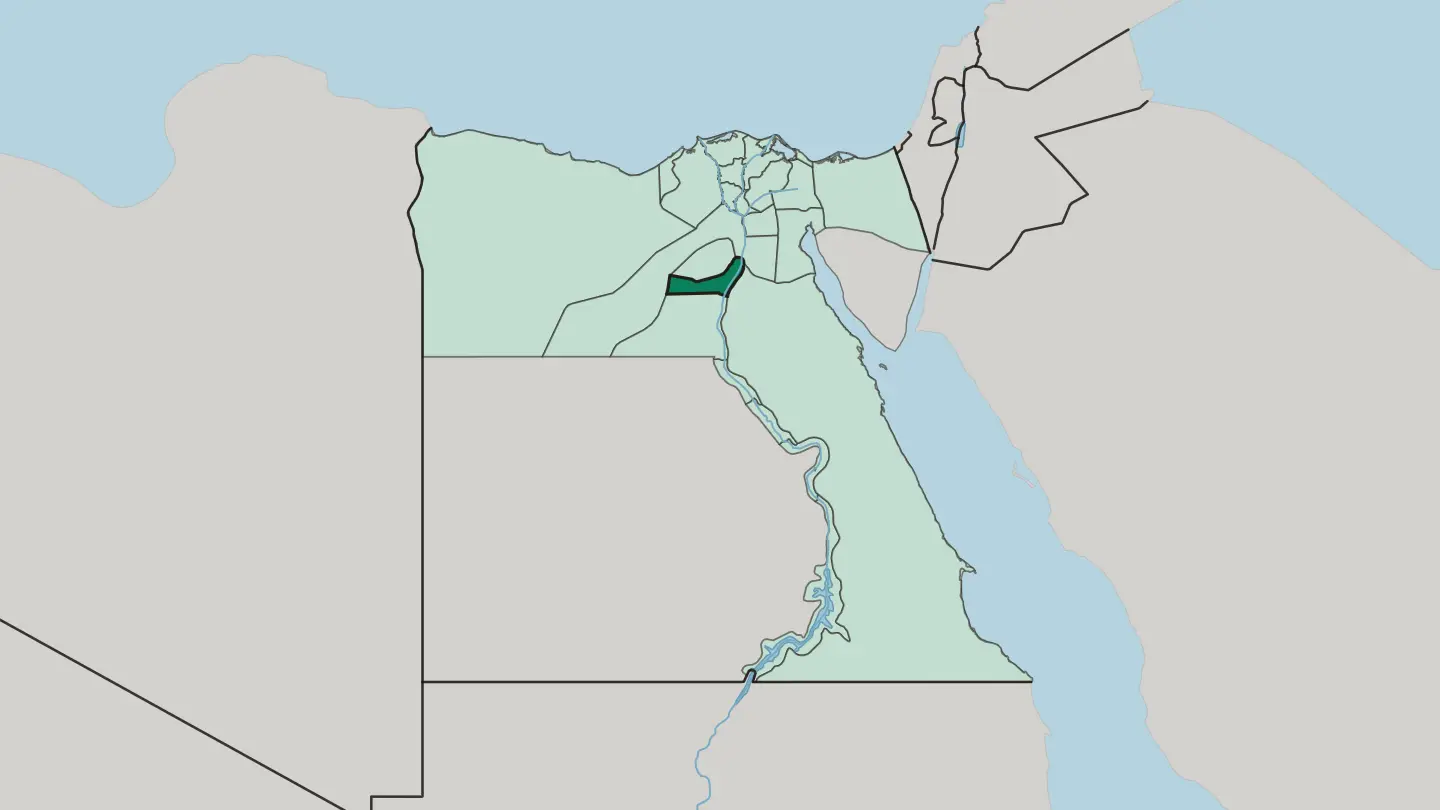
 Egypt
Egypt
Muḩāfaz̧at Maţrūḩ
Muḩāfaz̧at Maţrūḩ is Egypt's north-western corner, a strip of turquoise Mediterranean coast backed by the vast Western Desert.Towns & cities →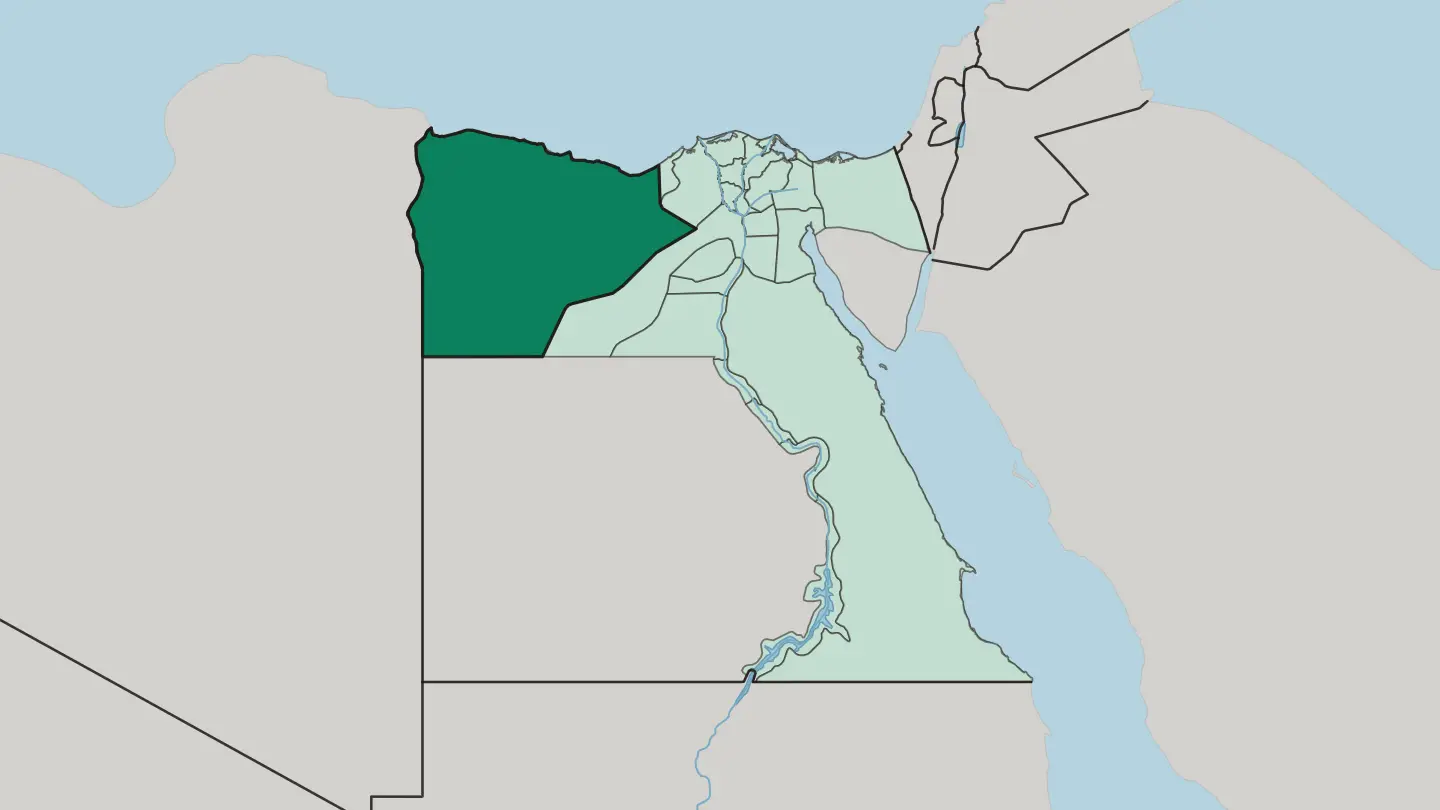
 Egypt
Egypt
Muḩāfaz̧at Qinā
Muḩāfaz̧at Qinā spans the Nile's great bend in Upper Egypt, where Qena city faces the temple of Dendera across the water.Towns & cities →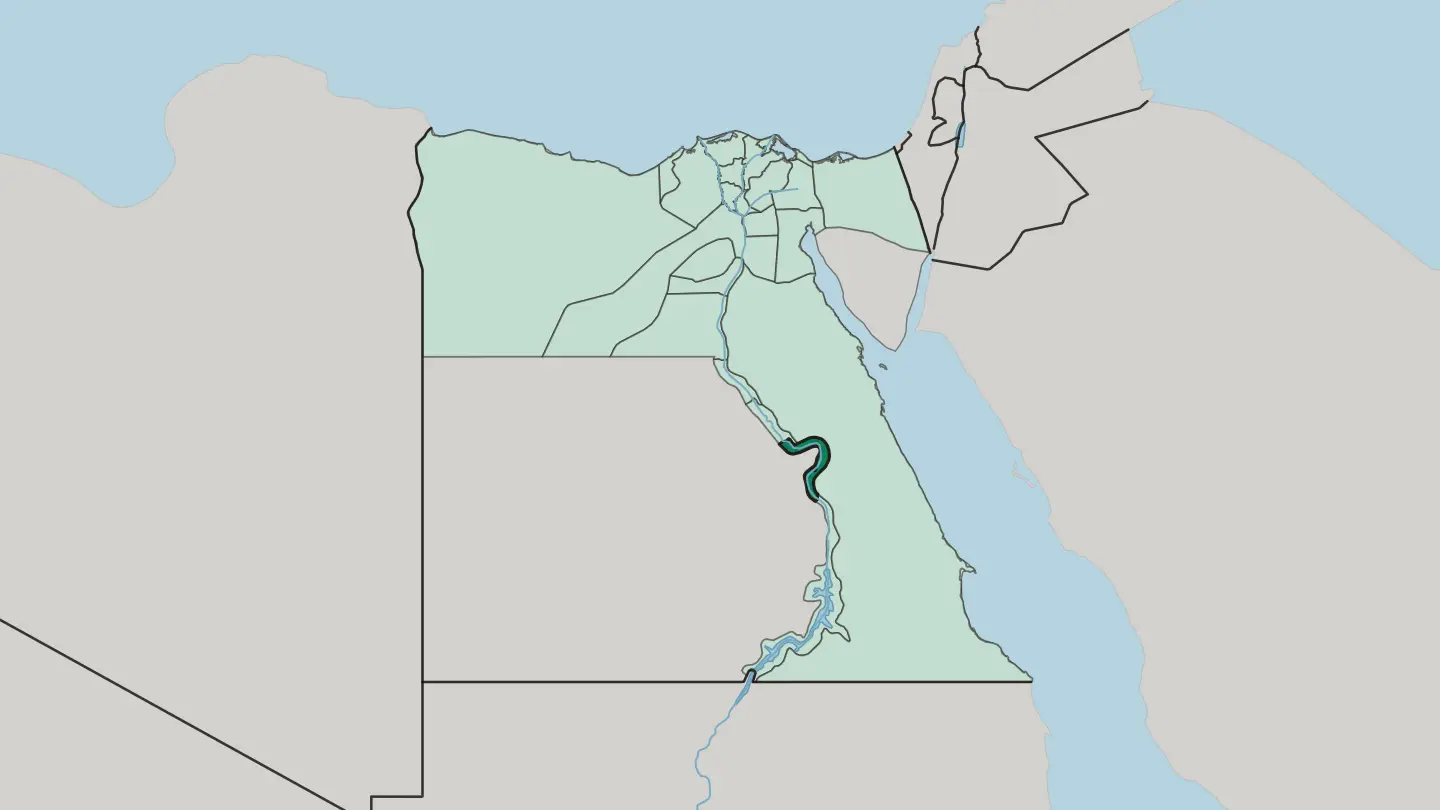
 Egypt
Egypt
Muḩāfaz̧at Sūhāj
Muḩāfaz̧at Sūhāj is a governorate of Upper Egypt, a ribbon of the Nile Valley threaded between the desert cliffs.Towns & cities →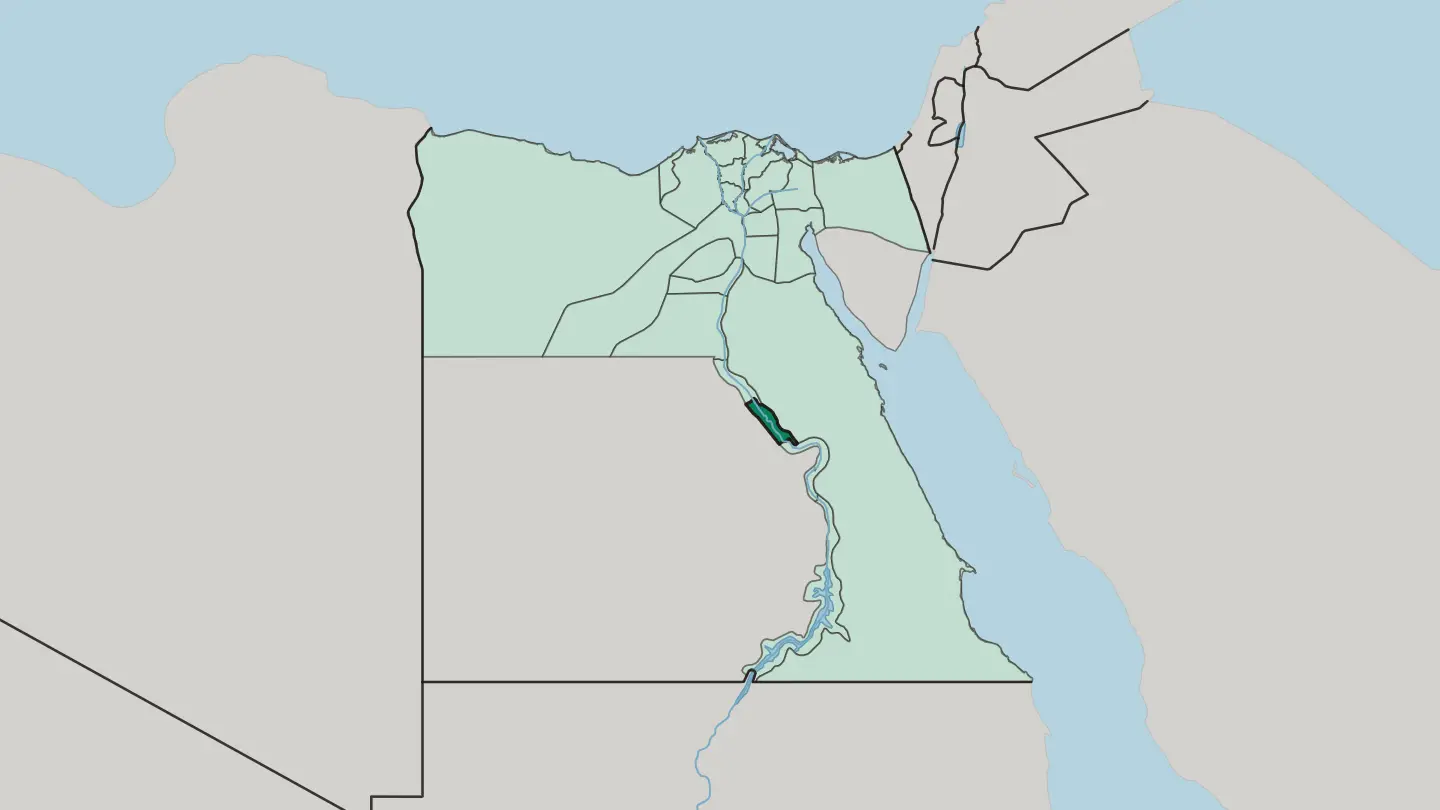
 Egypt
Egypt
Muḩāfaz̧at ad Daqahlīyah
Muḩāfaz̧at ad Daqahlīyah sits in the northeastern Nile Delta, its capital Mansoura on the Damietta branch of the Nile.Towns & cities →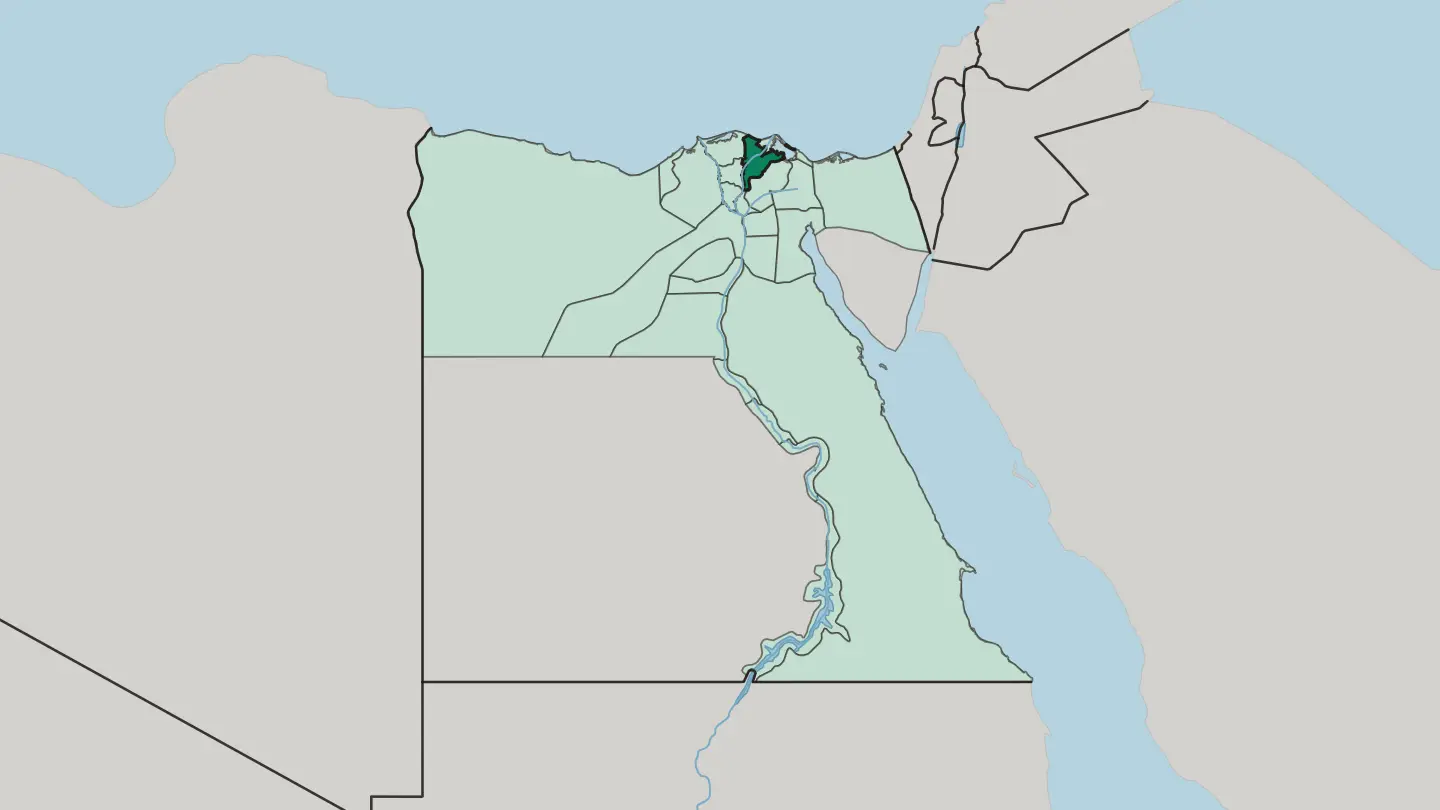
 Egypt
Egypt
Muḩāfaz̧at al Fayyūm
Faiyum is a governorate southwest of Cairo, an oasis depression around Lake Qarun watered by the Bahr Yussef from the Nile.Towns & cities →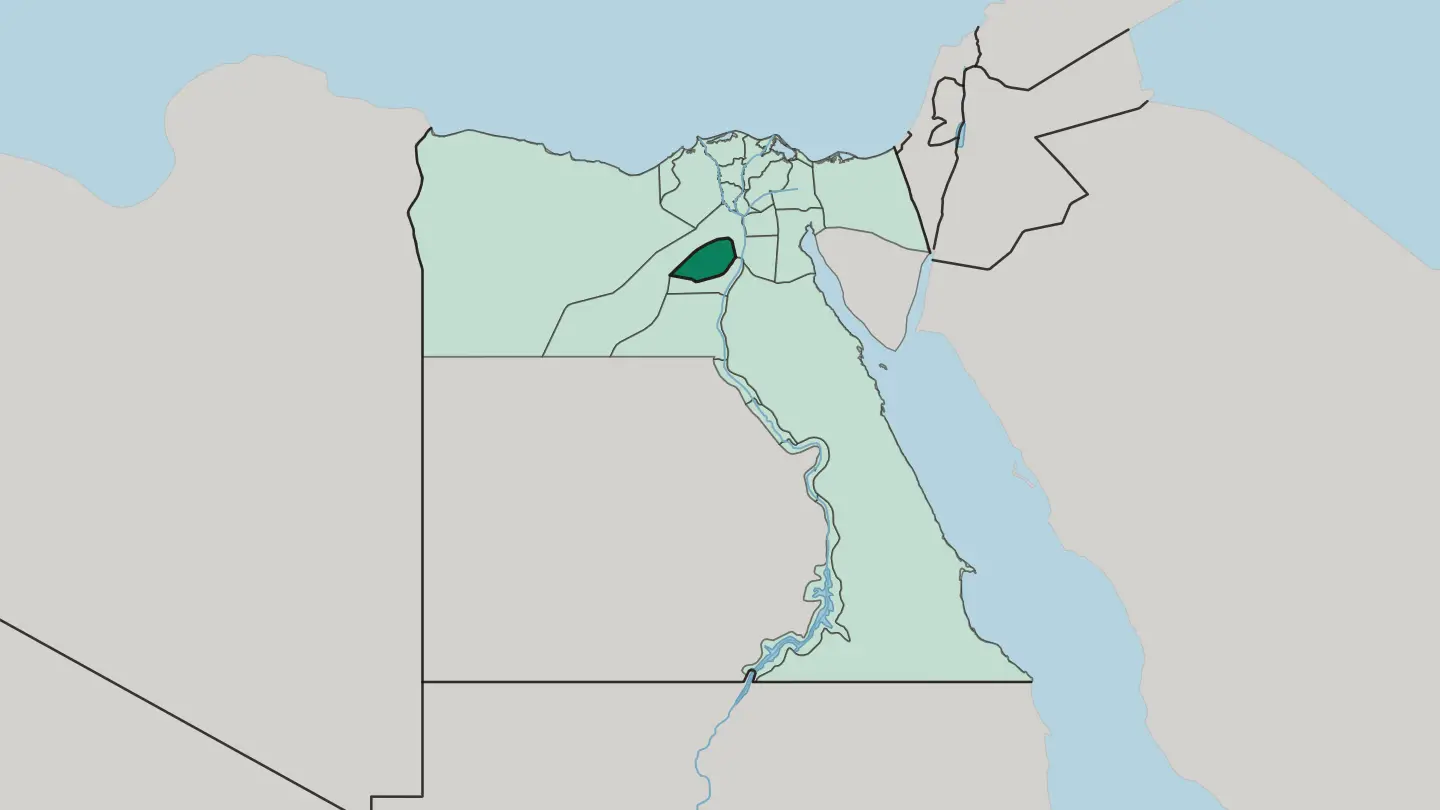
 Egypt
Egypt
Muḩāfaz̧at al Gharbīyah
Muḩāfaz̧at al Gharbīyah sits in the middle of Egypt's Nile Delta, a flat farmland province between the two great branches of the Nile.Towns & cities →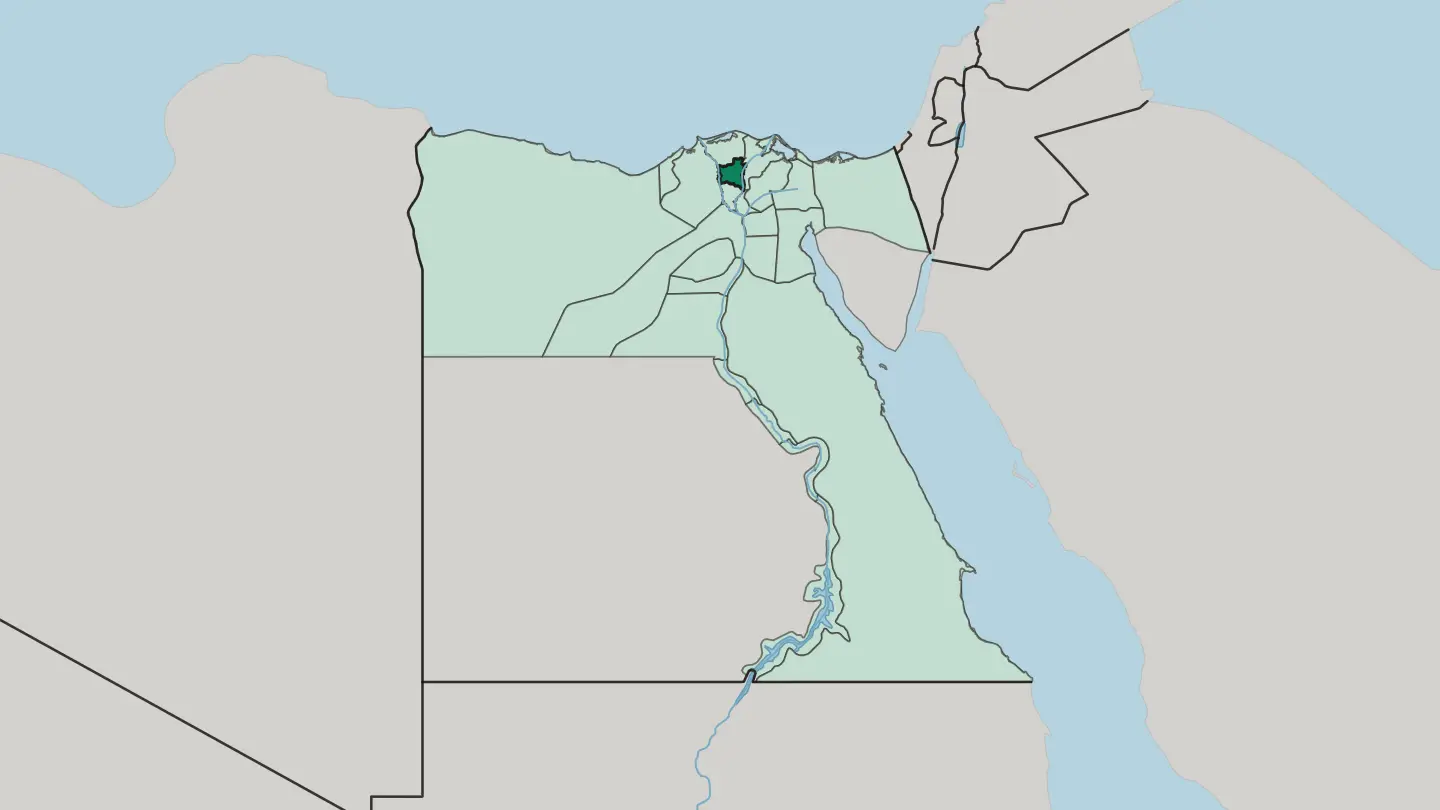 Egypt
Egypt
Muḩāfaz̧at al Jīzah
Giza Governorate holds the Great Pyramid and the Sphinx on the west bank of the Nile, just across the water from Cairo.Towns & cities →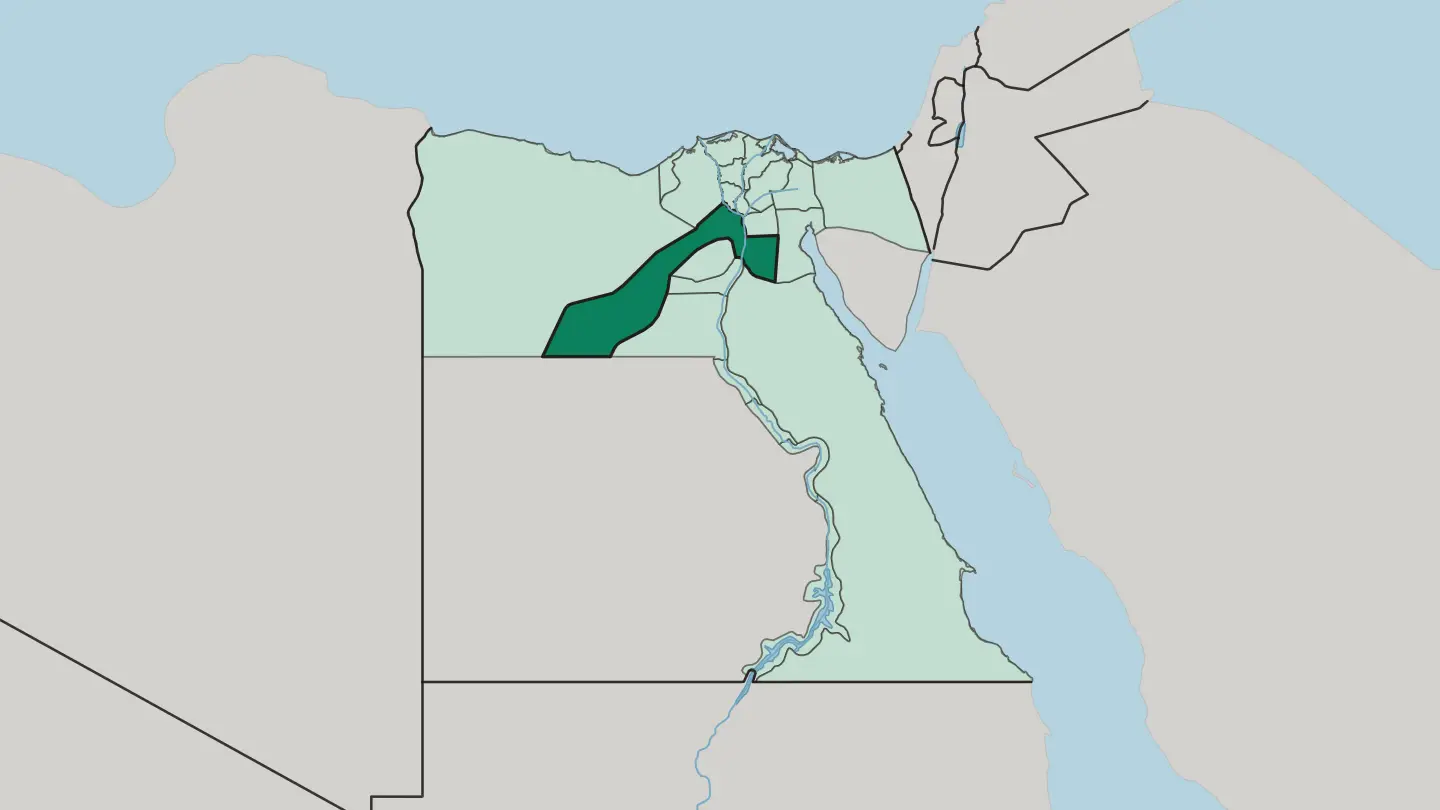
 Egypt
Egypt
Muḩāfaz̧at al Minyā
Muḩāfaz̧at al Minyā stretches along the Nile through Middle Egypt, a farm belt of ancient tombs, Coptic monasteries, and cotton wealth.Towns & cities →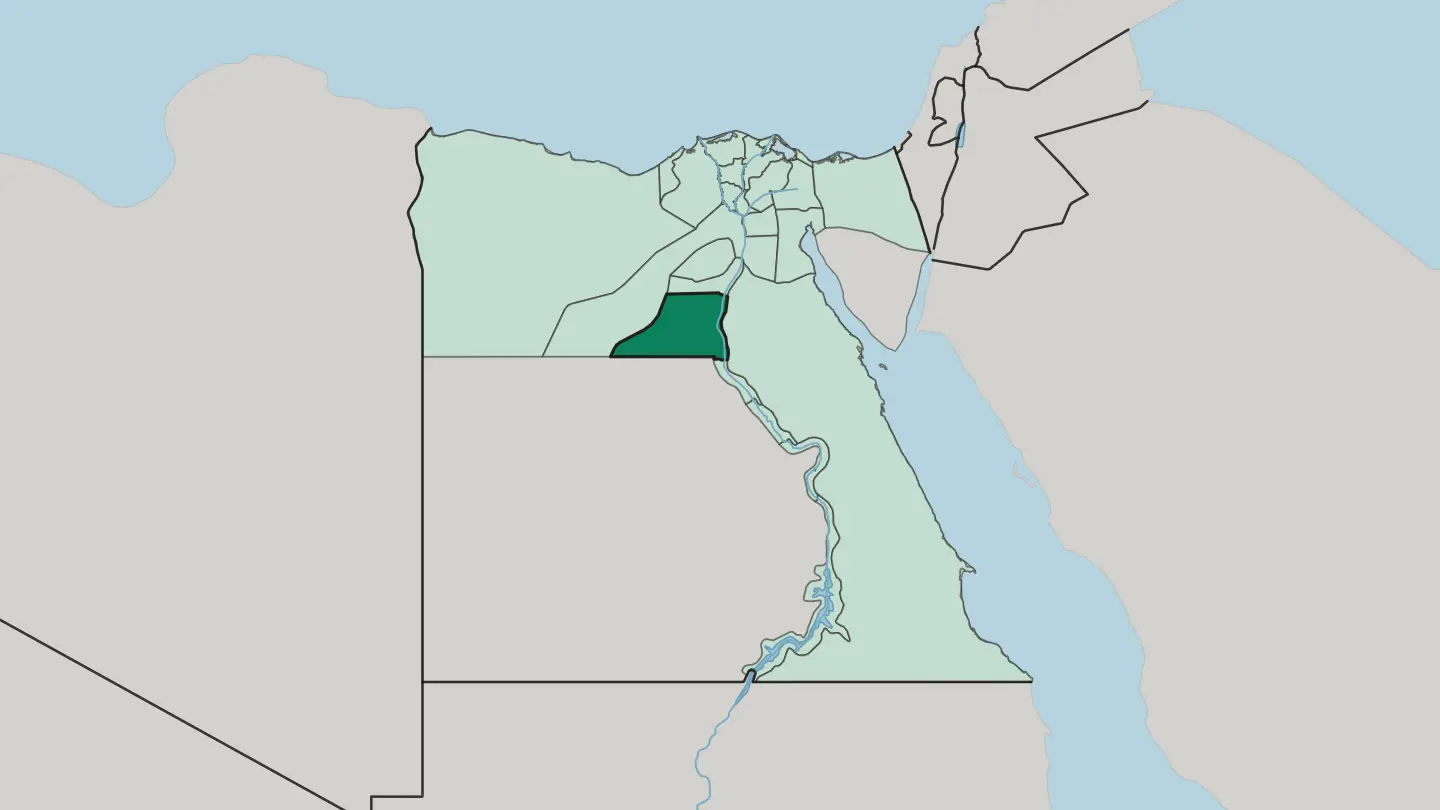
 Egypt
Egypt
Muḩāfaz̧at al Minūfīyah
Muḩāfaz̧at al Minūfīyah is a farming heartland of the Nile Delta, birthplace of two Egyptian heads of state, centred on Shibīn al-Kawm.Towns & cities →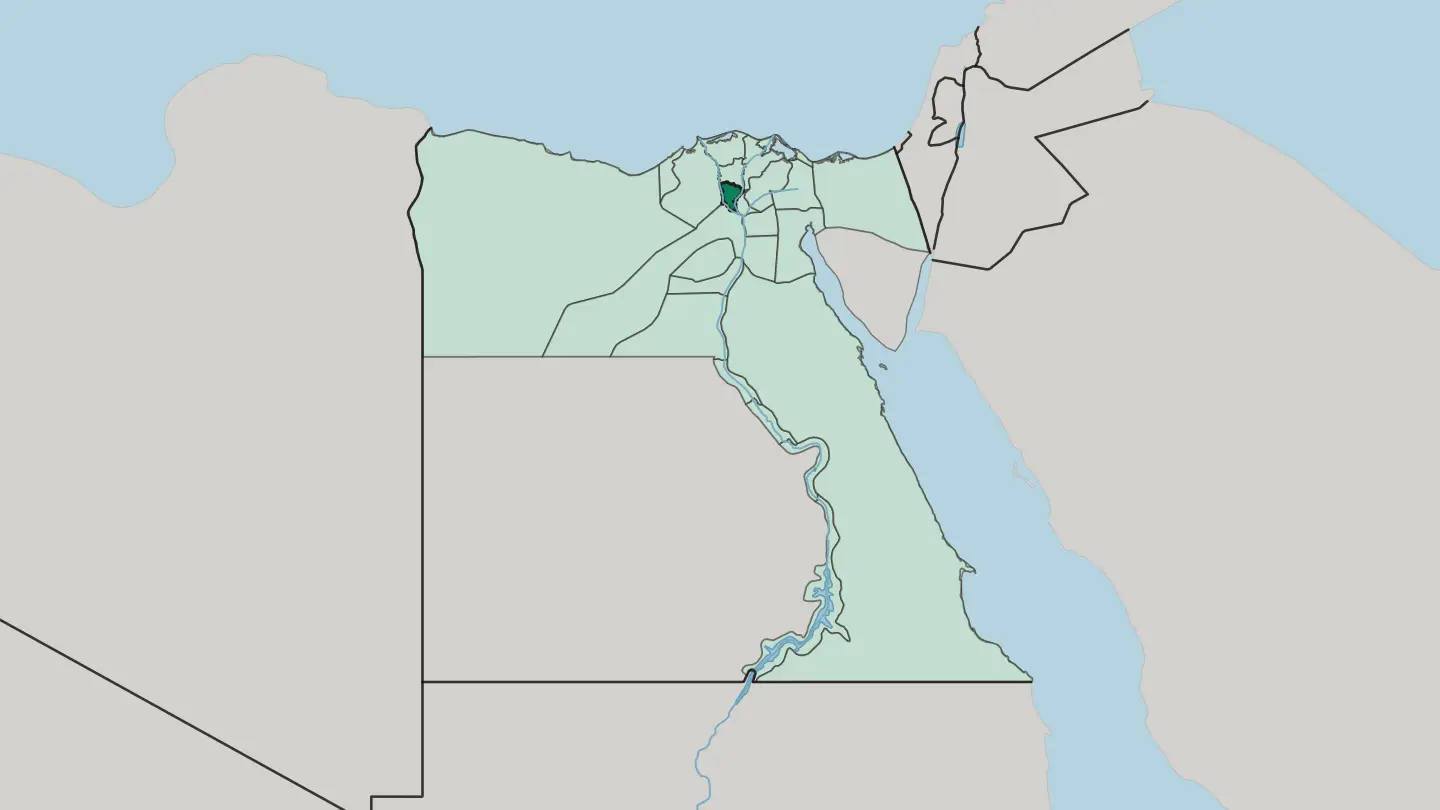
 Egypt
Egypt
Muḩāfaz̧at al Qalyūbīyah
Muḩāfaz̧at al Qalyūbīyah sits at the apex of the Nile Delta, just north of Cairo, where the river splits in two.Towns & cities →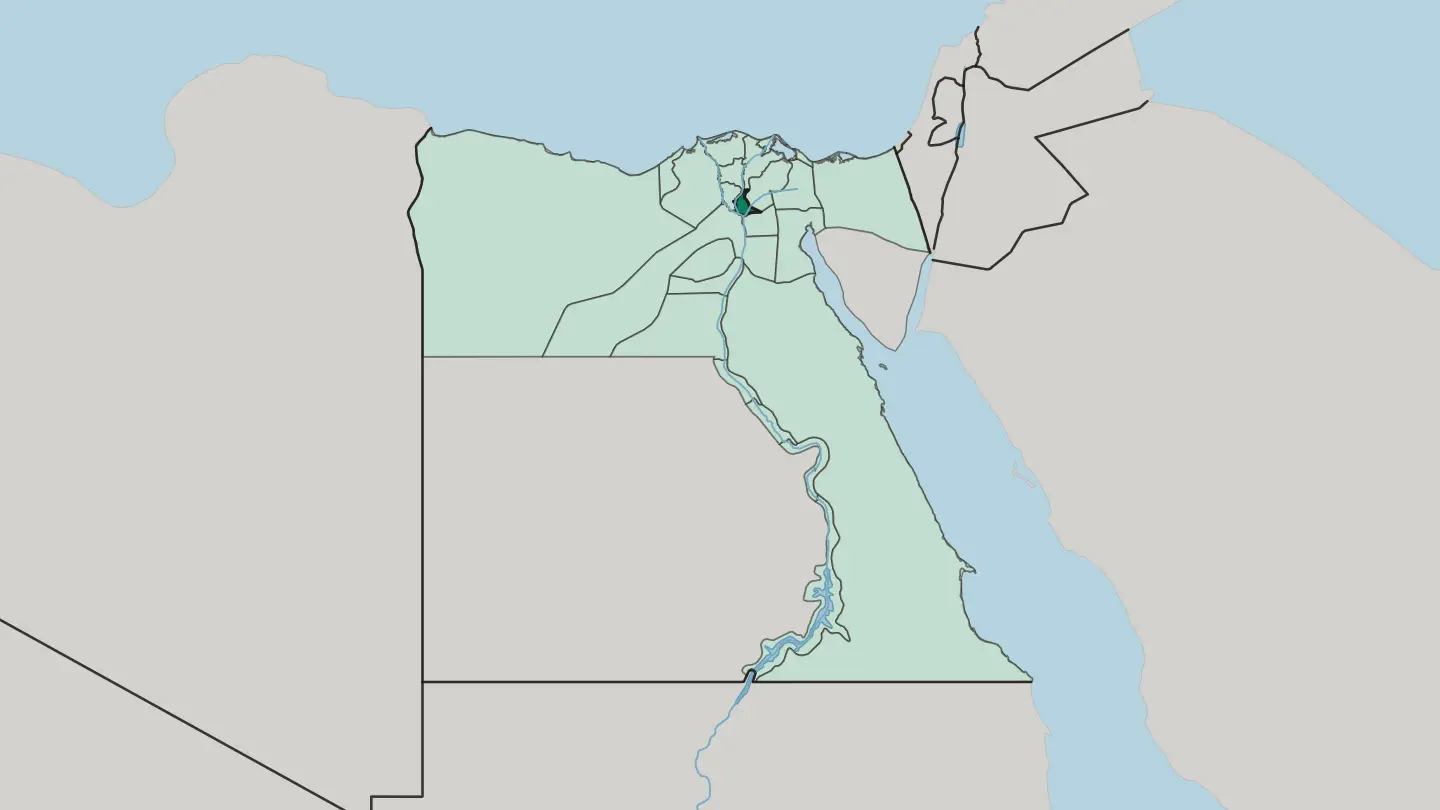
 Egypt
Egypt
Muḩāfaz̧at ash Sharqīyah
Sharqia fills the eastern edge of the Nile Delta, a flat farm province around Zagazig, the biblical Land of Goshen.Towns & cities →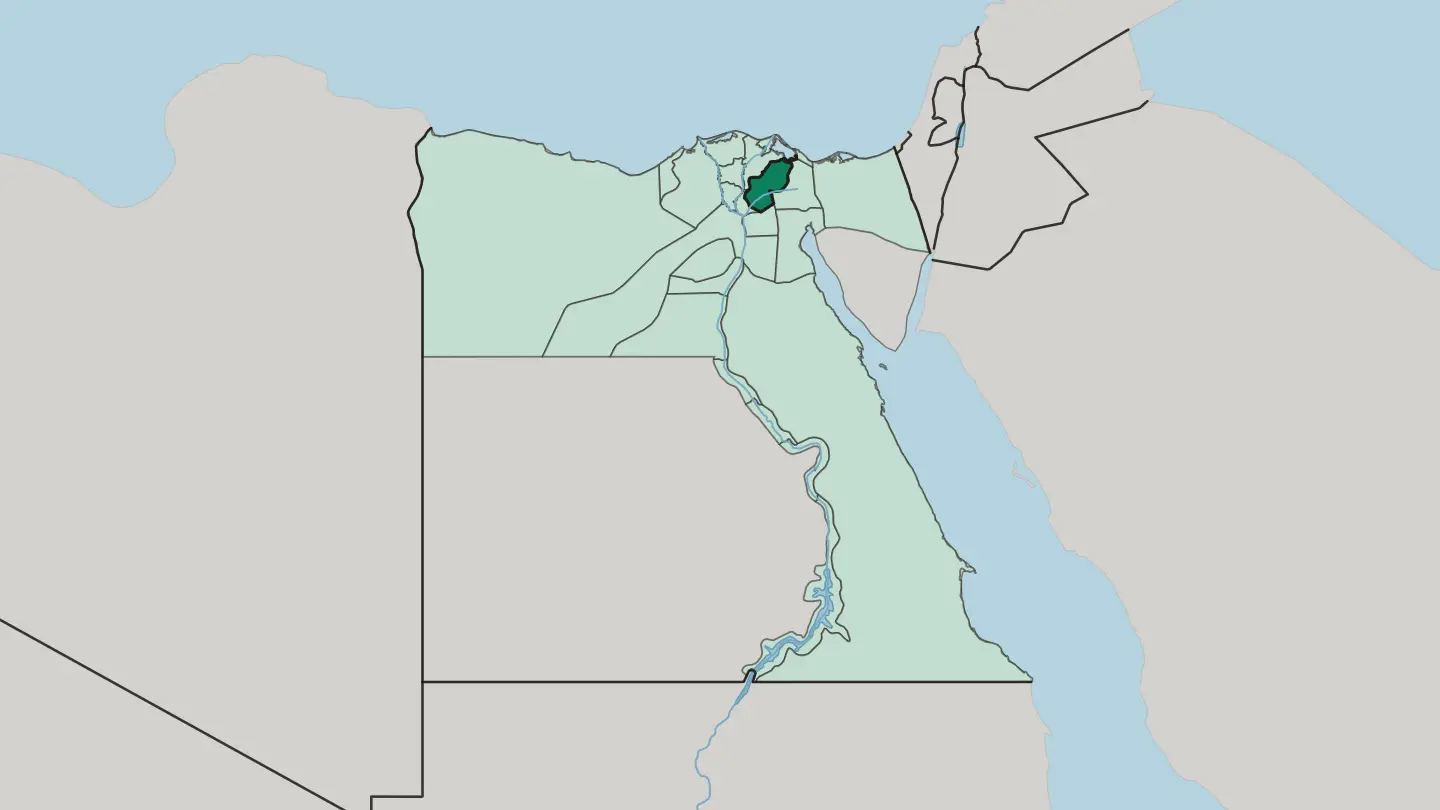 Egypt
Egypt
North Sinai
North Sinai fills the northern half of the Sinai Peninsula, a Mediterranean-coast desert reaching from the Suez Canal to the Gaza border.Towns & cities →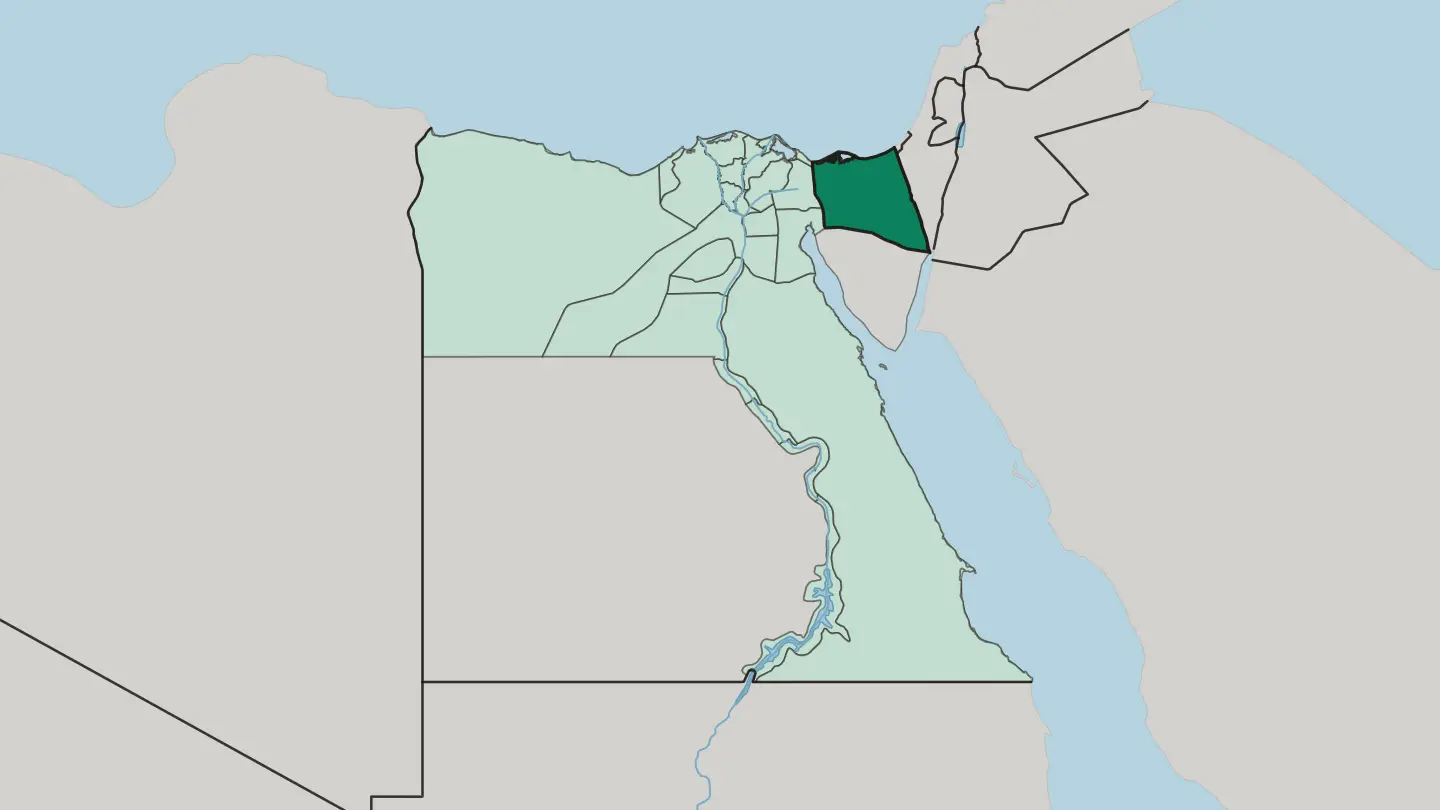 Egypt
Egypt
Port Said
Port Said guards the Mediterranean mouth of the Suez Canal, a canal city at the north-eastern edge of Egypt's Nile Delta.Towns & cities →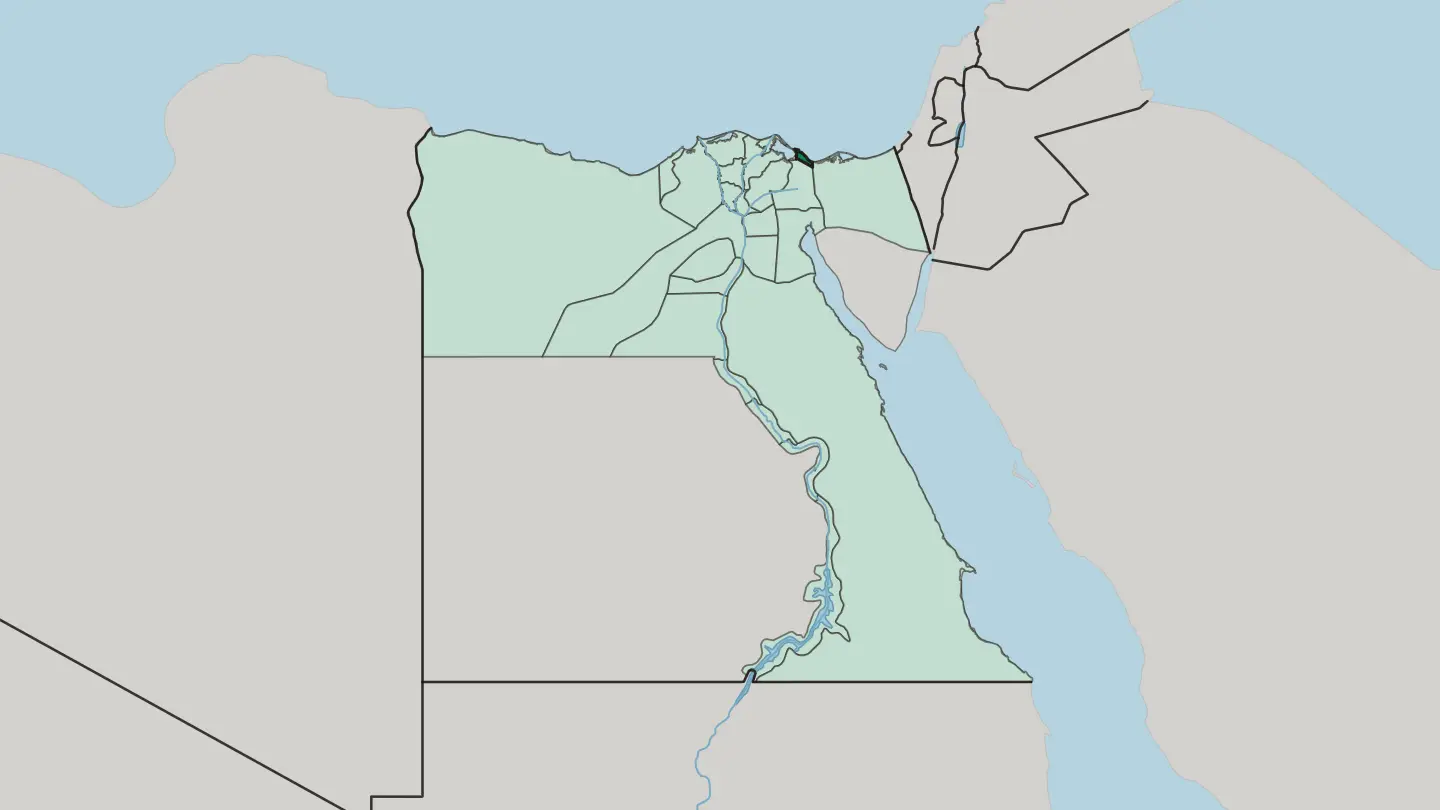 Egypt
Egypt
Red Sea Governorate
Red Sea Governorate is Egypt's dive coast, where the Eastern Desert meets the reef and Hurghada anchors it all.Towns & cities →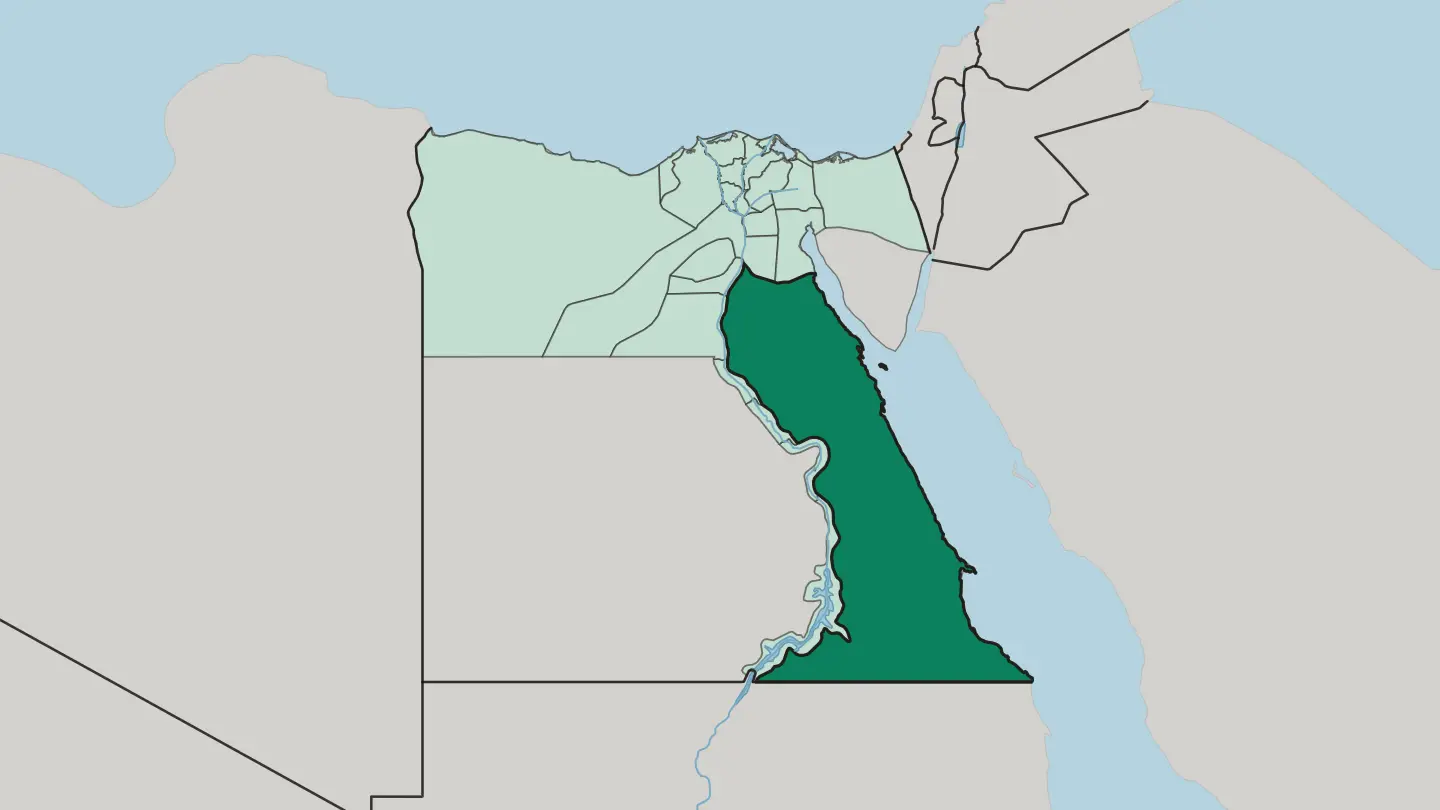 Egypt
Egypt
Suez
Suez is Egypt's south-eastern canal governorate, a desert port at the head of the Gulf of Suez where the Suez Canal meets the Red Sea.Towns & cities →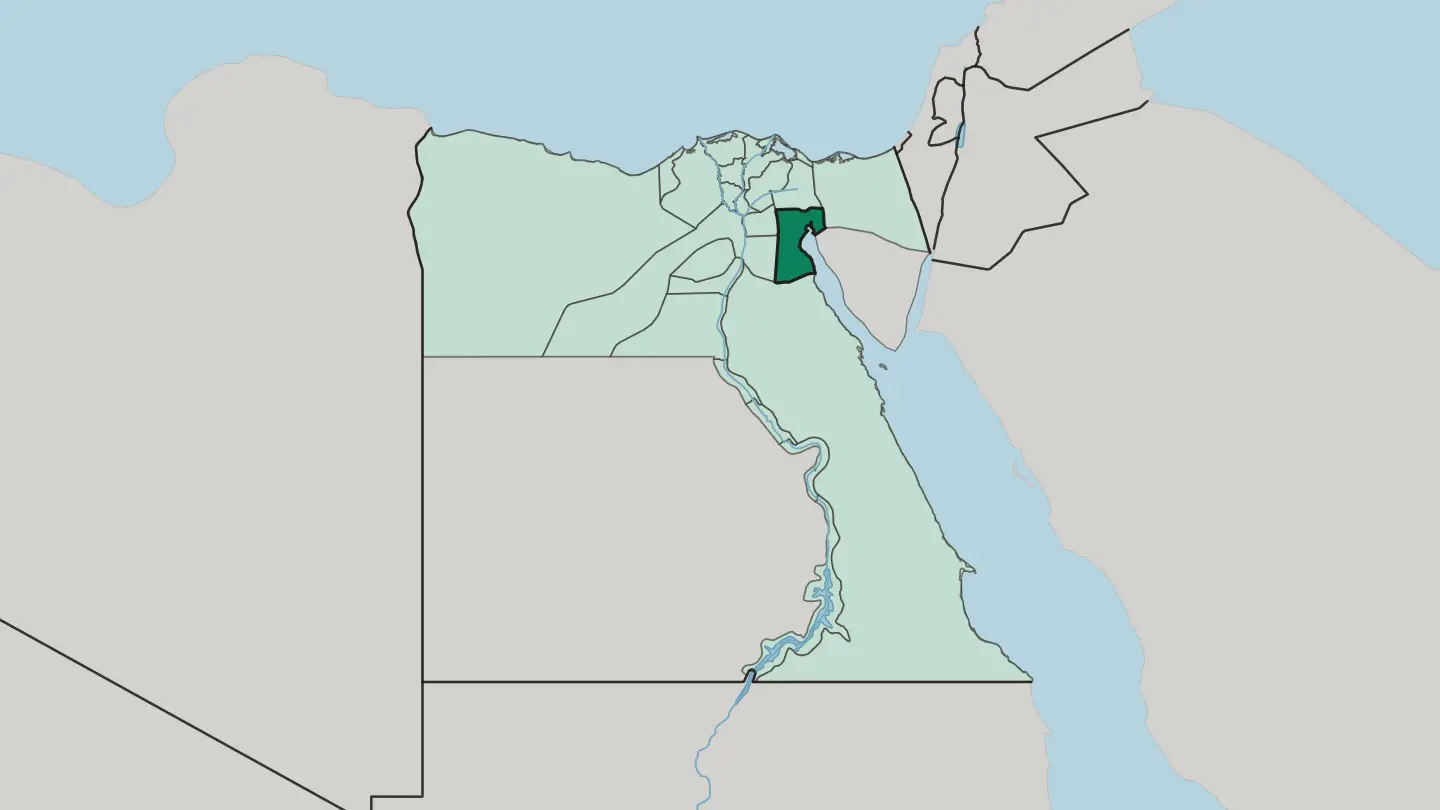
Explore by experience
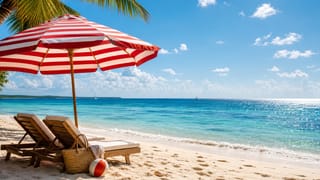
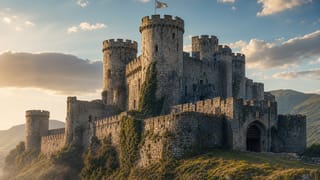
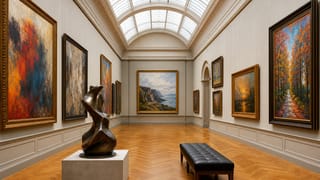
Not sure which place? Start from how you want to travel.

About Egypt
What is Egypt known for?
Few countries carry a past as deep as Egypt's. The pyramids and the hieroglyph-covered temples draw travellers who have come since ancient times, part of what may be the oldest tourist trade on earth. Churches and mosques mark later faiths across the same ground.
Called a cradle of civilisation, Egypt holds one of the longest recorded histories of any nation, and its two great cities, Cairo and Alexandria, still carry that weight of centuries.
Where is Egypt?
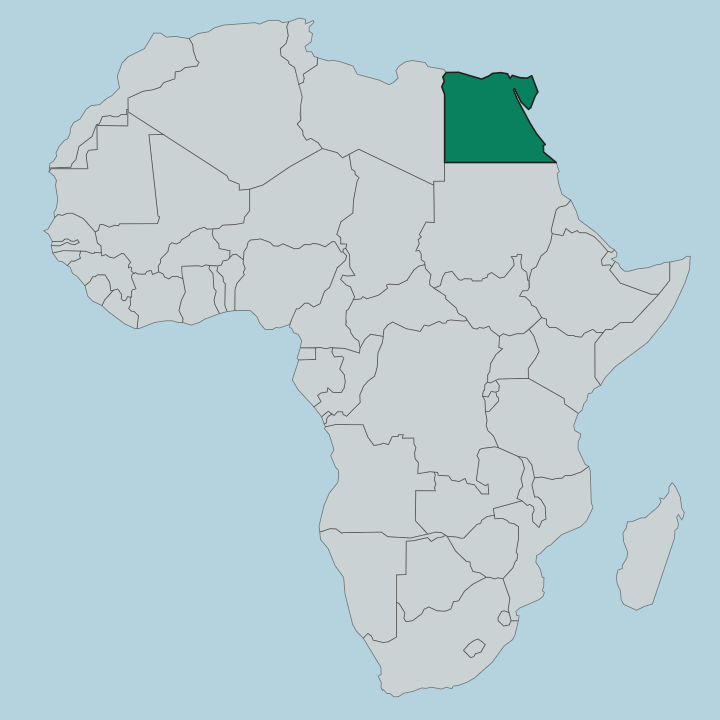
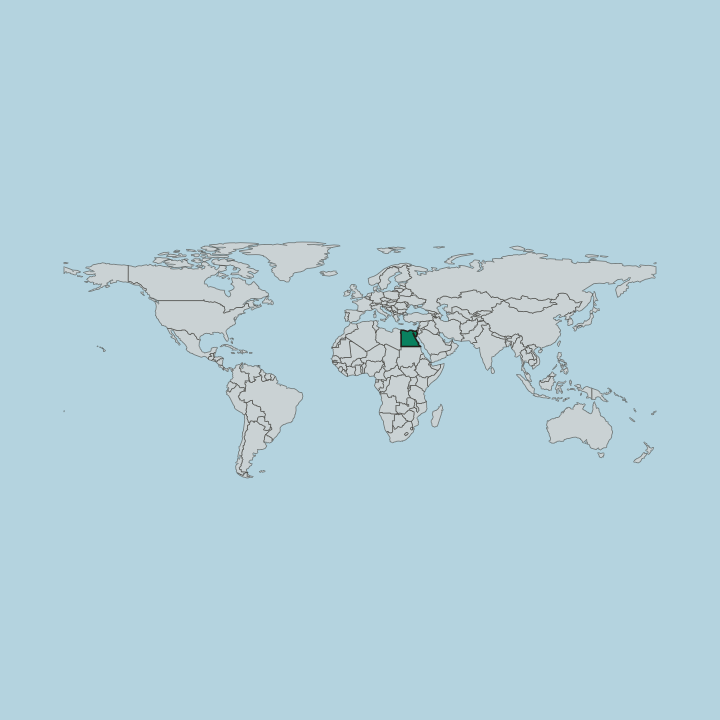
Egypt occupies the northeast corner of Africa and reaches across the Sinai Peninsula into the southwest corner of Asia. The Mediterranean Sea forms its northern edge and the Red Sea its eastern, with the Sinai carrying the only land bridge between the two continents. Sudan and the Sahara lie south; Libya closes the west.
In the northeast the Gulf of Aqaba separates Egypt from Jordan and Saudi Arabia, while beyond the Sinai lie Israel and the Palestinian territories. Sea and desert frame the country on almost every side. Desert fills much of the interior.
The Sahara spreads across the south and west, a dry expanse of rock and sand rather than forest, so most travel and settlement gather toward the coasts and the great cities. Cairo is the capital and largest city, the leading cultural centre of the country. Alexandria follows as the second city, long a hub of industry and of tourism to the ancient sites.
The pyramids and old temples that draw travellers rise from this desert ground. Between the Mediterranean shore and the Red Sea coast, the pattern of Egyptian life bends around water and sand.
What is the history of Egypt?
Egypt holds one of the longest recorded histories of any country in the world. Counted among the cradles of civilisation, it left the pyramids, carved temples, and walls of hieroglyphics that still mark the land. Travellers have come to see these monuments since ancient times, and that deep past made Egypt perhaps the oldest destination for tourists anywhere on earth.
The great stones outlasted the people who raised them by thousands of years. Empire after empire passed across the country in turn, each leaving something on the ground. Later ages left their own marks.
Churches and mosques rose beside the older monuments as new faiths took hold across the country, adding sanctuaries to a landscape already crowded with the works of earlier ages. Egypt took its modern form in 1922, emerging then as an independent state. From that founding grew the Arab Republic of Egypt, a major nation of the Arab world that reaches across Africa toward Asia.
Its two great cities, Cairo and Alexandria, gather the layered record of all that came before. The past here is never far from the street.
What is Egypt like?
Arabic is the language of daily life across Egypt, and the country sits at the heart of the Arab world. Its culture rests on layers few places can match: the art and hieroglyphics of the ancient monuments, then the churches and mosques of the faiths that followed, all standing on the same old ground. Faith runs deep and visible.
Churches and mosques share the streets of the cities, marking the ground of a country shaped by many beliefs. Ancient art still shapes how the country is seen far beyond its borders. The old monuments are not kept behind glass alone.
The pyramids, temples, and carved hieroglyphics remain part of how Egypt sees itself, a heritage carried in the open rather than shut away, and people have been welcomed among them since ancient times. Cairo leads the country's cultural life. As the largest city and leading cultural centre, it draws the arts and faith of the nation, while Alexandria carries the character of a second city with its own long story.
Egyptians are known for meeting travellers warmly. That welcome is old.
What is the climate of Egypt?
Heat and drought define Egypt's weather. The Sahara sets the pattern across most of the country, bringing long rainless summers of fierce heat and warm, bright winters that draw travellers to the ancient sites. Rain is rare inland.
Only the Mediterranean edge in the north sees much of it, where sea air softens the season along the coast. Between the desert interior and the two coasts, the climate stays firmly warm and sun-struck the year round.
How do you get to Egypt?
For most travellers, the journey to Egypt ends at an airport gate. Cairo, the capital and largest city, is the main point of entry for international flights, while Alexandria takes its own share as the second city. Ships reach the coasts as well.
The Mediterranean Sea to the north and the Red Sea to the east both carry sea traffic to the country. Overland, the Sinai Peninsula holds the one land route between Africa and Asia, linking Egypt toward its neighbours in the northeast.
Updated September 2026