Russia
Tyumen Oblast, Russia — Towns & Travel Guide
Tyumen Oblast is Russia's oil-rich threshold of Siberia, a flat West Siberian plain of rivers and thermal springs east of the Urals.
Find your area →


Towns & cities in Tyumen Oblast
Pick a town or city — each links to where to stay.
 Russia
Tyumen
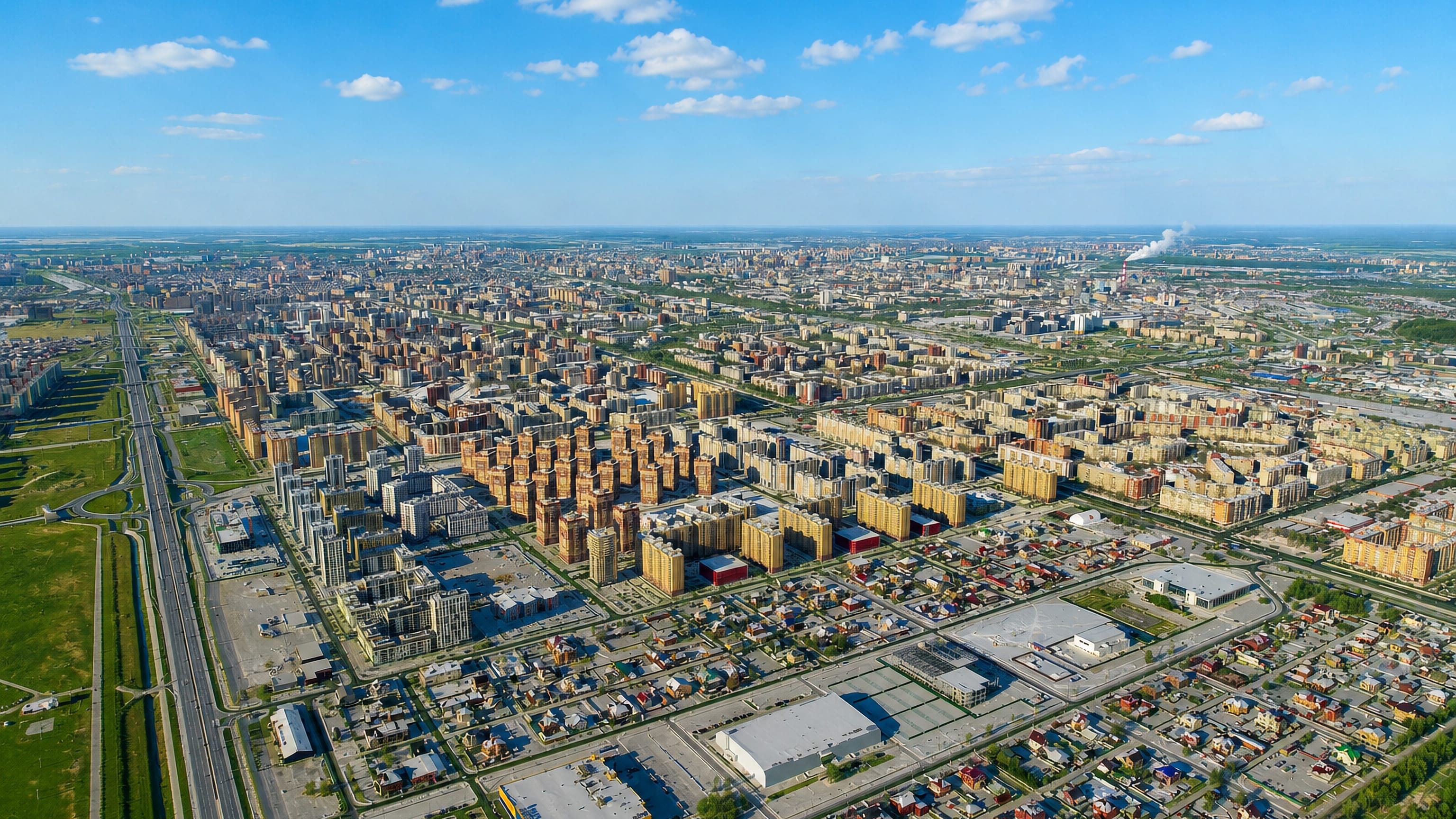
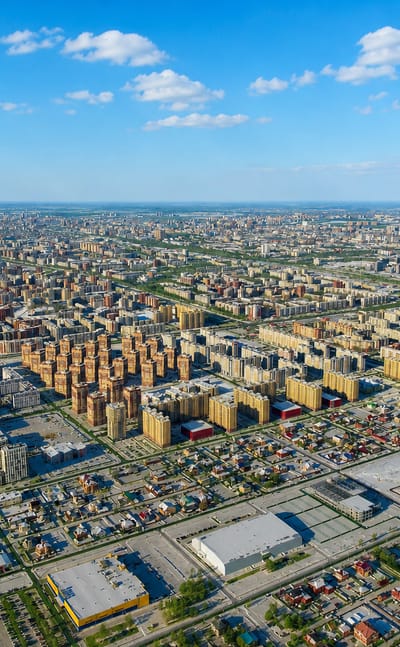
The Tura River bends past Tyumen, a city in Western Siberia and capital of Tyumen Oblast, east of the Ural Mountains, known as the first Siberian city.Where to stay →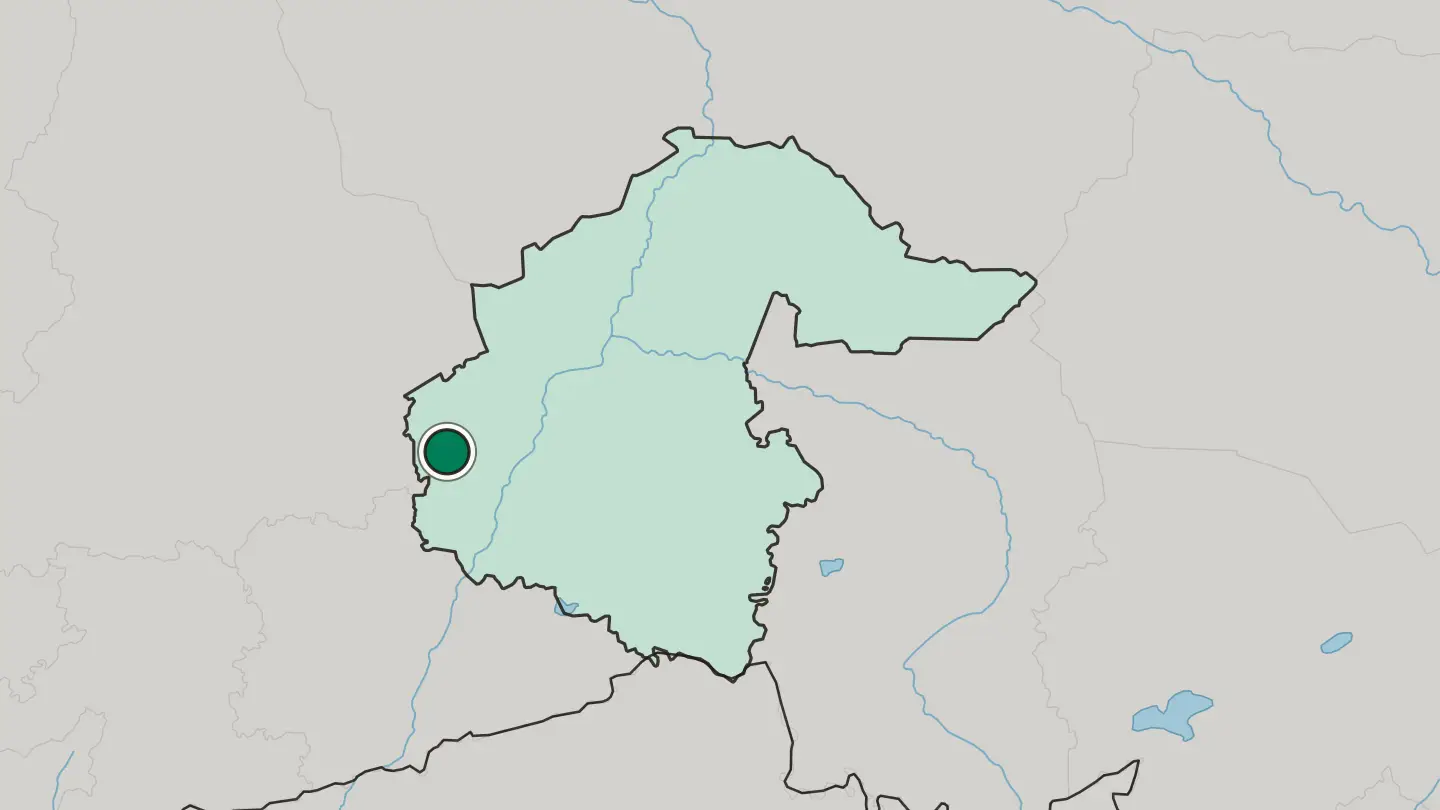
 Russia
Tobolsk
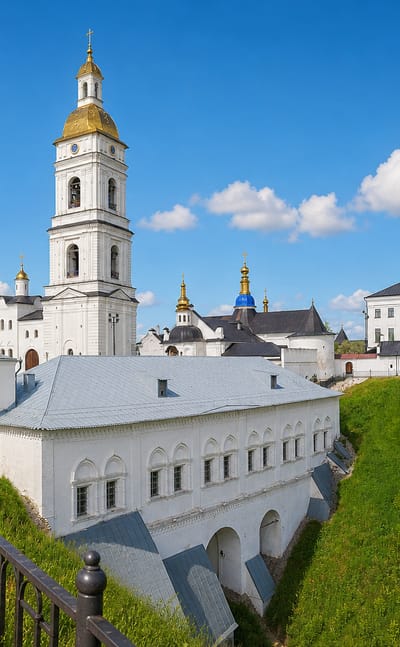
The Tobolsk Kremlin crowns the escarpment at Tobolsk, an old Siberian capital in Tyumen Oblast known for its white stone walls and cathedral.Where to stay →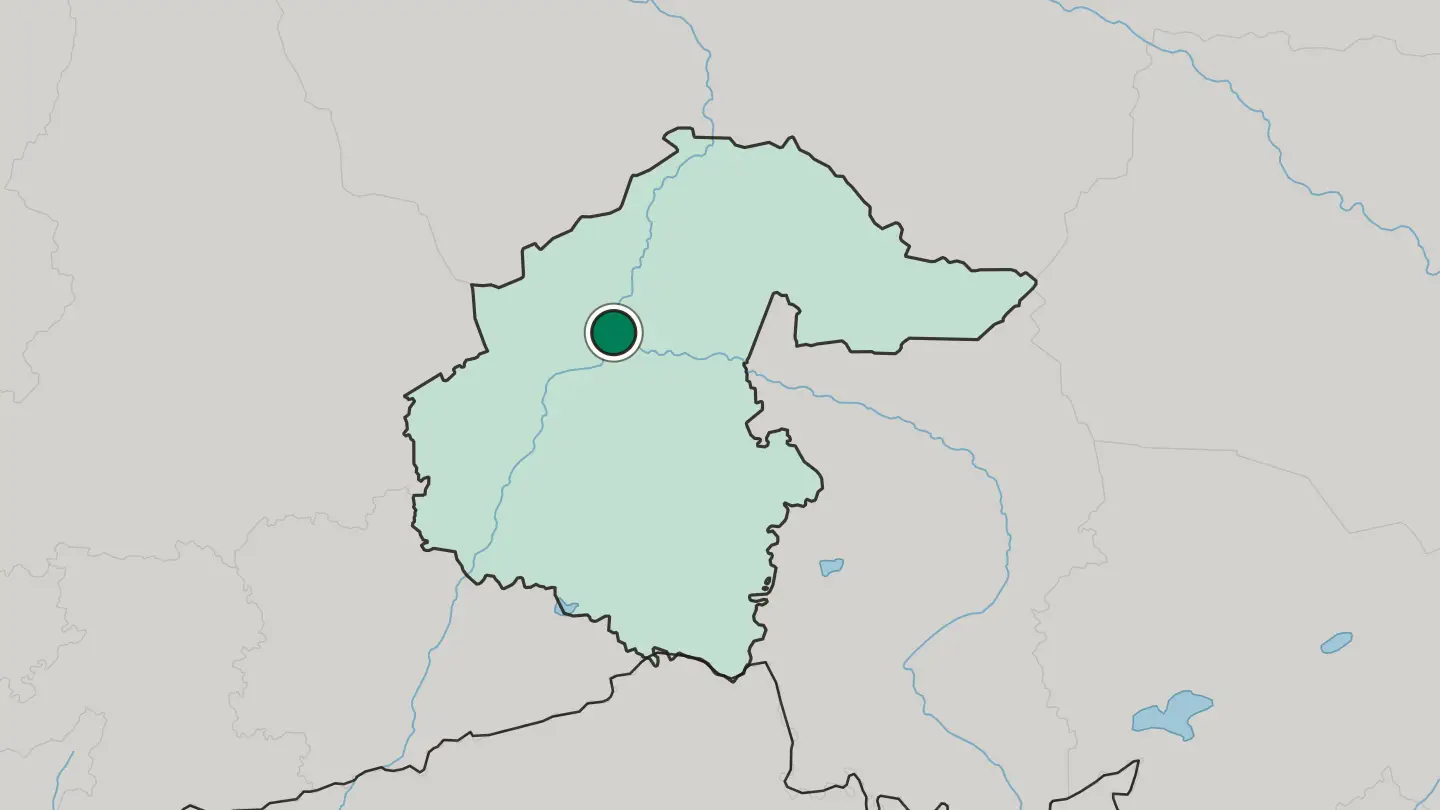
 Russia
Ishim
Ishim, in the south of Tyumen Oblast, dates from 1687 and was once Korkina Sloboda; three protected churches still mark its centre.Where to stay →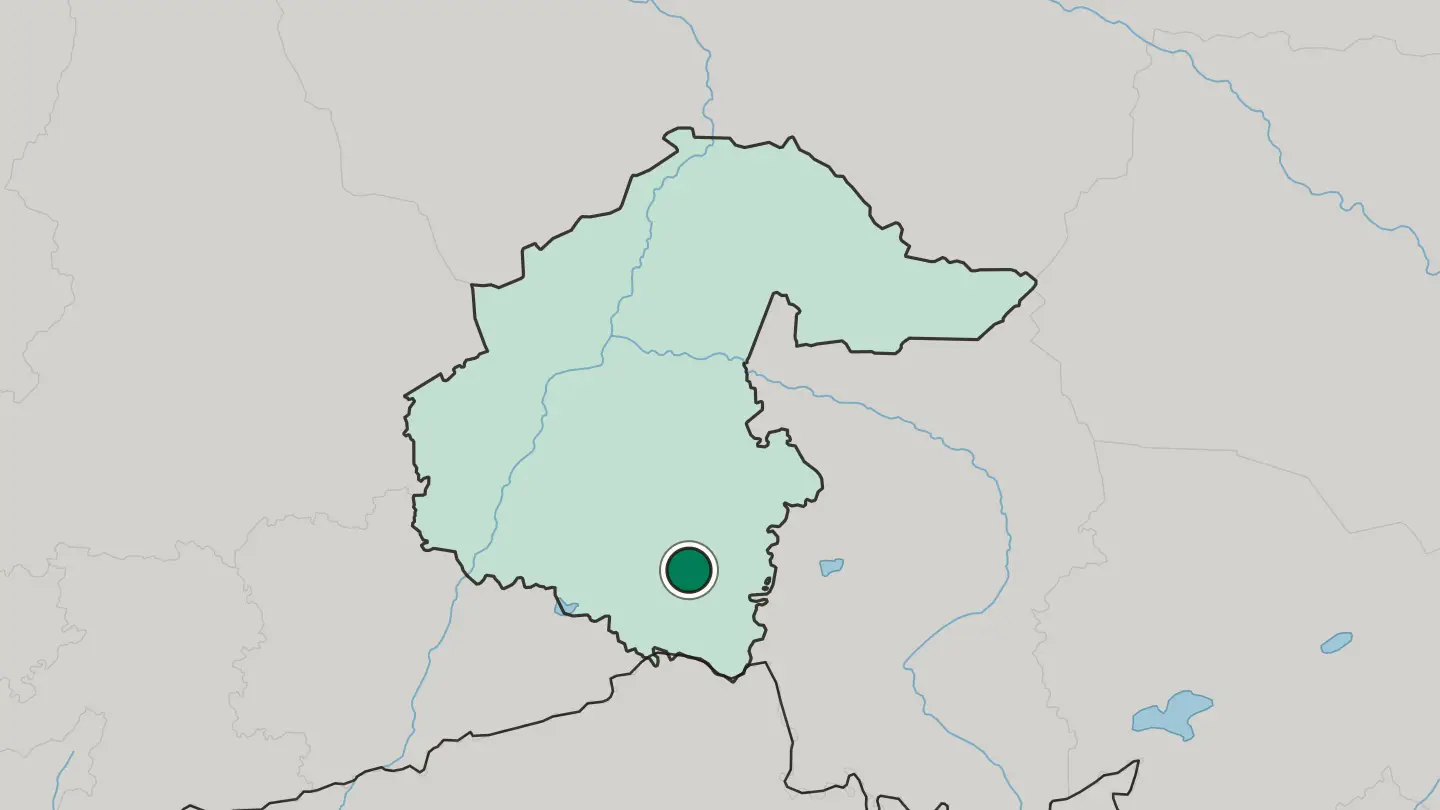
About Tyumen Oblast
Oil built this region.
What is Tyumen Oblast known for?
The wealth from the great northern fields runs through Tyumen, the capital and largest city, and it shows in a skyline of glass towers and engineering offices. Tyumen stands on the Tura just east of the Ural Mountains, the fourth-largest Russian city in Siberia. Downstream stands Tobolsk, the old capital of Siberia, crowned by its stone kremlin.
Beyond both, the flat West Siberian Plain runs on in taiga and swamp. Travellers come for a stranger draw too: geothermal springs that steam through the snow all winter.
Where is Tyumen Oblast?
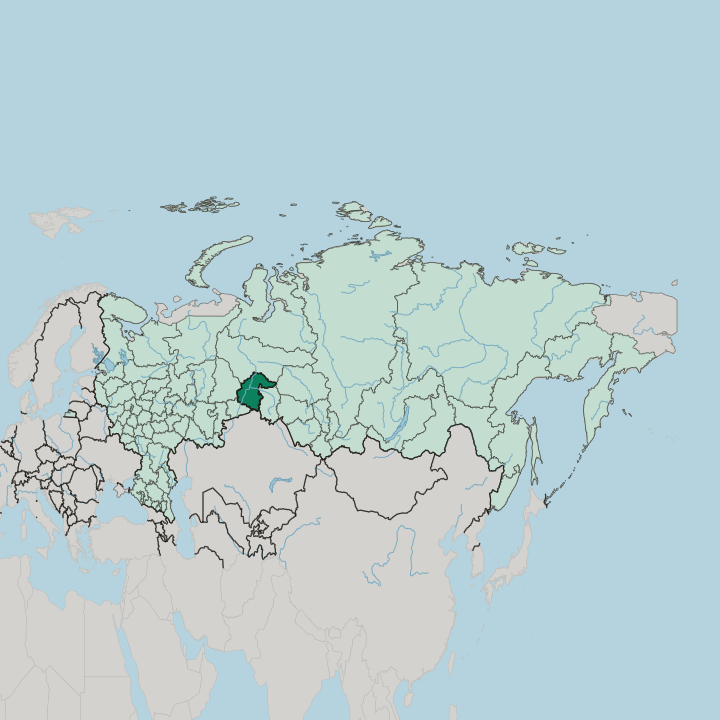
Tyumen Oblast lies in western Siberia, on the far side of the Ural Mountains from European Russia. The Urals form its western edge, the divide between Europe and Asia. Everything east of them is the West Siberian Plain.
The oblast fills a long stretch of it, running north from the border with Kazakhstan deep into the Siberian forest. Water defines the land more than any hill does. The Tobol threads down from Kazakhstan and joins the Irtysh at Tobolsk, and the Tura, the Ishim, the Pyshma and the Iset all feed the same slow northern drainage.
Between the rivers lie taiga forest, peat bog and marsh, thousands of shallow lakes stitched across the plain. The south opens into forest-steppe, where the trees thin to birch groves and grassland. Tyumen, the capital, stands in that southern belt on the Tura, close to the Ural foothills and the old road east.
Tobolsk sits further north, where the Tobol meets the Irtysh. Beyond both, the plain runs on toward the Arctic for hundreds of kilometres. The land barely rises the whole way.
What is Tyumen Oblast like?
Two identities pull at the region. One is old Siberia, held in Tobolsk, whose stone kremlin was the seat of Orthodox and imperial power across the whole east for two centuries. Tsar Nicholas II and his family were sent there in 1917, exiled in the former governor's mansion before the road that ended at Yekaterinburg.
That Siberia is a place of onion domes, river landings and long memory. The other identity is money. Oil and gas remade Tyumen into a fast, modern city of glass towers and engineering offices, the base from which Russia runs the vast fields to the north.
Russian is the everyday language, as it is across Siberia. The region carries an older grain underneath. Siberian Tatars settled the Tura valley long before the Cossacks came, and their town of Chimgi-Tura stood where Tyumen stands now.
Merchants, exiles and oil engineers each left a layer. The result is not a museum. It is a working region that happens to hold an old Russian story, kept alive on the bluff at Tobolsk.
What is the history of Tyumen Oblast?
Cossacks reached the Tura in 1586. There they raised a fort called Tyumen over the ruins of the Tatar town of Chimgi-Tura, and a year later, in 1587, came Tobolsk. It grew into the administrative and church capital of all Siberia.
For three centuries the whole east was governed from that bluff above the Irtysh. Power later shifted back to Tyumen as the railway and then the oilfields made it the region's motor. The oblast in its present borders was drawn in 1944.
What is the climate of Tyumen Oblast?
The climate is sharply continental. The swing between the seasons is enormous, with winters that are long and hard, January on the West Siberian Plain settling far below freezing, and cold snaps that drive the reading lower still. Summers turn warm and green across the southern forest-steppe, short but real, with July afternoons pleasant along the Tura.
The far north grades toward subarctic. That deep winter is exactly why the geothermal springs near Tyumen draw such crowds, steaming at bathing warmth while the air above the snow stays frozen.
How do you get to Tyumen Oblast?
Most visitors arrive at Tyumen. Roshchino, the city's airport, handles flights from Moscow and other Russian hubs. Tyumen also sits on the Trans-Siberian Railway, so the same trains that cross the country stop here, roughly a day and a half east of Moscow by rail.
From Tyumen a branch line and a highway run north to Tobolsk. Rivers no longer carry travellers the way they once carried the Cossacks, but the Tura and the Irtysh still shape where the roads and rails go.
Common questions
What is the best area to stay in Tyumen Oblast?
Tyumen: hot-spring resorts and transport links. Tobolsk: the Siberian kremlin and imperial history. Ishim: the southern forest-steppe.
Good for
More regions in Russia
Updated October 2026