Russia
Kalmykiya, Russia — Towns & Travel Guide
Kalmykiya is a republic of Russia in the Volga region, running east to the Caspian Sea, and the only Buddhist-majority polity in Europe.
Find your area →


Towns & cities in Kalmykiya
One town here has its own guide — it links to where to stay.

 Russia
Elista
Elista is the capital of Kalmykia in southern Russia, the seat of Europe's only Buddhist people and home to a famous purpose-built Chess City.Where to stay →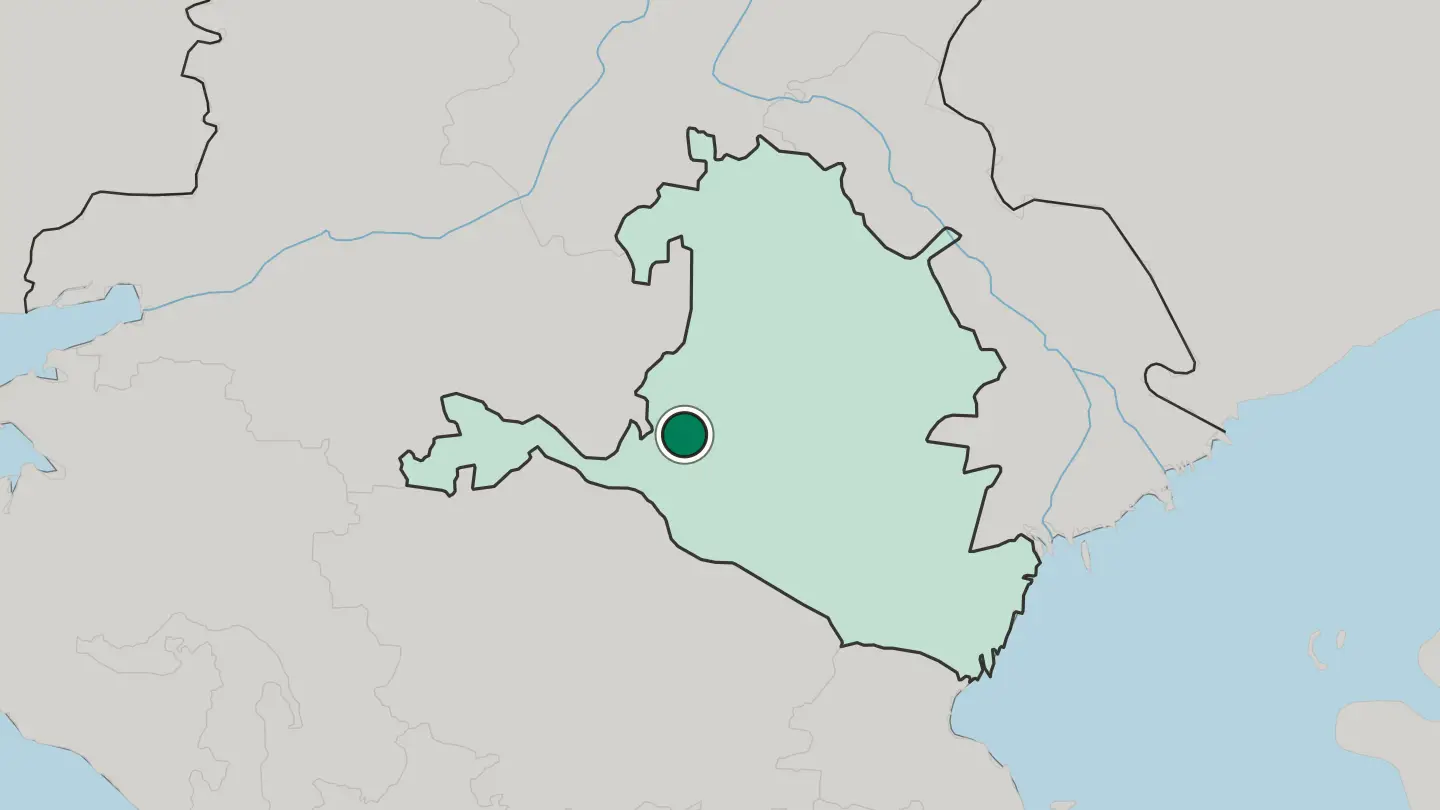
About Kalmykiya
Buddhism sets Kalmykiya apart.
What is Kalmykiya known for?
Most Kalmyk people follow Vajrayana Tibetan Buddhism of the Gelug and Kagyu lineages, which makes this the one polity on the European continent where that faith holds the majority. The land is the other signature: low, open country across the Caspian Depression, running east to the Caspian Sea, with a fifth of the republic held as national reserves, parks and hunting plots. Хальмг Таңһч is the name it answers to in Kalmyk.
Where is Kalmykiya?
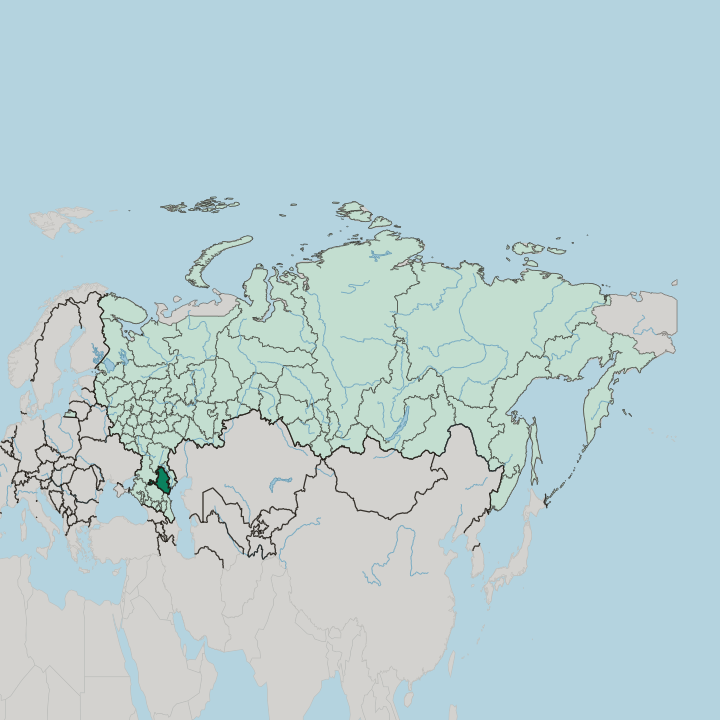
Kalmykiya sits in the Volga region of European Russia, inside the Southern Federal District, and its borders read like a list of its neighbours. Astrakhan Oblast lies to the northeast and north, Volgograd Oblast to the north and northwest, Rostov Oblast to the west, Stavropol Krai to the southwest, and Dagestan to the south. The Caspian Sea closes the east.
Through the Caspian Depression, the Kuma river forms the natural border with Dagestan. Land here is low rather than raised. A fifth of the republic is set aside as national reserves, parks and hunting plots, a large share for open country of this kind, and it shapes how much of Kalmykiya is crossed on tracks rather than made roads.
Water is the limiting factor. Away from the Caspian shore and the Kuma, the ground runs dry for long stretches, and settlement follows the few reliable sources, with Elista the hub that road traffic converges on. Scale works against quick touring.
The republic runs from the Rostov Oblast border in the west to the Caspian shore in the east, and from the Volgograd Oblast line in the north down to the Kuma and Dagestan, which is a lot of open ground for one administrative unit. Relief barely intervenes. The Caspian Depression keeps the eastern ground low and level, so the horizon does more work here than any hill or ridge.
What is Kalmykiya like?
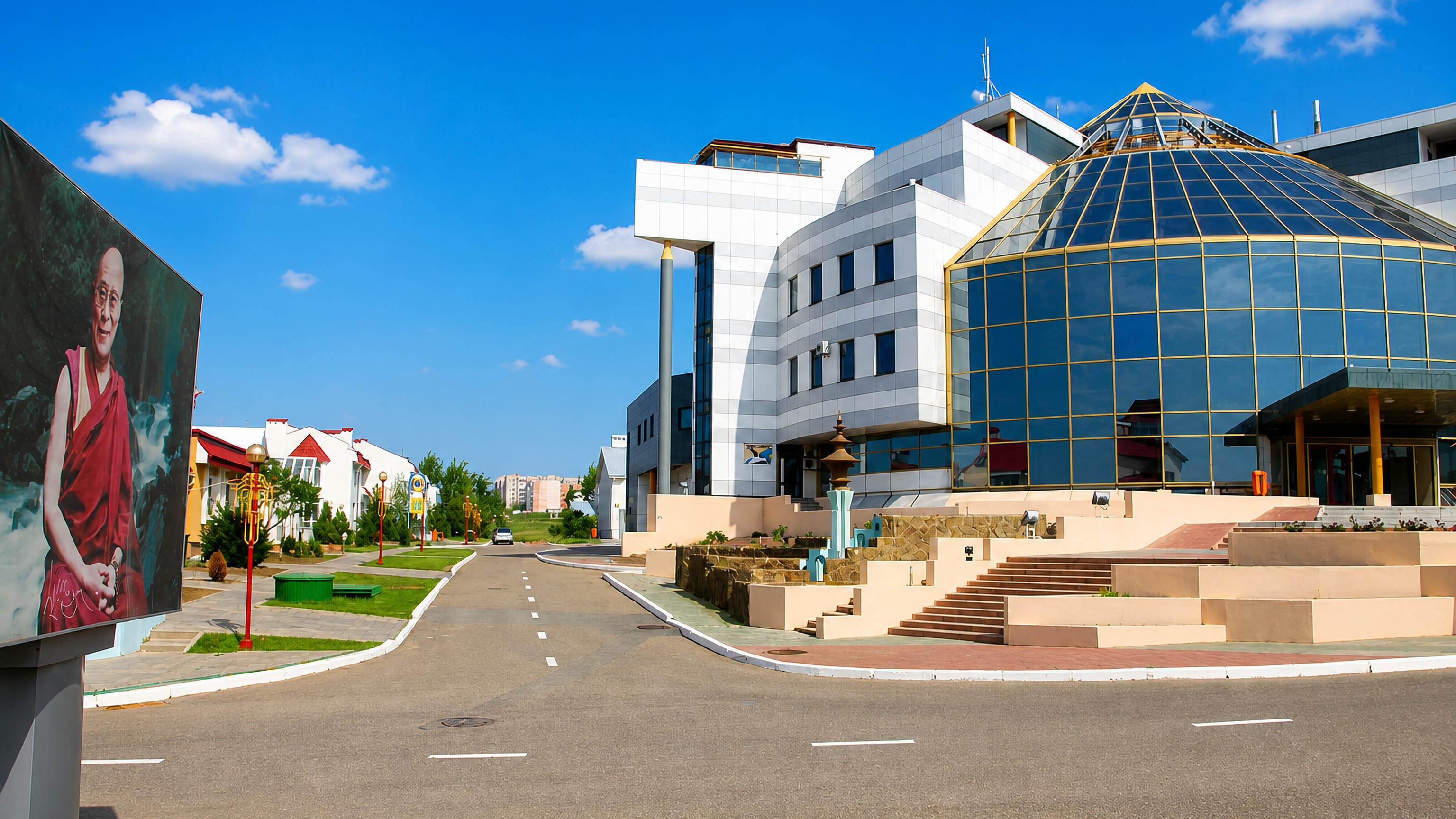
Faith is the first thing outsiders notice. The majority of Kalmyk people are Vajrayana Tibetan Buddhists of the Gelug and Kagyu lineages, and nowhere else on the European continent does Buddhism hold a majority, which makes the republic an anomaly in the middle of the Volga region. That fact is not decorative.
It sets the calendar, the visual language of building and monument, and the way Kalmykiya presents itself to the rest of Russia. Language carries the same doubleness. Russian is the working tongue across the republic, while the Kalmyk form Хальмг Таңһч stands as the official name and keeps a separate line of speech alive beside it.
Two registers, one place. The Gelug and Kagyu lineages give the practised religion its shape, and that inheritance is Tibetan rather than European, which is why the republic reads differently from every neighbour along its borders. Land use tells another part of it.
National reserves, parks and hunting plots account for a fifth of the republic, so protected open country is a normal part of ordinary life here rather than a distant category set apart from it. Hunting sits inside that framework. Elista, as the hub city, is where the republic's institutions and services gather.
What is the history of Kalmykiya?
Kalmykiya's present form dates to 1992. The republic took that shape within Russia, and it carries two identities at once: an administrative unit of the state, and the one polity on the European continent where Buddhism is the majority religion. Хальмг Таңһч is the name in Kalmyk. Older than any boundary line is the religious inheritance, the Gelug and Kagyu lineages of Vajrayana Tibetan Buddhism that the majority of Kalmyk people follow.
What is the climate of Kalmykiya?
The Caspian Sea sets the terms on Kalmykiya's eastern edge. Nothing between the Volga region and the Kuma breaks the run of air across the Caspian Depression, so weather arrives unobstructed from whichever direction the season sends it, and the low ground offers no shelter. Relief would change that.
Without it, the difference between one side of the republic and the other is a matter of distance from the Caspian rather than of altitude.
How do you get to Kalmykiya?
Every approach to Kalmykiya is by land. Roads into Kalmykiya come from Astrakhan Oblast on the northeast, from Volgograd Oblast on the north, and from Rostov Oblast on the west, with Elista the hub city that those routes converge on. Two more doors open from the south.
One crosses the Kuma out of Dagestan, and the other turns in from Stavropol Krai on the southwestern border.
Common questions
What is the best area to stay in Kalmykiya?
Elista: one fixed base for driving the reserves and the Caspian side.
More regions in Russia
Updated September 2026