Russia
Respublika Mordoviya, Russia — Towns & Travel Guide
Respublika Mordoviya is a Volga-Finnic republic of Russia, a rolling plain between the Moksha and Sura rivers east of Moscow.
Find your area →


Towns & cities in Respublika Mordoviya
One town here has its own guide — it links to where to stay.

 Russia
Saransk
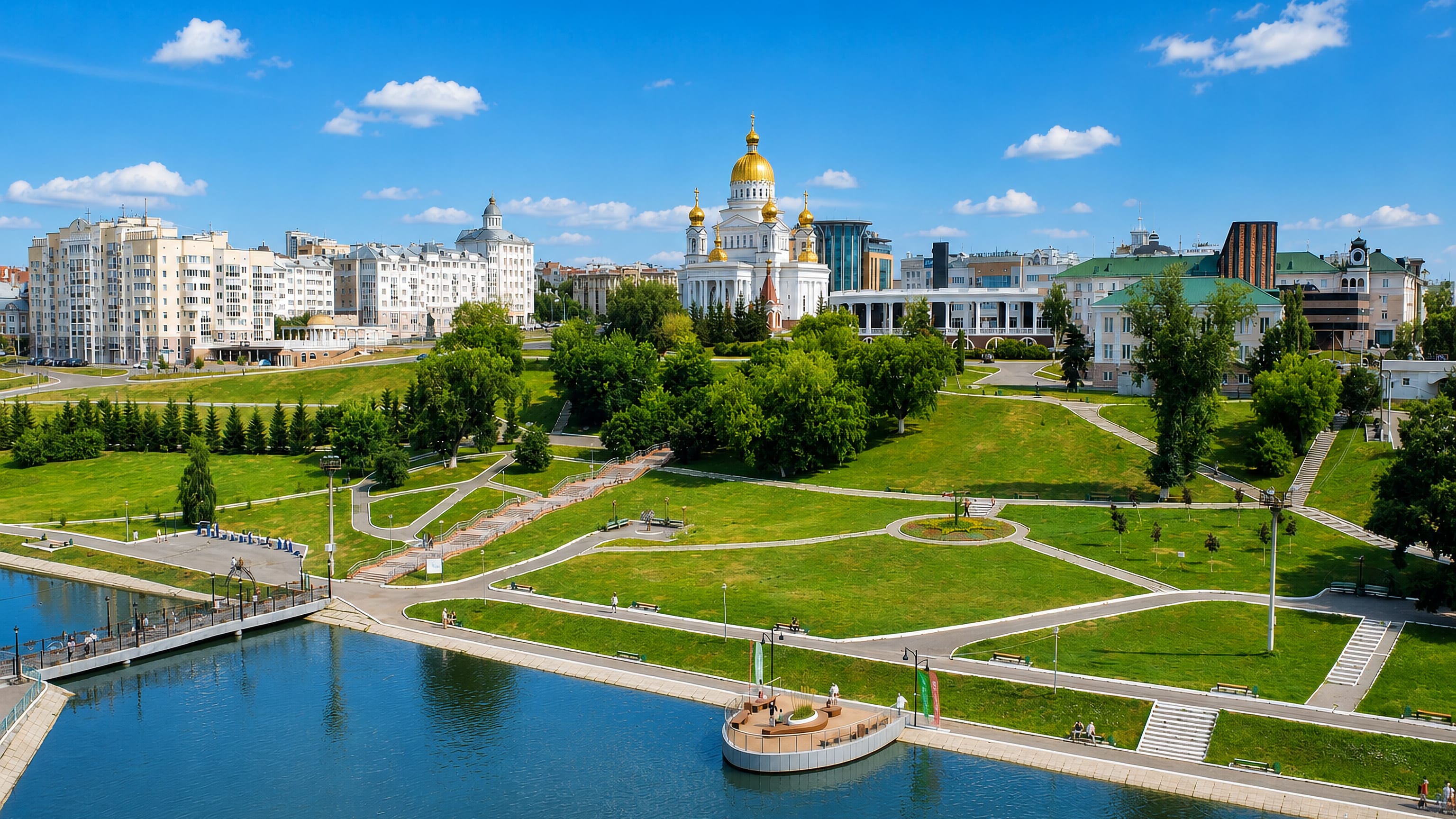
Saransk is a city of central Russia, the capital of Mordovia, a leafy town of the Finno-Ugric Mordvin lands with a great white cathedral.Where to stay →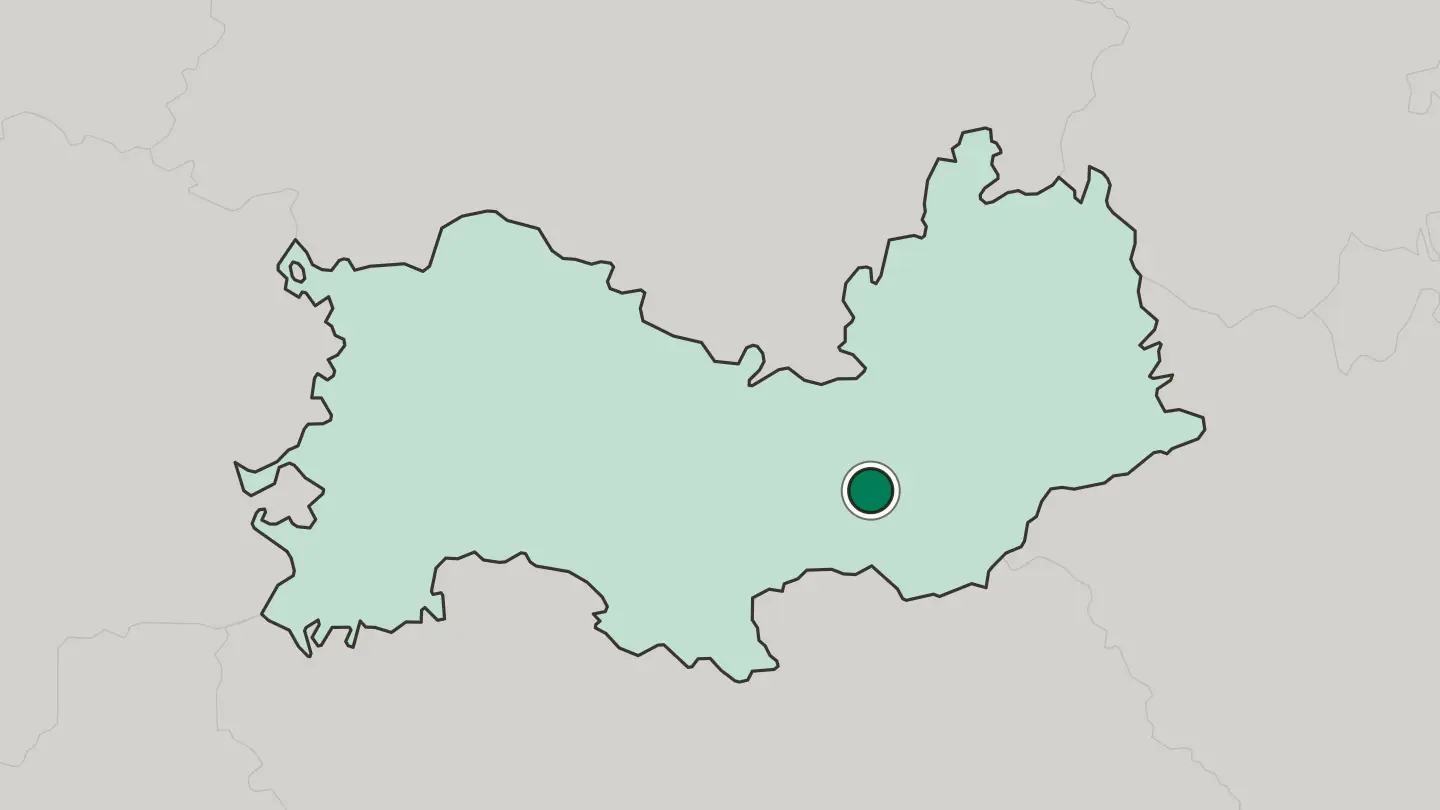
About Respublika Mordoviya
This is Mordvin country.
What is Respublika Mordoviya known for?
The republic is the homeland of the Erzya and Moksha, two Volga-Finnic peoples whose languages hold official standing beside Russian here. Saransk, the capital, carries the region's landmarks, chief among them the Cathedral of Fyodor Ushakov, whose dome climbs to 62 metres above the central square. Beyond the city the land opens into farmland and forest, crossed by the Moksha in the west and the Sura in the east.
Football fans know the name too, from the Mordovia Arena built for the 2018 World Cup.
Where is Respublika Mordoviya?
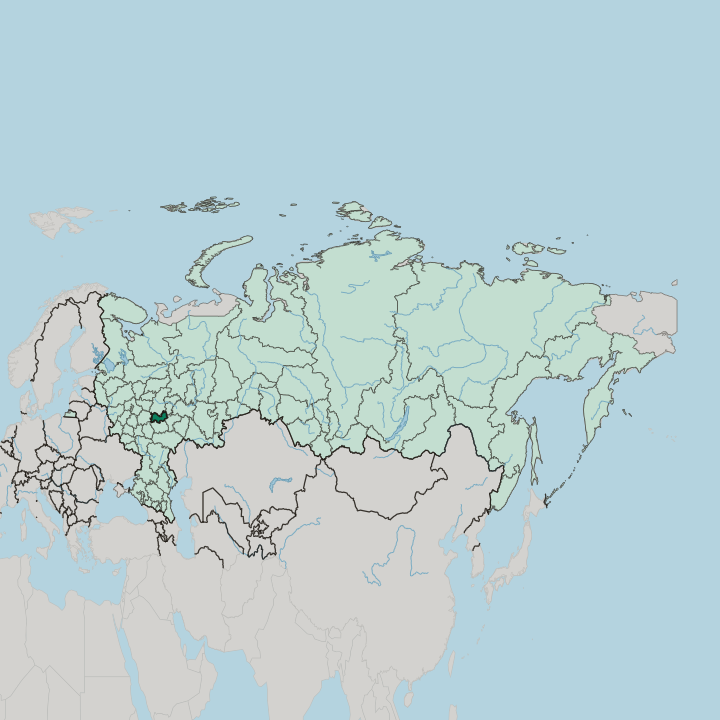
Mordoviya lies in the middle Volga country of European Russia, a landlocked republic roughly 630 kilometres east of Moscow. The whole of it is a gently rolling plain. In the west that plain sinks into the broad and often swampy valley of the Moksha, a river that runs on north-west to join the Oka.
The Sura claims the east. It is the longer of the two, and it flows to the Volga itself, so the republic drains toward the great river on both flanks at once. Between them the land rolls in low ridges and shallow valleys, mixed farmland and patches of forest, with no mountain and no coast anywhere near.
Saransk stands near the centre, where the small Saranka empties into the Insar. The Insar carries on north to the Alatyr, and the Alatyr to the Sura, threading the capital into the Volga basin by water. Five Russian regions ring it round.
The republic covers about 26,000 square kilometres, a compact block of the East European Plain with the Oka-Don lowlands on the west and the higher Volga Upland rising on the east.
What is Respublika Mordoviya like?
Two peoples give the republic its name and its character. The Erzya and the Moksha are Volga-Finnic Mordvins, and their two languages, Erzya and Moksha, stand alongside Russian as the official tongues of the republic. The two are close kin but not the same speech, and a speaker of one does not simply read the other.
Russians form the larger share of the population, so the everyday texture of Mordoviya is a blend rather than a single strand. That blend runs through the folk costume, the embroidery and the wooden church architecture the region is known for. Saransk holds the public face of that culture.
The Erzya sculptor Stepan Erzia, born in a village of the republic, gives his name to the city's fine-arts museum, and the towering Cathedral of Fyodor Ushakov anchors the central square, named for the admiral-saint whose relics rest here. Festivals of Mordvin song and dance keep the older village traditions alive. Museums and galleries fill in the rest.
Between the Finno-Ugric inheritance and the Russian majority, the republic keeps a foot in two worlds.
What is the history of Respublika Mordoviya?
The land came under Moscow's rule in 1552, when Ivan the Terrible took the Kazan khanate and the Mordvin lands with it. Saransk itself began later, in 1641, as a wooden stockade fortress on the Tsardom's southeastern frontier against Crimean Tatar raids. From that fort a town grew.
The Mordvin homeland gained its own autonomous oblast in 1930 and was raised to an autonomous republic within the Soviet Union in 1934, with Saransk as its capital. It took its present standing as the Republic of Mordovia after the Soviet Union fell.
What is the climate of Respublika Mordoviya?
Mordoviya has a markedly continental climate, the kind that comes with sitting far inland on the East European Plain. Winters are long and hard. January runs cold enough to average well below freezing, and Arctic air pushing down from the north can drop it far further on the worst days.
Summers turn genuinely warm, with July averaging around twenty degrees and the plains drying out under long daylight. Rain falls mostly in the warm months, heavier over the Moksha country in the west than over the drier east.
How do you get to Respublika Mordoviya?
Most travellers reach Mordoviya by rail from Moscow. The line from the capital toward Kazan reached Saransk in 1893, and trains still run the roughly 630 kilometres east from Moscow through the night. Ruzayevka, on the Insar southwest of Saransk, is the larger junction where the main lines cross.
Saransk has its own airport for the few flights that serve the republic. Inland, road and rail tie the capital to Ruzayevka, Kovylkino and the smaller towns of the plain.
Common questions
What is the best area to stay in Respublika Mordoviya?
Saransk: a base for the whole republic.
More regions in Russia
Updated September 2026