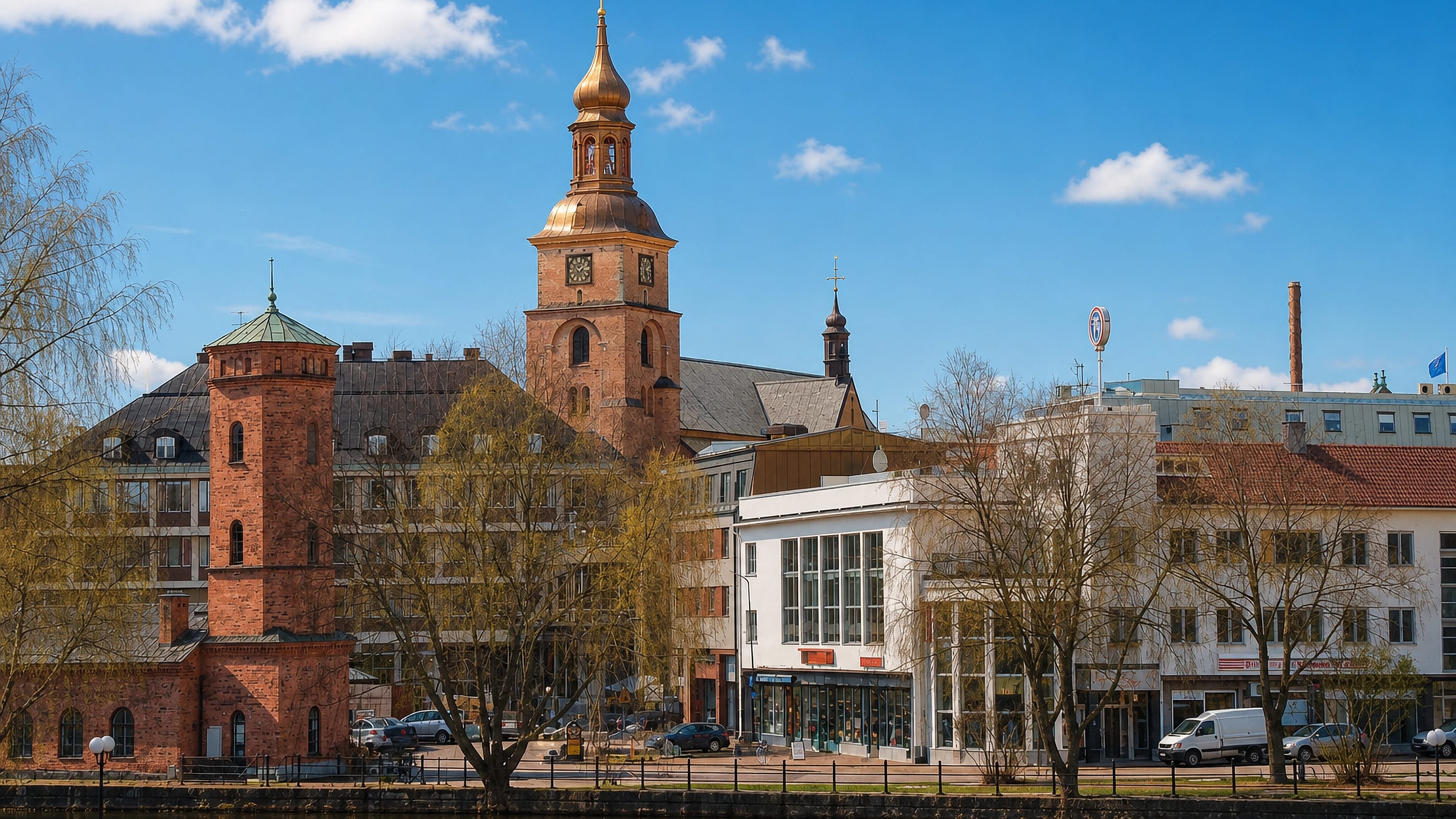
Sweden · Dalarna County
Where to Stay in Falun, Dalarna County
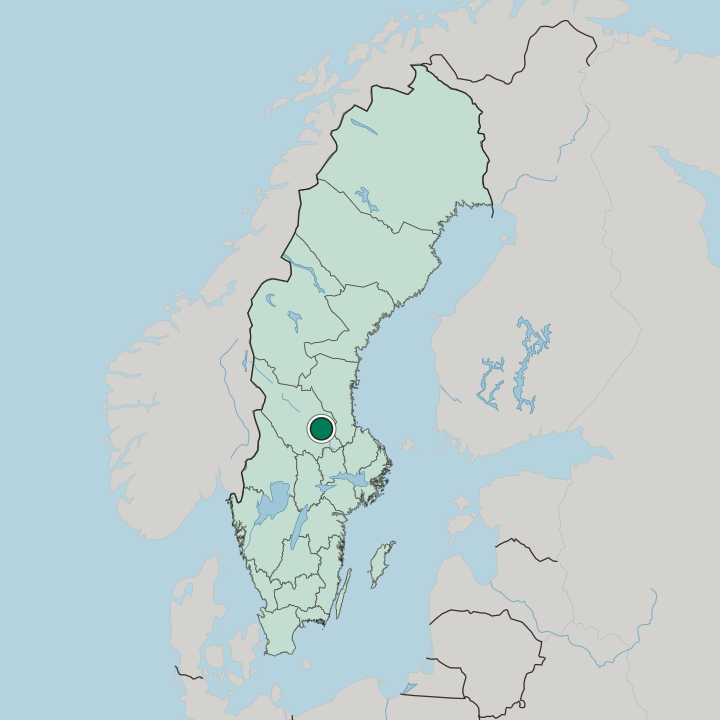
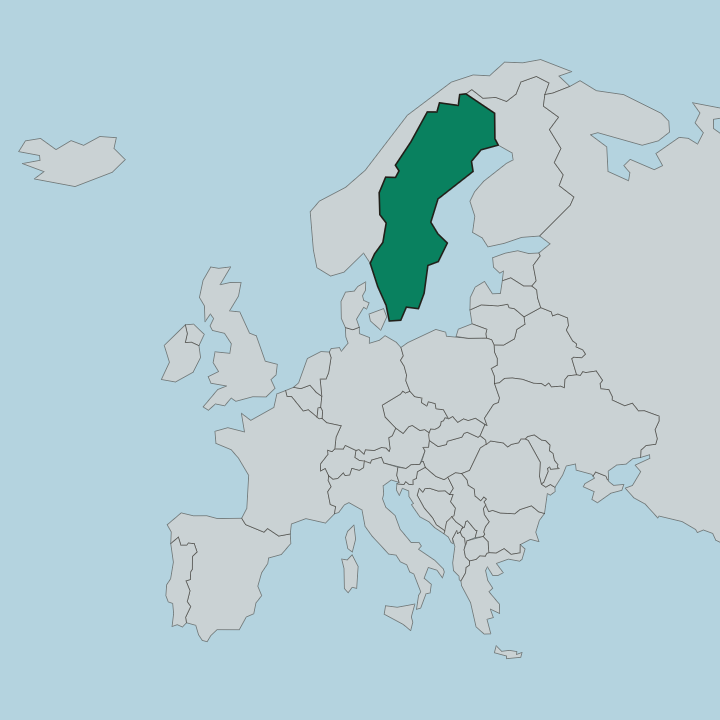
Falun is the seat of Dalarna County in central Sweden, a copper-mining city whose great pit and red-painted houses shaped a nation's image.
Hotel links are affiliate links: booking through them may earn us a commission, at no extra cost to you. It never affects how places are ranked. How this works


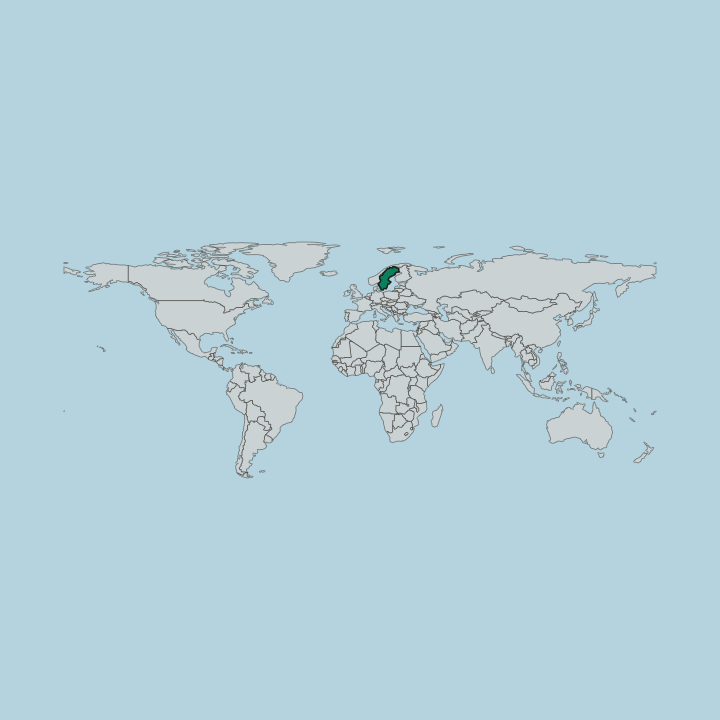
Where to stay in Falun
Where the beds are, and what that means for the visit.
Most visitors stay in the centre, the old grid east of the Faluån where hotels, restaurants, and shops cluster within a short walk of the square and the church. It suits first-timers who want the mine and the museums close at hand. Rooms here range from grand old town hotels to small guesthouses.
West across the river, the mine quarter and Elsborg's tight rows of cottages sit nearest the World Heritage core, quiet and atmospheric but light on beds. North toward Lugnet, the sports and ski complex offers practical lodging for athletes and event crowds, busy through every championship and World Cup weekend. Out by Runn, lakeside cabins and resorts suit a slower summer stay among the water and the pines.
Look first to the old grid east of the Faluån. Everywhere else is a short ride away.
Find hotels in Falun
Direct booking searches for these neighbourhoods.
City centre
mine, museums and the square within a short walkFind hotels in City centreheritage visitorsElsborg and the mine quarter
old cottages beside the World Heritage core. Lodging is scarce in this area; reserve in advance.Find hotels in Elsborg and the mine quartersports and event visitorsLugnet
lodging beside the ski and sports complexFind hotels in LugnetHotel links are affiliate links: booking through them may earn us a commission, at no extra cost to you. It never affects how places are ranked. How this works
Things to do in Falun
Ranked by global recognition; descriptions from Wikidata (CC0).
Museums & Galleries
5- Falun Mine UNESCO working life museum
- Thunströms köpmansgård Heritage
- Falun Prison museum and hostel
- Ernst Rolf's birthplace museum in Elsborg
- Silverhyttan Listed building and working life museum
Churches & Religious Sites
3- Kristine Church Heritage
- Stora Kopparberg Church Heritage Church of Sweden church building
- Sankt Örjans kapell Heritage
Stadiums & Sports
3- Lugnet sport complex
- Lugnet ice arena ice arena
- Alla På Plan Arena
Landmarks & Notable Places
1- Dalarnas Museum Heritage
worth knowingacross 4 categories in Falun
About Falun
Copper made Falun.
What is Falun known for?
The great mine of Stora Kopparberg produced ore for centuries and at its height supplied much of Europe, funding the Swedish crown through war and peace alike. From its slag came Falu red, the iron-rich paint that turned timber cottages across the country a deep rust colour. That pit, the Falu koppargruva, is a World Heritage Site.
What are the main landmarks in Falun?
The Falu koppargruva, with its vast open collapse pit and the Gruvmuseet at the surface, anchors the city's World Heritage standing. Falun's churches include Kristine kyrka over the square and Stora Kopparbergs kyrka. Lugnet's ski jumps tower above town.
The wooden quarters of Elsborg preserve miners' cottages painted in the famous red. Falu fängelse and Dalarnas idrottsmuseum round out the rest.
What is the history of Falun?
Falun's history is the history of its mine. Copper was being dug from the hill of Stora Kopparberg as early as the medieval period, and by the seventeenth century the works had become the most important industrial enterprise in the kingdom, employing thousands and bankrolling Sweden's wars. The town grew around the pit.
Disaster and decline followed glory. A massive cave-in late in the seventeenth century opened the great pit that still scars the hill, and over the following centuries output slowly fell until mining at last came to an end. The city turned to administration, learning, and sport.
The pit endures as a monument to the trade that made it.
Where is Falun?
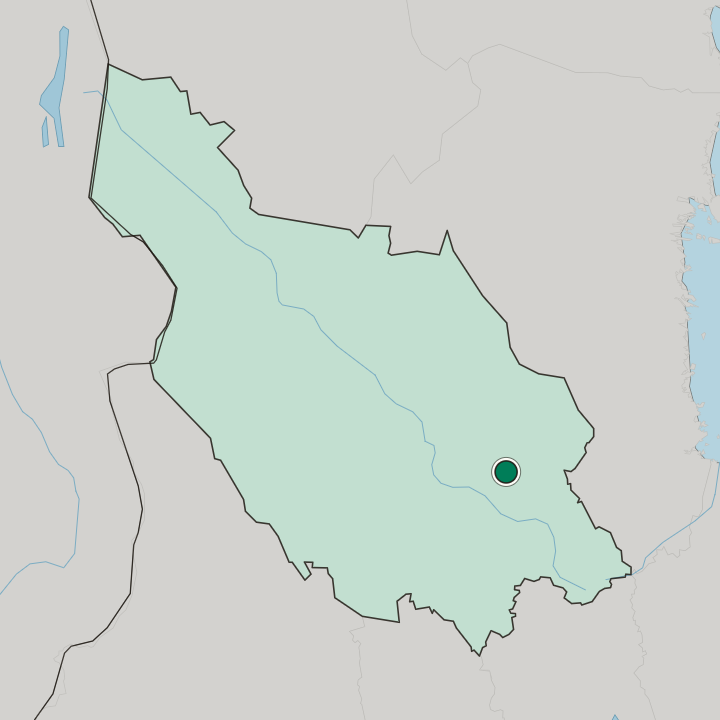
Falun lies in the eastern part of Dalarna County in central Sweden, set where the Faluån river runs down into Lake Runn. Wooded hills rise close around the town, and the old mining ground lifts to the west above the valley floor. Lakes, forest, and low ridges spread out in every direction beyond the streets, with the city of Borlänge a short way off to the south-west and the open uplands of Dalarna stretching well beyond.
The terrain is broken and green. With Lake Runn and the Faluån at hand, the water stays close.
What is the climate of Falun?
Falun has a humid continental climate, set well inland in central Sweden. Winters are long and cold, with reliable snow that turns the surrounding hills into ski country from December into March, and Lake Runn freezing hard enough to cross. Summers come mild and green to the hills.
Long northern evenings stretch the daylight far past nine around midsummer, when dusk barely settles before the early dawn. The shoulder seasons pass quickly around Falun.
How do you get to Falun?
Falun sits on a branch of the Dalarna rail network, with regional trains linking it to Borlänge and on toward Stockholm and the rest of the county. Connections often run through the junction at Borlänge nearby. Dala Airport, west toward Borlänge, handles the region's limited air traffic.
The roads are the mainstay. Main highways carry traffic in from the south and west, and regional buses thread out across the hills to the smaller towns around.
Common questions
What is the best area to stay in Falun?
City centre: first-timers. Elsborg and the mine quarter: heritage visitors. Lugnet: sports and event visitors.
Good for
More cities in Dalarna County
Updated October 2026