Sweden · Stockholm County
Where to Stay in Täby, Stockholm County
Täby is a municipality in Stockholm County on the north-eastern side of the capital, chartered in its present form in the 20th century.
Hotel links are affiliate links: booking through them may earn us a commission, at no extra cost to you. It never affects how places are ranked. How this works


Where to stay in Täby
Where the beds are, and what that means for the visit.
Täby Centrum is the natural base, built around one of the larger shopping centres in the region and the junction of the local railway, and it suits you if you want shops, restaurants, and trains in one place. Näsbypark, out toward the water, is the green and genteel quarter, with the grounds of Näsby slott and a yacht harbour on the bay, good for travellers after calm and a view. Roslags-Näsby is the rail crossroads where lines meet, plain but very practical for getting about.
Further out, Gribbylund and Viggbyholm offer low houses, gardens, and quick access to the lakes and the inlets of the archipelago's inner edge. These reward a slower, car-borne stay. Wherever you land in Täby, a rune stone is probably within walking distance.
The old and the new sit side by side.
Find hotels in Täby
Direct booking searches for these neighbourhoods.
Täby Centrum
Around a large shopping centre and the local railway junction.Find hotels in Täby CentrumGreen, waterside calmNäsbypark
Genteel quarter with Näsby slott grounds and a yacht harbour.Find hotels in NäsbyparkRail connectionsRoslags-Näsby
Crossroads where the local lines meet, plain but practical.Find hotels in Roslags-NäsbyLakes and longer staysViggbyholm
Low houses near the inlets of the inner archipelago.Find hotels in ViggbyholmHotel links are affiliate links: booking through them may earn us a commission, at no extra cost to you. It never affects how places are ranked. How this works
Things to do in Täby
Ranked by global recognition; descriptions from Wikidata (CC0).
Churches & Religious Sites
3- Tibble Church Heritage
- Sankt Olofs kyrka Heritage
- Näsbyparks kyrka Heritage
Stadiums & Sports
3- Tibblehallen Sport hall near Stockholm
- Täby Racketcenter
- Enebybergs ishall Ice hockey venue in Enebyberg
worth knowingacross 2 categories in Täby
About Täby
Täby is rune-stone country.
What is Täby known for?
The fields and roadsides hold one of the densest concentrations of Viking-age inscriptions anywhere, including the stones raised by the chieftain Jarlabanke, who boasted in carved letters of the causeway he built. At the heart of the old parish, Täby kyrka keeps a ceiling of late-medieval paintings by the master Albertus Pictor. The past is unusually visible here.
What are the main landmarks in Täby?
Täby kyrka is the keystone, a whitewashed medieval church whose vaults Albertus Pictor filled with biblical scenes, among them a famous image of Death playing chess. Scattered through the parish, the rune stones include Upplands runinskrifter 153, one of several raised in Jarlabanke's name. By the bay, the manor of Näsby slott presides over its park and harbour.
Stone and paint together carry the story here.
What is the history of Täby?
Täby's story reaches back to the Viking Age, when a powerful local chieftain named Jarlabanke Ingefastsson left his mark across the parish. He commissioned a raised causeway, Jarlabankes bro, and lined it with runestones declaring that he had built the bridge and owned the whole district. Several of these stones still stand.
They form the core of Runriket, an open-air trail through one of the densest concentrations of runic monuments anywhere in the region. The inscriptions record names, claims, and Christian prayers from the eleventh century, when the old Norse world was turning toward a new faith. Täby kyrka rose in the thirteenth century, a stone church on ground that had been settled for generations.
Its fame rests on the ceiling. In the 1480s the painter Albertus Pictor covered the vaults with biblical scenes, among them a figure of Death playing chess against a doomed man, an image that later helped inspire Ingmar Bergman's film The Seventh Seal. For centuries the parish stayed rural, a patchwork of farms, manor estates such as Näsby Slott, and quiet woodland.
That changed when the narrow-gauge Roslagsbanan railway arrived and pulled the area into Stockholm's orbit, drawing commuters and turning old farmland into one of the county's largest suburban municipalities.
Where is Täby?
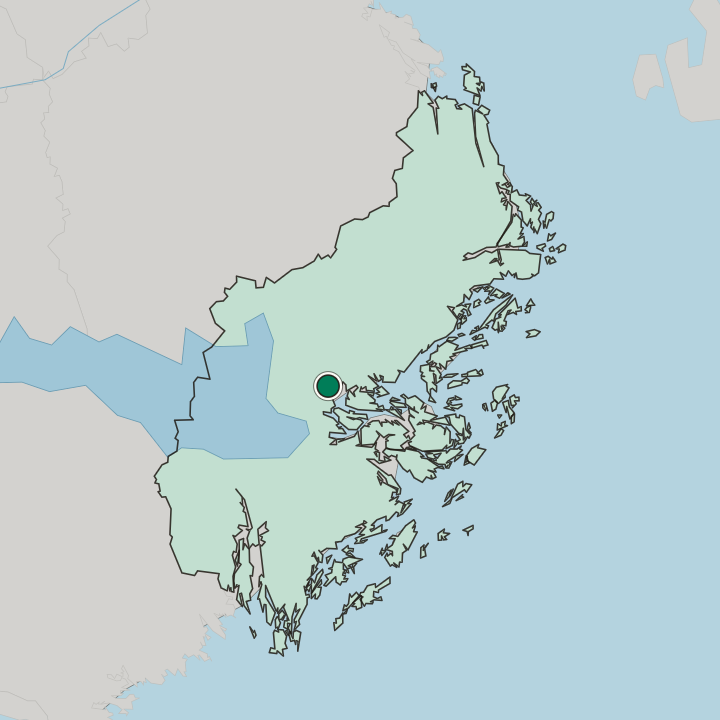
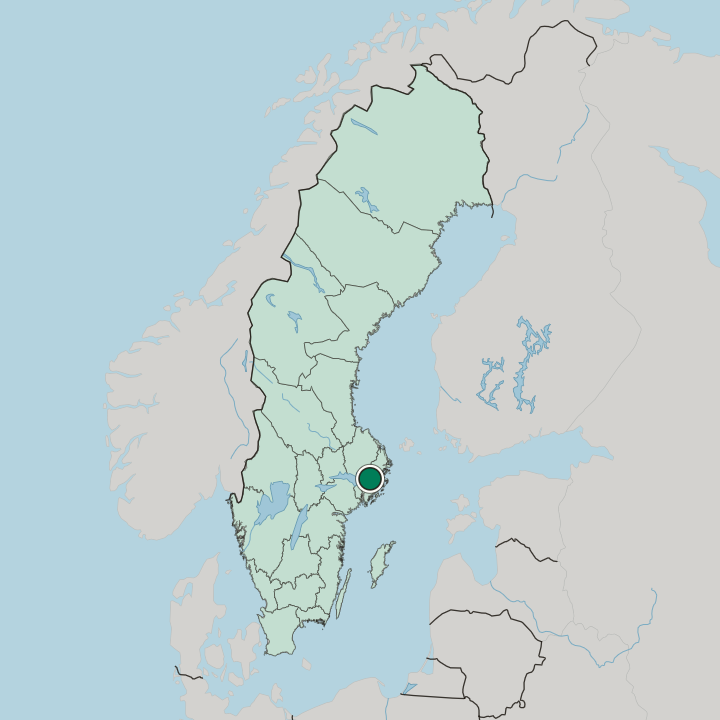
Täby occupies the north-eastern part of Stockholm County, on the south-eastern, Baltic-facing side of the country, set back a little from the open sea behind the inner archipelago. The land is a mild patchwork of low ridges, farmed valleys, and small lakes, edged on the east by inlets that reach in from the coast toward Roslagen. Woodland still covers the slopes between the suburbs.
The terrain is gentle. Old field boundaries shape the modern map.
What is the climate of Täby?
Täby has the humid continental climate of the Stockholm region, with the Baltic close enough to take the edge off its extremes. Winters are cold and often grey, bringing snow that lingers in the woods and on the frozen inlets, while summers are mild and green, with long light evenings over the lakes and fields. Spring comes late to this northern corner of Stockholm County.
Autumn turns the surrounding forests to rust before the dark sets in.
How do you get to Täby?
Täby is tied to the city mainly by the Roslagsbanan, the narrow-gauge railway that runs from Stockholm Östra out through Roslags-Näsby and on across the municipality. The E18 motorway cuts through from south-west to north-east, the principal road toward Norrtälje and the coast. Buses connect the outer districts to the rail stations.
The trains are small but frequent. Driving in from the capital is quick.
Common questions
What is the best area to stay in Täby?
Täby Centrum: Shops and transport. Näsbypark: Green, waterside calm. Roslags-Näsby: Rail connections. Viggbyholm: Lakes and longer stays.
Good for
More cities in Stockholm County
Updated October 2026