Sweden · Stockholm County
Where to Stay in Tumba, Stockholm County
Tumba is a town in Stockholm County, in the south-western part of the region, known for the old mill that once made Sweden's banknote paper.
Hotel links are affiliate links: booking through them may earn us a commission, at no extra cost to you. It never affects how places are ranked. How this works


Where to stay in Tumba
How the choice of base plays out on the ground.
Most travellers settle around Tumba centrum, the compact core that grew beside the commuter-rail station. Pendeltåg services run north toward central Stockholm in under an hour, so a room here means calm evenings without losing easy days in the capital. The blocks nearby hold the ordinary run of shops, cafés, and small hotels, plus the bus links that fan out across Botkyrka.
Stays here feel unhurried. Beside the centre, the old Tumba Bruk grounds line the Tumbaån, where the mill has pressed paper for Swedish banknotes since 1755. Guesthouse rooms sit among the mill buildings.
These restored houses stand a short stroll from the paper museum, the millrace, and the wooded banks that mill workers once crossed each morning. Tumbaån still threads quietly past the yards. Families often prefer the leafier streets of Tullinge or the green expanse around Hågelby gård, both a short hop to the north.
Lakeside walks edge Tullingesjön and Aspen for anyone who likes water nearby. If you want a peaceful base with fast trains into Stockholm and a real piece of industrial history on the doorstep, Tumba rewards the choice. Either way, the trains stay close.
Find hotels in Tumba
Direct booking searches for these neighbourhoods.
Tumba centrum
Compact centre at the commuter-rail station; shops, cafés, small hotels, and bus links across Botkyrka.Find hotels in Tumba centrumTumba Bruk
Historic paper-mill grounds along the Tumbaån, with guesthouse rooms near the paper museum.Find hotels in Tumba BrukTullinge
Leafier residential streets a short hop north, close to Tullingesjön and Hågelby gård.Find hotels in TullingeHotel links are affiliate links: booking through them may earn us a commission, at no extra cost to you. It never affects how places are ranked. How this works
Things to do in Tumba
Ranked by global recognition; descriptions from Wikidata (CC0).
Museums & Galleries
1- Tumba Papermill Museum working life museum in Botkyrka Municipality
Churches & Religious Sites
3- Tullinge Church Heritage church building in Botkyrka Municipality
- Tumba Church Heritage
- Säby Church Heritage church building in Salem Municipality (1971-73)
worth knowingacross 2 categories in Tumba
About Tumba
What is Tumba known for?
Tumba's claim to fame is paper money. The mill at Tumba Bruk, founded in the eighteenth century to supply the national bank, made the special paper for Swedish banknotes for generations, and the old works now hold a museum of printing and watermarks beside the stream. Around the town spread woods and lakes, with nature reserves and bathing spots a short way off.
Few suburbs carry a story quite so particular.
What are the main landmarks in Tumba?
Tumba Bruk is the obvious draw, a riverside complex of eighteenth-century mill buildings where the national paper money was once made, now opened as a museum of printing, security paper, and craft. The medieval Tumba kyrka stands at the older parish centre, its stone walls older than the town around it. Beyond the streets lie nature reserves of lake and forest, threaded with marked trails.
Industry, faith, and woodland sit side by side.
What is the history of Tumba?
Tumba's roots run deep. Long before any railway arrived, this corner of Södermanland lay within the medieval parish of Botkyrka, whose stone church was raised in memory of Sankt Botvid, a missionary killed in the early twelfth century. Farms and woodland shaped the district for generations.
The small watercourse called the Tumbaån threads the valley, linking the lakes Aspen and Tullingesjön. In 1755 the rhythm of local life changed. Sveriges Riksbank established the paper mill known as Tumba Bruk, beside the Tumbaån, to manufacture the secure paper on which the realm's banknotes were printed.
The works drew skilled papermakers to the valley, and around the mill grew an estate of workshops, gardens, and timber dwellings that endures as a strikingly intact relic of early industry, holding the collections of the Tumba Bruksmuseum. During the nineteenth century the Västra stambanan reached the area. Tumba station turned the old mill village into a commuter town within easy reach of the capital, and new housing climbed the slopes above the works as the settlement spread outward.
Growth followed the tracks. In time Tumba became the administrative centre of Botkyrka Municipality.
Where is Tumba?
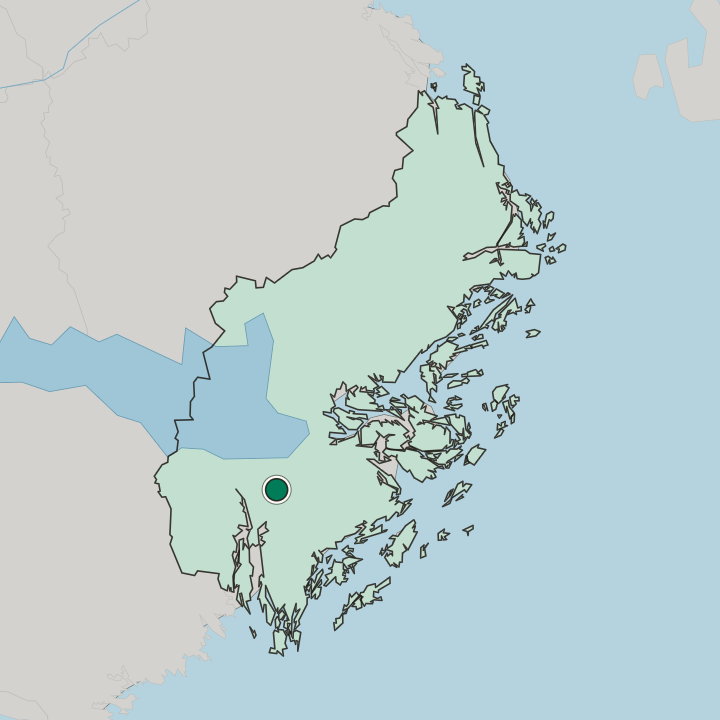
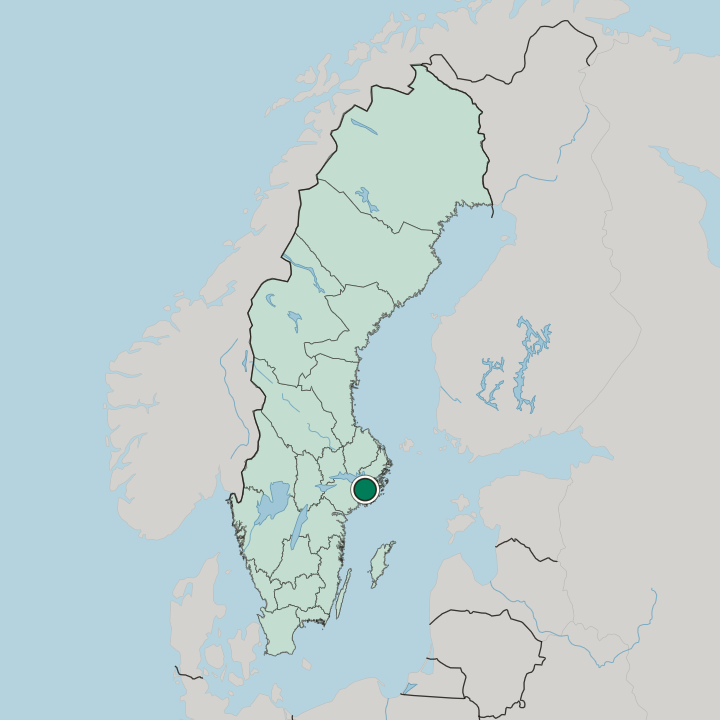
Tumba lies in the south-western part of Stockholm County, on the south-eastern side of the country, near the southern arm of Lake Mälaren. This is a landscape of woods, ridges, and small lakes, with the water of Aspen close to the town and nature reserves spreading into the higher ground to the south. A stream runs down through the old mill site to the lake.
The terrain rolls and folds. Forest still presses against the streets.
What is the climate of Tumba?
Tumba has the humid continental climate of the southern Stockholm country. Winters are cold and often grey, with snow over the woods and the lakes locked under ice, while summers turn warm and green, the long evenings filling the bathing places and the forest trails. Spring is short.
Autumn comes in wet and still, with mist gathering over the water at Aspen.
How do you get to Tumba?
Tumba is the end of one of the southern commuter-rail branches, so trains run straight in from Stockholm through Tullinge and on to the town's station. The E4 and E20 motorways pass close by on their way south toward Södertälje, the main road link out of the region. Buses connect the outer districts and the reserves to the railway.
The line terminates here. Reaching the city takes little more than the ride itself.
Good for
More cities in Stockholm County
Updated October 2026