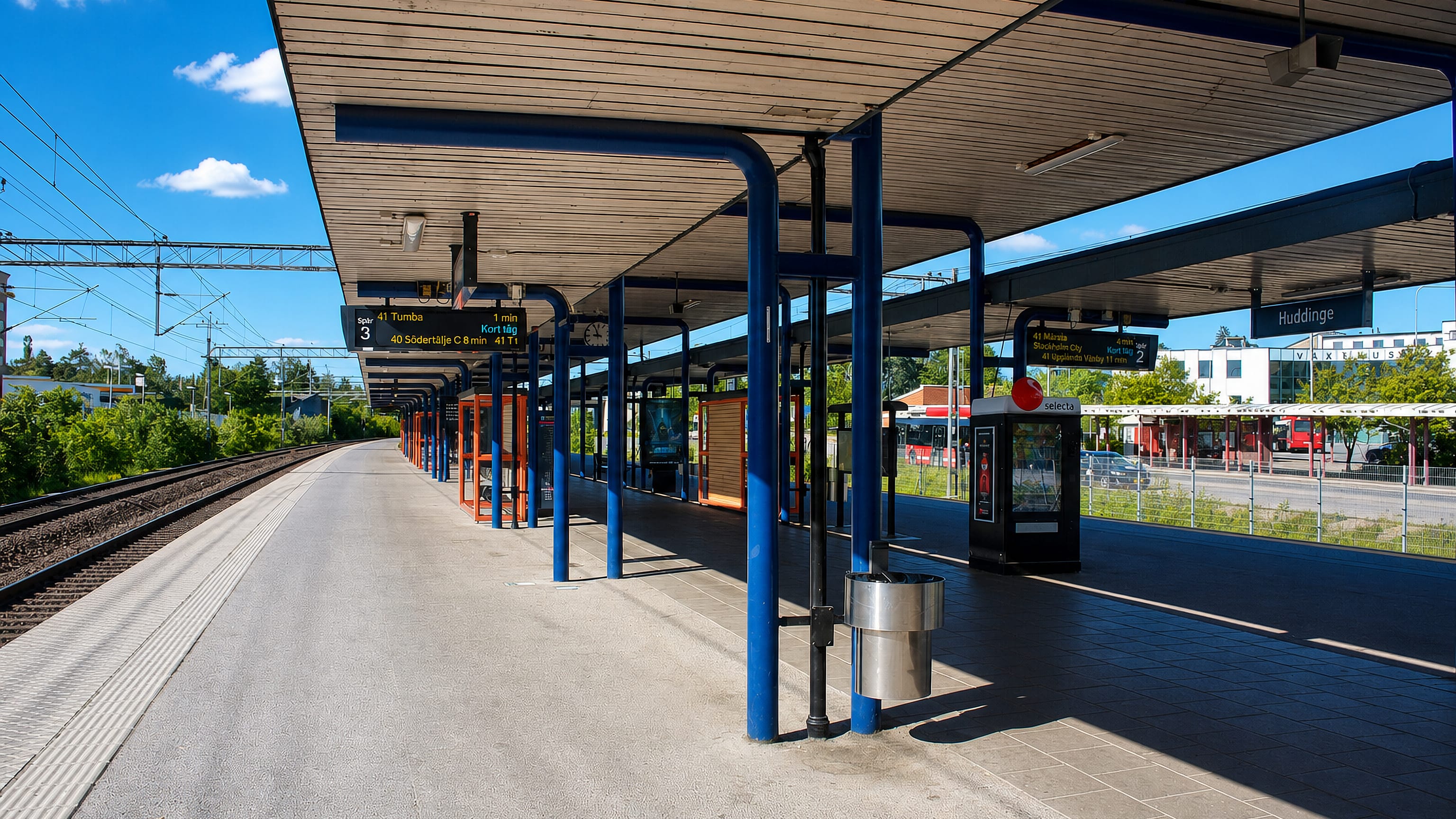
Sweden · Stockholm County
Where to Stay in Huddinge, Stockholm County
Huddinge is a municipality in Stockholm County on the Södertörn peninsula, a suburb of lakes and forest directly south of central Stockholm.
Hotel links are affiliate links: booking through them may earn us a commission, at no extra cost to you. It never affects how places are ranked. How this works


Where to stay in Huddinge
One neighbourhood here has its own guide — here's what it is best for.

 HuddingeSweden
Segeltorp
Segeltorp is a district in the north-west of Huddinge, on the border with Stockholm and part of the Stockholm urban area.Segeltorp →Hotel links are affiliate links: booking through them may earn us a commission, at no extra cost to you. It never affects how places are ranked. How this works
Things to do in Huddinge
Ranked by global recognition; descriptions from Wikidata (CC0).
Museums & Galleries
1- Nybodamuseet, Björksättra smedja
Churches & Religious Sites
3- Huddinge Church Heritage
- Flemmingsberg church Heritage
- Segeltorp Church Heritage
Stadiums & Sports
1- Källbrinks IP
worth knowingacross 3 categories in Huddinge
About Huddinge
What is Huddinge known for?
Huddinge is known less for sights than for what happens in Flemingsberg, the district where a major teaching hospital, a campus of academic and medical institutions, and one of the country's larger court complexes cluster around the station. It is a hub for medicine. The rest of the municipality is mostly residential, threaded with lakes and forest reserves where city dwellers come to swim, walk, and ski, so the place pairs heavy public institutions with a great deal of green between them.
What are the main landmarks in Huddinge?
Huddinge's landmarks are modest and scattered. The medieval Huddinge kyrka, white and stout, stands by the old village core near the station. The large modern Södertörnkyrkan serves a free-church congregation on the southern side.
Beyond the buildings, the real attractions are natural: nature reserves, lakeshores, and the long ridges of Södertörn that carry ski tracks in winter and walking paths the rest of the year, all within the municipal bounds.
What is the history of Huddinge?
Huddinge began as a rural parish on Södertörn, its history written first in a medieval stone church and the farms around it. Then the railway came. When the southern main line opened through the parish in the mid-nineteenth century, a station rose at Huddinge, and a settlement gathered around it.
Through the twentieth century the municipality filled in fast as Stockholm spread south. New residential districts went up along the rail line, and from the 1970s onward Flemingsberg was developed almost from scratch into a centre of hospitals, higher education, and justice, giving the once-rural municipality a wholly new role. Even so, large tracts were set aside as nature reserves, so that lakes and forest still cover much of the land between the built-up areas.
The result is a municipality of two faces, dense institutions and quiet woodland, bound together by the commuter trains that first called it into being.
Where is Huddinge?
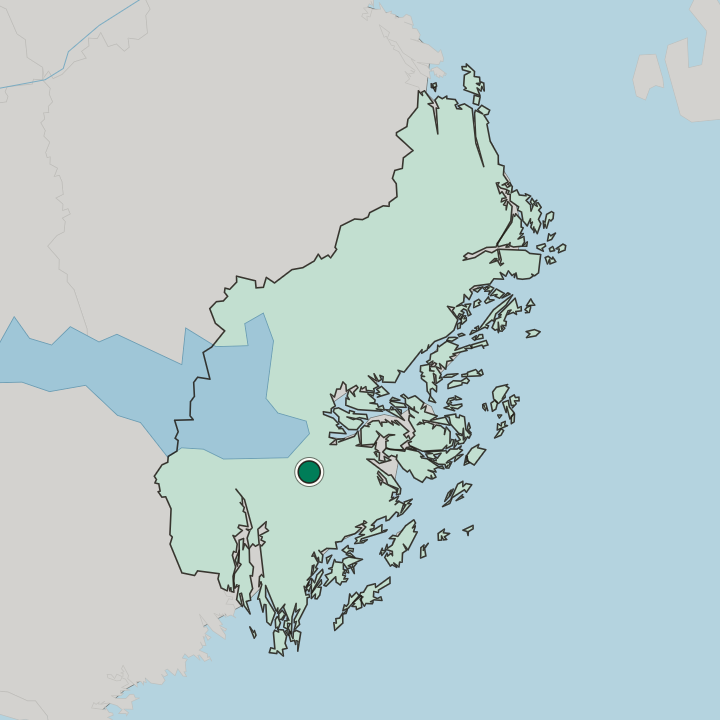
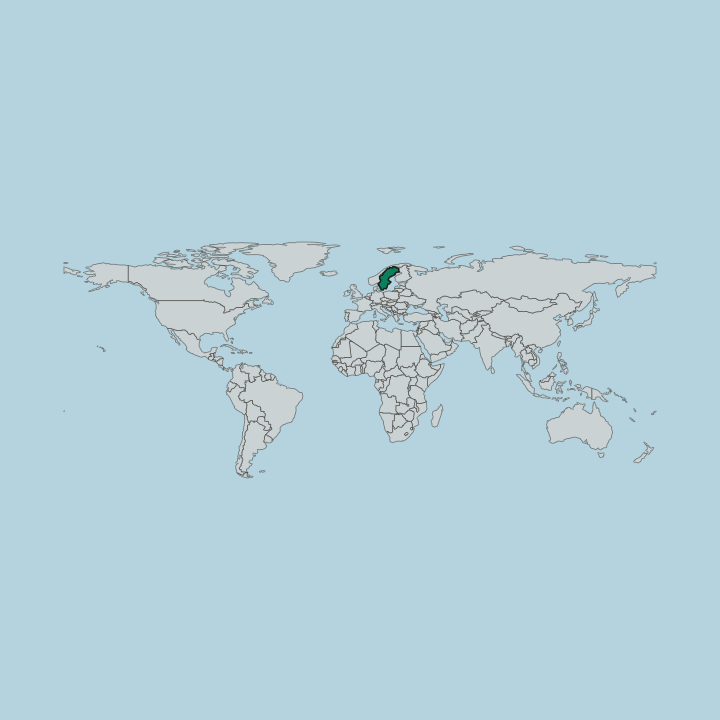
Huddinge spreads across the southern part of Stockholm County, on the northern half of the Södertörn peninsula in eastern Sweden. Forest covers much of it. Waters such as Orlången, Magelungen, and Trehörningen lie within its bounds, with reserves of woodland between them, and the built-up districts press against central Stockholm to the north while the south stays green and thinly settled.
What is the climate of Huddinge?
Inland on Södertörn, Huddinge has a humid continental climate with a slightly more landward feel than the coast. Winters bring cold and snow that lingers in the forests and freezes the smaller lakes, opening tracks for skiers on the ridges. Summers turn warm and green across Södertörn.
Long daylight and the cooling effect of so much water and woodland make the reserves pleasant through the season, while spring and autumn run cool, wet, and changeable between the longer extremes.
How do you get to Huddinge?
Huddinge is woven into Stockholm's southern transport web. Commuter trains on the main line stop at Huddinge, Flemingsberg, and other stations, linking the municipality to the central city in minutes, and Flemingsberg also takes faster regional and long-distance services. The roads carry the rest.
The E4 and E20 motorways skirt the area on their way south, and bus routes connect the districts that lie off the rail line, so most arrivals come by train or car from the capital.
Good for
More cities in Stockholm County
Updated October 2026