Turkey
Muğla, Turkey — Towns & Travel Guide
Muğla is Turkey's southwestern corner, a long Aegean and Mediterranean coast of pine-backed bays holding Bodrum, Marmaris and Fethiye.
Hotel links are affiliate links: booking through them may earn us a commission, at no extra cost to you. It never affects how places are ranked. How this works


Towns & cities in Muğla
Pick a town or city — each links to where to stay.

 Turkey
Muğla
Muğla is the inland capital of Muğla Province in southwestern Turkey, a preserved old town set back in the hills above the Aegean coast.Where to stay →
 Turkey
Fethiye
Fethiye is a Mediterranean resort town in Lycia, southwestern Turkey, built on ancient Telmessos and famous for its Lycian rock tombs.Where to stay →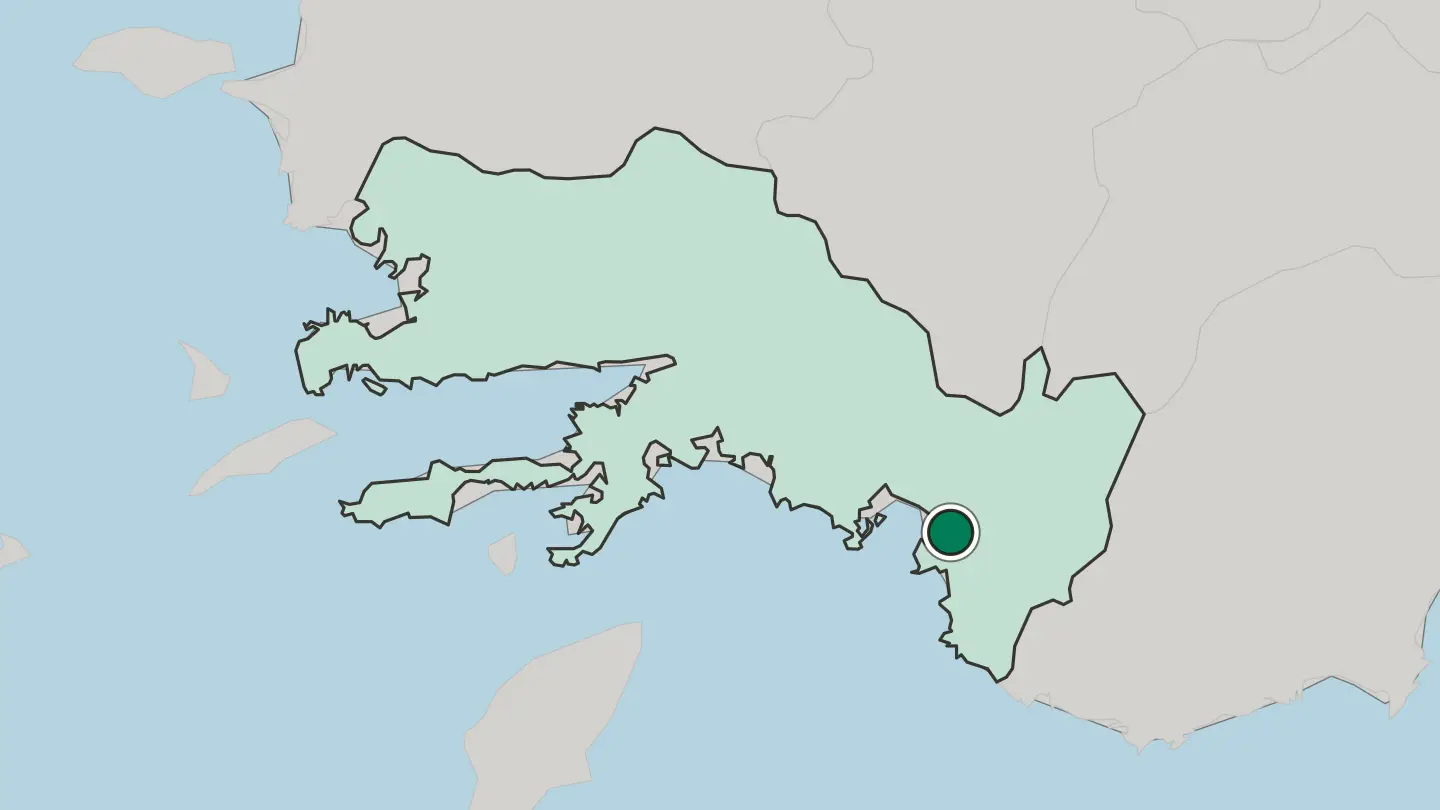
Hotel links are affiliate links: booking through them may earn us a commission, at no extra cost to you. It never affects how places are ranked. How this works
About Muğla
Muğla is the coast Turkey sells to the world.
What is Muğla known for?
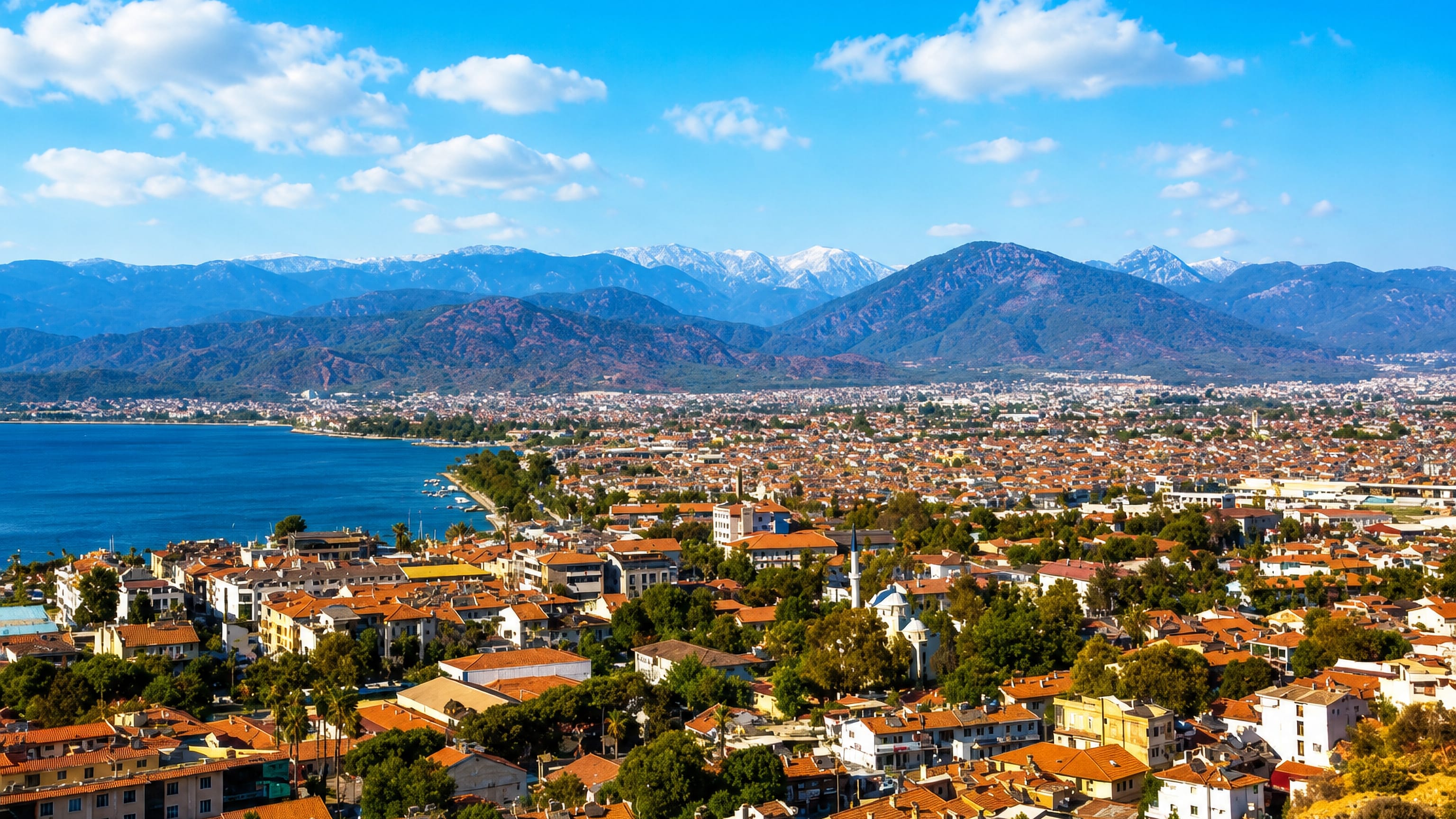
Its shoreline is the longest of any Turkish province, a run of deep bays and pine-covered headlands branded the Turquoise Coast. Bodrum anchors the western end, a whitewashed resort built over ancient Halicarnassus, where the Mausoleum once stood among the Seven Wonders of the Ancient World. Marmaris and Fethiye draw the summer crowds further east, and the lagoon at Ölüdeniz ranks among the best-known beaches in the country.
Sailing is the other signature. Wooden gulet yachts work the Gulf of Gökova and the island-strewn water off Datça.
Where is Muğla?
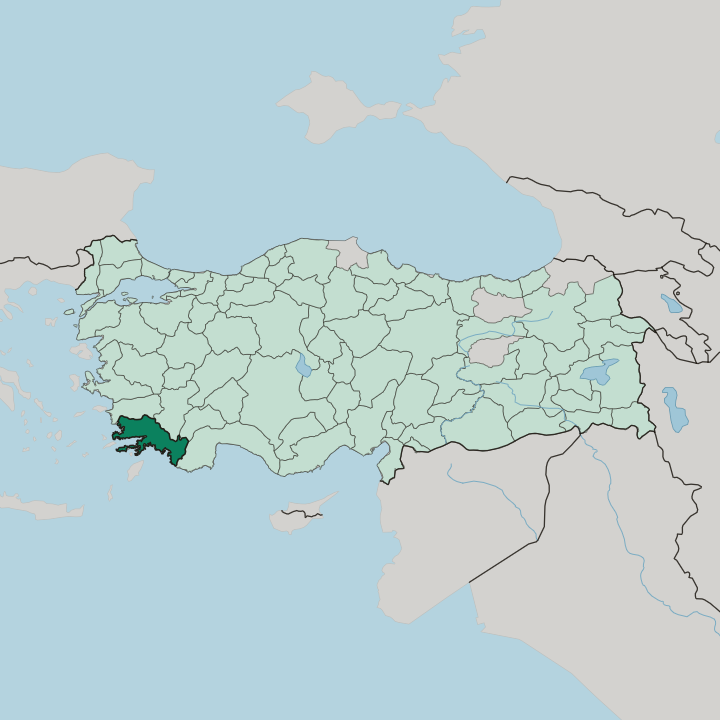
Muğla fills the southwestern corner of Turkey, the point where the Aegean Sea bends south into the Mediterranean Sea. Its coast is the longest of any Turkish province. Peninsulas do the work.
The Bodrum and Datça headlands reach west toward the Greek Dodecanese like a pair of fingers, splitting the sea into the Gulf of Gökova and the gulfs beyond, while the shoreline south of Marmaris crumbles into a maze of bays, capes and offshore islands. Behind the water the land climbs fast into limestone mountains cloaked in red pine. The provincial seat sits inland.
Muğla the city stands in a mountain basin above the Gulf of Gökova, one of the pot-shaped plains that dimple the interior. Two lakes break the ranges. Brackish Lake Bafa, a former arm of the sea, sits near Milas, while Lake Köyceğiz lies behind coastal reed-beds where the Dalaman plain carries the province's main airport toward Fethiye.
To the east the mountains rise toward Antalya and the old land of Lycia, where the coast road threads between cliff and water. Neighbouring Aydın and Denizli lie north across the ridges of ancient Anatolia. Everything here tilts toward the sea.
What is Muğla like?
Two Muğlas coexist, the resort coast and the quiet interior, and they feel like different countries. Muğla, the inland capital, keeps the older face. Its Saburhane quarter is a grid of whitewashed Ottoman houses with cumba bay windows and tall chimneys, laid out when Greek-Orthodox, Jewish and Turkish families shared the same streets before the population exchange of 1923.
A covered arasta bazaar still runs through the centre. The common tongue is Turkish, and its university lends the town a studenty, unhurried air rare among provincial seats. Boats and honey define the crafts.
Bodrum built the wooden gulet, the broad-beamed schooner chartered for blue-voyage cruises, and its shipwrights still shape the hulls by eye along the waterfront. The pine forests yield its most famous export, a dark çam balı, the pine honey bees draw from the sap of red-pine aphids. Cooking leans light and Aegean: olive oil, wild greens, sea bass, and citrus off the Dalaman plain.
Deeper still lie the ruins. This was the core of ancient Caria, with Lycia along the eastern shore, and rock tombs and half-buried theatres surface in nearly every valley from Halicarnassus to Fethiye.
What is the history of Muğla?
The land was Caria long before it was Turkish. Its Carian rulers made Halicarnassus their capital, and around the fourth century BC the satrap Mausolus was buried there beneath the Mausoleum, a tomb so vast it named the word and joined the Seven Wonders. Persians, Greeks, Romans and Byzantines each held the coast in turn.
Then came the Turks. The Menteşe Beylik seized the region after the Seljuks, and the Ottomans absorbed it in stages under Bayezid I and Murad II. Its seat moved inland to Muğla in 1420, and the sanjak of Menteşe carried that name until the Republic renamed the province after its town.
What is the climate of Muğla?
Muğla runs on a Mediterranean rhythm. Summers are hot, dry and cloudless, the coast baking under a sky that barely changes from June to September while sea breezes take the edge off the afternoons. Winters flip the pattern.
Rain arrives in earnest, feeding the pine forests and the short mountain rivers, and the inland capital, set high in its basin, turns cooler and greyer than the balmy shore below. Snow even dusts the ranges behind Muğla. The dry heat has a cost: the red-pine slopes above the Gulf of Gökova sit in Turkey's most fire-prone belt through the long rainless summer.
How do you get to Muğla?
Most visitors fly straight to the coast. Two airports do the work: Dalaman in the east feeds Fethiye and Marmaris, while Milas-Bodrum in the west serves the Bodrum peninsula, both busy with summer charters from across Europe. Ferries cross the narrow straits from the Greek islands, Rhodes to Marmaris and Kos to Bodrum, in under two hours.
By road the province hangs off the highways from İzmir to the north and Antalya to the east. Muğla town itself keeps no airport. Reaching the inland capital means a climb by bus or car up from the Gulf of Gökova.
Common questions
What is the best area to stay in Muğla?
Bodrum: marinas, nightlife and the old Halicarnassus capital. Marmaris: a busy package-holiday seafront. Fethiye: Lycian ruins and paragliding off Babadağ. Datça: a quiet peninsula base near Knidos.
Good for
More regions in Turkey
Updated October 2026