
Turkey
Nevşehir, Turkey — Towns & Travel Guide
Nevşehir is the province at the heart of Cappadocia, a volcanic plateau of fairy chimneys, cave churches, and underground cities in central Turkey.
Hotel links are affiliate links: booking through them may earn us a commission, at no extra cost to you. It never affects how places are ranked. How this works


Towns & cities in Nevşehir
One town here has its own guide — it links to where to stay.

 Turkey
Nevşehir
Nevşehir is the capital of Cappadocia in central Turkey, a town among the fairy chimneys and cave cities of the region.Where to stay →
Hotel links are affiliate links: booking through them may earn us a commission, at no extra cost to you. It never affects how places are ranked. How this works
About Nevşehir
What is Nevşehir known for?
Cappadocia's signature scenery sits inside this province. Wind and water carved the soft volcanic tuff into the tapered pillars locals call fairy chimneys, and at dawn dozens of hot-air balloons rise over the valleys around Göreme. Byzantine monks cut churches and chapels straight into the rock, many of them preserved with their frescoes at the Göreme open-air museum.
Deeper still lie the underground cities of Derinkuyu and Kaymaklı, whole subterranean towns hollowed out level upon level. Avanos turns the red clay of the river into pottery, and Ürgüp presses the local grapes into wine.
Where is Nevşehir?
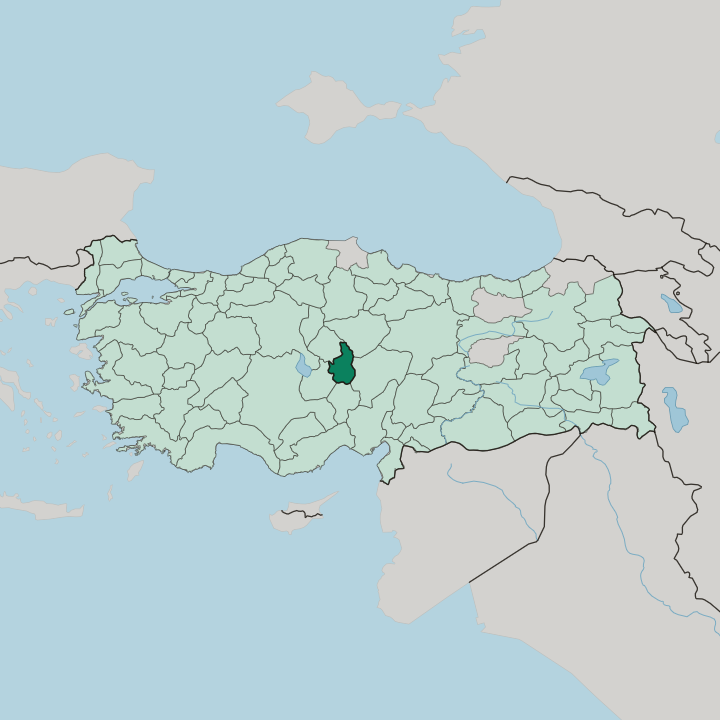
Nevşehir sits in Central Anatolia, on the high inland plateau of central Turkey. No coast touches the province. Kırşehir lies to the north-west and Yozgat to the north-east, Kayseri to the south-east, Niğde to the south, and Aksaray to the south-west, so the province is ringed entirely by other Anatolian provinces with no coast of its own.
The land rises well above the surrounding lowlands, a rolling tableland cut by shallow valleys and dry watercourses. The Kızılırmak, the longest river to run its whole course inside Turkey, loops through the north of the province and passes the pottery town of Avanos. This scenery was born of fire.
Ash and lava from the volcanoes Erciyes and Hasan Dağı buried the region in soft tuff, which wind and rain then wore into ridges, cones, and the slender fairy chimneys that crowd the valleys around Göreme, Uçhisar, and Ürgüp. Where the rock is softest, people dug into it, first cave dwellings and churches, then the deep underground cities of Derinkuyu and Kaymaklı in the south. Nevşehir, the provincial seat, stands on higher open ground toward the centre.
Cappadocia's strangest country lies just east of it.
What is Nevşehir like?
Life in these valleys has always worked the local earth. Avanos has thrown pots from the red clay of the Kızılırmak for centuries, and its workshops still turn kick-wheels by hand. Around Ürgüp the volcanic soil suits vines, and its cellars press the pale Emir grape into the dry white wine the region is known for.
The kitchen has its own signature: testi kebabı, a stew of meat and vegetables cooked slowly in a sealed clay pot and cracked open at the table. Carpets and kilims came off the village looms here too. Faith carved the other half of the local culture.
Byzantine monks filled the valleys with rock-cut chapels, and their painted saints still look down from cave walls at the Göreme churches. Greek-speaking Christians lived alongside Turks for generations, until the population exchange between Turkey and Greece after 1923 emptied villages such as Mustafapaşa of their old families. Turkish is spoken everywhere.
The youngest tradition floats overhead each morning, as balloons carry visitors above the chimney valleys, and the cave hotels carved into the tuff have become a livelihood in their own right.
What is the history of Nevşehir?
People have been digging into this rock for over three thousand years. The Hittites worked the tuff first, and later Cappadocia passed through Persian, Roman, and Byzantine hands, each leaving churches, tombs, and refuges cut underground. When Arab raiders swept the plateau, whole communities dropped into cities like Derinkuyu and sealed the entrances with rolling stone doors.
The town itself is far younger. It grew from the village of Muşkara, which the Ottoman grand vizier Nevşehirli Damat İbrahim Pasha rebuilt and renamed the 'new city' in 1726, endowing it with mosques and a medrese.
What is the climate of Nevşehir?
The high Cappadocian plateau gives Nevşehir a dry continental climate of sharp extremes. Summers run hot and rainless, the tuff baking pale under a cloudless sky, while winters turn cold enough to dust the fairy chimneys with snow. Days and nights pull far apart.
Even in summer the air cools fast once the sun drops behind the valleys. Rain stays light through the year, which is part of why the soft rock has held its shapes so long, and why the underground cities kept a steady, even temperature while the surface swung between heat and frost.
How do you get to Nevşehir?
Arriving by air is the norm here. Two airports serve the region: Nevşehir Kapadokya, close to the provincial capital, and the busier Erkilet airport at Kayseri to the south-east, both linked by short hops to Istanbul and Ankara. From either, shuttles and transfers run the last stretch to Göreme and the cave hotels.
There is no passenger railway into the fairy-chimney country; the nearest trains call at Kayseri. By road, Ankara lies a few hours north-west across the plateau, and the highways from there feed straight into Nevşehir.
Common questions
What is the best area to stay in Nevşehir?
Göreme: first-time visitors and balloon flights. Ürgüp: wine houses and stone-mansion stays. Uçhisar: quiet nights and long valley views. Avanos: riverside pottery workshops.
More regions in Turkey
Updated October 2026