
Turkey
Zonguldak, Turkey — Towns & Travel Guide
Zonguldak is Turkey's hard-coal province on the Black Sea, where forested mountains drop to a working coast of pits, steel mills, and old harbours.
Hotel links are affiliate links: booking through them may earn us a commission, at no extra cost to you. It never affects how places are ranked. How this works


Towns & cities in Zonguldak
Pick a town or city — each links to where to stay.

 Turkey
Zonguldak
Zonguldak is a Black Sea coal port, established in 1849 to serve the mines at Ereğli and the seat of Zonguldak Province.Where to stay → Turkey
Ereğli
Ereğli, the Karadeniz Ereğli of Zonguldak Province, stands on the site of Heraclea Pontica, the ancient city of Bithynia. Cehennemağzı Cave remains.Where to stay →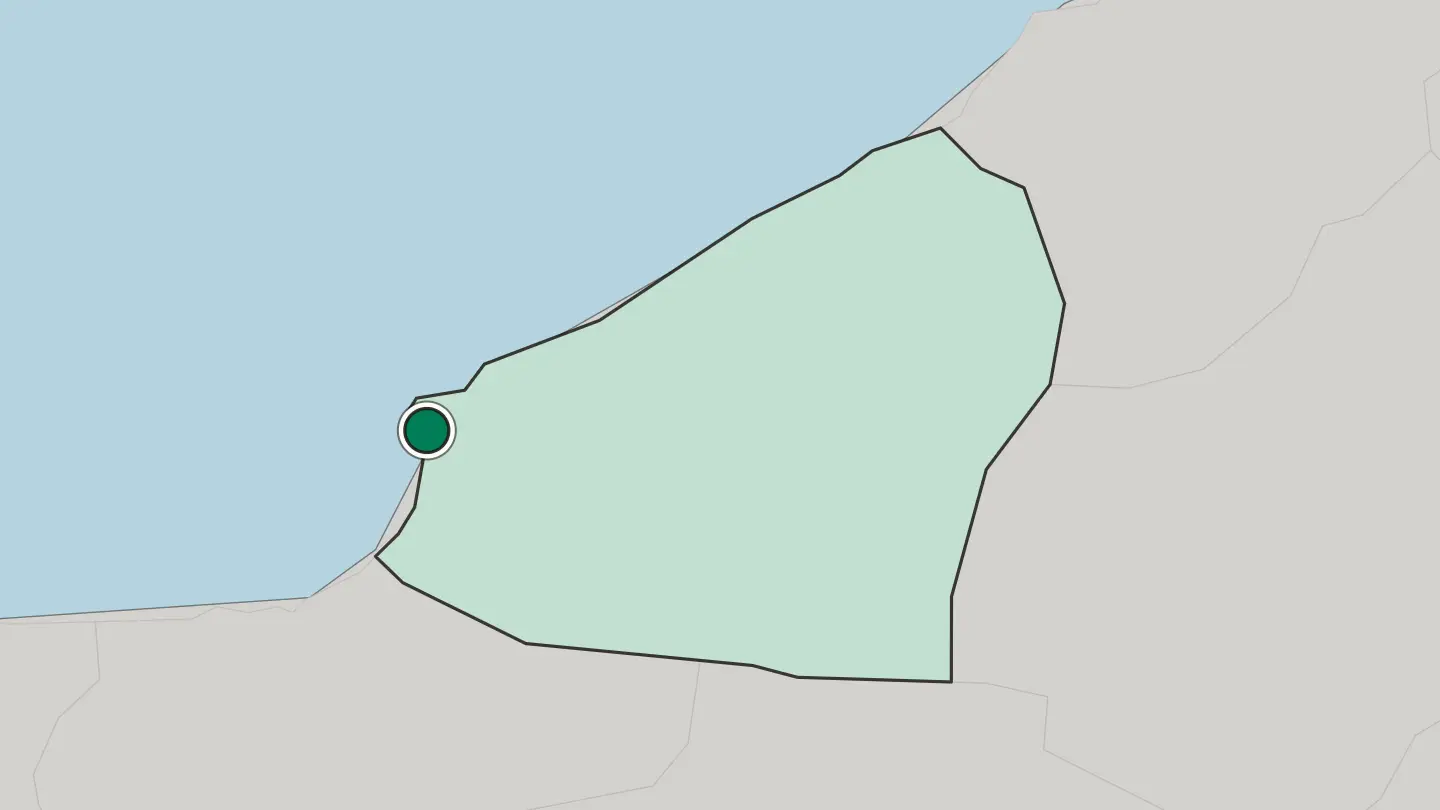
Hotel links are affiliate links: booking through them may earn us a commission, at no extra cost to you. It never affects how places are ranked. How this works
About Zonguldak
Coal made this province.
What is Zonguldak known for?
Zonguldak commands the head of the only basin in Turkey that yields workable hard coal, and pits such as Kozlu, Kilimli, and Karadon have driven galleries into its seams since Ottoman days. Down the coast at Karadeniz Ereğli, the Erdemir works turn that carbon into steel, feeding one of Turkey's earliest integrated mills. Inland the Filyos cuts through forested ridges toward the sea.
Just outside town, the lit galleries of Gökgöl Cave draw visitors underground.
Where is Zonguldak?
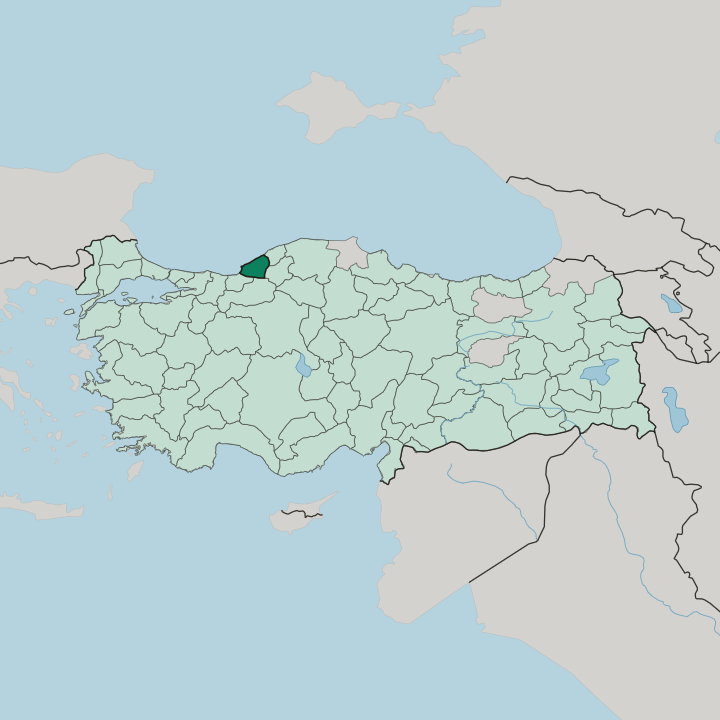
Zonguldak lies along the western Black Sea coast, where forested mountains crowd close to the shore. The land is steep and green. Wooded ridges rise straight from the water, leaving only a thin ribbon of coast and a few pockets of flat ground at the river mouths.
Bartın borders it to the east, Karabük and Bolu to the south, and Düzce to the southwest, so the province is hemmed by highland on almost every landward side. The Black Sea takes the whole northern edge. Rain-fed streams have cut deep, wooded valleys down through the hills toward that coast.
The Filyos is the province's main river, gathering the Devrek and other tributaries before spilling into the sea near Çaycuma. Along its lower course lie the widest fields, corn and vegetable ground on alluvial flats between the ridges. The shoreline itself is rocky and broken, giving small fishing harbours rather than long beaches.
What the surface hides is the wealth below. The rock underneath holds Turkey's only workable seams of hard coal, folded into the hills between Zonguldak and Karadeniz Ereğli. That geology set the shape of everything built here.
What is Zonguldak like?
This is a working province, and it knows it. The miner stands at the centre of local identity, honoured in monuments and in a football club that has carried the coal town's name for generations. Generations went down the shafts at Kozlu and Üzülmez, and that shared labour still shapes how Zonguldak sees itself.
A mining museum runs through a former gallery, following the tunnels the miners cut by hand. The pit shift set the daily rhythm. Away from the pits, older cultures surface.
At Karadeniz Ereğli the ancient Greek city of Heraclea Pontica left ruined walls and cave shrines, and the town throws a summer festival for the strawberries grown on its slopes. Inland at Devrek, craftsmen carve ornate walking sticks that carry the town's name through Turkey. The kitchen belongs to the Black Sea, heavy on maize bread, fried anchovies, dark cabbage, and the cornmeal dishes of the western coast.
Fishing boats still work out of the smaller harbours strung between the coal quays. Rain keeps the hills green. People speak Turkish, and the students of a coastal university keep the shore towns busy through the seasons.
What is the history of Zonguldak?
Two ages define this coast. In antiquity, Megarian settlers founded Heraclea Pontica at what is now Karadeniz Ereğli around 560 BC, a Greek sea power on the Pontic shore. Zonguldak itself is far younger, a town that barely existed before coal.
A miner's find near Ereğli sent the first sample of Turkish hard coal to Istanbul in 1822, and organised digging followed within a generation. Pit villages, a railway, and an export harbour turned the empty hillsides into the country's coalfield capital.
What is the climate of Zonguldak?
Wet is the word for it. The Black Sea holds Zonguldak in a mild, humid climate, dropping rain across every month of the calendar so that no season ever really dries out. Summers are warm and cloudy.
Winters stay cool rather than hard, tempered by the sea that never lets the coast freeze for long. The heaviest rain gathers in autumn and early winter. All that water keeps the hills green from the Devrek valley to the ridgelines above Karadeniz Ereğli.
How do you get to Zonguldak?
Most travellers come overland. Zonguldak lies within a half-day's drive of both Istanbul and Ankara, reached by the coastal highway from the west and the mountain road up from Karabük in the south. A small airport at Çaycuma handles a thin schedule of domestic flights, so many visitors simply fly into Istanbul and continue by car or bus.
Trains still climb the old coal railway inland toward Ankara. On the ground, roads link Zonguldak with Karadeniz Ereğli and the pit towns along the shore.
Common questions
What is the best area to stay in Zonguldak?
Zonguldak: the coal-port capital and Gökgöl Cave. Karadeniz Ereğli: ancient Heraclea Pontica and the strawberry coast. Devrek: inland forests and the walking-stick craft.
Good for
More regions in Turkey
Updated October 2026