Ukraine
Vinnytsya Oblast, Ukraine — Towns & Travel Guide
Vinnytsya Oblast spreads across the Podolian forest-steppe of central Ukraine, where the Southern Bug cuts through Vinnytsia, its river city.
Hotel links are affiliate links: booking through them may earn us a commission, at no extra cost to you. It never affects how places are ranked. How this works


Towns & cities in Vinnytsya Oblast
One town here has its own guide — it links to where to stay.
 Ukraine
Vinnytsya
The Southern Bug runs through Vinnytsya, the seat of Vinnytsya Oblast in west-central Ukraine, a city founded in 1363 and the hub of historic Podillia.Where to stay →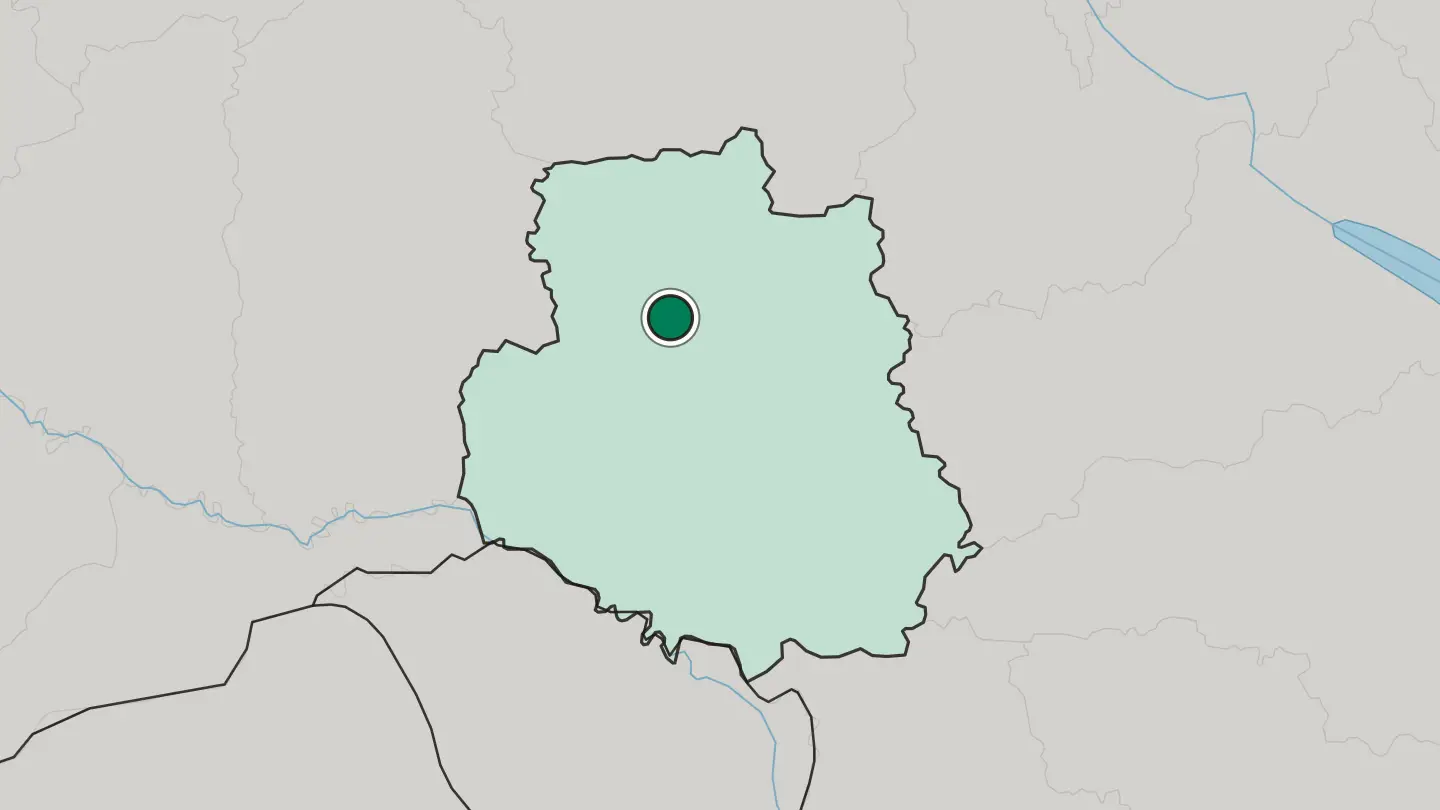
Hotel links are affiliate links: booking through them may earn us a commission, at no extra cost to you. It never affects how places are ranked. How this works
About Vinnytsya Oblast
This is farming country.
What is Vinnytsya Oblast known for?
The oblast sits in the eastern part of the historic Podolia, a fertile belt of forest-steppe worked for grain and sugar beet, and its black soil is some of the most productive in Ukraine. Vinnytsia anchors it, straddling the Southern Bug in the region's centre. The spa town of Khmilnyk draws people to its radon springs, while the world's largest raw kaolin deposits lie in the ground beneath these fields.
Composer Mykola Leontovych, whose arrangement of "Shchedryk" became the Carol of the Bells, worked in the southern town of Tulchyn.
Where is Vinnytsya Oblast?
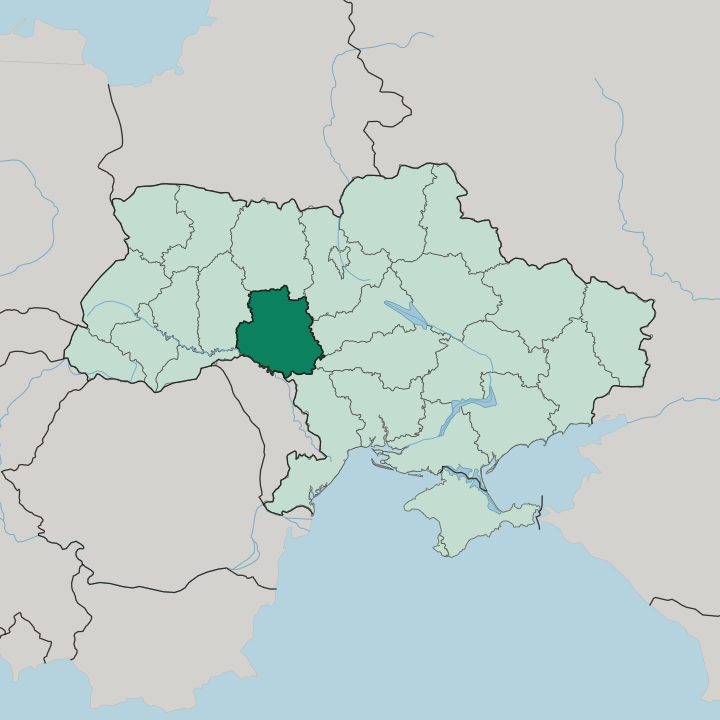
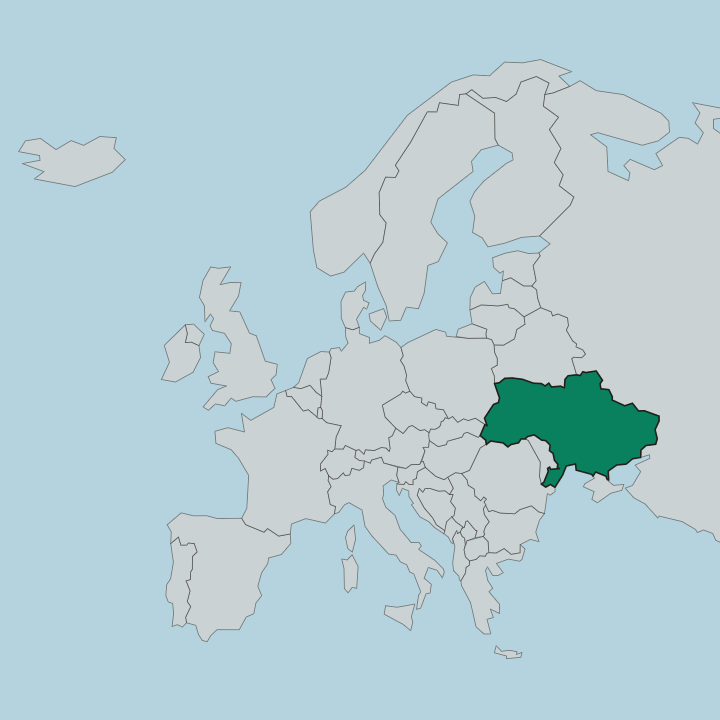
Vinnytsya Oblast lies in central Ukraine, on the right bank of the Dnieper's wider basin, filling the eastern reaches of the historic Podolia. No sea borders Vinnytsya Oblast. The land here is the Podolian Upland, a rolling plateau of forest-steppe cut by deep river valleys, and the black earth between those valleys is turned over for grain and sugar beet across most of the oblast.
The Southern Bug is the region's own river. It rises to the north-west and runs south-east straight through Vinnytsia, gathering the smaller streams of the plateau as it goes and carving a granite-lined gorge in places along its course. Along the south-western edge the Dniester marks the border, and for a long stretch that river is also the state line between Ukraine and Moldova.
Mohyliv-Podilskyi sits on the Dniester as the southern crossing point. Kyiv lies to the north-east, roughly a quarter of the way across the country, and the oblast shares its other borders with a ring of neighbouring Ukrainian regions rather than with any coast. Every border here is inland. The rivers, more than any mountain range, give the region its shape, and the deep-cut valleys of the Bug and the Dniester are the closest thing here to dramatic relief.
What is Vinnytsya Oblast like?
Podolia has passed through many hands, and the culture carries all of them. Polish magnates, the Cossack host, a large Jewish population and the Soviet state each left a mark on these towns. That layering shows in the buildings.
Tulchyn holds the grandest of them, the classicist Potocki palace raised for one of Poland's great landowning families at the close of the eighteenth century, and it stands as the finest such monument in all of Podolia. Music runs strong through the region. Mykola Leontovych, born and working in the southern towns of the oblast, turned a Ukrainian winter chant into "Shchedryk", the melody the world sings as the Carol of the Bells.
The Jewish heritage is older and harder-won. Nemyriv, one of the oldest towns here, held a large Jewish community for centuries and was the site of a notorious massacre during the Khmelnytsky uprising, and the writer Marko Vovchok kept a house in the town that is now a museum. The everyday language is Ukrainian, spoken by almost everyone across the oblast, and the region counts itself firmly among the Ukrainian-speaking heartland of the country.
Folk craft, church choirs and small-town museums carry the culture as much as any palace. It is a rural culture at heart. The land and its harvests shape the calendar as surely as the buildings shape the skyline.
What is the history of Vinnytsya Oblast?
People have worked this land for a very long time. A Scythian hillfort stood on the edge of Nemyriv as early as the seventh century BC, one of the largest in Ukraine. Through the medieval and early-modern centuries the whole of Podolia passed between Lithuania, the Polish crown and the Cossack risings, before the Russian Empire absorbed it in the partitions of Poland.
Empires came and went. The present oblast was drawn up as a Soviet administrative region in 1932, its borders traced over a much older Podolian map. Its towns still carry the palaces, churches and street-plans left by each of those rulers.
What is the climate of Vinnytsya Oblast?
The oblast has a humid continental climate, well inland and far from any moderating sea. The oblast's winters run cold. Snow settles over the Podolian plateau from December, and January stays below freezing across the region.
Summers turn warm and green, with July the height of the growing season on the black-earth fields, and most of the year's rain falling in the warmer months as showers rolling over the Southern Bug valley. Spring and autumn are short, sharp turns between the two.
How do you get to Vinnytsya Oblast?
Most people reach the oblast overland from Kyiv, which lies to the north-east and is linked to Vinnytsia by both a main railway line and the highway south-west. Trains are the usual way in. Vinnytsia sits on the busy Kyiv-to-Odesa corridor, and the rail junction at Zhmerynka funnels services from across the country through the region.
The airport at Havryshivka outside Vinnytsia handles flights when they run. In the far south, the bridge at Mohyliv-Podilskyi carries road traffic over the Dniester into Moldova.
Common questions
What is the best area to stay in Vinnytsya Oblast?
Vinnytsia: the riverfront capital of Podolia. Khmilnyk: a radon-spring spa stay. Tulchyn: the Potocki palace and Leontovych country. Mohyliv-Podilskyi: the Dniester border crossing.
Good for
More regions in Ukraine
Updated September 2026