Argentina · Buenos Aires
Where to Stay in Ezeiza, Buenos Aires
Ezeiza is the capital of the Ezeiza Partido in Greater Buenos Aires, the town wrapped around Aeropuerto Ministro Pistarini.
Hotel links are affiliate links: booking through them may earn us a commission, at no extra cost to you. It never affects how places are ranked. How this works


Where to stay in Ezeiza
Where visitors usually base themselves, and why.
Two bases, and they barely overlap. Beds on the Aeropuerto Ministro Pistarini side exist for the flight, and they earn their keep when the departure is early or the connection tight, with the listed Hangares Nº 3 y 4 for scenery. The town centre is the other option, and it is the one within reach of the Museo Histórico Municipal La Campana and the ordinary business of a partido capital.
Monte Grande offers a third register. The gated estates that cover much of the Ezeiza Partido are residential rather than commercial, so they rarely translate into places to sleep for a visitor without a local address. That thins the map considerably.
Anyone here for the Yacimiento arqueológico Tres Ombúes or the Hogar Escuela Evita will be moving by road in any case, which makes the choice of base less about proximity than about whether the airport or the town suits the trip. The Parroquia Inmaculada Concepción de Monte Grande gives that quarter its landmark, and the streets around it read more like a town than an estate frontage. Buenos Aires is the fallback for anyone wanting a wider choice of rooms than the partido can supply.
Find hotels in Ezeiza
Direct booking searches for these neighbourhoods.
Aeropuerto Ministro Pistarini
Rooms on the airport ground sit beside the listed Hangares Nº 3 y 4, close enough that a pre-dawn check-in needs no run out from Buenos Aires.Find hotels in Aeropuerto Ministro PistariniDays built around the Museo Histórico Municipal La CampanaEzeiza centre
The seat of the Ezeiza Partido keeps its museum, municipal offices and shops within one walk of each other, which the walled estates around them do not. Lodging is scarce in this area; reserve in advance.Find hotels in Ezeiza centreEvenings near the Parroquia Inmaculada Concepción de Monte GrandeMonte Grande
The quarter around the Parroquia Inmaculada Concepción keeps its shops and restaurants on the street rather than behind gates.Find hotels in Monte GrandeHotel links are affiliate links: booking through them may earn us a commission, at no extra cost to you. It never affects how places are ranked. How this works
Things to do in Ezeiza
Ranked by global recognition; descriptions from Wikidata (CC0).
Museums & Galleries
1- Museo Histórico Municipal La Campana
Churches & Religious Sites
1- Parroquia Inmaculada Concepción de Monte Grande
Castles & Historic Sites
1- Yacimiento arqueológico Tres Ombúes
Landmarks & Notable Places
2- Hangares Nº 3 y 4 del Aeropuerto Ministro Pistarini Heritage
- Hogar Escuela Evita Heritage
worth knowingacross 4 categories in Ezeiza
About Ezeiza
What is Ezeiza known for?
Most arrivals to Argentina touch down here first, on the aprons of Aeropuerto Ministro Pistarini, whose Hangares Nº 3 y 4 are protected as landmarks in their own right. The airport sets the local rhythm. Gated communities spread across the surrounding country, giving Ezeiza its standing as one of the more affluent stretches of Greater Buenos Aires, alongside the federal prison complex that also carries the town's name.
Hogar Escuela Evita adds a landmark of a different order.
What are the main landmarks in Ezeiza?
Five listed sites, and no two alike. The Parroquia Inmaculada Concepción de Monte Grande and the Museo Histórico Municipal La Campana cover the churchgoing and record-keeping side of the district, while the Yacimiento arqueológico Tres Ombúes reaches back past both of them. Hangares Nº 3 y 4 at Aeropuerto Ministro Pistarini are listed for the aviation ground they stand on.
Hogar Escuela Evita completes the set.
What is the history of Ezeiza?
Occupation here predates the town. The archaeological ground at Tres Ombúes carries evidence of use long before any street grid was drawn across this part of the Ezeiza Partido, and it is protected on that basis. The town proper dates from 1885.
It gives the partido its name and serves as its administrative seat, the address from which the surrounding communities are run. Its early record is kept at the Museo Histórico Municipal La Campana, while the Parroquia Inmaculada Concepción de Monte Grande stands among the district's recognised landmarks. Aviation rewrote the rest.
The building of Aeropuerto Ministro Pistarini turned a partido capital into Argentina's main point of arrival, and the Hangares Nº 3 y 4 from that work are listed in their own right. Around the airport came the other institutions that carry the town's name, among them the federal prison complex. Hogar Escuela Evita belongs to the same municipal roll of protected sites.
Open country became one of the more affluent stretches of Greater Buenos Aires, and the walled estates that followed set the pattern the district keeps. Both strands survive on the listings.
Where is Ezeiza?
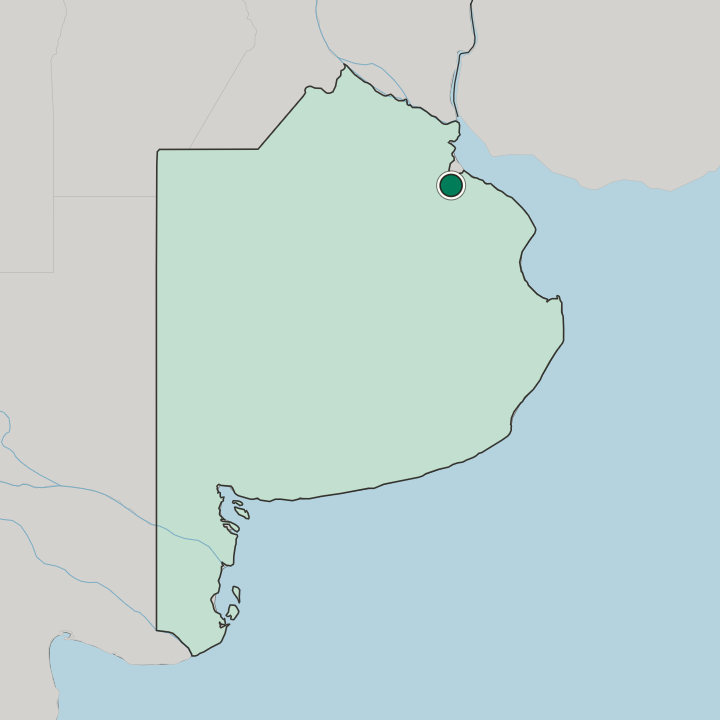
Ezeiza anchors the Ezeiza Partido, an outer district of the Greater Buenos Aires conurbation, and the ground it occupies is given over less to dense blocks than to airport land, gated estates and open country. Space is the local currency. That expanse is what allowed Aeropuerto Ministro Pistarini to be laid out here rather than nearer Buenos Aires, and it is why the archaeological ground at Tres Ombúes survives on the town's margins.
What is the climate of Ezeiza?
Ezeiza shares the subtropical air of the Greater Buenos Aires lowlands, which puts its hottest weeks in January and its coolest in July. The calendar runs inverted. Summer heat is what travellers notice first, hanging over the runways of Aeropuerto Ministro Pistarini and the gated estates alike, and it eases into the shoulder months of April and September when the Ezeiza Partido is at its most comfortable.
How do you get to Ezeiza?
For most visitors the airport is the arrival rather than the destination, since Aeropuerto Ministro Pistarini handles the bulk of Argentina's international flights and its terminals stand within the Ezeiza Partido rather than in the capital. The run into Buenos Aires is the usual next leg. Reaching the town itself means turning off the terminal road into the partido, where the municipal centre and the estates sit apart from the aviation ground.
Few travellers arrive another way.
Common questions
What is the best area to stay in Ezeiza?
Aeropuerto Ministro Pistarini: First flights out of Aeropuerto Ministro Pistarini. Ezeiza centre: Days built around the Museo Histórico Municipal La Campana. Monte Grande: Evenings near the Parroquia Inmaculada Concepción de Monte Grande.
Good for
More cities in Buenos Aires
Updated September 2026