Argentina · Buenos Aires
Where to Stay in Zárate, Buenos Aires
Zárate is the administrative capital of Zárate Partido, an industrial city founded in 1854 on the right bank of the Paraná River.
Hotel links are affiliate links: booking through them may earn us a commission, at no extra cost to you. It never affects how places are ranked. How this works


Where to stay in Zárate
Where the beds are, and what that means for the visit.
Rooms in Zárate exist for work. Most people booking here are tied to the industrial side or to business at the Zárate Partido offices, so the useful split is between the administrative streets of the district capital and the ground nearer the Paraná River frontage where the freight side of the city operates. Weekday demand is real.
A room that would be simple to secure on a Sunday can be tight on a Tuesday, because the visitors are largely people whose trip was set by an employer rather than chosen for pleasure. The district-capital streets suit anyone whose business is with the seat itself, offices and daily commerce packed close together, with the ordinary services of a city this size on hand and nothing much to walk to afterwards. The river side is a different proposition.
Beds toward the Paraná River put the water and the working frontage in reach, which is the better call for anyone whose reason for being in Zárate is the industry rather than the paperwork. Specialists have a third case. Museo del Automovil is the only named collection in the city, and a stay chosen around it makes most sense as part of a day that also takes in the run out from the city of Buenos Aires and back.
Book midweek nights early.
Find hotels in Zárate
Direct booking searches for these neighbourhoods.
The district-capital streets
The administrative core of the district capital, where the offices that run Zárate Partido stand among the city's everyday commerceFind hotels in The district-capital streetsNights tied to the working river side of ZárateThe Paraná frontage
The ground toward the right bank of the Paraná River, where the freight and industrial side of the city does its businessFind hotels in The Paraná frontageSpecialist visits built around Museo del AutomovilAround the motor collection
The corner of Zárate nearest Museo del Automovil, workable as a stop on the run out from the city of Buenos AiresFind hotels in Around the motor collectionHotel links are affiliate links: booking through them may earn us a commission, at no extra cost to you. It never affects how places are ranked. How this works
About Zárate
What is Zárate known for?
Zárate earns its keep as an industrial centre and as a transport link on the Greater Buenos Aires corridor, a role that follows directly from its place on the right bank of the Paraná River. Freight sets the tone. Business travel outnumbers sightseeing by a wide margin, and the single collection the record attaches to the city, the Museo del Automovil, works as a specialist stop rather than as a reason to make the trip out from Buenos Aires.
What are the main landmarks in Zárate?
Zárate offers a visitor very little to tick off. Museo del Automovil collects motor vehicles, and it is the only named collection tied to Zárate in the record, which fits a city whose working life has run on freight rather than on visitors. Little else is packaged for tourism.
Anyone spending a day on the ground will get more from the Paraná River frontage and the working edge of Zárate Partido than from hunting for sights that were never built.
What is the history of Zárate?
The date on the record is 1854. Zárate was founded in that year on the right bank of the Paraná River, and the water explains the siting better than anything else, since a bank position on a navigable river was the practical reason to place a settlement anywhere in that generation of Buenos Aires Province towns. The water was the starting point.
Everything the city became afterwards, an industrial centre, a link in the transport chain that runs through the Greater Buenos Aires corridor, rests on that first decision about where to stand. Administration arrived alongside the works. Zárate holds the administrative capital of Zárate Partido, which layers offices, courts and district records on top of the freight traffic, and the two functions have shared the same streets for most of the city's working life.
Neither one produced a monumental centre. What a visitor sees instead is a city organised around what it does, with the Museo del Automovil standing as the clearest statement of the industrial strand: a collection of motor vehicles in a place that has spent its existence moving goods, which reads quite differently here than it would in a town with no freight behind it. The rest of the past stays off display.
Zárate keeps its record in its function rather than in a preserved quarter, and anyone comparing it with the older towns closer to the city of Buenos Aires will notice that absence within an hour of arriving.
Where is Zárate?
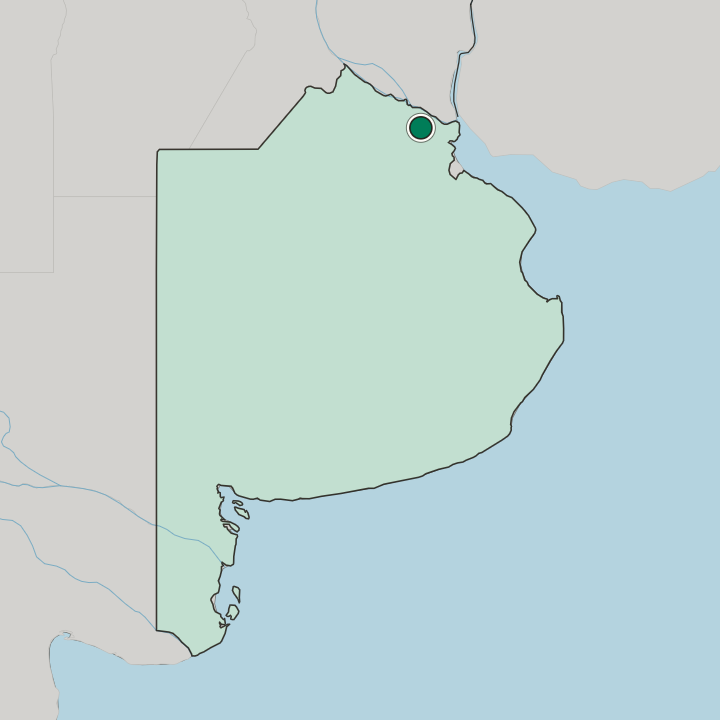
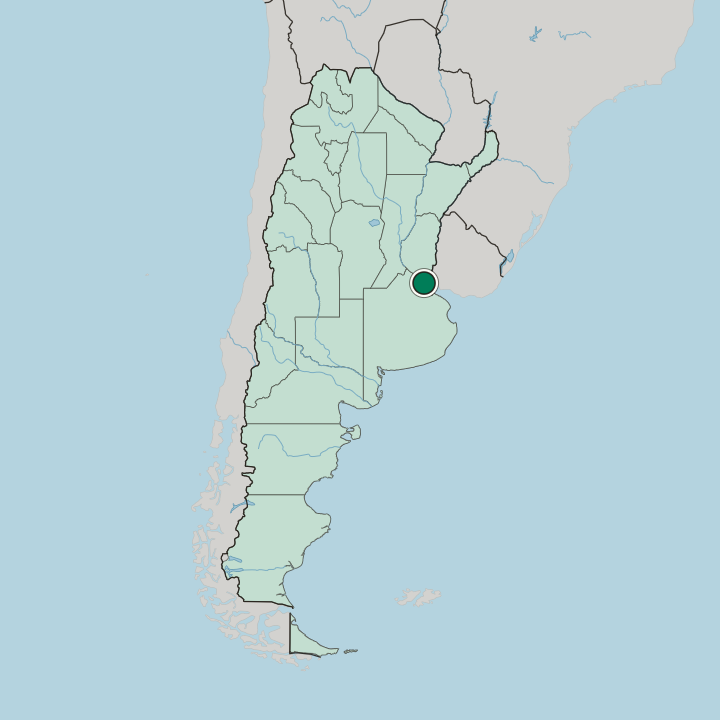
The Paraná River sets the edge. Zárate stands on its right bank, roughly 60 kilometres from the city of Buenos Aires, near enough to belong to the belt of settlement running out from the capital and far enough to keep an outline of its own. Zárate Partido spreads back from the water.
The working frontage along the river is what the city is organised around, and everything else in this part of Buenos Aires Province arranges itself behind it.
What is the climate of Zárate?
Summer belongs to January here. The subtropical band of the southern hemisphere puts Zárate's warm months at the turn of the year and its cool ones in the middle of it, a pattern shared with the whole of Buenos Aires Province rather than anything the Paraná River imposes on this stretch of bank. Pack for the inversion.
A visitor used to a June summer will meet the shortest days of the year instead, and the working city carries on either way because freight keeps no season.
How do you get to Zárate?
In a city that keeps a car museum, visitors turn up by car. Zárate lies about 60 kilometres from the city of Buenos Aires along the belt of traffic leaving the capital, and the same routes that move goods to the river carry visitors, which makes the approach practical rather than scenic. Heavy traffic shares it.
The city's standing as a transport link inside the Greater Buenos Aires corridor means lorries are on every road in, so a weekday arrival takes longer than the distance on the map suggests.
Common questions
What is the best area to stay in Zárate?
The district-capital streets: Paperwork at the Zárate Partido seat, with the shops on the same blocks. The Paraná frontage: Nights tied to the working river side of Zárate. Around the motor collection: Specialist visits built around Museo del Automovil.
More cities in Buenos Aires
Updated September 2026