Brazil · São Paulo
Where to Stay in Santos, São Paulo
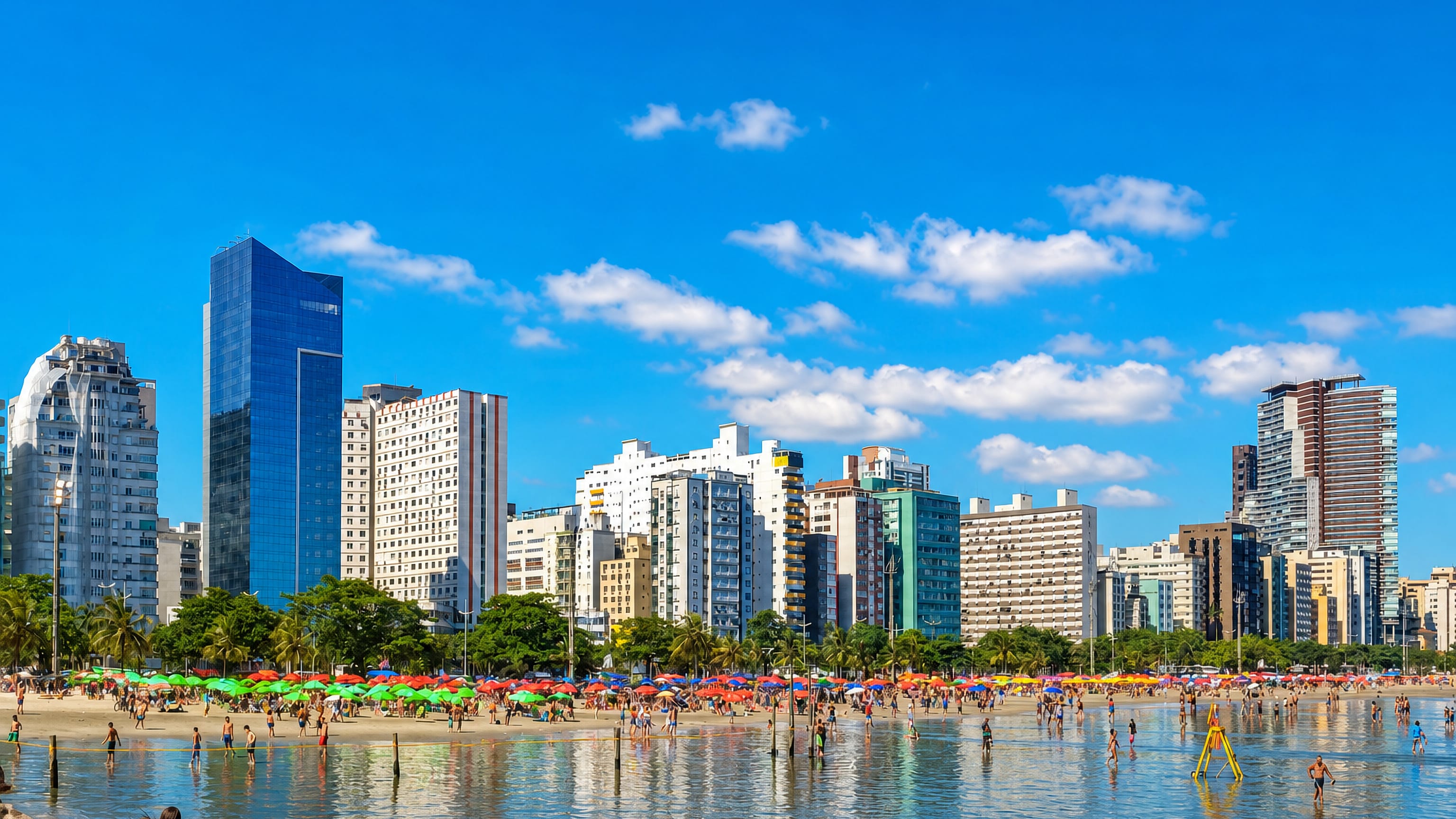
Santos, founded in 1546 on the island of São Vicente, holds the most important port in South America, a record beachfront garden and the Pelé Museum.
Hotel links are affiliate links: booking through them may earn us a commission, at no extra cost to you. It never affects how places are ranked. How this works


Where to stay in Santos
The practical side of choosing where to sleep.
The beach and the old centre pull in opposite directions. Rooms along the shore face the beachfront garden, which puts the sand, the surf museum and the whole length of that planted strip outside the door, and they are the obvious choice for a stay built around the sea. Museu Brasileiro do Surfe sits on this side.
The historic centre is the other pole, gathered around Our Lady of the Rosary Cathedral and the Church of Santo Antônio do Valongo, and it holds the Coffee Museum and the Santos Port Museum within a walk. Monte Serrat rises behind both. The Church of Our Lady on Monte Serrat crowns that hill, and a room near its foot trades the sand for a view over the roofs and the water of the island of São Vicente.
Football fills a third kind of visit. Anyone here for Santos Futebol Clube will want the Pelé Museum and the Memorial of the Conquest close by, and both stand nearer the old streets than the shore. The Frontaria Azulejada House is among them.
Fundação Arquivo e Memória de Santos keeps the town's papers in the same quarter.
Find hotels in Santos
Direct booking searches for these neighbourhoods.
The beachfront
Facing the planted garden that Guinness World Records lists as the largest on any beachFind hotels in The beachfrontVisitors working through the Coffee Museum and the Santos Port MuseumThe historic centre
Old streets between Our Lady of the Rosary Cathedral and the Valongo churchFind hotels in The historic centreTravellers after the hill church and the view across the island of São VicenteBelow Monte Serrat
The slope under the Church of Our Lady on Monte Serrat, off the beach circuitFind hotels in Below Monte SerratHotel links are affiliate links: booking through them may earn us a commission, at no extra cost to you. It never affects how places are ranked. How this works
Things to do in Santos
Ranked by global recognition; descriptions from Wikidata (CC0).
Museums & Galleries
3- Coffee Museum Heritage
- Museum of Sacred Art in Santos Heritage
- Pelé Museum
Churches & Religious Sites
5- Our Lady of the Rosary Cathedral, Santos Heritage
- Church of Our Lady on Monte Serrat Heritage
- Church of Santo Antônio do Valongo Heritage
- Church of the Order Terceira do Carmo Heritage
- Igreja da Ordem Primeira do Carmo Heritage
Castles & Historic Sites
3- Andradas Monument Heritage
- Candido Gaffree Eduardo Guinle Monument Heritage
- Monumento Braz Cubas Heritage
Landmarks & Notable Places
1- Frontaria Azulejada House Heritage
worth knowingacross 4 categories in Santos
About Santos
The port comes first.
What is Santos known for?
Port of Santos moves more cargo than any other in South America, and the Santos Port Museum sets out how the quays and the warehouses of the island came to do it. Coffee built the second story. The Coffee Museum occupies the hall where the world's coffee was once traded, while the Pelé Museum and the Memorial of the Conquest hold the football that made the city's other name.
The beachfront garden runs the length of that shore and is listed by Guinness World Records as the largest of its kind.
What are the main landmarks in Santos?
Churches set the frame. Our Lady of the Rosary Cathedral and the Igreja da Ordem Primeira do Carmo stand in the old city, with the Church of Santo Antônio do Valongo near the quays and the Church of Our Lady on Monte Serrat up on the hill. Museums answer them.
The Coffee Museum, the Santos Port Museum and the Museum of Sacred Art in Santos split the record between trade and faith, while the Pelé Museum takes the sporting half. Monuments to Braz Cubas and to the Andradas mark the founders.
What is the history of Santos?
Brás Cubas founded Santos in 1546. The Portuguese settlement took the low ground of the island of São Vicente, which it shares with the city of São Vicente, and the sheltered water behind that island decided everything that came after. Monumento Braz Cubas records the founder.
Church of Santo Antônio do Valongo and the Church of the Order Terceira do Carmo survive from the colonial centuries, and the Frontaria Azulejada House shows the tiled fronts that later merchants put on their buildings. Monumento Filhos de Bandeirantes stands among the older memorials. Coffee made the modern city.
The Coffee Museum occupies the exchange where the crop was once traded for the world, and the Andradas Monument and the Candido Gaffree Eduardo Guinle Monument commemorate the names that attach to that era of the port. Then came football. Santos Futebol Clube held Pelé for most of his career, and the Memorial of the Conquest and the Pelé Museum were built to keep that record rather than leave it to the club alone.
Fundação Arquivo e Memória de Santos holds the documents, and the Museu da Imagem e do Som de Santos holds the film and the sound.
Where is Santos?
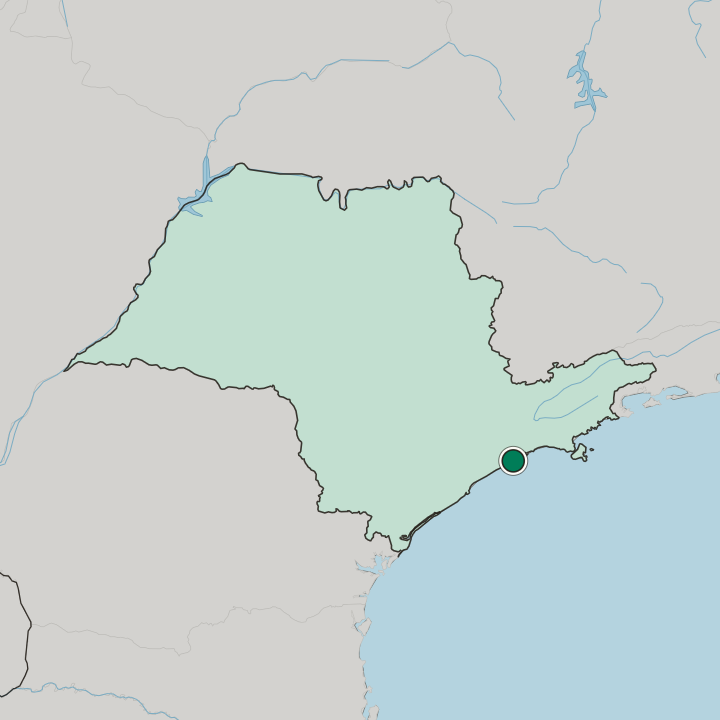
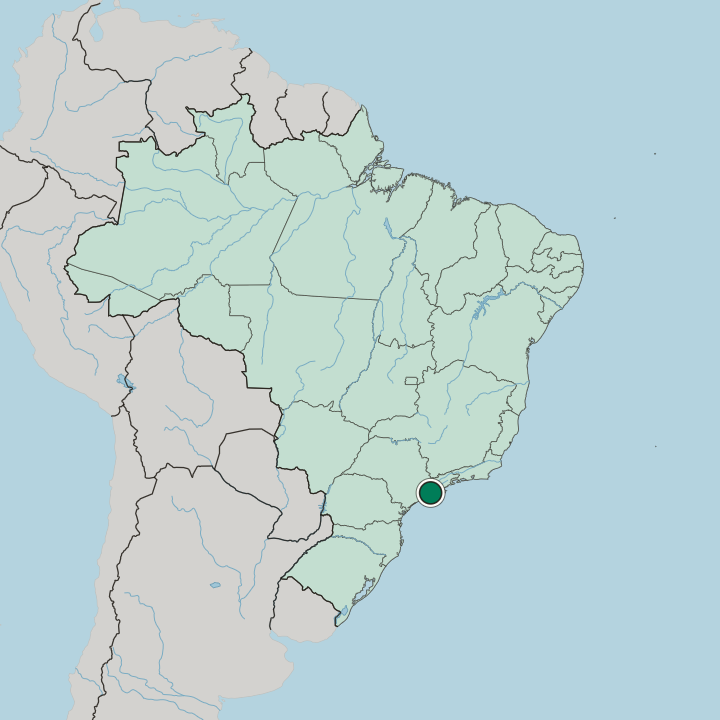
Santos occupies about 280 square kilometres. Most of the city stands on the island of São Vicente, shared with the city of São Vicente, and the Port of Santos takes up the sheltered water behind it. Monte Serrat is the high ground.
The seaward side carries the beaches and the planted garden that runs their whole length, and the subtropical band places the city south of the tropics rather than inside them.
What is the climate of Santos?
Everything here begins with the ocean. Santos lies on the coast in the subtropical band of the southern hemisphere, so the water keeps the summer from reaching the extremes found inland in the state of São Paulo. Wet months fall in the southern summer, the drier stretch belongs to the middle of the year, and the hill of Monte Serrat stands over both.
Humidity is the cost. The beachfront garden and the shade along it do more for a hot afternoon than any indoor room.
How do you get to Santos?
The Port of Santos is the oldest way in. Ships still work it, and the city sits at the centre of Baixada Santista, the coastal metropolitan region that road traffic from the rest of the state reaches first. The island crossing matters.
Santos shares the island of São Vicente with the city of São Vicente, so an arrival by road runs through neighbouring ground before reaching the cathedral and the quays.
Common questions
What is the best area to stay in Santos?
The beachfront: Stays given over to the sand and the Museu Brasileiro do Surfe. The historic centre: Visitors working through the Coffee Museum and the Santos Port Museum. Below Monte Serrat: Travellers after the hill church and the view across the island of São Vicente.
Good for
More cities in São Paulo
Updated October 2026