China · Jiangsu
Where to Stay in Tongshan, Jiangsu
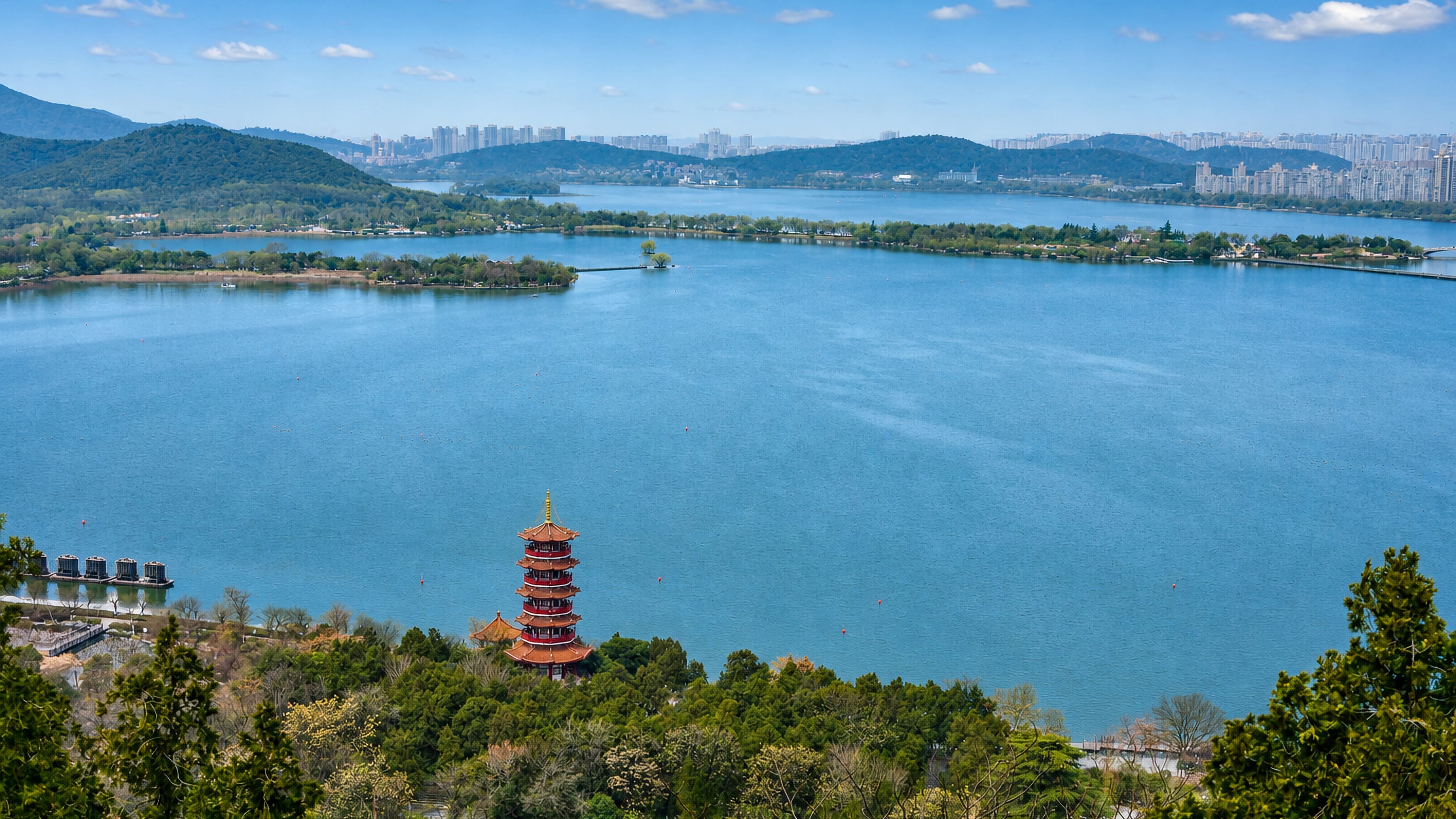
Tongshan holds the core of Xuzhou, the old Pengcheng of Jiangsu, with Han royal tombs in the hills and Yunlong Lake at the city's edge.
Hotel links are affiliate links: booking through them may earn us a commission, at no extra cost to you. It never affects how places are ranked. How this works


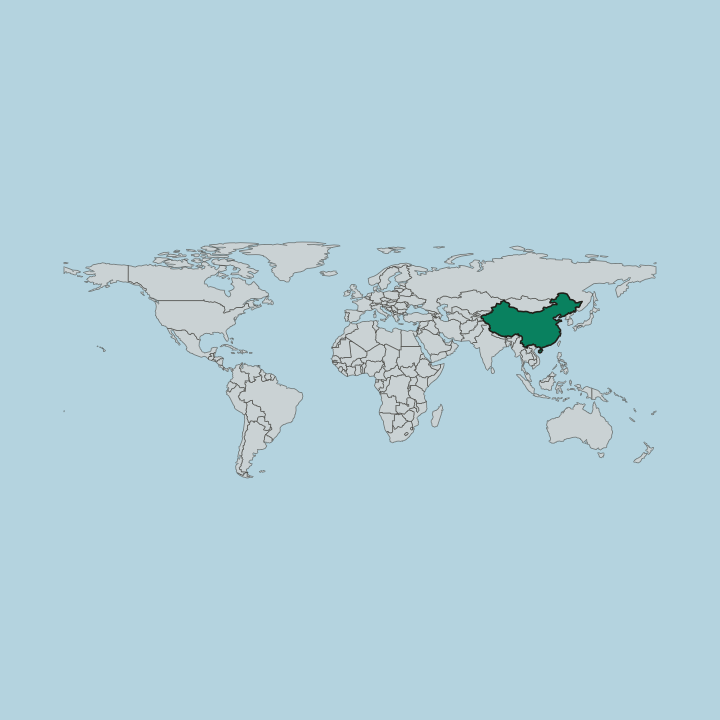
Where to stay in Tongshan
How the choice of base plays out on the ground.
Hubushan and Yunlong Lake pull the decision in opposite directions. Streets near Hubushan keep the old architecture and the museums of central Xuzhou within reach on foot, and a room there suits anyone whose days are built around the Memorial Museum of the Huaihai Campaign and short rides out to the tombs. The lake side is quieter.
Water and parkland replace through traffic along the Yunlong Lake shore, the evening walk becomes the evening itself, and families or slower travellers generally do better there than in the thick of the streets. Further out, the hills take over. Beds near the Tombs of Han Dynasty Kings of Chu and the wider field of Xuzhou Tombs put the archaeology first and the restaurants second, with the Huaihai Campaign Cemetery on roughly the same run of roads.
Rooms thin out past the ring. Liangwangcheng Ruins, Dadunzi, the Liulin Site, the Huating Site and the Ruins of Ancient City of Xiapi scatter across farmland toward Shandong and Anhui, so anyone planning to see more than one of them in a day should count on driving rather than on a central address.
Find hotels in Tongshan
Direct booking searches for these neighbourhoods.
Hubushan and the central streets
The old architecture of Hubushan and the Memorial Museum of the Huaihai Campaign sit within a walk of each otherFind hotels in Hubushan and the central streetsSlower mornings and an evening circuit of Yunlong LakeThe Yunlong Lake shore
Parkland and water on the Yunlong Lake side, set back from the through roads of XuzhouFind hotels in The Yunlong Lake shoreArchaeology-first stays with a car for Xiapi and LiulinThe tomb hills
Low hills holding the Tombs of Han Dynasty Kings of Chu and the Huaihai Campaign Cemetery, thin on beds. Beds are limited here, so book early.Find hotels in The tomb hillsHotel links are affiliate links: booking through them may earn us a commission, at no extra cost to you. It never affects how places are ranked. How this works
Things to do in Tongshan
Ranked by global recognition; descriptions from Wikidata (CC0).
Museums & Galleries
2- Huaihai Campaign Cemetery
- Memorial Museum of the Huaihai Campaign
Castles & Historic Sites
2- Liangwangcheng Ruins Heritage
- Dadunzi Heritage
Parks & Gardens
1- Yunlong Lake
worth knowingacross 3 categories in Tongshan
About Tongshan
What is Tongshan known for?
The Tombs of Han Dynasty Kings of Chu are the best-known sight in Tongshan, part of a wider field of Xuzhou Tombs cut into the low hills that ring this prefecture-level city. Yunlong Lake lies at the edge of the built-up streets. Old architecture stands at Hubushan, while the Memorial Museum of the Huaihai Campaign and the Huaihai Campaign Cemetery hold the memory of the fighting that swept this junction of provinces.
Archaeology runs deeper still. Liangwangcheng Ruins, Dadunzi and the Huating Site sit out in the farmland around.
What are the main landmarks in Tongshan?
Han tombs dominate the list. The Tombs of Han Dynasty Kings of Chu and the broader field of Xuzhou Tombs cut their chambers into the hills, and the Ruins of Ancient City of Xiapi mark an older walled settlement that survives as an outline. Hubushan preserves old architecture.
Liangwangcheng Ruins, the Liulin Site, the Huating Site and Dadunzi carry the archaeology out into the countryside, while Yunlong Lake, the Memorial Museum of the Huaihai Campaign and the Huaihai Campaign Cemetery draw visitors closer in.
What is the history of Tongshan?
Pengcheng is the older name, and it still attaches to this ground. The Ruins of Ancient City of Xiapi record a walled settlement whose plan survives as an outline in the fields, and the Han Dynasty Kings of Chu were buried in the hills above the modern streets, their chambers hollowed out of rock rather than raised above it. The Xuzhou Tombs are the wider field they belong to.
Dadunzi, the Liulin Site and the Huating Site push the record back further, into layers that predate any of the dynastic names later attached to the place. Farmland covers most of it. The Liangwangcheng Ruins add another walled seat to the same countryside.
Because the gap between the Shandong Hills and the North China Plain funnels movement between Shandong, Henan, Anhui and the rest of Jiangsu, this junction has rarely stood aside from what passed through it, and the Huaihai Campaign was fought across the same ground. The Memorial Museum of the Huaihai Campaign sets out that story indoors. The Huaihai Campaign Cemetery holds the other half of it, on ground the built-up area has since grown around, and the two together shape how the modern city presents its own past.
Xuzhou runs the prefecture from here.
Where is Tongshan?
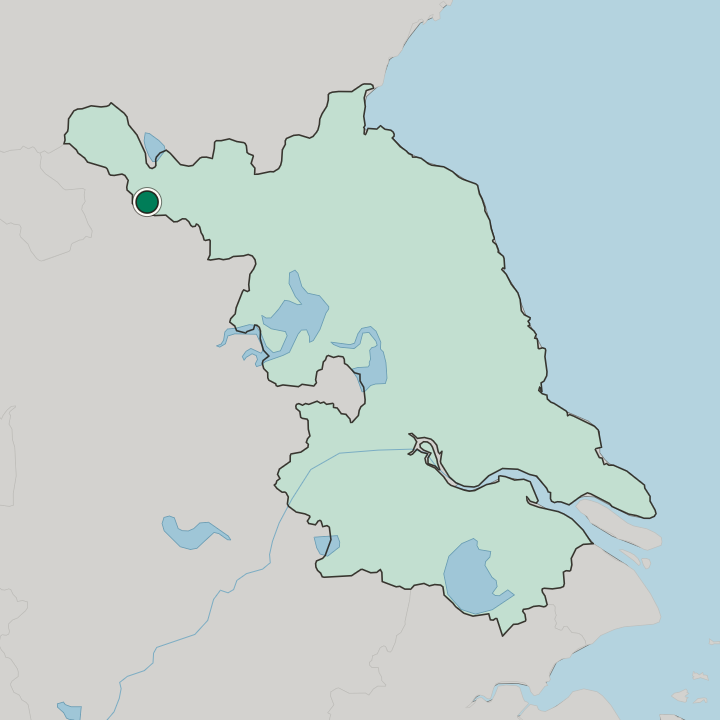
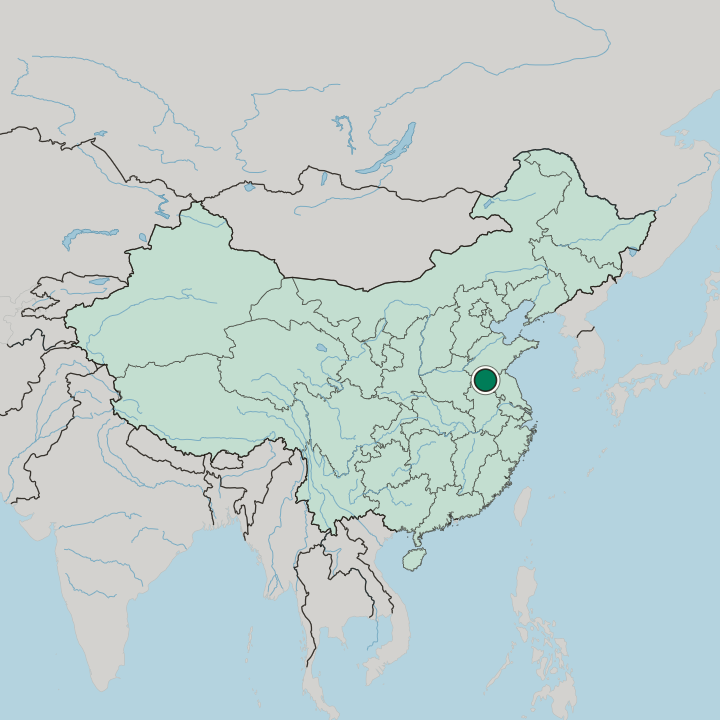
Tongshan occupies the natural gap between the Shandong Hills and the North China Plain, at the junction of four provinces, so Shandong, Henan and Anhui all begin within a short drive of Xuzhou. The border with Anhui runs close. Yunlong Lake fills a hollow at the edge of the built-up area, low hills carry the Xuzhou Tombs above the streets, and level farmland takes over beyond them, reaching out toward Xiapi and the sites at Huating and Liulin.
Jiangsu ends here.
What is the climate of Tongshan?
Two things set the weather over Xuzhou: the subtropical band the city sits in, and the open North China Plain that lets cold air run down in winter without meeting a barrier. Summers are long, wet and heavy. The Shandong Hills rise on one flank only, so they break little of what arrives, and the seasons swing further apart than the subtropical label on its own would suggest.
How do you get to Tongshan?
Xuzhou is a junction before it is anything else. Rail and road lines crossing between Shandong, Henan, Anhui and the rest of Jiangsu funnel through the same gap in the hills, which is why the prefecture handles far more through traffic than its own errands would ever generate. The lake and the tomb hills sit outside the centre.
Reaching them takes a taxi or a local bus rather than a walk, and the outlying sites at Xiapi, Huating and Liulin need a car. Distances add up quickly.
Common questions
What is the best area to stay in Tongshan?
Hubushan and the central streets: Days spent between the Hubushan frontages and the Han tomb hills. The Yunlong Lake shore: Slower mornings and an evening circuit of Yunlong Lake. The tomb hills: Archaeology-first stays with a car for Xiapi and Liulin.
Good for
More cities in Jiangsu
Updated September 2026