China · Zhejiang
Where to Stay in Huzhou, Zhejiang
Lake Tai edges Huzhou. Canal towns, pagodas and the Mount Mogan hills fill the prefecture between Hangzhou and the Jiangsu border.
Hotel links are affiliate links: booking through them may earn us a commission, at no extra cost to you. It never affects how places are ranked. How this works


Where to stay in Huzhou
Where the beds are, and what that means for the visit.
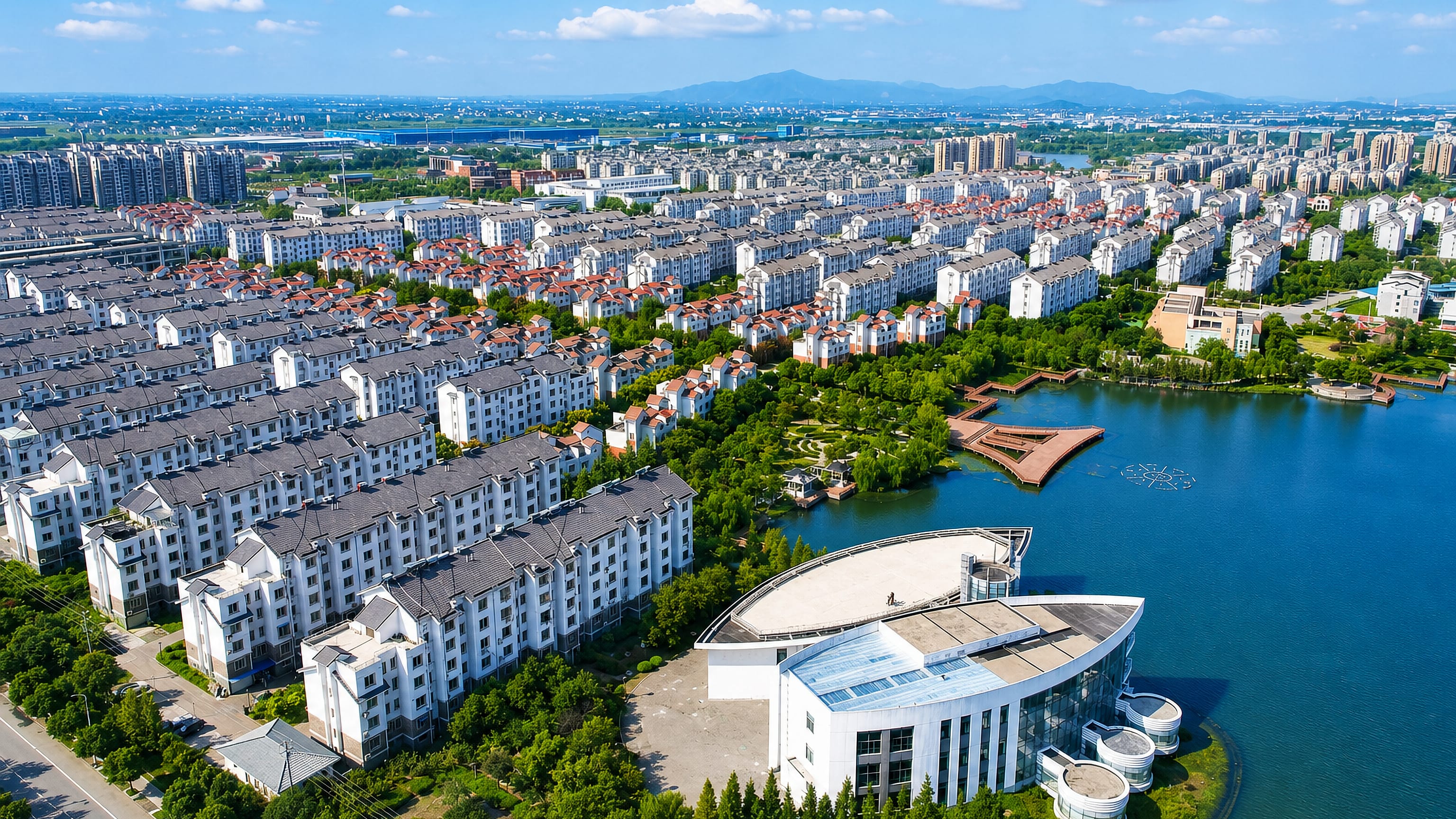
Beds divide between the water and the hills. In the built-up centre of Huzhou, Feiying Pagoda and Huzhou Museum sit close together, and the shore of Lake Tai is near enough for an evening out to the water, which makes the city the practical base for a first visit. Nanxun is the other obvious choice, a canal town where Jiaye Library, Changfa Bridge and Nanxun Christ Church stand within a few streets of one another, and where the merchant houses of Zhang Jingjiang and Zhang Shiming are open to look at.
Mount Mogan changes the terms. The villas built on its slopes sit well above the plain, cooler in summer than the canal grid below, and they suit a stay planned around walking rather than around bridges and museums. Anji, at the upland end of the prefecture, keeps the line of its old city wall.
Deqing offers a quieter version again, with proto-porcelain kiln sites and a cluster of old bridges. Book the canal towns early. Nanxun and Shuanglin are small, their rooms are limited, and a weekend can fill them well ahead of arrival.
Find hotels in Huzhou
Direct booking searches for these neighbourhoods.
Huzhou city centre
Huzhou Museum and Feiying Pagoda anchor the built-up core, with the Lake Tai shore a short run out.Find hotels in Huzhou city centreCanal evenings among the Jiaye Library mansionsNanxun
Jiaye Library, Changfa Bridge and Nanxun Christ Church stand within a few streets of each other.Find hotels in NanxunHill air on the Mogan villa slopesMount Mogan
The Villas in Mount Mogan sit above the canal plain, cooler in summer and built for walking.Find hotels in Mount MoganUpland nights by the old Anji wall lineAnji
The City wall of Anji marks the inland end of the prefecture, far from the Taihu basin canals.Find hotels in AnjiHotel links are affiliate links: booking through them may earn us a commission, at no extra cost to you. It never affects how places are ranked. How this works
Things to do in Huzhou
Ranked by global recognition; descriptions from Wikidata (CC0).
Museums & Galleries
2- Huzhou Museum
- Former Residence of Liu Ansheng
Churches & Religious Sites
1- Nanxun Christ Church
Castles & Historic Sites
2- Liangzhu site UNESCO
- Qianshanyang Heritage
Landmarks & Notable Places
4- Chaoyin Bridge Heritage
- Shouchang Bridge Heritage
- 南浔天主堂 Heritage
- Changfa Bridge Heritage
worth knowingacross 4 categories in Huzhou
About Huzhou
Water organises everything here.
What is Huzhou known for?
The Lougang irrigation and drainage system in the Taihu basin still shapes the fields, the canal towns of Nanxun and Shuanglin still turn on their bridges, and Lake Tai closes the northern edge. Feiying Pagoda marks the old city. Up in the hills, the Villas in Mount Mogan draw a different kind of visitor, one after cool air rather than water.
What are the main landmarks in Huzhou?
Feiying Pagoda is the marker that stands over the old city, and the Huzhou Museum gathers what the fields and kiln sites around it have produced. Bridges do the rest of the work: Shouchang Bridge, Chaoyin Bridge and the Three Bridges in Shuanglin all still carry traffic over the canals. Zhao Mengfu tomb lies out among them.
Older ground still shows at Qianshanyang and the Liangzhu site.
What is the history of Huzhou?
The register reads as a stack of layers. Qianshanyang, the Pishan Site and the Liangzhu site record settlement on this ground long before any of the towns took their present shape, and the proto-porcelain kiln sites in Deqing show craft production established early on the same ground. Water came under management next.
The Lougang irrigation and drainage system in the Taihu basin turned marsh into field, and the pattern of dyke, pond and canal it laid down still governs how the land drains. Bridges and libraries mark the later centuries. Shouchang Bridge and Chaoyin Bridge, the Three Bridges in Shuanglin, the City wall of Anji and Dusong Pass all belong to a landscape organised around movement by water and by defensible ground.
Nanxun holds the densest concentration: Jiaye Library, the former residences of Zhang Jingjiang, Zhang Shiming and Liu Ansheng, and Nanxun Christ Church, standing together in one small canal town. Zhao Mengfu tomb lies in the countryside outside the city. Later entries include the Tomb of Chen Yingshi and the Site of Jiangsu-Zhejiang Military Region of the New Fourth Army, while the Villas in Mount Mogan record the taste for hill summers above the plain.
Where is Huzhou?
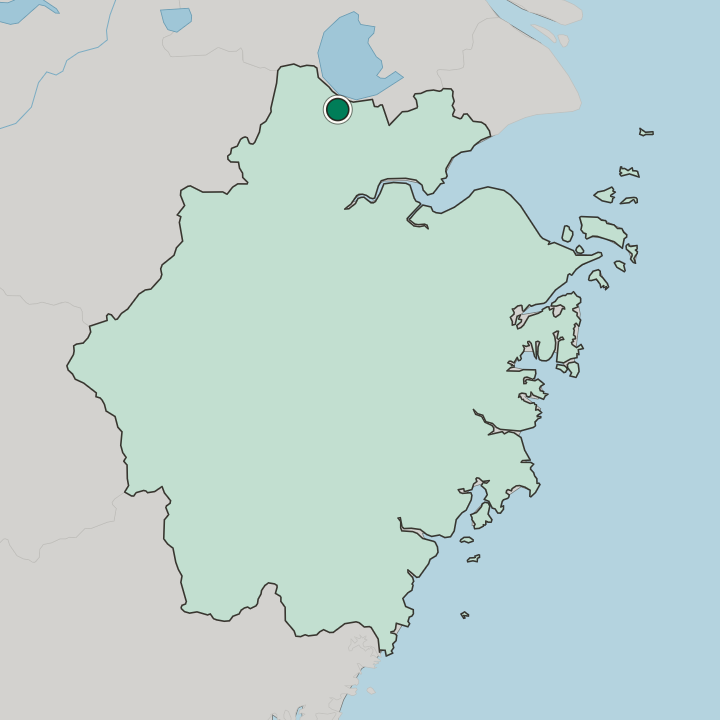
Lake Tai sets the northern boundary, and the ground below it is flat, wet and cut through with canals that drain the Taihu basin toward the lake. Jiaxing lies east, Hangzhou south, with Anhui and Jiangsu beyond the western and northern limits of the prefecture. The land tilts up at Mount Mogan. Anji sits in that upland country, well away from the water.
What is the climate of Huzhou?
Damp air off Lake Tai holds over the plain for much of the year, and the subtropical position gives Huzhou hot, close summers with rain that arrives in long spells rather than short bursts. Winters are cool and grey. Frost is uncommon on the plain, though Mount Mogan runs colder than the canal towns below and keeps its cloud longer, which is the difference travellers notice most between the two halves of the prefecture.
How do you get to Huzhou?
Hangzhou is the usual approach. Roads run north from Hangzhou onto the Huzhou plain, and the same corridor carries on around Lake Tai into Jiangsu, which is the line most traffic from that side follows. Jiaxing sits east on the plain route.
For Nanxun, Deqing or the Villas in Mount Mogan, plan the final leg separately, since the canal towns and the hill road branch away from the corridor between Hangzhou and the lake.
Common questions
What is the best area to stay in Huzhou?
Huzhou city centre: Museum days beside the Feiying Pagoda quarter. Nanxun: Canal evenings among the Jiaye Library mansions. Mount Mogan: Hill air on the Mogan villa slopes. Anji: Upland nights by the old Anji wall line.
Good for
More cities in Zhejiang
Updated September 2026