China · Zhejiang
Where to Stay in Zhoushan, Zhejiang
Zhoushan is an archipelago. Its temples on Mount Putuo, the lighthouses offshore and the ferries between islands all answer to Hangzhou Bay water.
Hotel links are affiliate links: booking through them may earn us a commission, at no extra cost to you. It never affects how places are ranked. How this works


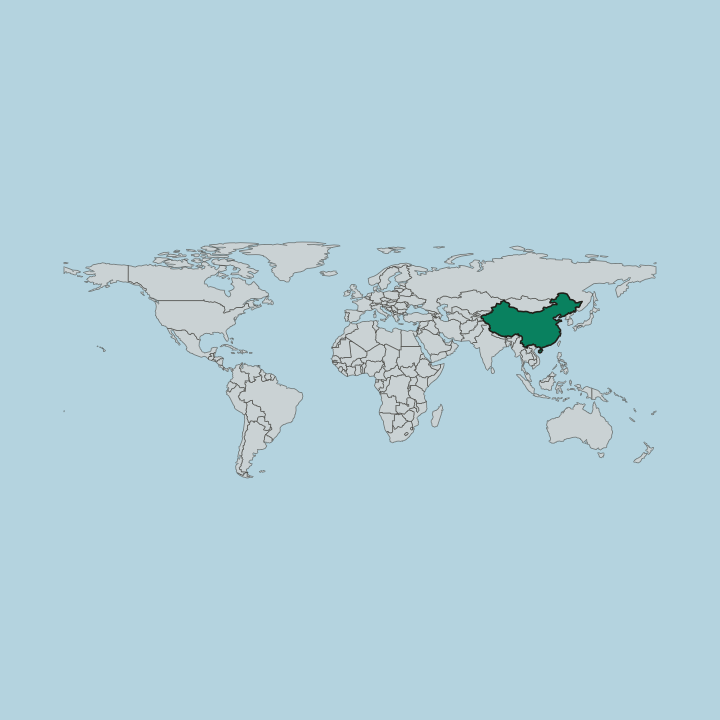
Where to stay in Zhoushan
Where visitors usually base themselves, and why.
Dinghai is the city proper, and it sits on Zhoushan Island itself, which makes it the base with the most beds and the most connections to everywhere else in the group. Ferries leave from there. Mount Putuo is the other centre of gravity, an island where Puji Temple, Fayu Temple and the Duobao Pagoda give visitors a reason to stay overnight rather than come and go in a day.
Choose between them early. Rooms on Mount Putuo are limited by the size of the island, and the return to Dinghai is a boat ride rather than a drive, so anyone planning temple mornings should sleep on the temple island rather than commute to it. Putuo District covers the wider urban area on that side, which is a useful distinction when booking, since a listing in Putuo is not necessarily a listing at the temples.
The outer islands are a different proposition again, thinner in beds and slower to reach, with Huāniǎoshān Lighthouse standing at the far edge of the archipelago. Weather can strand you out there. Build slack into any itinerary that leaves Zhoushan Island.
Find hotels in Zhoushan
Direct booking searches for these neighbourhoods.
Dinghai
Dinghai is the city proper on Zhoushan Island, with the widest choice of beds and boats out.Find hotels in DinghaiSleeping on the temple island itselfMount Putuo
The Duobao Pagoda stands here, and a bed on the island turns the temple round into a morning walk.Find hotels in Mount PutuoUrban beds when the temple island is fullPutuo District
Putuo District is the second of the prefecture's urban districts, an easier booking than Mount Putuo itself.Find hotels in Putuo DistrictNights out by the Huāniǎoshān lightZhoushan outer islands
Huāniǎoshān Lighthouse marks the far edge of the archipelago, where beds are few and boats the only way in.Find hotels in Zhoushan outer islandsHotel links are affiliate links: booking through them may earn us a commission, at no extra cost to you. It never affects how places are ranked. How this works
About Zhoushan
Temples give the archipelago its pull.
What is Zhoushan known for?
Puji Temple and Fayu Temple hold the religious listings, the Duobao Pagoda stands on Mount Putuo, and together they draw traffic that would otherwise have no reason to cross the water. Lighthouses do the practical work. Huāniǎoshān Lighthouse marks the outer islands, where Hangzhou Bay gives out into the East China Sea and the mainland at Ningbo drops out of sight.
What are the main landmarks in Zhoushan?
Zhoushan's register is a brief one. Puji Temple and Fayu Temple are the temples, the Duobao Pagoda stands on Mount Putuo, and Huāniǎoshān Lighthouse belongs to the string of lights that guides shipping along this coast. Stone and lamp, nothing else.
What the archipelago holds instead is water, and the sites that matter are reached across it rather than along a road.
What is the history of Zhoushan?
Islands make their own history, and Zhoushan's turns on the sea rather than on any inland frontier or road. Dinghai came to be the city proper, set on Zhoushan Island, the main island of a group counted in 1,390 islands and 3,306 reefs. Administration followed settlement.
The seat belongs to Dinghai District, and Putuo District grew as the second urban half, the two of them holding most of the built-up ground between them. Religion gave the group a second identity. Puji Temple and Fayu Temple stand among the prefecture's listed religious sites, and the Duobao Pagoda on Mount Putuo belongs to the same tradition, drawing arrivals from far beyond the archipelago.
Navigation added the last layer of all. Huāniǎoshān Lighthouse and the wider set of coastal lights along this shore mark the point at which the islands became a hazard to be charted rather than a barrier to be avoided. Zhoushan sits at the southern mouth of Hangzhou Bay, off the mainland city of Ningbo and inside the Yangtze River Delta, a place ships pass more readily than they call.
Where is Zhoushan?
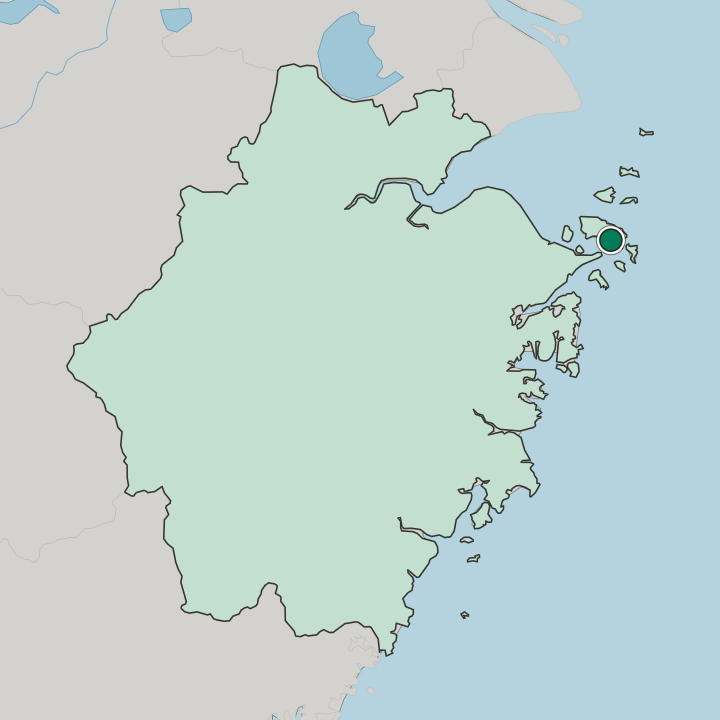
Water separates everything here. The archipelago lies at the southern mouth of Hangzhou Bay, off the mainland city of Ningbo, with the East China Sea opening beyond its outer islands and the Yangtze River Delta behind. Zhoushan Island is the main piece.
Dinghai and Putuo hold the built-up ground of the prefecture, and the rest of the group thins outward into smaller islands and bare reefs.
What is the climate of Zhoushan?
The sea moderates everything. Air off the East China Sea and Hangzhou Bay keeps Zhoushan's summers cooler than the mainland behind it and its winters milder, though damp holds through much of the subtropical year and fog can close the outer islands. Wind is the variable that matters.
Crossings to Mount Putuo and the far islands depend on it.
How do you get to Zhoushan?
Ningbo is the mainland side of the trip. The archipelago sits off that city, and crossings from that side are how most of the group is reached, which makes the city proper the natural first stop for anyone without a fixed island in mind. Boats do the rest.
Mount Putuo has its own approach, separate from the run into Dinghai, and Huāniǎoshān with the outer islands takes longer than the map suggests.
Common questions
What is the best area to stay in Zhoushan?
Dinghai: Ferry mornings from the Zhoushan Island city proper. Mount Putuo: Sleeping on the temple island itself. Putuo District: Urban beds when the temple island is full. Zhoushan outer islands: Nights out by the Huāniǎoshān light.
Good for
More cities in Zhejiang
Updated September 2026