Germany · Nordrhein-Westfalen
Where to Stay in Arnsberg, Nordrhein-Westfalen
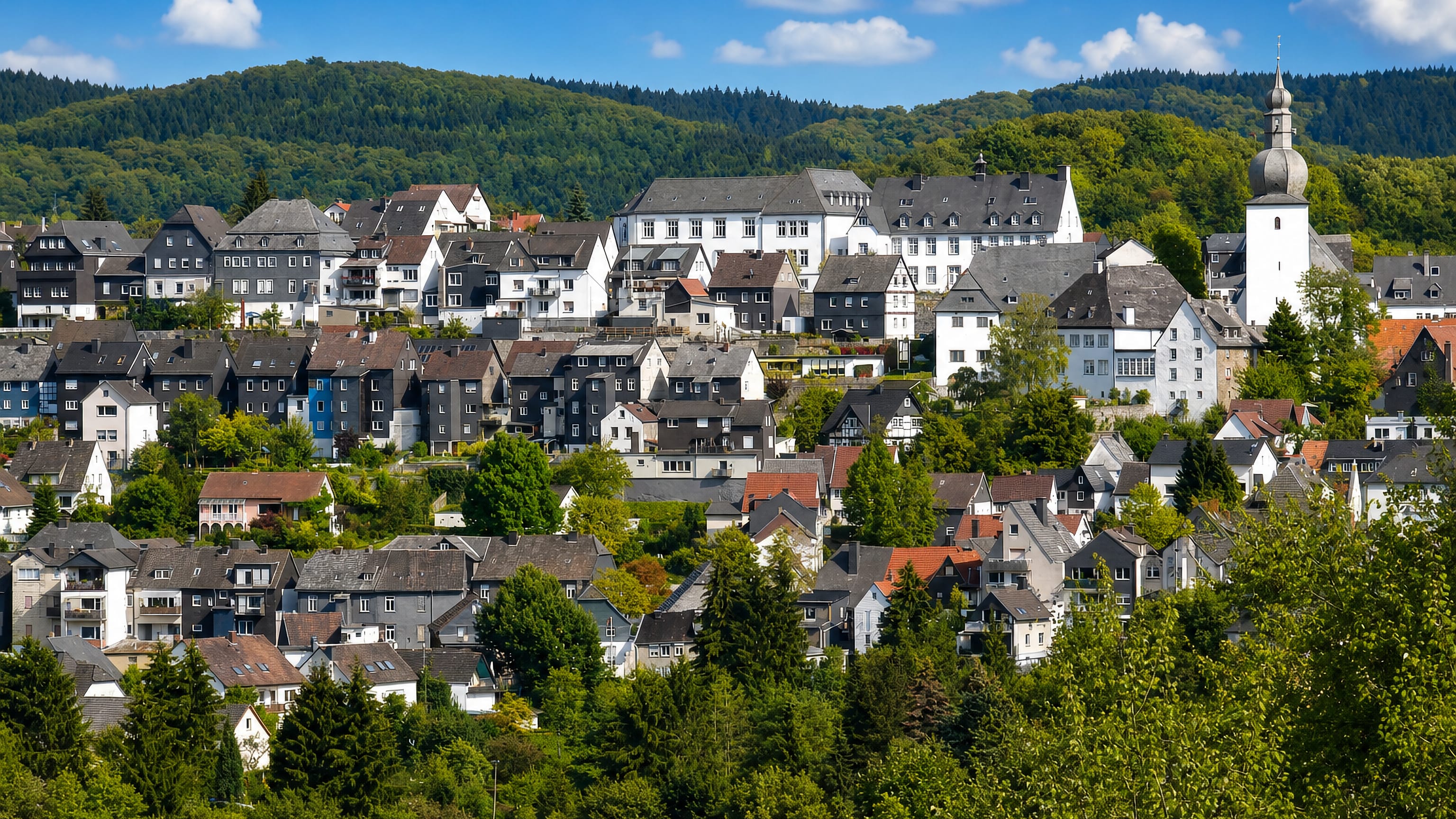
Arnsberg holds the Regierungsbezirk administration in the Hochsauerland, a North Rhine-Westphalian town of cloisters, castle ruins and wooded hills.
Hotel links are affiliate links: booking through them may earn us a commission, at no extra cost to you. It never affects how places are ranked. How this works


Where to stay in Arnsberg
One neighbourhood here has its own guide — here's what it is best for.

 ArnsbergGermany
Neheim
Neheim is a district of Arnsberg, with the Christuskirche, the Fresekenhof, and the Burghaus Gransau among its named buildings.Where to stay →Hotel links are affiliate links: booking through them may earn us a commission, at no extra cost to you. It never affects how places are ranked. How this works
Find hotels in Arnsberg
Direct booking searches for these neighbourhoods.
The old town by Kloster Wedinghausen
Lanes around Kloster Wedinghausen and the Propsteikirche. Lodging is scarce in this area; reserve in advance.Find hotels in The old town by Kloster WedinghausenWoodland nights beside Kloster Rumbeck and Sankt NikolausRumbeck
Fields and forest at Rumbeck, well away from the Regierungsbezirk offices. Beds are limited here, so book early.Find hotels in RumbeckDrivers wanting parking near Sankt Joseph and Holy CrossThe newer parishes
Later quarters around Sankt Joseph, Holy Cross and the AuferstehungskircheFind hotels in The newer parishesHotel links are affiliate links: booking through them may earn us a commission, at no extra cost to you. It never affects how places are ranked. How this works
Things to do in Arnsberg
Ranked by global recognition; descriptions from Wikidata (CC0).
Churches & Religious Sites
8- Kloster Wedinghausen Heritage
- Pfarrkirche St. Johannes Baptist Heritage
- Kloster Rumbeck Heritage
- St. Georg, Arnsberg Heritage
- Auferstehungskirche Heritage
Show 3 more →
- Christuskirche Heritage
- Jesuitenmission Arnsberg Heritage
- Propsteikirche, Arnsberg Heritage
Castles & Historic Sites
3- Fresekenhof Heritage
- Rüdenburg Arnsberg
- Ehmsendenkmal
Stadiums & Sports
1- Rundturnhalle Arnsberg
Landmarks & Notable Places
1- Limps Turm Heritage
worth knowingacross 4 categories in Arnsberg
About Arnsberg
Kloster Wedinghausen sets the tone.
What is Arnsberg known for?
The monastery church and its buildings still stand, and the Rüdenburg Arnsberg, Burg Wollbrigg and Limps Turm add the towers and remnants of older defences. Administration is the other trade. The Regierungsbezirk Arnsberg keeps its administration here, and one of the three local offices of the Hochsauerlandkreis works from the same town, which gives a place of this size an official weight.
The Sauerland-Museum tells the rest.
What are the main landmarks in Arnsberg?
Churches and cloisters crowd a small map. Kloster Wedinghausen and Kloster Rumbeck are the two monastic houses, the Propsteikirche and Sankt Georg serve the old streets, and Sankt Joseph, Holy Cross, the Auferstehungskirche and Sankt Nikolaus in Rumbeck spread the parishes across the rest of the town. Two museums, one memorial.
The Sauerland-Museum and the Feuerwehrmuseum der Stadt Arnsberg hold the collections, and the Ehmsendenkmal stands as the town's monument. Limps Turm still stands.
What is the history of Arnsberg?
Castles came before offices. The Rüdenburg Arnsberg and Burg Wollbrigg belong to the age when the Hochsauerland was held from strongpoints on its hills, and Limps Turm survives from the same order of things. Monks followed.
Kloster Wedinghausen and Kloster Rumbeck gave the district two religious houses, and Sankt Nikolaus in Rumbeck still stands beside the second of them. The Jesuitenmission Arnsberg brought a later order to the same ground, and the Propsteikirche took the rank that its name implies. Government arrived in the modern age.
Arnsberg became the seat of the Regierungsbezirk that carries its name, and it holds one of the three local administration offices of the Hochsauerlandkreis, so files and hearings became as much a part of the town as the cloisters were. New parishes came with the growth: Sankt Joseph, Holy Cross and the Auferstehungskirche. The Rundturnhalle Arnsberg is a curiosity of its own.
Memory is kept in three places. The Sauerland-Museum sets out the region's past, the Feuerwehrmuseum der Stadt Arnsberg keeps the town's fire service, and the Ehmsendenkmal stands for a name Arnsberg did not want to lose.
Where is Arnsberg?
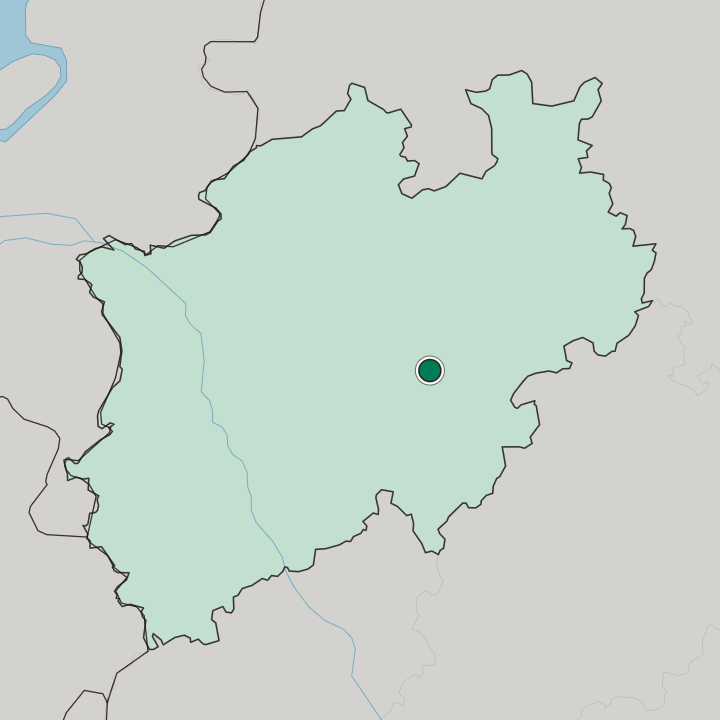
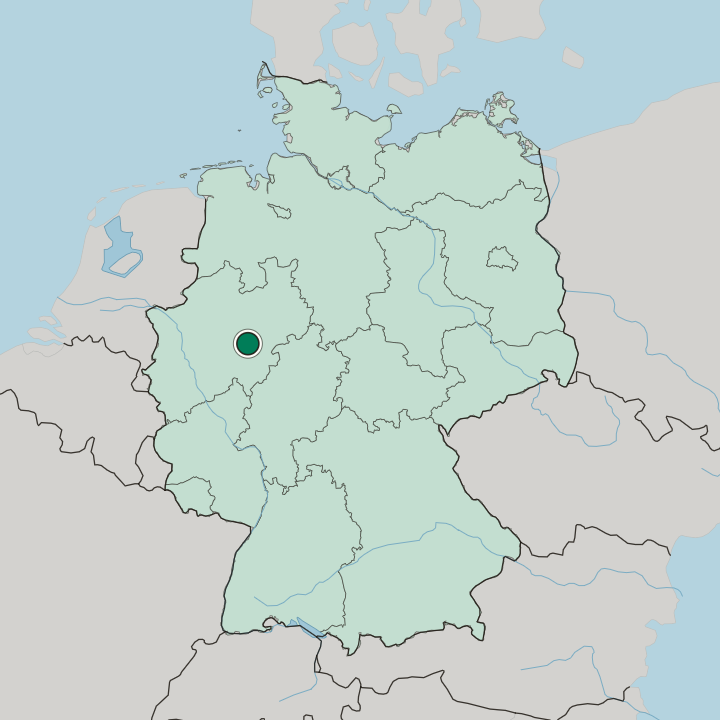
Hills close around Arnsberg. The town lies in the Hochsauerland, upland country of wooded ridges and narrow valleys, and the Hochsauerlandkreis takes in the villages and forest around it, Rumbeck among them. Forest covers much of the district, and the Sauerland-Museum takes its name from the wider upland the town belongs to.
Arnsberg spreads wide across it.
What is the climate of Arnsberg?
Height decides the weather in the Hochsauerland. The uplands wring rain and snow out of the westerly air before it reaches the lower country, so Arnsberg sees more cloud, more rainfall and longer snow cover than towns down on the plain. Winters bite in the valleys.
Summers stay cool and green, and the forest around Rumbeck holds the damp long after the rain has stopped.
How do you get to Arnsberg?
Every approach runs through hills. The way into Arnsberg from any direction crosses the wooded ridges of the Hochsauerland, and the town appears only once the road has dropped into its own valley. Rumbeck sits at one edge of the district, where Sankt Nikolaus and Kloster Rumbeck stand.
Business traffic comes for the Regierungsbezirk Arnsberg offices and the Hochsauerlandkreis administration, which draws people who would otherwise have no reason to leave the main roads.
Common questions
What is the best area to stay in Arnsberg?
The old town by Kloster Wedinghausen: Walkers wanting Limps Turm and the Sauerland-Museum on the doorstep. Rumbeck: Woodland nights beside Kloster Rumbeck and Sankt Nikolaus. The newer parishes: Drivers wanting parking near Sankt Joseph and Holy Cross.
Good for
More cities in Nordrhein-Westfalen
Updated October 2026