Germany · Nordrhein-Westfalen
Where to Stay in Düsseldorf, Nordrhein-Westfalen
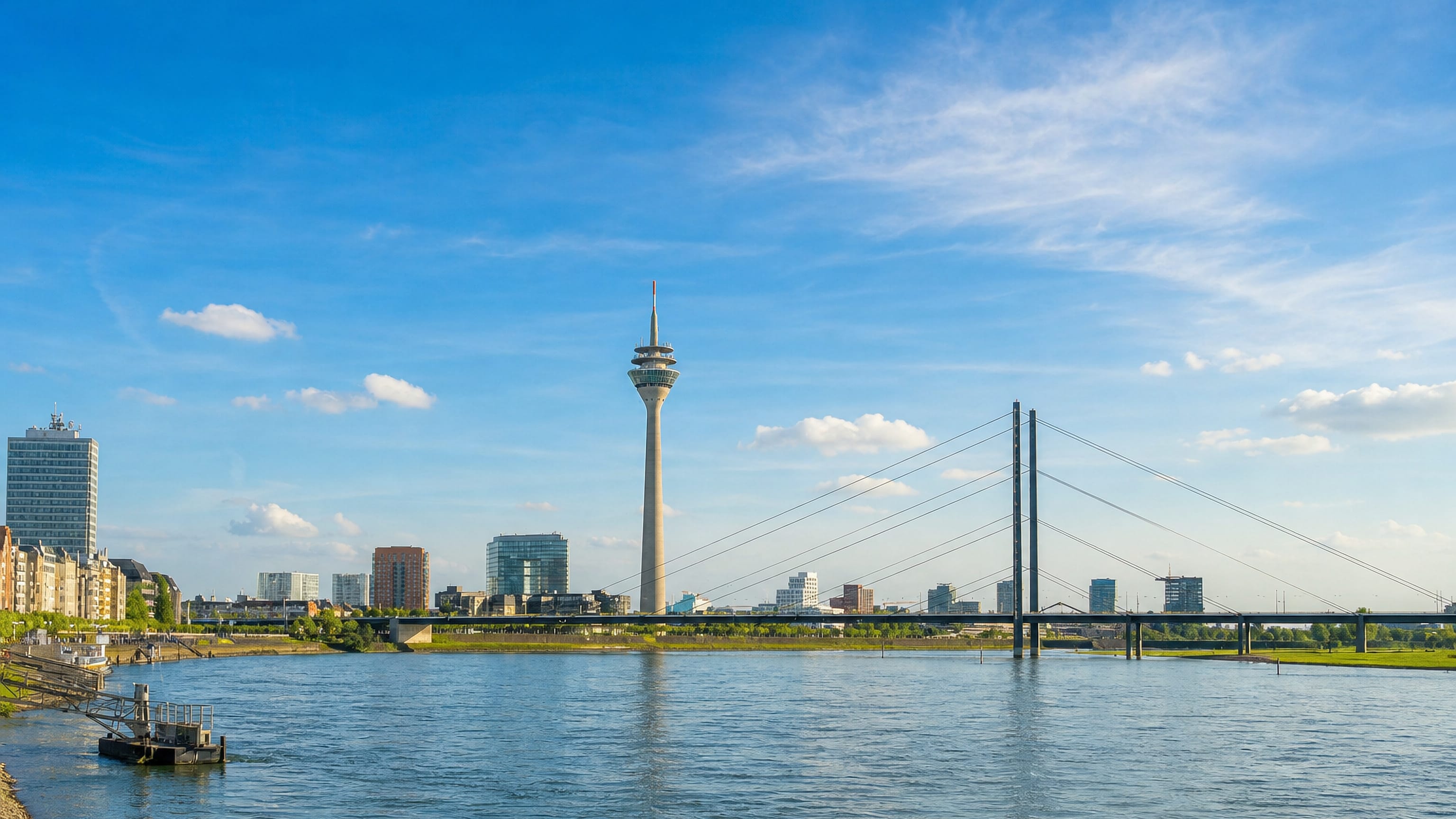
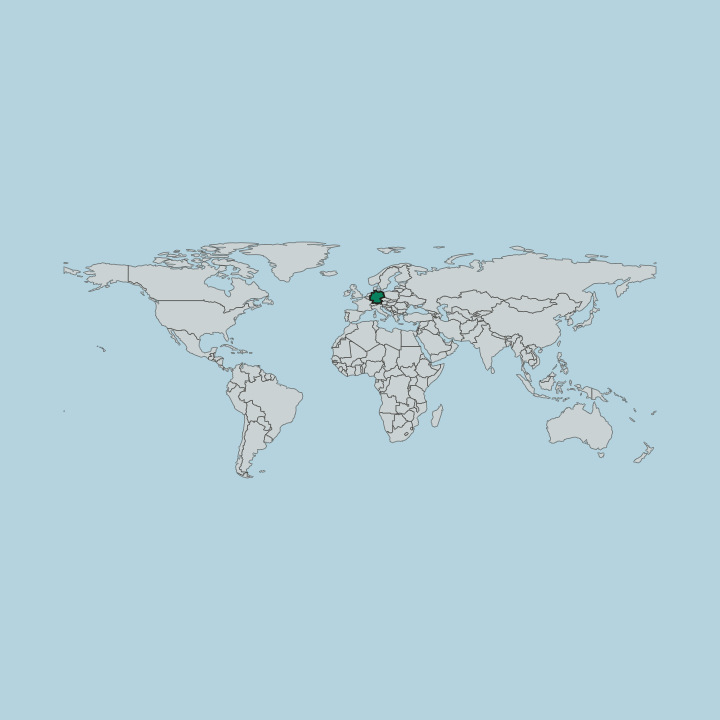
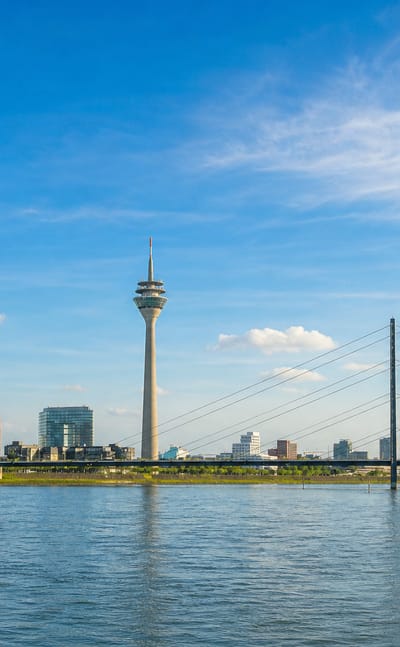
Düsseldorf lines the River Rhine in western Germany, the capital of North Rhine-Westphalia, known for its Altstadt and the twisted spire of St. Lambertus.
Hotel links are affiliate links: booking through them may earn us a commission, at no extra cost to you. It never affects how places are ranked. How this works


Where to stay in Düsseldorf
Each area has its own feel; here's who each one suits.
 DüsseldorfGermany
Düsseldorf-Pempelfort
Pempelfort is the Düsseldorf district of the Museum Kunstpalast and the NRW Forum, with the Goethe Museum and the Hofgarten a few streets away.Where to stay → DüsseldorfGermany
Stockum
Stockum is a Düsseldorf quarter in Borough 5, west of Unterrath, and the Löbbecke Museum und Aquazoo stands within it.Where to stay →DüsseldorfGermanyVolmerswerth
Volmerswerth is a Rhine-side quarter in the west of Düsseldorf, in Borough 3, where the Reckenberg Roman Watchtower marks the oldest ground.Where to stay →DüsseldorfGermanyUnterrath
Unterrath is a northern quarter of Düsseldorf in Borough 6, close to Düsseldorf Airport, with the Alte Burg its one non-church landmark.Where to stay → DüsseldorfGermany
Wersten
Wersten is a Düsseldorf district of four square kilometres, holding the Stephanuskirche, St. Maria Rosenkranz and St. Maria in den Benden.Where to stay → DüsseldorfGermany
Vennhausen
Vennhausen is a quarter of Düsseldorf in Borough 8, bordered by Eller, Unterbach and Gerresheim, with three church sites on its register.Where to stay →DüsseldorfGermanyLudenberg
Ludenberg is a district of Düsseldorf covering some six square kilometres, taking in Knittkuhl and the church of St. Victor.Where to stay →DüsseldorfGermanyWittlaer
Wittlaer is the Düsseldorf quarter where the Schwarzbach reaches the Rhine, the lowest ground in the city, out past Stockum toward Duisburg.Where to stay →Hotel links are affiliate links: booking through them may earn us a commission, at no extra cost to you. It never affects how places are ranked. How this works
Find hotels in Düsseldorf
Direct booking searches for these neighbourhoods.
Altstadt
Rings St. Lambertus with pub-lined streets running down to the Rhine promenadeFind hotels in AltstadtA modern waterfront stay in the converted harbourMedienHafen
Bends around Düsseldorf's old harbour basins amid warehouses and new towersFind hotels in MedienHafenA quieter, elegant base near the antique streetsCarlstadt
Runs its calm grid past the Hetjens Museum just south of the AltstadtFind hotels in CarlstadtHotel links are affiliate links: booking through them may earn us a commission, at no extra cost to you. It never affects how places are ranked. How this works
Things to do in Düsseldorf
Ranked by global recognition; descriptions from Wikidata (CC0).
Museums & Galleries
3- Museum Kunstpalast Heritage
- NRW Forum Heritage
- Ständehaus Heritage
Churches & Religious Sites
8- St. Lambertus Heritage
- Church of St. Andrew Heritage
- Johanneskirche Heritage
- Neanderkirche Heritage
- Rochuskirche Heritage
Show 3 more →
- St. Maximilian Heritage
- St. Mariä Empfängnis Heritage
- Maria-Obhut-Kirche Heritage
Castles & Historic Sites
3- Vater Rhein und seine Töchter Heritage
- Kaiser-Wilhelm-Denkmal Heritage
- Hof Kaldenberg Heritage
Landmarks & Notable Places
2- Schlossturm Heritage
- Grupello-Haus
worth knowingacross 4 categories in Düsseldorf
About Düsseldorf
What is Düsseldorf known for?
Düsseldorf is known as the capital of North Rhine-Westphalia and a centre of art and finance on the River Rhine. Its old town sits by the water. The twisted spire of St. Lambertus rises over the Altstadt, and the galleries of the Museum Kunstpalast and the Kunsthalle Düsseldorf give the city its long reputation for painting.
Along the riverbank promenade the Rhine and the old harbour tie the modern quarters back to the medieval core.
What are the main landmarks in Düsseldorf?
Düsseldorf's landmarks stand mostly by the Rhine, gathered in and around the old town where a leaning church tower, a castle keep, and a run of art museums sit close along the river. St. Lambertus and its twisted spire rise over the Altstadt, beside the surviving Schlossturm of the old Düsseldorfer Schloss. The Museum Kunstpalast, the Kunsthalle Düsseldorf, and the Hetjens Museum hold the city's collections.
On the riverbank stands the fountain of Vater Rhein und seine Töchter. Art and water define it.
What is the history of Düsseldorf?
Düsseldorf grew from a fishing and market settlement where the small Düssel stream meets the River Rhine in what is now North Rhine-Westphalia. It began small. Granted town rights in the Middle Ages, it gained walls and a market.
A church dedicated to St. Lambertus rose then, and its twisted spire still leans over the Altstadt as the oldest mark of that founding town. The counts and dukes who held the lower Rhine made it a seat of their court. Under the electors of the Palatinate the town became a residence city, and the Düsseldorfer Schloss on the river anchored a court that drew painters and collectors, seeding the tradition the Museum Kunstpalast and the Kunsthalle Düsseldorf carry on.
Fire and war later gutted the old castle. Only the Schlossturm survives on the bank. As capital of North Rhine-Westphalia the city rebuilt around trade, finance, and art, spreading its modern quarters along the Rhine while keeping the Altstadt at the core.
That old riverside town still sets the plan.
Where is Düsseldorf?
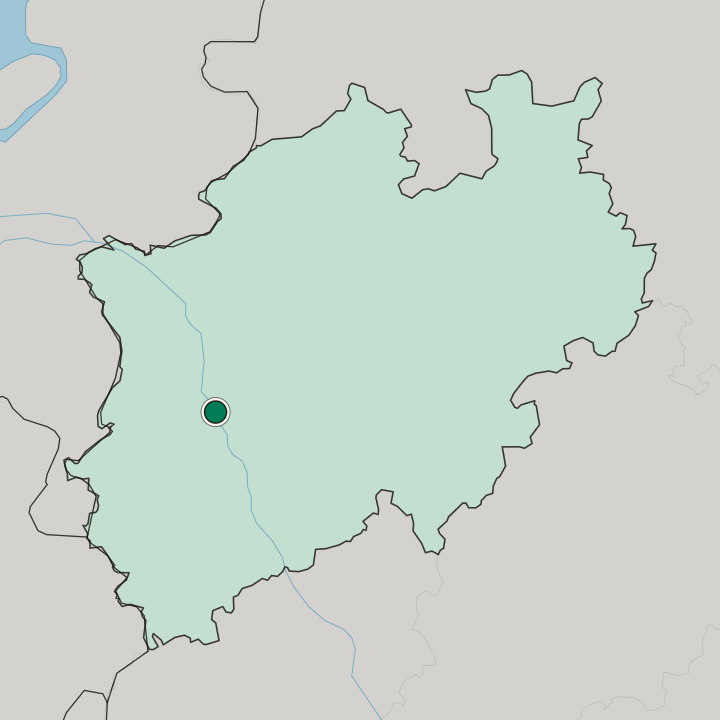
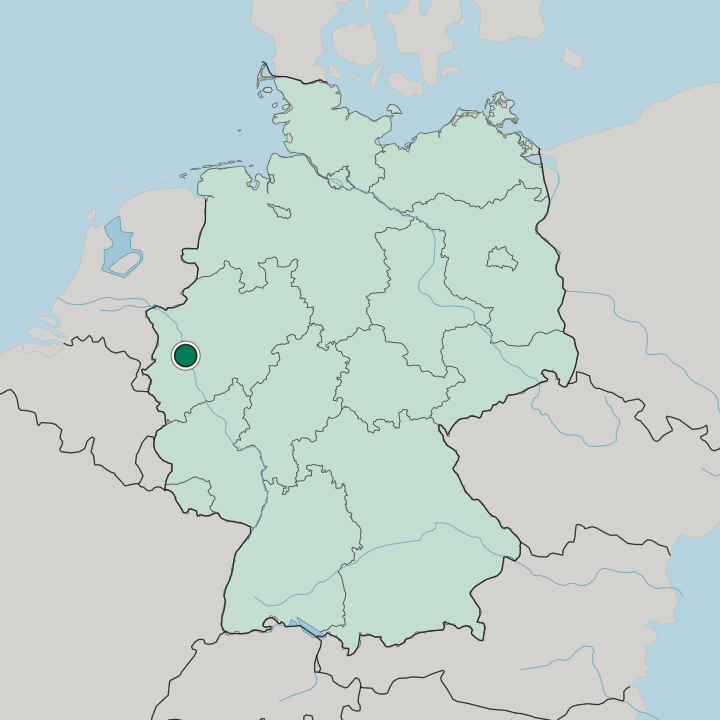
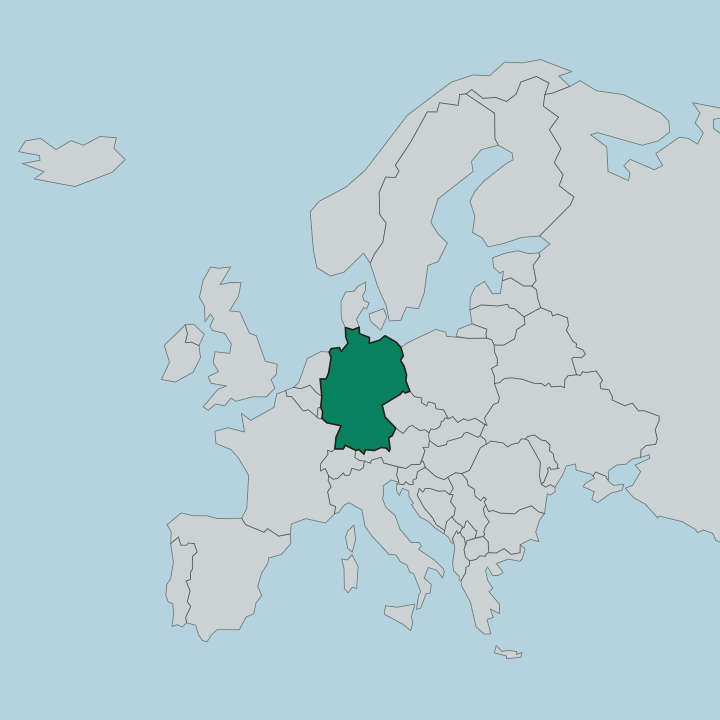
Düsseldorf lies on the River Rhine in western Germany, the capital of North Rhine-Westphalia, at the point where the small Düssel joins the great river. Most of the city rests on the right bank, on flat ground of the lower Rhine plain, part of the wider Rhine-Ruhr region running from Cologne to the Ruhr. Level land stretches around it.
This place on the Rhine, close to Cologne and the Ruhr, has long made it a hub of the western lowlands.
What is the climate of Düsseldorf?
Düsseldorf has a mild maritime climate typical of the lower Rhine plain of North Rhine-Westphalia. Winters stay cool and grey, with rain far more common than snow on the flat riverside ground. Summer along the lower Rhine turns warm and leafy.
Cloud and showers come and go with the westerly air off the North Sea, and the Rhine keeps the valley damp and temperate through much of the year.
How do you get to Düsseldorf?
Düsseldorf sits on the main rail lines of the lower Rhine, and its station and airport link the city with the rest of North Rhine-Westphalia and beyond. Trains, trams, and the S-Bahn meet in the centre. Motorways and the River Rhine both run through the region, tying the city into the dense Rhine-Ruhr network.
Many visitors arrive by air or rail.
Common questions
What is the best area to stay in Düsseldorf?
Altstadt: First-time visitors who want the Rhine promenade and the brewery lanes at the door. MedienHafen: A modern waterfront stay in the converted harbour. Carlstadt: A quieter, elegant base near the antique streets.
Good for
More cities in Nordrhein-Westfalen
Updated October 2026