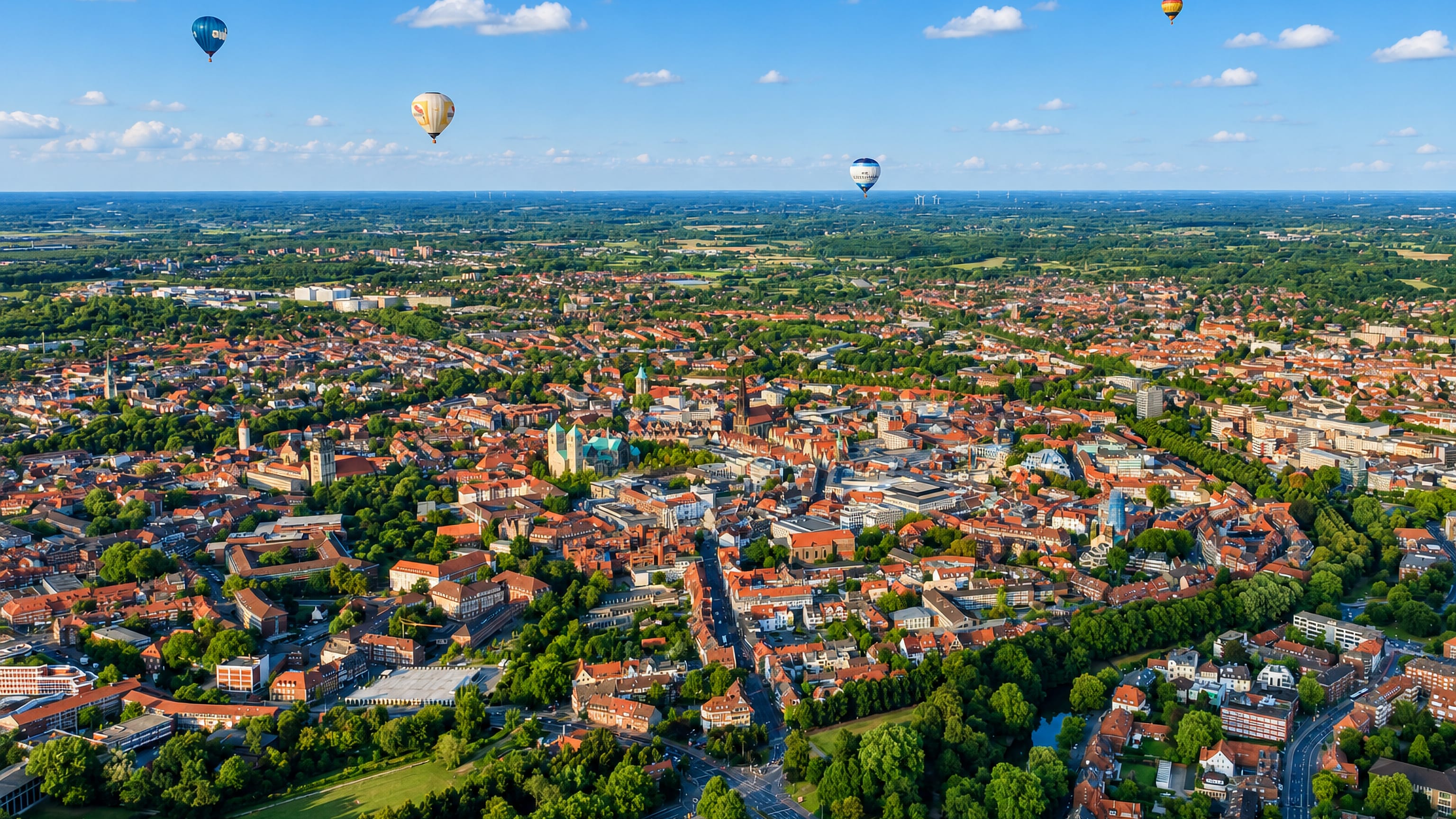
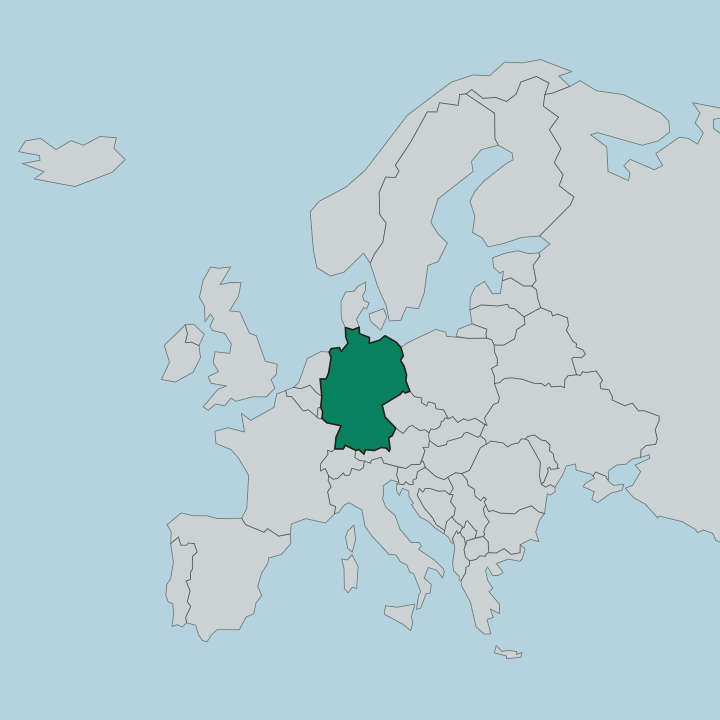
Germany · Nordrhein-Westfalen
Where to Stay in Münster, Nordrhein-Westfalen
Historic capital of Westphalia and a signing place of the 1648 peace, Münster ranges from the St.-Paulus-Dom to the Mühlenhof Open-Air Museum.
Hotel links are affiliate links: booking through them may earn us a commission, at no extra cost to you. It never affects how places are ranked. How this works


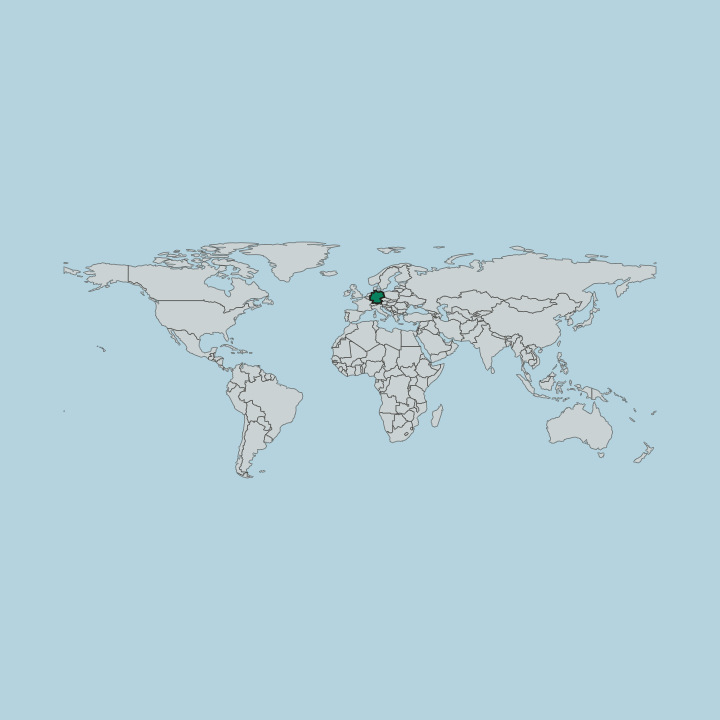
Where to stay in Münster
The right area depends on your trip — here's what each neighbourhood is best for.

 MünsterGermany
Sankt Mauritz
Sankt Mauritz is a district of Münster whose register runs to parish buildings: St. Margareta, St.-Konrad-Kirche, St. Pius and the Paal House.Where to stay → MünsterGermany
Roxel
Roxel is a Stadtteil in the Stadtbezirk West of Münster, first recorded in 1177 as curia Rukeslare, the A1 motorway dividing it from Altenroxel.Where to stay →Hotel links are affiliate links: booking through them may earn us a commission, at no extra cost to you. It never affects how places are ranked. How this works
Find hotels in Münster
Direct booking searches for these neighbourhoods.
Cathedral quarter
The St.-Paulus-Dom, the Westphalian State Museum of Art and Cultural History and the Bible Museum Münster fall into a single circuit from here, which is what a two-night visit to Münster wants.Find hotels in Cathedral quarterCyclists sleeping past the BuddenturmBeyond the Buddenturm
The Buddenturm marks where the older core gives out, and a bed on that side of Münster stays inside easy bicycle range of the Dominikanerkirche and the Clemenskirche. Lodging is scarce in this area; reserve in advance.Find hotels in Beyond the BuddenturmFamily days at the Münster ZooMünster Zoo side
The Münster Zoo, the Westphalian Museum of Natural History and the Westphalian Horse Museum fill a whole family day, and a room near them removes the return leg a cathedral-quarter bed would add. Beds are limited here, so book early.Find hotels in Münster Zoo sideHotel links are affiliate links: booking through them may earn us a commission, at no extra cost to you. It never affects how places are ranked. How this works
Things to do in Münster
Ranked by global recognition; descriptions from Wikidata (CC0).
Museums & Galleries
3- Villa Ten Hompel Heritage
- Geologisch-Paläontologisches Museum Münster Heritage
- Westphalian State Museum of Art and Cultural History
Churches & Religious Sites
8- St. Lamberti Heritage
- St.-Paulus-Dom Heritage
- Clemenskirche Heritage
- St. Mauritz Church (Münster) Heritage
- Apostelkirche (Münster) Heritage
Show 3 more →
- St. Petri (Münster) Heritage
- St. Martini (Münster) Heritage
- St. Servatius church Heritage
Landmarks & Notable Places
3- Buddenturm Heritage
- Townhouse tower in Münster Heritage
- Paal House
worth knowingacross 3 categories in Münster
About Münster
Peace was signed here.
What is Münster known for?
Münster and Osnabrück together hosted the Treaties of Westphalia that closed the Thirty Years' War in 1648, an event that fixed this city in European history far beyond its size. Bicycles are the other headline. Germany calls Münster its bicycle capital, and the St.-Paulus-Dom, the Westphalian State Museum of Art and Cultural History and the Kunstmuseum Pablo Picasso Münster all sit within reach of two wheels.
What are the main landmarks in Münster?
Churches carry the skyline. The St.-Paulus-Dom leads, with the Apostelkirche, the Dominikanerkirche, the Clemenskirche, the Herz-Jesu-Kirche and the Alte St.-Aegidii-Kirche behind it. Museums nearly outnumber them.
The Westphalian State Museum of Art and Cultural History, the Kunstmuseum Pablo Picasso Münster, the Museum of Lacquer Art, the Bible Museum Münster and the Westphalian Horse Museum each hold their own collections, and the Buddenturm and the Townhouse tower in Münster survive from an older register.
What is the history of Münster?
Reformation broke here first. Münster was the site of the Anabaptist rebellion during the Protestant Reformation, an episode that put the city into the front rank of a European religious upheaval. The cathedral predates that.
The St.-Paulus-Dom and the Alte St.-Aegidii-Kirche belong to the older church city, while the Buddenturm and the Townhouse tower in Münster carry the two tower names on the register. Then came 1648. Münster and Osnabrück were the two signing places of the Treaties of Westphalia, which ended the Thirty Years' War and gave the name of this region to a settlement studied ever since.
Westphalia had its capital here. The city is also the centre of a state district, and the regional name repeats across the Westphalian State Museum of Art and Cultural History, the Westphalian Museum of Natural History and the Westphalian Horse Museum. Not all of it is church.
The Kunstmuseum Pablo Picasso Münster, the Museum of Lacquer Art, the Bible Museum Münster, the City Museum of Münster and the Geologisch-Paläontologisches Museum Münster give the city five collections that answer to nothing on the parish register. Villa Ten Hompel joins them. So does the Mühlenhof Open-Air Museum, which sets rural Westphalian building against the Gottfried von Cappenberg Church and the rest of the parish stock.
Where is Münster?
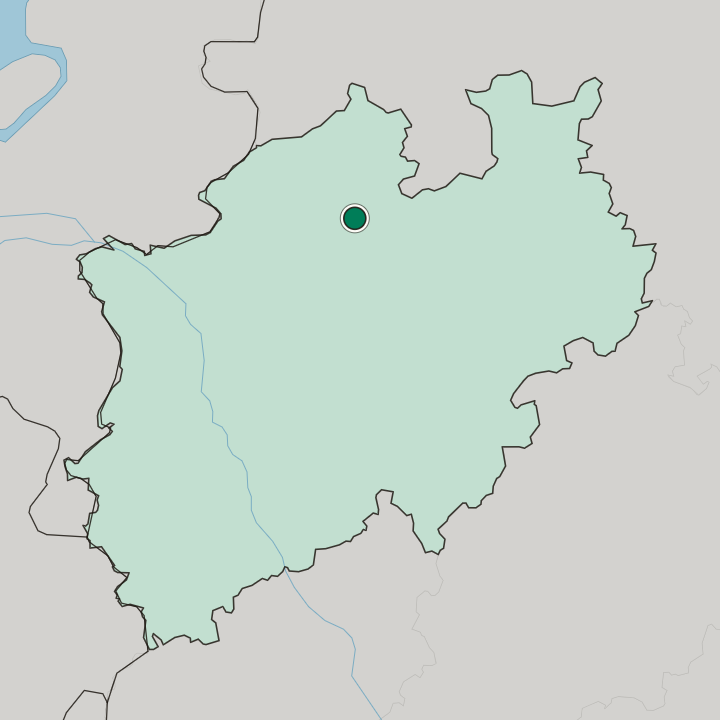
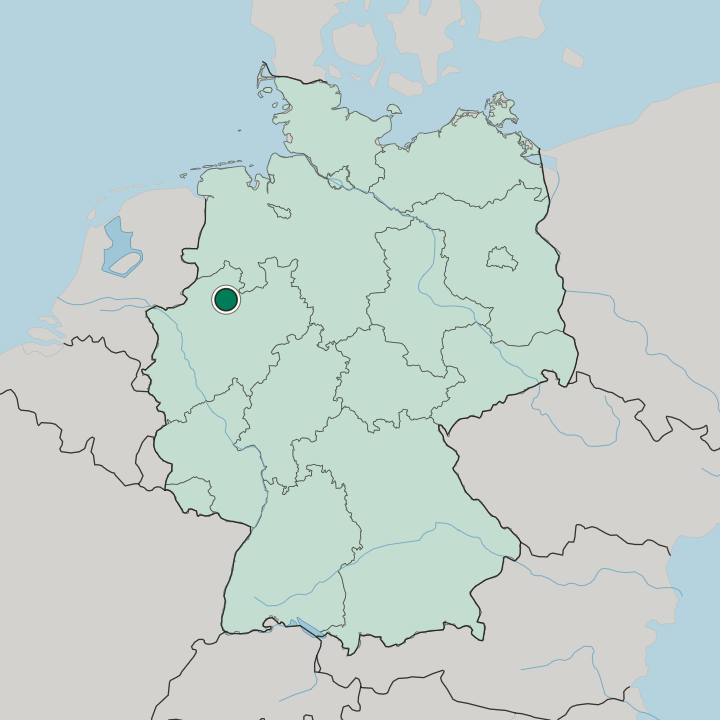
Münster covers about 303 square kilometres. That is a large municipal area for a city whose named sites, from the St.-Paulus-Dom and the Buddenturm to the Münster Zoo and the Mühlenhof Open-Air Museum, sit at very different points across it. Westphalia surrounds it.
The region takes its historic capital from here, and Osnabrück shared the 1648 signing with it.
What is the climate of Münster?
Bicycles set the test. A temperate year over Westphalia leaves few weeks when the ride from the St.-Paulus-Dom out to the Mühlenhof Open-Air Museum is genuinely unpleasant, which is part of why the city keeps its cycling name. Wet spells arrive anyway.
The Museum of Lacquer Art and the Bible Museum Münster are the answer to those.
How do you get to Münster?
Two wheels beat four here. Germany's bicycle capital hands arrivals a way to cross 303 square kilometres without a car, and the St.-Paulus-Dom, the Buddenturm and the Westphalian State Museum of Art and Cultural History all fall within that range. Osnabrück is the twin.
The two cities shared the 1648 signing, which is why their names appear together in every account of the Treaties of Westphalia.
Common questions
What is the best area to stay in Münster?
Cathedral quarter: Walkers based at the St.-Paulus-Dom. Beyond the Buddenturm: Cyclists sleeping past the Buddenturm. Münster Zoo side: Family days at the Münster Zoo.
Good for
More cities in Nordrhein-Westfalen
Updated October 2026