Germany · Nordrhein-Westfalen
Where to Stay in Bad Salzuflen, Nordrhein-Westfalen
Bad Salzuflen is a thermal spa town in the Lippe district of North Rhine-Westphalia, built on salt, with brine still running through its Gradierwerk.
Hotel links are affiliate links: booking through them may earn us a commission, at no extra cost to you. It never affects how places are ranked. How this works


Where to stay in Bad Salzuflen
Where visitors usually base themselves, and why.
The beds cluster around the Gradierwerk Bad Salzuflen and the old streets by the Stadtkirche. This is a spa town first, so the houses expect guests who stay a week rather than a night, and rooms near the Historical townhall and Haus Backs put the whole old centre within a slow walk. Quiet is part of the offer.
Anyone here for the brine air will want the Gradierwerk within a few minutes rather than a drive, since the point of the place is being able to walk out to it twice a day. Wüsten and the outer villages are the other choice. Beds there stand among farmland with the Evangelische Kirche Wüsten for a landmark, and they suit drivers who want space and a short run to the Tierpark Herford or out into the Lippe district.
Nights are darker out there. The Katzenturm, the Stumpfer Turm and the Kilianskirche stay in the middle, so anyone who came for the old town rather than the fields should keep to the centre. Book early for the spa season.
The Salt maker and the Rudolph-Brandes-Obelisk are both a short walk from the centre's houses.
Find hotels in Bad Salzuflen
Direct booking searches for these neighbourhoods.
The old centre by the Stadtkirche
Old streets between the Stadtkirche and the Historical townhallFind hotels in The old centre by the StadtkircheLong stays taking the brine air twice a dayAround the Gradierwerk
The salt air blowing off the Gradierwerk Bad SalzuflenFind hotels in Around the GradierwerkDrivers wanting farmland and a run to the Tierpark HerfordWüsten and the outer villages
Farm country around the Evangelische Kirche Wüsten. Beds are limited here, so book early.Find hotels in Wüsten and the outer villagesHotel links are affiliate links: booking through them may earn us a commission, at no extra cost to you. It never affects how places are ranked. How this works
Things to do in Bad Salzuflen
Ranked by global recognition; descriptions from Wikidata (CC0).
Churches & Religious Sites
4- Kilianskirche Heritage
- Erlöserkirche (Bad Salzuflen) Heritage
- Stadtkirche Heritage
- Evangelische Kirche Wüsten Heritage
Castles & Historic Sites
3- Bauernburg Schwaghof Heritage
- Rudolph-Brandes-Obelisk Heritage
- Burg Nyggenborch
Landmarks & Notable Places
3- Katzenturm Heritage
- Stumpfer Turm Heritage
- Windmühlenstumpf Heritage
worth knowingacross 3 categories in Bad Salzuflen
About Bad Salzuflen
What is Bad Salzuflen known for?
The Gradierwerk Bad Salzuflen still runs brine down its long face, and the salt air around it is why the town carries Bad in its name and works as a thermal spa of the Lippe district. A figure called Salt maker stands for the trade. Old towers survive.
The Katzenturm and the Stumpfer Turm remain from the town's defences, and the Historical townhall and Haus Backs keep the frontages that a spa town learned to look after.
What are the main landmarks in Bad Salzuflen?
Two towers and a stump. The Katzenturm and the Stumpfer Turm stand from the old defences, the Windmühlenstumpf is what a mill left behind, and Burg Nyggenborch and the Bauernburg Schwaghof carry the names of older strongholds. Churches divide the parishes: the Stadtkirche, the Kilianskirche, the Erlöserkirche and the Evangelische Kirche Wüsten.
The Rudolph-Brandes-Obelisk and the Salt maker stand as the town's own monuments, with Haus Gießenbier and Haus Backs among its named houses. The Tierpark Herford is close by.
What is the history of Bad Salzuflen?
Salt came out of the ground here long before the spa did. The Salt maker figure stands for generations of work at the pans, and the Gradierwerk Bad Salzuflen is the surviving machine of that trade, a long wall down which brine was run to concentrate it. Defences came with the wealth.
Burg Nyggenborch and the Bauernburg Schwaghof held the country around, while the Katzenturm and the Stumpfer Turm belonged to the town's own walls. The Stadtkirche and the Kilianskirche served the parishes, and merchants' houses such as Haus Gießenbier and Haus Backs went up on the streets between them. The spa changed the town's business.
Bathing and breathing the brine turned Bad Salzuflen from a salt works into a thermal resort of the Lippe district, and the Bad in the name records that change more plainly than any document. The Rudolph-Brandes-Obelisk carries a name the town kept. Outlying villages joined it.
Wüsten kept its own Evangelische Kirche, the Erlöserkirche took a later parish, and the Windmühlenstumpf and the Historical townhall stayed on as the older working town's leftovers. Visitors still walk the Gradierwerk for the air.
Where is Bad Salzuflen?
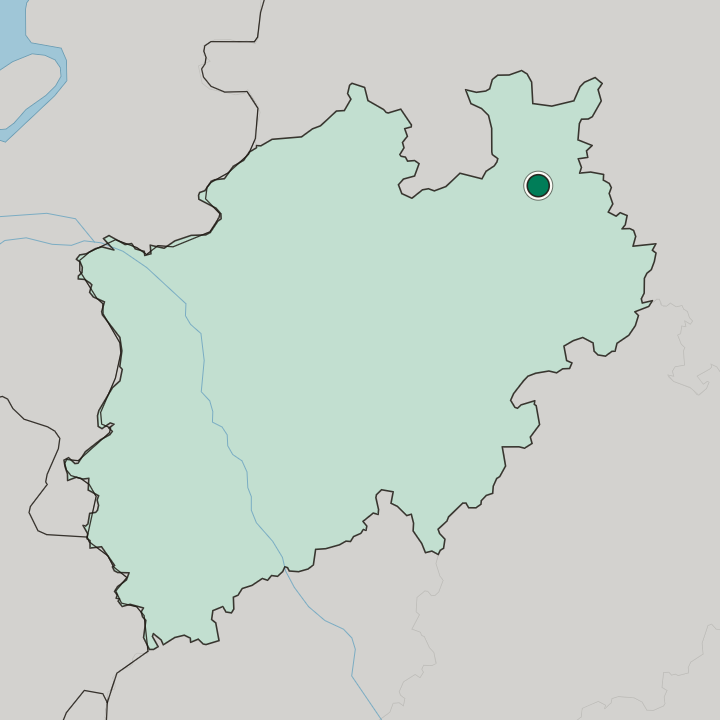
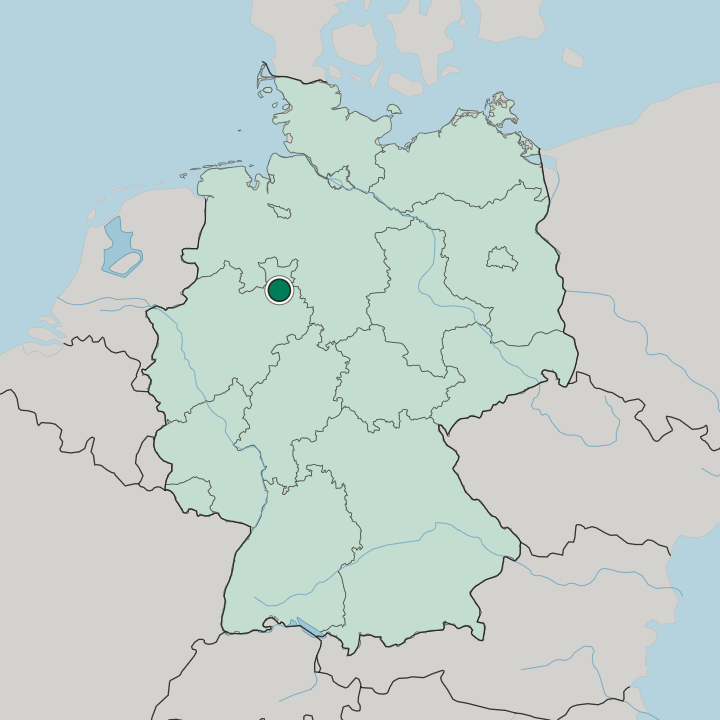
Bad Salzuflen belongs to the Lippe district of North Rhine-Westphalia. The town's ground covers far more than its centre, taking in outlying villages such as Wüsten with its own Evangelische Kirche. Brine underlies all of it, drawn up for the salt pans first and for the baths afterwards, which is why the Gradierwerk Bad Salzuflen stands where it does rather than anywhere else.
The Tierpark Herford is not far.
What is the climate of Bad Salzuflen?
Mild and wet describes most of the year in the Lippe district, with cloud arriving off the west, rain spread through every season, and neither the winters nor the summers reaching far in either direction. Frost is short-lived. That steadiness suits the Gradierwerk Bad Salzuflen, which needs open air rather than hard frost, and it suits a spa season stretched across much of the year.
Bring rain gear in any season.
How do you get to Bad Salzuflen?
Spa traffic sets the rhythm of arrivals. People come to Bad Salzuflen for the baths and the Gradierwerk rather than to pass through, so the approaches are those of a resort rather than a junction. Wüsten and the other outlying villages come first, and the centre with the Stadtkirche and the Historical townhall only afterwards.
The Katzenturm marks the old edge.
Common questions
What is the best area to stay in Bad Salzuflen?
The old centre by the Stadtkirche: Spa guests who want the Gradierwerk on foot. Around the Gradierwerk: Long stays taking the brine air twice a day. Wüsten and the outer villages: Drivers wanting farmland and a run to the Tierpark Herford.
Good for
More cities in Nordrhein-Westfalen
Updated October 2026