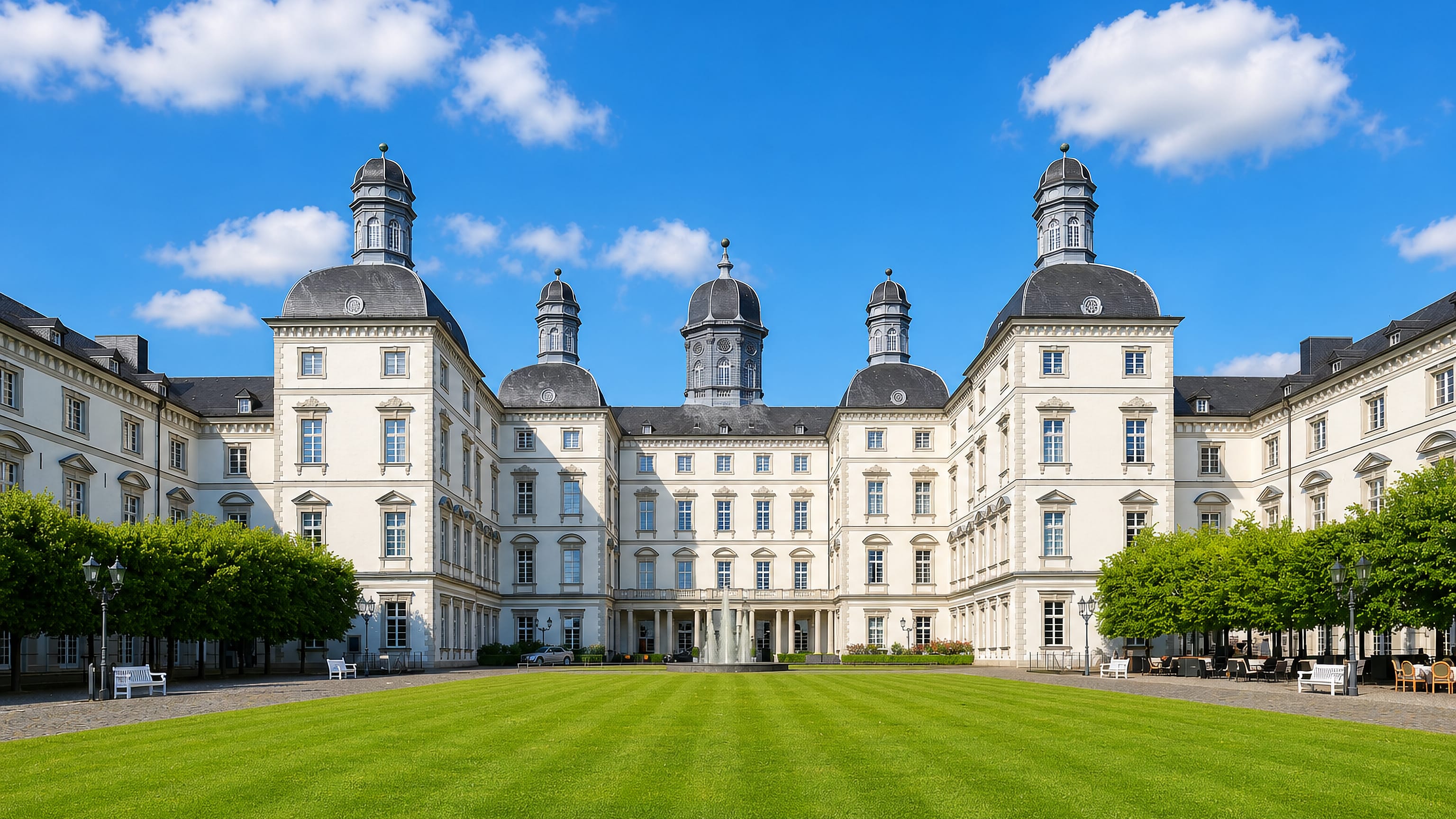
Germany · Nordrhein-Westfalen
Where to Stay in Bergisch Gladbach, Nordrhein-Westfalen
Bergisch Gladbach is the seat of the Rheinisch-Bergischer Kreis, a Cologne/Bonn Region city of castles, parish churches and old paper mills.
Hotel links are affiliate links: booking through them may earn us a commission, at no extra cost to you. It never affects how places are ranked. How this works


Where to stay in Bergisch Gladbach
How the choice of base plays out on the ground.
Two centres split the choice. Gladbach holds the working middle of the city, where Villa Zanders, the Bergisches Museum für Bergbau, Handwerk und Gewerbe and the Kindergartenmuseum Nordrhein-Westfalen sit among the shops and offices of the valley floor. Most beds and most bus routes end up there as well, which makes it the default for a first stay, for anyone without a car, and for anyone whose day starts early.
Rooms there are plain and practical. Bensberg is the other pole, gathered below Burg Bensberg and the Protestant Church Bensberg, on streets that read more like a small town than a quarter of the Rheinisch-Bergischer Kreis seat. The Kirche zum Heilsbrunnen serves Hebborn, one of the smaller quarters that ring the two centres, and Kippekausen has its own Evangelische Kirche on the same pattern.
Beyond them the valleys take over. The Papiermühle Alte Dombach lies out along its own valley, Erdenburg and Burg Zweiffel keep to the outer edges of the built-up area, and the Tram Museum Thielenbruch marks another rim, ground with few hotels but reachable from either centre. If you want the castle and a small-town evening, take Bensberg; if you want the shops, the museums and the bus links, take the Gladbach side.
Neither is far from the other, and the city that holds both is compact enough that the choice is about character rather than access.
Find hotels in Bergisch Gladbach
Direct booking searches for these neighbourhoods.
Gladbach centre
Villa Zanders and the Bergisches Museum sit on the same valley floor as the shopsFind hotels in Gladbach centreEvenings under Burg Bensberg rather than in the shopping streetsBensberg
Burg Bensberg and the Protestant Church Bensberg give this quarter its shapeFind hotels in BensbergWalkers aiming at the Papiermühle Alte DombachAlte Dombach
The old paper-mill valley, out beyond both of the city's centres. Lodging is scarce in this area; reserve in advance.Find hotels in Alte DombachHotel links are affiliate links: booking through them may earn us a commission, at no extra cost to you. It never affects how places are ranked. How this works
Things to do in Bergisch Gladbach
Ranked by global recognition; descriptions from Wikidata (CC0).
Museums & Galleries
4- Villa Zanders Heritage
- Papiermühle Alte Dombach Heritage
- Tram Museum Thielenbruch Heritage
- Bergisches Museum für Bergbau, Handwerk und Gewerbe Heritage
Churches & Religious Sites
8- St. Nikolaus Heritage
- St. Laurentius Heritage
- Evangelische Kirche Kippekausen Heritage
- St. Clemens Heritage
- St. Antonius Abbas Heritage
Show 3 more →
- Old Parish Church Heritage
- Gnadenkirche (Bergisch Gladbach) Heritage
- Malteser Komturei Heritage
Castles & Historic Sites
3- Burg Bensberg Heritage
- Erdenburg Heritage
- Burg Zweiffel Heritage
worth knowingacross 3 categories in Bergisch Gladbach
About Bergisch Gladbach
Castles come first here.
What is Bergisch Gladbach known for?
Burg Bensberg stands over the Bensberg quarter, Burg Zweiffel keeps its own site, and Erdenburg names a third fortified point in the same city. On the Gladbach side, Villa Zanders holds one landmark address, the Papiermühle Alte Dombach records the paper trade of the valley, and the Bergisches Museum für Bergbau, Handwerk und Gewerbe sets out mining and the crafts that went with it. The Kindergartenmuseum Nordrhein-Westfalen is rarer still.
What are the main landmarks in Bergisch Gladbach?
Church buildings make up most of the list. Saint Engelbert Church, the Gnadenkirche and the Evangelische Kirche Kippekausen stand in different quarters, while the Kirche zum Heilsbrunnen serves Hebborn and the Protestant Church Bensberg serves the same quarter as Burg Bensberg. One is simply the Old Parish Church.
Malteser Komturei recalls the order that once held property in the valley, and the Heimatdenkmal Bergisch Gladbach, the Max-Bruch-Denkmal and the Ferdinand-Stucker-Denkmal mark three separate acts of remembrance.
What is the history of Bergisch Gladbach?
Bergisch Gladbach comes to the record without a charter date. What the city has instead is a sequence of buildings, and the earliest of them are defensive: Erdenburg, whose name keeps the earth-and-timber idea of a fort, and then Burg Zweiffel and Burg Bensberg on their separate sites. Malteser Komturei carries the name of the knightly order that once held property here, and it sits among church names that mark how the valley filled in, the Old Parish Church and Saint Engelbert Church and Zum Frieden Gottes among them.
Churches came in waves. Then came paper. The Papiermühle Alte Dombach preserves a mill of the kind that worked the water of these valleys, and the Bergisches Museum für Bergbau, Handwerk und Gewerbe sets the same story beside mining and the trades that grew around it.
The city is the seat of the Rheinisch-Bergischer Kreis, inside the Cologne/Bonn Region of Nordrhein-Westfalen, and Villa Zanders remains one of the addresses that carries that older civic weight. Memory arrived later: the Heimatdenkmal Bergisch Gladbach, the Ferdinand-Stucker-Denkmal and the Max-Bruch-Denkmal each hold a name the city chose to keep. The Kindergartenmuseum Nordrhein-Westfalen and the Tram Museum Thielenbruch keep two narrower histories, one of early schooling and one of the trams the museum keeps.
Where is Bergisch Gladbach?
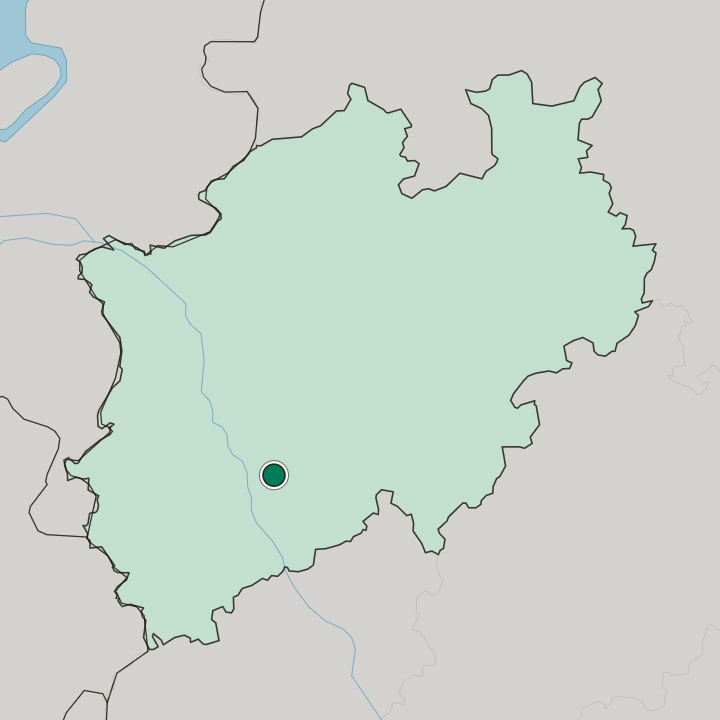
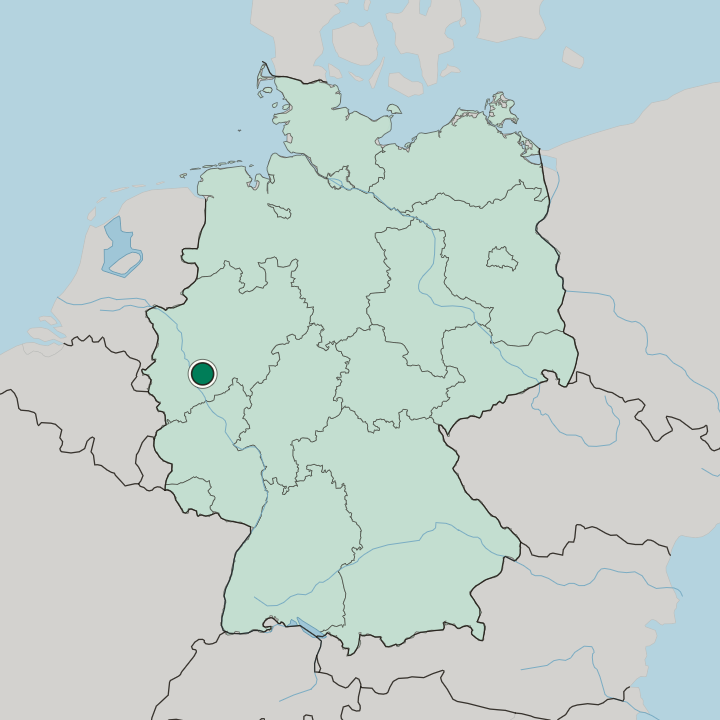
Boundaries here are administrative first. The city covers roughly 83 square kilometres inside Nordrhein-Westfalen, and it serves as the seat of the Rheinisch-Bergischer Kreis, which puts the district offices and the city offices on the same ground. Cologne is the larger neighbour, and the Cologne/Bonn Region takes in both.
Inside the boundary the settlement reads as a set of quarters rather than a single centre: Bensberg with its castle, Hebborn and Kippekausen with their own churches, and Thielenbruch out at the tram museum. Erdenburg marks another edge.
What is the climate of Bergisch Gladbach?
Cloud sits over Bergisch Gladbach most days. The temperate band that covers the Cologne/Bonn Region gives Bergisch Gladbach damp, changeable weather in every season, with cloud and drizzle far more common than either hard frost or real heat. Winter is a matter of damp rather than depth of cold.
The seasons show most on the churchyards and the castle grounds, where the Old Parish Church, Burg Bensberg and Burg Zweiffel each look different under leaf and under bare branches.
How do you get to Bergisch Gladbach?
Cologne does the connecting. Bergisch Gladbach sits inside the Cologne/Bonn Region and its long-distance connections run through that city, so most arrivals come by way of Cologne rather than direct. Thielenbruch keeps the old tram connection in museum form.
Within the city, the two centres, the Gladbach side around Villa Zanders and Bensberg under its castle, are linked by local buses, and the Rheinisch-Bergischer Kreis roads carry the rest of the traffic between the outlying quarters. Erdenburg and the Papiermühle Alte Dombach need a car or a walk.
Common questions
What is the best area to stay in Bergisch Gladbach?
Gladbach centre: First stays wanting the Kindergartenmuseum Nordrhein-Westfalen and the bus links. Bensberg: Evenings under Burg Bensberg rather than in the shopping streets. Alte Dombach: Walkers aiming at the Papiermühle Alte Dombach.
Good for
More cities in Nordrhein-Westfalen
Updated October 2026