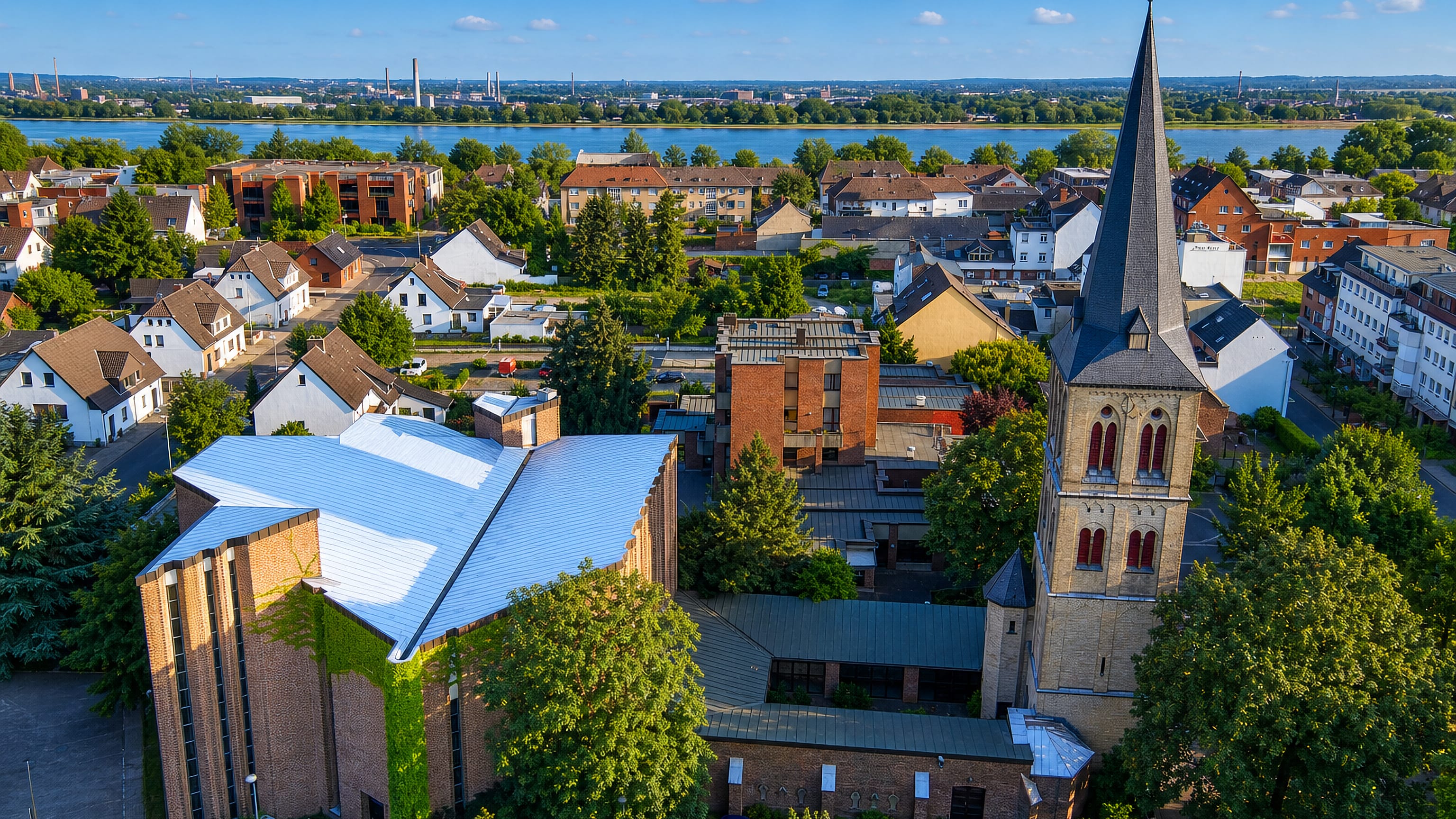
Germany · Nordrhein-Westfalen
Where to Stay in Dormagen, Nordrhein-Westfalen
Zons and Burg Friedestrom hold the old ground of Dormagen, a Rhein-Kreis Neuss town whose record reaches back to Roman Durnomagus.
Hotel links are affiliate links: booking through them may earn us a commission, at no extra cost to you. It never affects how places are ranked. How this works


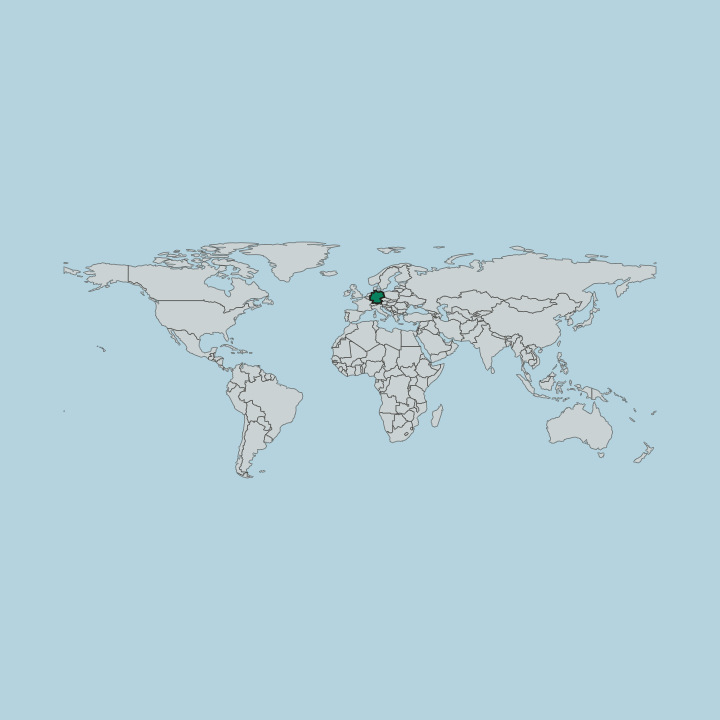
Where to stay in Dormagen
Where visitors usually base themselves, and why.
Zons decides it. The walled quarter around Burg Friedestrom is the one part of Dormagen built for wandering, and a room inside it leaves the Kreismuseum Zons and the Church of Peace within a few streets. The rest is spread thin.
Dormagen covers about 85 square kilometres of the Rhein-Kreis Neuss, and its districts sit far enough apart that the choice of quarter matters more than the choice of street. Hackenbroich points the other way. That district appears on the record as a Samian ware discovery site, and a bed out there sits closer to the Wildpark Tannenbusch than to anything walled or medieval.
Families often prefer it. The Wildpark Tannenbusch gives the municipality its open green ground, and a stay beside it trades the lanes of Zons for space, parking and an easy start to a day outdoors. Gasthof Zur Post names the older trade.
The inn stands in Zons among the named buildings of the town, and the walled quarter around it is where a short visit does best. Two nights are enough. Beds in the Dormagen middle suit errands and the Christuskirche, while Hackenbroich suits the Wildpark Tannenbusch and a stay shaped around a car.
Find hotels in Dormagen
Direct booking searches for these neighbourhoods.
Zons
Burg Friedestrom, the Kreismuseum Zons and the Church of Peace stand inside one walled quarter, the corner of Dormagen laid out for wandering. Beds are limited here, so book early.Find hotels in ZonsErrands near the Christuskirche and the Phono- und RadiomuseumDormagen middle
The Christuskirche and the Phono- und Radiomuseum sit in the working middle of Dormagen, which carries the shops and the daily business of the town.Find hotels in Dormagen middleGreen mornings at the Wildpark TannenbuschHackenbroich and the Wildpark Tannenbusch
The Wildpark Tannenbusch and the Hackenbroich discovery site lie where the municipality turns to open ground, so beds there come with parking rather than walls. Rooms are few around here — worth securing early.Find hotels in Hackenbroich and the Wildpark TannenbuschHotel links are affiliate links: booking through them may earn us a commission, at no extra cost to you. It never affects how places are ranked. How this works
Things to do in Dormagen
Ranked by global recognition; descriptions from Wikidata (CC0).
Museums & Galleries
2- Kreismuseum Zons
- Archäologisches Museum Haus Bürgel
Churches & Religious Sites
8- St. Martinus Heritage
- St. Michael (Dormagen) Heritage
- St. Gereon Heritage
- St. Katharina Heritage
- Marienkapelle Heritage
Show 3 more →
- Holy Trinity Chapel Heritage
- Church of Peace (Zons) Heritage
- Protestant Church Heritage
Castles & Historic Sites
3- Burg Friedestrom Heritage
- Durnomagus Heritage
- Dormagen (Samian Ware Discovery Site)
Landmarks & Notable Places
1- Gasthof Zur Post (Zons) Heritage
worth knowingacross 4 categories in Dormagen
About Dormagen
Two castles stand here.
What is Dormagen known for?
Burg Friedestrom sits in the walled quarter of Zons, and Burg Worringen appears on the same list of named sites, which gives the municipality two fortified places rather than one. Three museums take the rest. Kreismuseum Zons holds the district collection, the Phono- und Radiomuseum keeps sound equipment, and the Archäologisches Museum Haus Bürgel sets out what the ground around Dormagen has produced.
What are the main landmarks in Dormagen?
Zons holds the densest cluster. Burg Friedestrom anchors the walled quarter, with the Kreismuseum Zons, the Church of Peace and the Gasthof Zur Post all recorded within the same small compass. Elsewhere the list scatters.
Burg Worringen, the Marienkapelle, the Holy Trinity Chapel and the Christuskirche account for much of the older defensive and religious fabric, while the Franz Boehm Memorial and the ship Fiat Voluntas carry names from a far later stretch of the record.
What is the history of Dormagen?
Dormagen begins with Rome. Durnomagus is recorded here as the Roman name, and the Samian ware discovery sites at Dormagen and Hackenbroich mark where that period left its pottery in the ground. Two finds, two districts.
The Archäologisches Museum Haus Bürgel sets out the archaeological record of this stretch of the Rhein-Kreis Neuss. Fortification followed. Burg Friedestrom rose at Zons and Burg Worringen appears on the same municipal list, two castle sites for one town, and the walls of Zons remain the clearest medieval fabric that Dormagen still holds.
Churches multiplied around them. The Marienkapelle, the Holy Trinity Chapel and the Church of Peace at Zons each hold a place on the register, while the Christuskirche and the Protestant Church record the later Protestant presence in the town. Trade left a house.
Gasthof Zur Post survives at Zons as a named inn, the kind of building that marks a stopping place on a road rather than a monument to anyone. Later memory has its markers. The Franz Boehm Memorial commemorates Franz Boehm, and the ship Fiat Voluntas, dating from 1937, joins the Wildpark Tannenbusch and the Phono- und Radiomuseum on a list that runs from Roman pottery to the twentieth century.
Where is Dormagen?
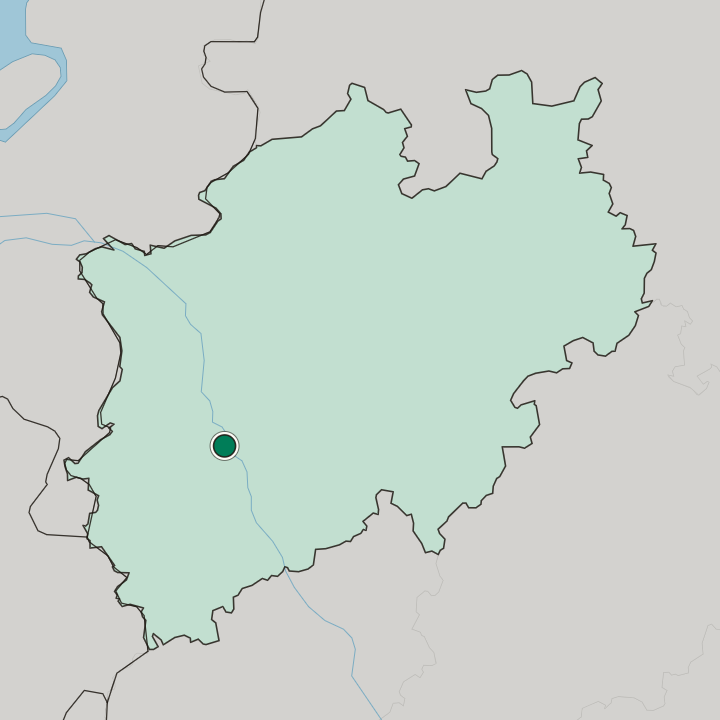
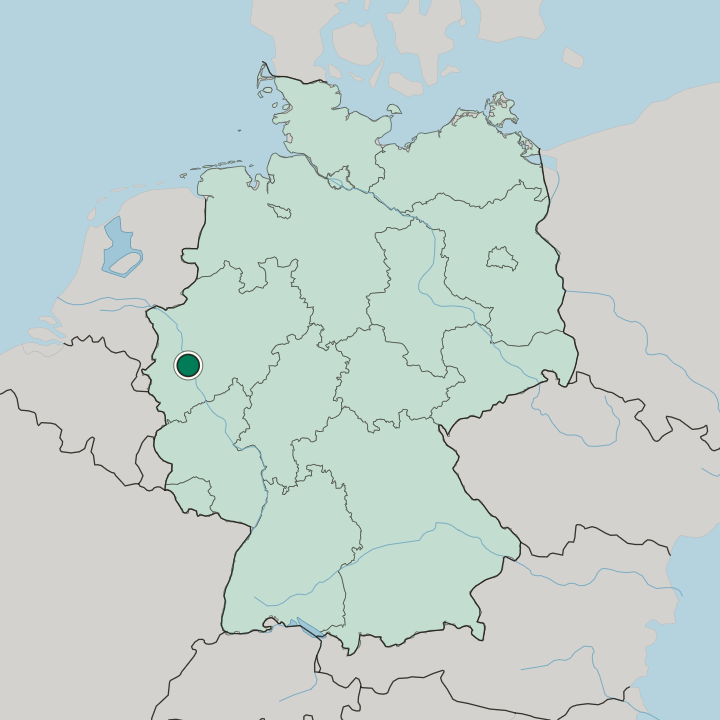
Dormagen spreads over about 85 square kilometres. The municipality belongs to the Rhein-Kreis Neuss in Nordrhein-Westfalen, and its named quarters, Zons and Hackenbroich among them, sit far enough apart that each keeps a centre of its own. Green ground breaks it up.
The Wildpark Tannenbusch takes a share of that spread, and the walls of Zons enclose a quarter small enough to cross on foot in minutes.
What is the climate of Dormagen?
Temperate weather rules the year. Nothing in the Rhein-Kreis Neuss calendar swings far, so a circuit of the walls at Zons or a morning in the Wildpark Tannenbusch works in most months rather than a chosen few. Only the rain refuses a schedule.
Showers arrive in any season here, which argues for indoor stops such as the Kreismuseum Zons and the Phono- und Radiomuseum whenever a day outdoors in Dormagen goes wrong.
How do you get to Dormagen?
Two centres compete for an arrival. The working middle of Dormagen carries the Christuskirche and the everyday business of the town, while the walled quarter of Zons sits apart and repays the extra distance. Distances need wheels.
Reaching the Wildpark Tannenbusch, Hackenbroich or the Archäologisches Museum Haus Bürgel from the middle of the municipality means a drive rather than a walk, because Dormagen sets its districts wide apart.
Common questions
What is the best area to stay in Dormagen?
Zons: Weekends inside the walls by Burg Friedestrom. Dormagen middle: Errands near the Christuskirche and the Phono- und Radiomuseum. Hackenbroich and the Wildpark Tannenbusch: Green mornings at the Wildpark Tannenbusch.
Good for
More cities in Nordrhein-Westfalen
Updated October 2026