Germany · Nordrhein-Westfalen
Where to Stay in Dorsten, Nordrhein-Westfalen
The Jewish Museum of Westphalia sits in Dorsten, a Recklinghausen-district town whose record runs from the Römerlager Holsterhausen onward.
Hotel links are affiliate links: booking through them may earn us a commission, at no extra cost to you. It never affects how places are ranked. How this works


Where to stay in Dorsten
One neighbourhood here has its own guide — here's what it is best for.
 DorstenGermany
Altendorf-Ulfkotte
Altendorf-Ulfkotte joins two names in one quarter of Dorsten, with Heilig Kreuz its single listed building. One church, two halves.Where to stay →Hotel links are affiliate links: booking through them may earn us a commission, at no extra cost to you. It never affects how places are ranked. How this works
Find hotels in Dorsten
Direct booking searches for these neighbourhoods.
The Dorsten core
The Jewish Museum of Westphalia, the Franziskanerkloster Dorsten and the Stadtkrone stand inside one walkable middle, so central Dorsten asks for no car.Find hotels in The Dorsten coreVisits built around the Römerlager HolsterhausenHolsterhausen
The Römerlager Holsterhausen lies well clear of the Dorsten core, and beds on that side favour Roman ground over the convents and the museum. Rooms are few around here — worth securing early.Find hotels in HolsterhausenFamilies with an afternoon at Atlantis DorstenBy Atlantis Dorsten and the Planetenufer
Atlantis Dorsten and the Planetenufer Dorsten give this side of the town its family ground, an easy walk that asks nothing of a sightseeing plan. Lodging is scarce in this area; reserve in advance.Find hotels in By Atlantis Dorsten and the PlanetenuferHotel links are affiliate links: booking through them may earn us a commission, at no extra cost to you. It never affects how places are ranked. How this works
Things to do in Dorsten
Ranked by global recognition; descriptions from Wikidata (CC0).
Churches & Religious Sites
7- St. Agatha Heritage
- St. Josef Heritage
- St. Antonius neu Heritage
- Heilig Kreuz Heritage
- St. Bonifatius Heritage
Show 2 more →
- Johanneskirche Heritage
- St. Johannes Heritage
Castles & Historic Sites
1- Römerlager Holsterhausen Heritage
worth knowingacross 2 categories in Dorsten
About Dorsten
One museum carries the name.
What is Dorsten known for?
The Jewish Museum of Westphalia is the institution that brings people to Dorsten from well beyond the Recklinghausen district, and it stands apart from everything else on the town's register. Two convents survive. Franziskanerkloster Dorsten and Ursulinenkloster Dorsten both hold their places on that list, while the Römerlager Holsterhausen adds a Roman camp to a record that is otherwise medieval and later.
What are the main landmarks in Dorsten?
Churches dominate the register here. Seven of the named sites are places of worship, the Johanneskirche among them, and Franziskanerkloster Dorsten and Ursulinenkloster Dorsten add two religious houses to that count. The rest is varied.
The Jewish Museum of Westphalia holds a collection that reaches past the town, the Römerlager Holsterhausen marks the Roman camp, and the Stadtkrone, Atlantis Dorsten and the Planetenufer Dorsten round out a short list of newer names.
What is the history of Dorsten?
Rome camped at Holsterhausen. The Römerlager Holsterhausen is the oldest entry on the Dorsten register, a Roman camp whose ground lies apart from the medieval core the town later grew around. Nothing else is that old.
Every other named site belongs to the centuries of church building and monastic foundation that came after, and the gap between the camp and the convents is the widest in the whole record. Orders settled inside the town. Franziskanerkloster Dorsten and Ursulinenkloster Dorsten record two religious houses in one modest place, and the seven churches on the register show how thoroughly parish life divided the growing municipality.
The Johanneskirche stands among them. Between them these buildings account for most of what this Recklinghausen district town preserves from before the modern period. One museum answers a harder history.
The Jewish Museum of Westphalia keeps in Dorsten the record of Jewish life across Westphalia, and it is the site on the town's list that reaches furthest beyond local interest. Later additions are lighter. Stadtkrone, Atlantis Dorsten and the Planetenufer Dorsten belong to the newer town, names on the same register as the convents without sharing anything of their age.
Where is Dorsten?
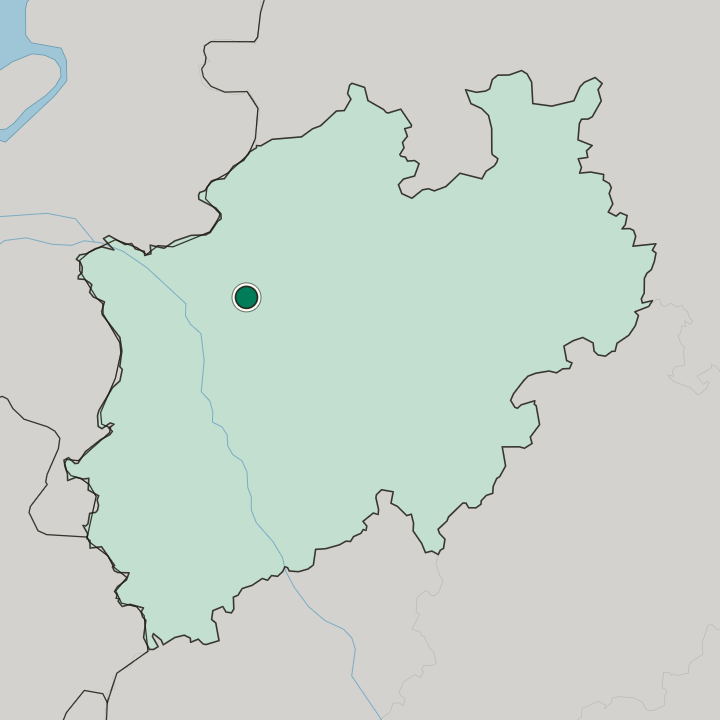
Dorsten covers about 171 square kilometres. That is a wide municipality for the Recklinghausen district, and the ground runs from the built middle out to Holsterhausen, where the Roman camp lies well past the last of the town's streets. The Planetenufer follows a bank.
Distances inside the municipality are large enough that the Johanneskirche and the Römerlager Holsterhausen belong to different kinds of day, one spent on foot in the old streets and the other out in open country.
What is the climate of Dorsten?
Temperate air holds the year. Winters and summers in this part of Nordrhein-Westfalen stay within a narrow band, so the walk along the Planetenufer Dorsten is rarely shut down by weather. Rain is routine.
A wet afternoon sends visitors to the Jewish Museum of Westphalia or to Atlantis Dorsten, both of which work as well in November as in July, which is more than the Römerlager Holsterhausen can offer.
How do you get to Dorsten?
Arrivals aim for the core. The middle of Dorsten keeps the Stadtkrone, the Franziskanerkloster Dorsten and the Jewish Museum of Westphalia within a few streets, so a first hour on foot covers most of what the town has named. Holsterhausen is another matter.
Reaching the Römerlager Holsterhausen or the far edges of this Recklinghausen district municipality means wheels, since 171 square kilometres do not fold into a walk.
Common questions
What is the best area to stay in Dorsten?
The Dorsten core: One-night stays by the Stadtkrone and the Franziskanerkloster Dorsten. Holsterhausen: Visits built around the Römerlager Holsterhausen. By Atlantis Dorsten and the Planetenufer: Families with an afternoon at Atlantis Dorsten.
Good for
More cities in Nordrhein-Westfalen
Updated October 2026