Germany · Nordrhein-Westfalen
Where to Stay in Grevenbroich, Nordrhein-Westfalen
Grevenbroich spreads over a hundred square kilometres of Nordrhein-Westfalen, holding Kloster Grevenbroich, two castles and the Wildfreigehege Bend.
Hotel links are affiliate links: booking through them may earn us a commission, at no extra cost to you. It never affects how places are ranked. How this works


Where to stay in Grevenbroich
The practical side of choosing where to sleep.
Kloster Grevenbroich and the Museum Villa Erckens both belong to the built-up middle, and a room there keeps the town's two indoor stops and its shops within the same short walk. That suits a short visit. St Martin's Church and the Erckens-Kapelle sit on the same side of things, so a central base covers most of what anyone walks to.
Families point elsewhere. The Wildfreigehege Bend is the reason, and a stay closer to Bend puts the wildlife enclosure at the start of the day rather than at the end of a drive. The villages are the third answer.
Wevelinghoven and Noithausen each keep a castle, the Burg Wevelinghoven and the Burg Noithausen, and a room in either trades the shops for a quieter street and a shorter list of options after dark. Bedburdyck, Barrenstein and Welchenberg are quieter again. The town is made up of some 30 districts, so a car turns the whole municipality into one base rather than forcing a choice between quarters.
Away from the centre, rooms grow scarce. Anyone arriving without a booking does better aiming at Grevenbroich itself than at Judenrode or Welchenberg.
Find hotels in Grevenbroich
Direct booking searches for these neighbourhoods.
The centre
Kloster Grevenbroich, the Museum Villa Erckens and St Martin's Church share the built-up middleFind hotels in The centreFamilies building the day around the Wildfreigehege BendBend
The Wildfreigehege Bend is the only wildlife enclosure on the municipal list. Lodging is scarce in this area; reserve in advance.Find hotels in BendQuieter village nights beside Burg WevelinghovenWevelinghoven
Burg Wevelinghoven anchors a village set well clear of the Grevenbroich shops. Lodging is scarce in this area; reserve in advance.Find hotels in WevelinghovenHotel links are affiliate links: booking through them may earn us a commission, at no extra cost to you. It never affects how places are ranked. How this works
Things to do in Grevenbroich
Ranked by global recognition; descriptions from Wikidata (CC0).
Museums & Galleries
1- Museum Villa Erckens
Churches & Religious Sites
8- Kloster Grevenbroich Heritage
- St. Mariä Himmelfahrt Heritage
- St. Josef Heritage
- St. Stephanus Heritage
- St. Martinus (Bedburdyck) Heritage
Show 3 more →
- St. Georg Heritage
- St Martin's Church Heritage
- St. Nikolaus (Barrenstein) Heritage
Castles & Historic Sites
2- Burg Wevelinghoven Heritage
- Burg Noithausen Heritage
worth knowingacross 3 categories in Grevenbroich
About Grevenbroich
Twelve churches, two castles and one museum.
What is Grevenbroich known for?
Kloster Grevenbroich carries the town's own name, the Museum Villa Erckens occupies a villa rather than a purpose-built gallery, and the Wildfreigehege Bend adds a wildlife enclosure to a list otherwise made of stone. Burg Noithausen and Burg Wevelinghoven are the two castles, each attached to a village of its own.
What are the main landmarks in Grevenbroich?
Churches dominate the tally. Twelve of them are counted, running from the Church of St Cyriakus and St Martin's Church through to St. Mariä Himmelfahrt, which is as complete a parish inventory as a town this size produces. Three monastic houses stand behind them, the Kloster Grevenbroich, the Deutschordenshaus Judenrode and the Franziskanerterziarenkloster at Welchenberg, and the Museum Villa Erckens is the one museum on the whole list.
The Wildfreigehege Bend answers to none of those categories.
What is the history of Grevenbroich?
Religious houses set the pattern. Kloster Grevenbroich took the town's own name, the Deutschordenshaus Judenrode names its order outright, and a Franziskanerterziarenkloster stood at Welchenberg, which is three religious institutions inside one municipality. Two castles held the secular side, the Burg Noithausen and the Burg Wevelinghoven, each in a village that still carries the same name.
Parishes multiplied from there, and twelve church buildings ended up spread across Bedburdyck, Barrenstein and Welchenberg rather than concentrated in one centre. The Erckens name recurs. It sits on the Museum Villa Erckens and again on the Erckens-Kapelle, which is the kind of repetition that marks a family with the means to build both a house and a chapel.
The villa became the museum. That change put the town's own record inside a building the town's own history produced, which is a neater arrangement than most places manage. Wildfreigehege Bend belongs to a much later impulse, a wildlife enclosure opened for visitors rather than a foundation built for an order or a lord.
The first settlements in the Erft valley date from around 1300, the town is first mentioned in 1311, and in 1975 it absorbed Gustorf, Neurath, Frimmersdorf, Kapellen, Hemmerden, Wevelinghoven and Neukirchen.
Where is Grevenbroich?
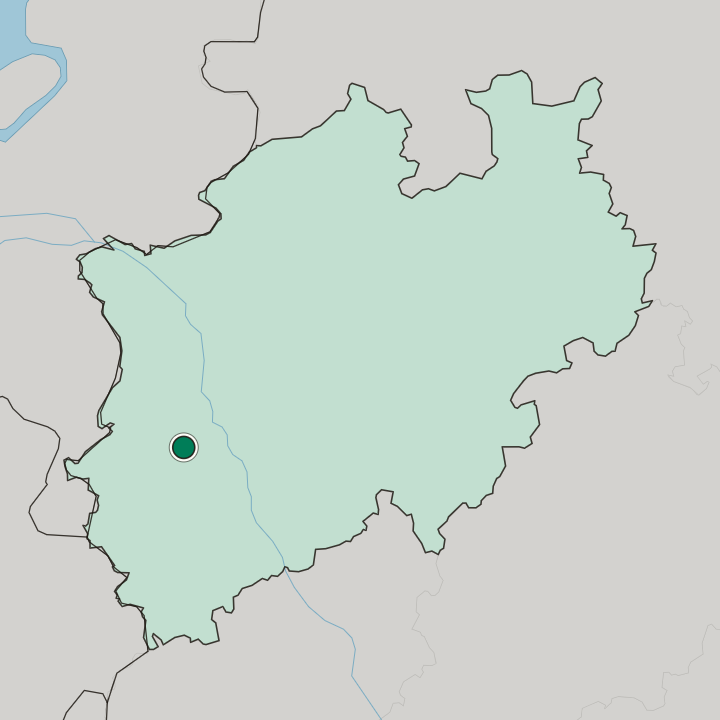
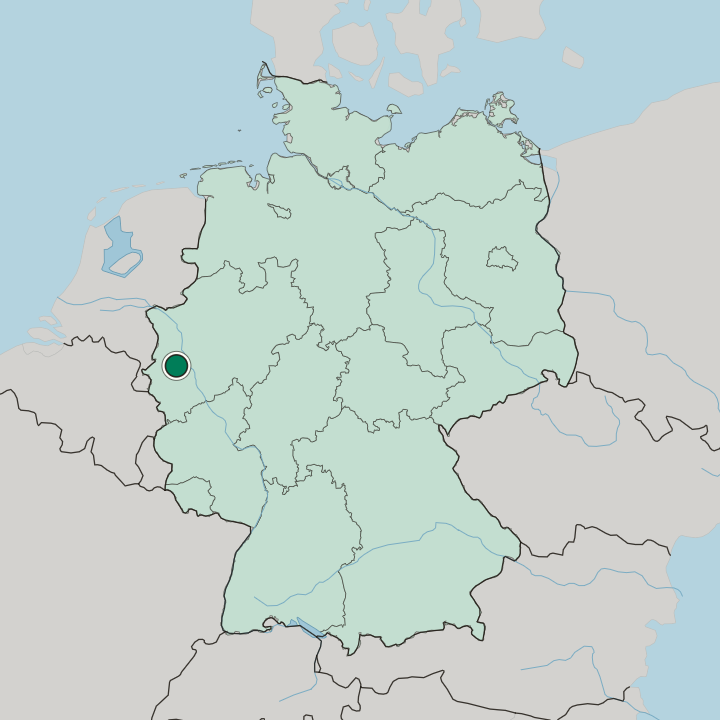
Grevenbroich runs to something over a hundred square kilometres, which is a lot of ground for one municipality, and the villages inside it do most of the work of filling that space. Bedburdyck and Barrenstein lie further out. Bend, Judenrode and Welchenberg fill in the rest of the map, and Nordrhein-Westfalen is the state the whole of it answers to.
What is the climate of Grevenbroich?
Grevenbroich gets ordinary weather. Open ground along the Erft gives nothing to funnel or trap the air, so the same temperate pattern runs through Bedburdyck, Wevelinghoven and the centre alike. Winters go grey and damp while summers stay moderate, and the Museum Villa Erckens takes care of a wet afternoon.
How do you get to Grevenbroich?
The centre is where the shops, Kloster Grevenbroich and the Museum Villa Erckens sit, so most arrivals aim at it before working outward to the villages that make up the rest. Bend needs a separate trip. The Wildfreigehege Bend, Burg Noithausen and Burg Wevelinghoven are spread across the municipality, so a car does more for a visit here than any single arrival point does.
Common questions
What is the best area to stay in Grevenbroich?
The centre: Short stays pairing Kloster Grevenbroich with the Museum Villa Erckens. Bend: Families building the day around the Wildfreigehege Bend. Wevelinghoven: Quieter village nights beside Burg Wevelinghoven.
Good for
More cities in Nordrhein-Westfalen
Updated October 2026