Germany · Nordrhein-Westfalen
Where to Stay in Gronau, Nordrhein-Westfalen
Gronau is a Nordrhein-Westfalen town of two museums, the rock'n'popmuseum and the Drilandmuseum, with the Alter Rathausturm marking its old core.
Hotel links are affiliate links: booking through them may earn us a commission, at no extra cost to you. It never affects how places are ranked. How this works


Where to stay in Gronau
Where visitors usually base themselves, and why.
Beds cluster near the Evangelische Stadtkirche and the Alter Rathausturm, the two markers of the old centre, and the rock'n'popmuseum stands within an easy walk of both. Practicality points to that cluster. A room in that block puts the Drilandmuseum, the Stadtkirche and the museum on one short circuit, which matters in a town where the sights are counted in single figures rather than dozens.
Choice of hotel is narrow here. Gronau is a small town by the standards of Nordrhein-Westfalen, and the calendar rather than the choice of street tends to decide how a stay works out. Glane lies out beyond the built-up streets, where the Franziskanerterziarinnenkloster Marienflucht gives that edge of Gronau a rural character the streets around the Drilandmuseum do not have.
A car helps here. The second Evangelische Kirche stands apart from the Stadtkirche, so the churches are spread through the town rather than gathered into one quarter, and no single street holds everything. Gronau's spread is still walkable end to end.
Anyone willing to walk between the Alter Rathausturm and the outer parishes will find the whole town workable on foot, while a car opens up Glane and the Marienflucht Monastery grounds beyond.
Find hotels in Gronau
Direct booking searches for these neighbourhoods.
Around the Alter Rathausturm
The Alter Rathausturm marks the old core of Gronau, and from it the Drilandmuseum and the Evangelische Stadtkirche fall inside a single loop on foot.Find hotels in Around the Alter RathausturmVisitors whose trip is built around the rock'n'popmuseum itselfBeside the rock'n'popmuseum
Rooms beside the rock'n'popmuseum suit a late arrival and a first-thing visit, with the Alter Rathausturm a few streets further on.Find hotels in Beside the rock'n'popmuseumQuiet nights near the Marienflucht Monastery, out beyond the Gronau centreGlane
Glane holds the Franziskanerterziarinnenkloster Marienflucht and sits in open country, so it suits drivers rather than anyone depending on foot. Rooms are few around here — worth securing early.Find hotels in GlaneHotel links are affiliate links: booking through them may earn us a commission, at no extra cost to you. It never affects how places are ranked. How this works
Things to do in Gronau
Ranked by global recognition; descriptions from Wikidata (CC0).
Museums & Galleries
2- rock'n'popmuseum
- Drilandmuseum
Churches & Religious Sites
3- Evangelische Stadtkirche Heritage
- Marienflucht Monastery
- Evangelische Kirche
Landmarks & Notable Places
1- Alter Rathausturm Heritage
worth knowingacross 3 categories in Gronau
About Gronau
Music explains much of it.
What is Gronau known for?
The rock'n'popmuseum carries the town's best-known name, and its subject sets Gronau apart from the church-and-market profile of most towns in Nordrhein-Westfalen. A second museum, the Drilandmuseum, stands alongside it. Older fabric shows in the Evangelische Stadtkirche, in a second Evangelische Kirche, and in the Alter Rathausturm, the tower kept from an earlier town hall.
What are the main landmarks in Gronau?
The Alter Rathausturm stands first. It is what survives of an older town hall, and it fixes the centre of Gronau more firmly than any newer building on the same streets. The Evangelische Stadtkirche is the principal church, with a second Evangelische Kirche serving another part of the town.
Out at Glane, the Franziskanerterziarinnenkloster Marienflucht, listed also as the Marienflucht Monastery, keeps a religious house in open country. Two museums complete the list: the rock'n'popmuseum and the Drilandmuseum.
What is the history of Gronau?
Gronau's charter year is simply missing from the record. What the town has instead is fabric: the Alter Rathausturm, the tower left standing from an old town hall, and the Evangelische Stadtkirche, which holds the older parish ground in the centre. Two churches, one tower.
A second Evangelische Kirche is recorded beside the Stadtkirche, so parish life here was never concentrated in a single building. The tower and the two churches are the fixed points, and everything else in the record is either newer or out at the edges of the town. Glane carries the older religious record.
The Franziskanerterziarinnenkloster Marienflucht, listed also as the Marienflucht Monastery, put a house of Franciscan tertiary sisters in the countryside at Glane rather than inside the town itself. The Drilandmuseum keeps that record. Local history is the museum's subject, and it shares the town with the rock'n'popmuseum, a modern institution whose subject stands well apart from the parish and monastic past.
Gronau reads as two towns in one. The monastic and parish layer sits under the newer one, and a visitor moving from the Alter Rathausturm to the rock'n'popmuseum crosses several centuries in a few streets.
Where is Gronau?
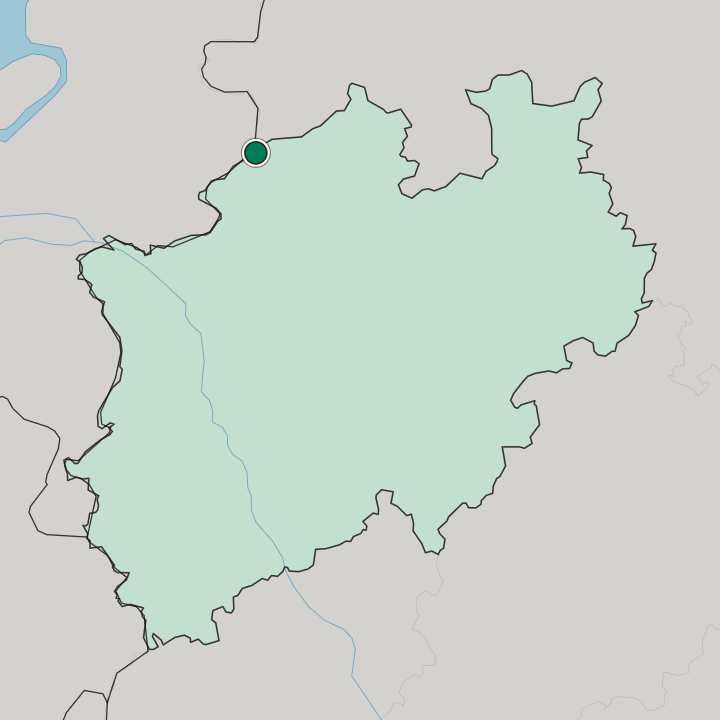
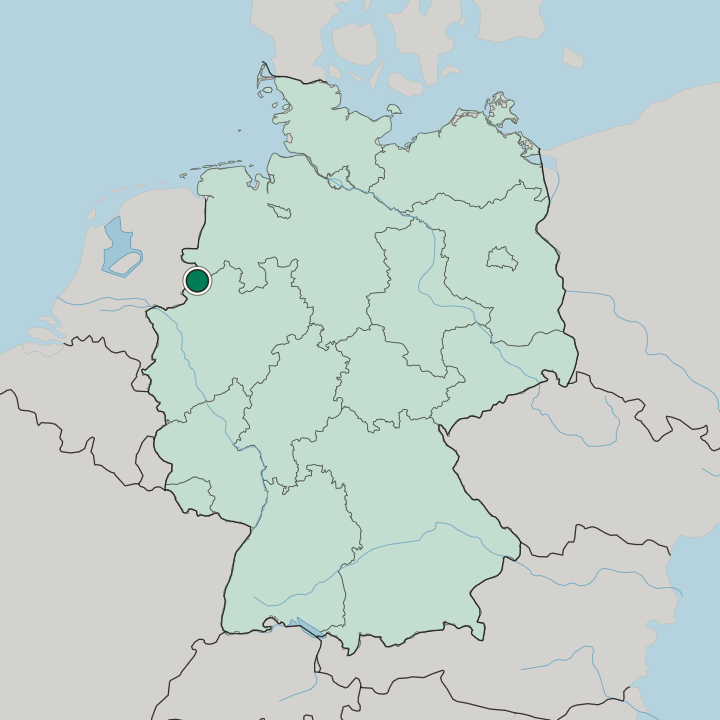
Gronau covers about 79 square kilometres. That is a wide footprint for a town of its size, and it explains why Glane sits well out from the centre with open ground between the parts rather than a continuous run of street. The parent region is Nordrhein-Westfalen.
Within Gronau the built-up centre holds the Evangelische Stadtkirche, the Alter Rathausturm and both museums, while Glane and the Marienflucht Monastery lie outside that core.
What is the climate of Gronau?
Temperate is the word for Gronau's weather. Seasons turn without extremes, and the difference between a summer visit and a winter one shows up more in daylight hours than in anything that would stop a walk between the Evangelische Stadtkirche and the Alter Rathausturm. Bad weather does not end the day.
The rock'n'popmuseum and the Drilandmuseum both work as wet-weather options in a town whose other attractions are a tower and two churches.
How do you get to Gronau?
Everything in Gronau is walkable except Glane. The Alter Rathausturm, the Evangelische Stadtkirche, the Drilandmuseum and the rock'n'popmuseum all fall inside the built-up part, so a visit on foot handles the whole list without transport. Glane is the exception.
The Franziskanerterziarinnenkloster Marienflucht stands out there, far enough from the Evangelische Stadtkirche that reaching it means a drive rather than a walk.
Common questions
What is the best area to stay in Gronau?
Around the Alter Rathausturm: Walkers who want the Drilandmuseum and the Evangelische Stadtkirche on one short circuit. Beside the rock'n'popmuseum: Visitors whose trip is built around the rock'n'popmuseum itself. Glane: Quiet nights near the Marienflucht Monastery, out beyond the Gronau centre.
Good for
More cities in Nordrhein-Westfalen
Updated October 2026