Germany · Nordrhein-Westfalen
Where to Stay in Hamm, Nordrhein-Westfalen
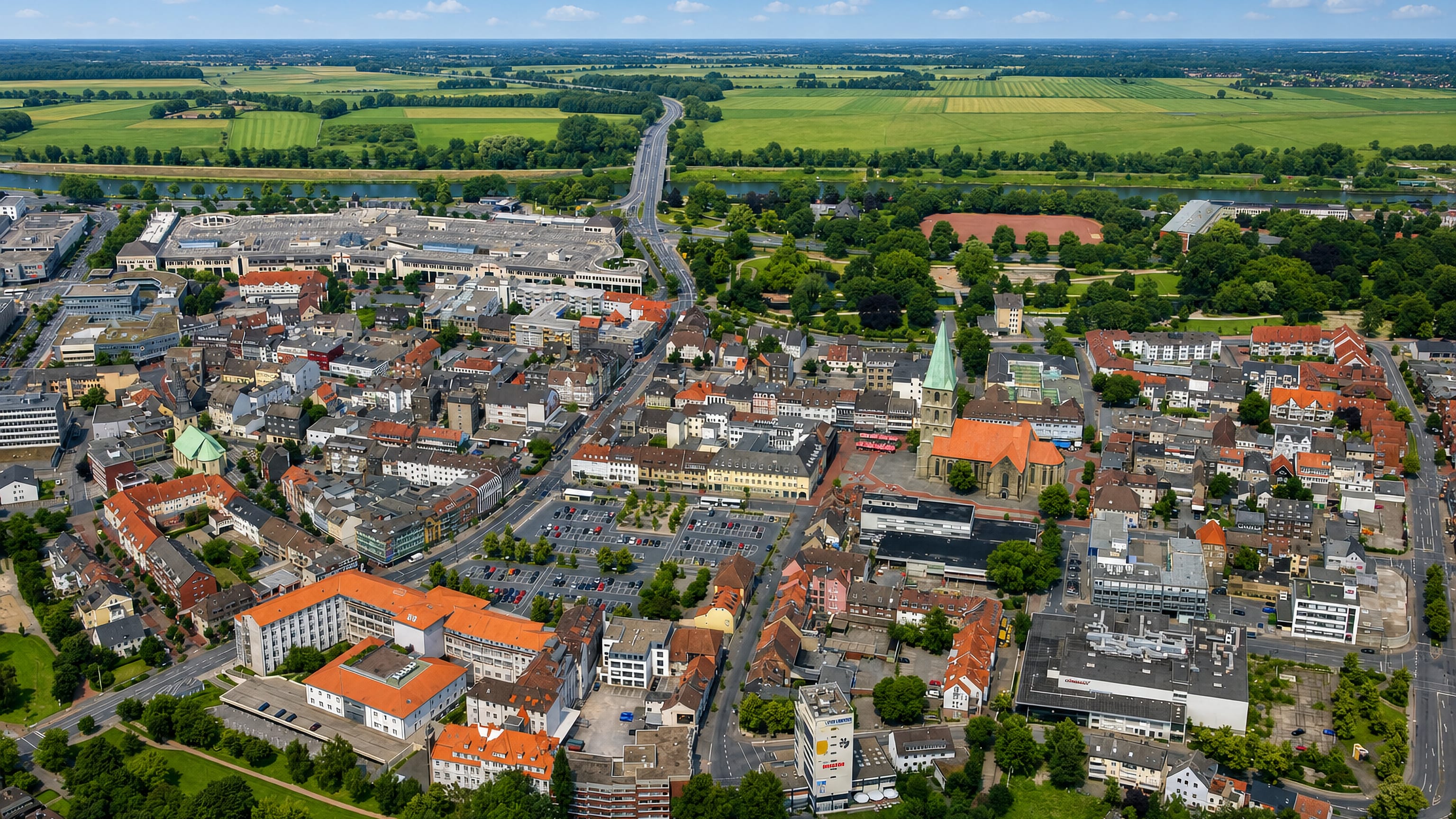
Hamm sits at the northeastern end of the Ruhr area, a rail city whose station, Gustav-Lübcke-Museum and Tierpark Hamm shape most visits.
Hotel links are affiliate links: booking through them may earn us a commission, at no extra cost to you. It never affects how places are ranked. How this works


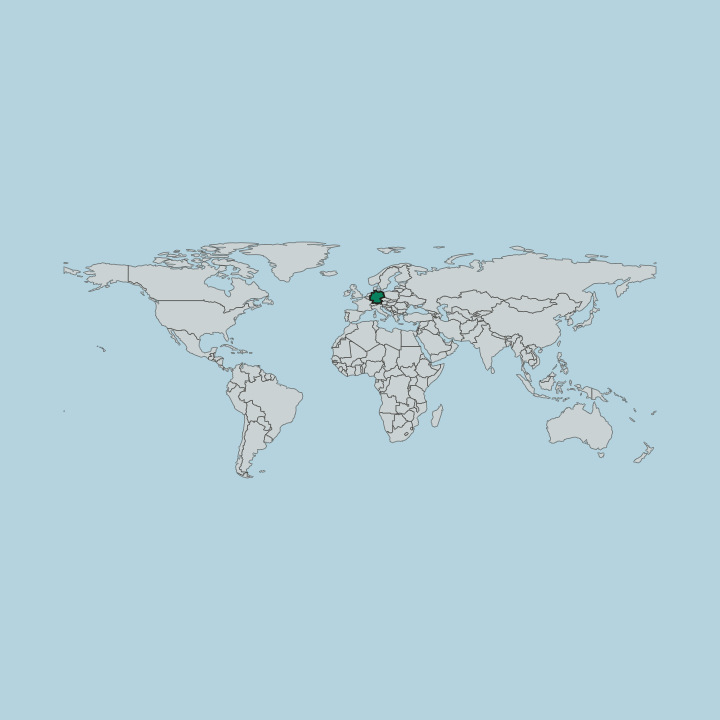
Where to stay in Hamm
Where you base yourself shapes the visit — here's the character of each area.

 HammGermany
Bad Hamm
Two castle sites, Burg Mark and the Stadtburg Hamm, stand in Bad Hamm, a Hamm district whose name carries the German spa prefix.Where to stay → HammGermany
Bockum-Hövel
Bockum-Hövel is a Hamm district holding two castle sites, Burg Hövel and Burg Geinegge, plus the memorial at the Zeche Radbod colliery.Where to stay →Hotel links are affiliate links: booking through them may earn us a commission, at no extra cost to you. It never affects how places are ranked. How this works
Find hotels in Hamm
Direct booking searches for these neighbourhoods.
Around Hamm railway station
Hamm railway station is the city's rail hub, and a room beside it turns the Gustav-Lübcke-Museum and the central churches into a walk rather than a connection.Find hotels in Around Hamm railway stationFamily stays built around the Tierpark Hamm and the museum railwayNear the Tierpark Hamm
A bed near the Tierpark Hamm suits a visit that starts with the animal park, with the Museumseisenbahn Hamm as the obvious second stop.Find hotels in Near the Tierpark HammQuieter nights out by Burg Mark and the older ground of the cityTowards Burg Mark
Burg Mark marks an older seat away from the streets around Hamm railway station, so a room out there trades connection for calm. Rooms are few around here — worth securing early.Find hotels in Towards Burg MarkHotel links are affiliate links: booking through them may earn us a commission, at no extra cost to you. It never affects how places are ranked. How this works
Things to do in Hamm
Ranked by global recognition; descriptions from Wikidata (CC0).
Museums & Galleries
1- Gustav-Lübcke-Museum
Churches & Religious Sites
8- Pauluskirche Heritage
- Evangelische Pfarrkirche St. Pankratius Heritage
- Ev. Christuskirche u. Gemeindehaus Heritage
- St. Pankratius Heritage
- Kreuzkirche (Bockum-Hövel) Heritage
Show 3 more →
- Katholische Filialkirche Herz Jesu Heritage
- Lutherkirche Heritage
- St. Stephanus Heritage
Castles & Historic Sites
3- Burg Mark Heritage
- Nienbrügge
- Burg Hövel
worth knowingacross 3 categories in Hamm
About Hamm
Rail made Hamm.
What is Hamm known for?
Hamm railway station works as a hub for rail transport, and the Museumseisenbahn Hamm keeps a museum railway running in a city that once counted as an industrial and railway centre at the eastern end of the Ruhr. Two more draws follow. The Gustav-Lübcke-Museum holds the city's collection and the Tierpark Hamm its animals, while Burg Mark and Stadtburg Hamm carry the older names on the list.
What are the main landmarks in Hamm?
Older names come first. Burg Mark and Stadtburg Hamm carry castle names, and Nienbrügge stands with them as a third piece of the city's oldest record. The church list comes next.
Fourteen appear in all, among them the Apostelkirche, the Pauluskirche, the Johanneskirche, the Lutherkirche, the Liebfrauenkirche and the Evangelische Pfarrkirche St. Pankratius. The Gustav-Lübcke-Museum, the Tierpark Hamm and the Museumseisenbahn Hamm complete the list, three attractions of quite different kinds inside one city.
What is the history of Hamm?
A founding year is one thing the Hamm record never supplied. Three older names carry what there is: Burg Mark, Stadtburg Hamm and Nienbrügge, a castle seat, a town castle and a name that belongs to the same early layer of the record. Rails reached Hamm next.
Hamm grew into an industrial centre and an important railway hub, and Hamm railway station still works as a hub for rail transport, its station building distinctive enough to be noted in its own right. The Ruhr area sets the frame. Hamm lies in its northeastern part, at the far eastern end of the Ruhr, which put the city on the edge of the industrial belt rather than in the middle of it.
Fourteen churches record the rest. Apostelkirche, Johanneskirche, Pauluskirche, Lutherkirche, Herz-Jesu-Kirche and Maria-Königin-Kirche are only part of a parish list that no small town would have needed, and it marks the growth that industry brought. Two institutions keep the memory.
The Gustav-Lübcke-Museum holds the civic collection and the Museumseisenbahn Hamm runs a museum railway, so the industrial and the railway past both have a place to be seen rather than only read about.
Where is Hamm?
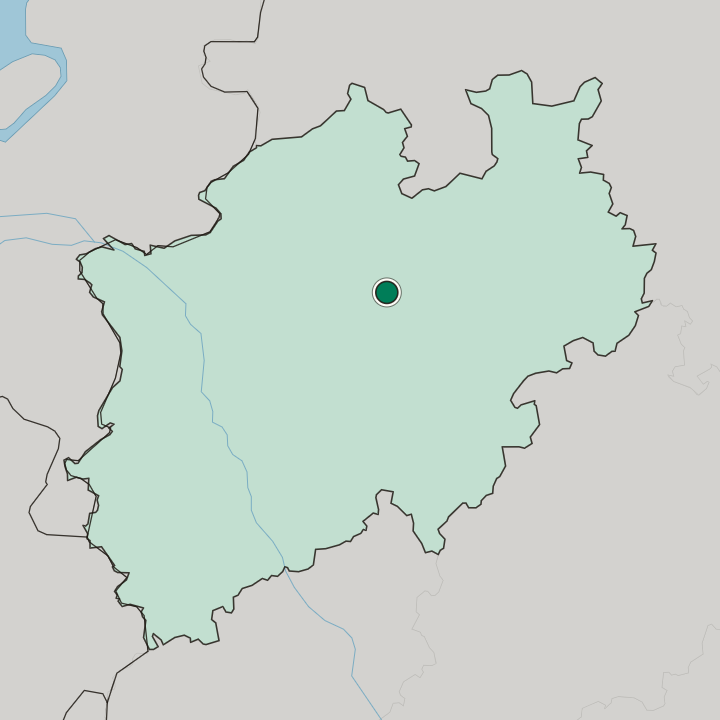
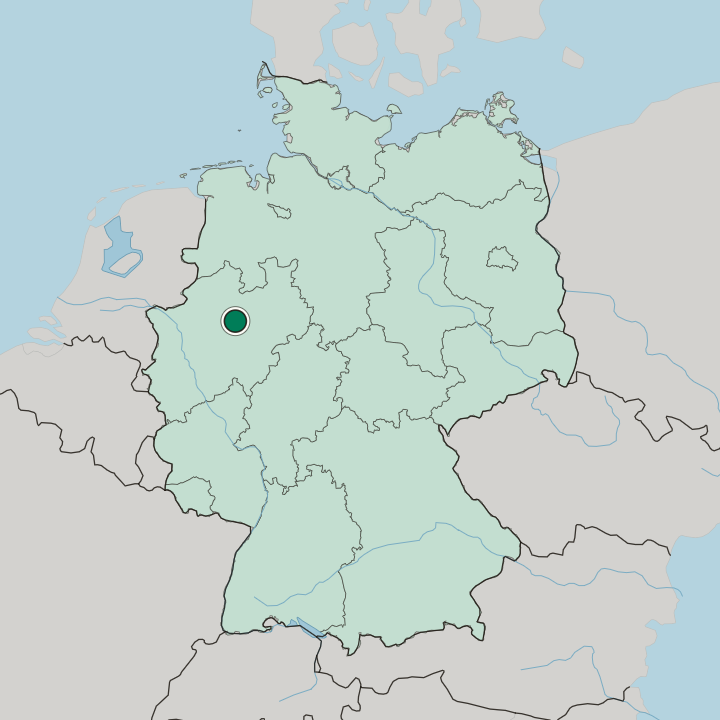
The Ruhr area ends here. Hamm occupies its northeastern part, out at the far eastern edge of the Ruhr, which places the city between the A1 motorway and the A2 motorway rather than deep inside the industrial core. Two motorways bracket it.
Burg Mark and Nienbrügge belong to a different part of the city's ground from Hamm railway station and the Gustav-Lübcke-Museum, so a visit crosses more than one quarter.
What is the climate of Hamm?
Temperate, and rarely dramatic. Hamm sits at the eastern end of the Ruhr, and the seasons there arrive gently enough that a plan rarely has to change. Wet days have answers.
The Gustav-Lübcke-Museum absorbs an afternoon indoors, while the Tierpark Hamm and the Museumseisenbahn Hamm both work better under a dry sky than a wet one.
How do you get to Hamm?
This is a rail city. Hamm railway station serves as an important hub for rail transport, and its station building is distinctive enough that arriving passengers notice it before they notice the city. Drivers have two motorways.
The A1 motorway and the A2 motorway pass either side of Hamm, which makes the Tierpark Hamm, Burg Mark and the outer parts of the city as easy to reach as the centre is.
Common questions
What is the best area to stay in Hamm?
Around Hamm railway station: Rail arrivals who want the Gustav-Lübcke-Museum within walking distance. Near the Tierpark Hamm: Family stays built around the Tierpark Hamm and the museum railway. Towards Burg Mark: Quieter nights out by Burg Mark and the older ground of the city.
Good for
More cities in Nordrhein-Westfalen
Updated October 2026