Germany · Nordrhein-Westfalen
Where to Stay in Leverkusen, Nordrhein-Westfalen
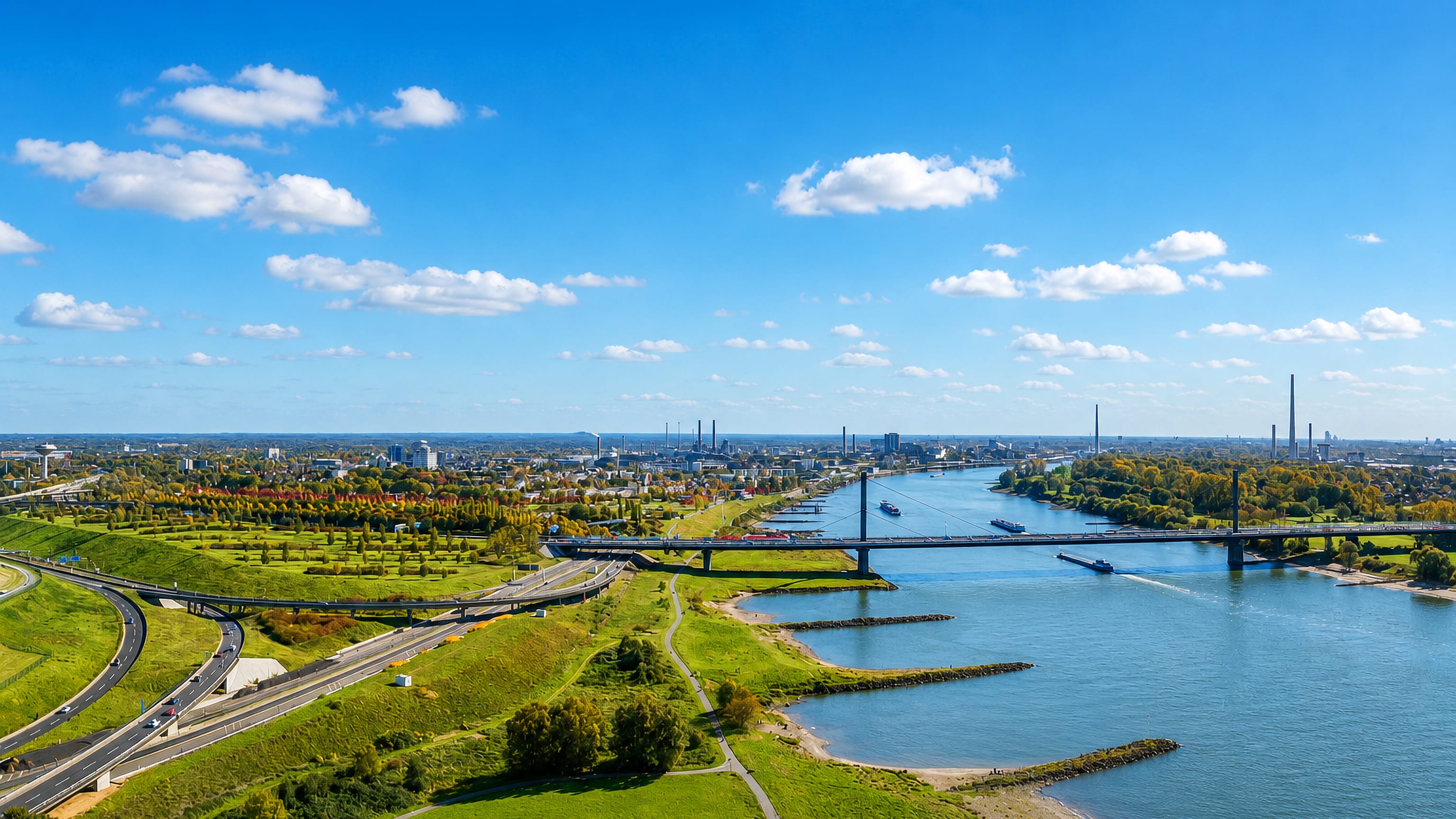
Industrial chimneys and riverside parks meet at Leverkusen, a city on the east bank of the Rhine in Nordrhein-Westfalen, between Cologne and Düsseldorf.
Hotel links are affiliate links: booking through them may earn us a commission, at no extra cost to you. It never affects how places are ranked. How this works


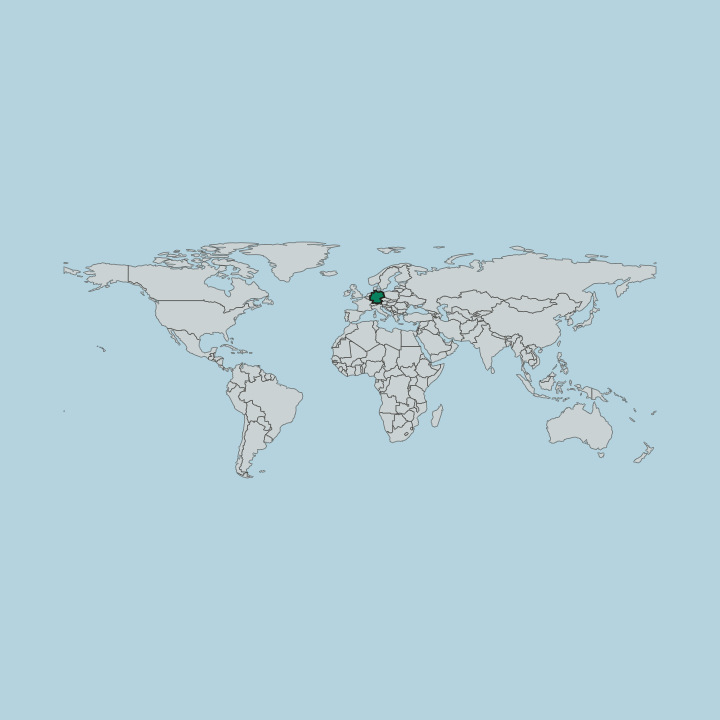
Where to stay in Leverkusen
Where the beds are, and what that means for the visit.
Where you stay in Leverkusen depends on whether you want the city centre or the quieter parkland edges. Wiesdorf, the central district around the shopping streets and St. Hildegard, is the practical base, close to the rail links and an easy hop toward Cologne to the south. Most visitors land here.
The streets are workmanlike rather than pretty, but everything you need sits within a short walk, and the Rhine embankment is never far off. For a calmer stay, Schlebusch and the ground near Schloss Morsbroich trade the centre's bustle for leafy residential avenues and the sculpture park in the manor grounds. It suits slower trips.
Rheindorf, on the low riverside flats near Burg Rheindorf, keeps you close to the water and the green plain that runs up toward Düsseldorf. Business travellers tied to the industrial works usually stay central in Wiesdorf, while families and weekend visitors often choose the greener districts around the Wildpark Reuschenberg, where the pace eases and the surrounding countryside of Nordrhein-Westfalen begins.
Things to do in Leverkusen
Ranked by global recognition; descriptions from Wikidata (CC0).
Museums & Galleries
2- Museum Morsbroich
- Kolonie-Museum Leverkusen
Churches & Religious Sites
8- St. Amandus Heritage
- St. Brictius Heritage
- Thomas More Church (Schlebusch) Heritage
- Christuskirche Heritage
- Herz-Jesu (Wiesdorf) Heritage
Show 3 more →
- Christus-König-Kirche Heritage
- St Hubertus Heritage
- Gezelinkapelle Heritage
Castles & Historic Sites
1- Burg Rheindorf
worth knowingacross 3 categories in Leverkusen
About Leverkusen
What is Leverkusen known for?
Leverkusen is known as a chemical-industry city, a settlement that grew around a great works on the Rhine and took its shape from that trade. It is a young city by German standards. The modern municipality was founded in 1930, knitting together older villages under one name.
Beyond the factories, Leverkusen keeps a cultural anchor at Museum Morsbroich, a modern-art collection housed in a Baroque manor, and green ground at the Wildpark Reuschenberg on the edge of Nordrhein-Westfalen's Rhine plain.
What are the main landmarks in Leverkusen?
The main landmarks in Leverkusen mix modern art, old chapels, and green estates. Museum Morsbroich sets contemporary works inside a Baroque manor, and the Skulpturenpark Schloss Morsbroich scatters sculpture across its grounds. Older stone survives on the edges.
The Gezelinkapelle and Burg Rheindorf recall the villages that predate the industrial city, while the Wildpark Reuschenberg gives Leverkusen a broad stretch of woodland and grazing on the Rhine plain of Nordrhein-Westfalen.
What is the history of Leverkusen?
Leverkusen is one of Germany's newer cities, and its history is really the history of an industry taking root on the Rhine. Before the factories there were villages. Wiesdorf, Rheindorf, Schlebusch, and their neighbours were small farming and river settlements on the eastern bank, watched over by chapels like the Gezelinkapelle and the old seat at Burg Rheindorf.
In the later nineteenth century a chemical works moved to the riverside plain, and a company colony grew up around it to house the workforce, a planned settlement whose story is now told at the Kolonie-Museum Leverkusen. The city as a single unit is a twentieth-century creation. In 1930 the separate communities were merged and given the name Leverkusen, borrowed from the industrialist whose enterprise had shaped the place.
From then on the works and the town grew together, drawing in labour from across Nordrhein-Westfalen and beyond. Wartime damage and postwar rebuilding reshaped the centre, and the older manor of Morsbroich passed into public hands to become a museum. Through all of it the Rhine stayed the constant, carrying the industry that gave Leverkusen its reason to exist between Cologne and Düsseldorf.
Where is Leverkusen?
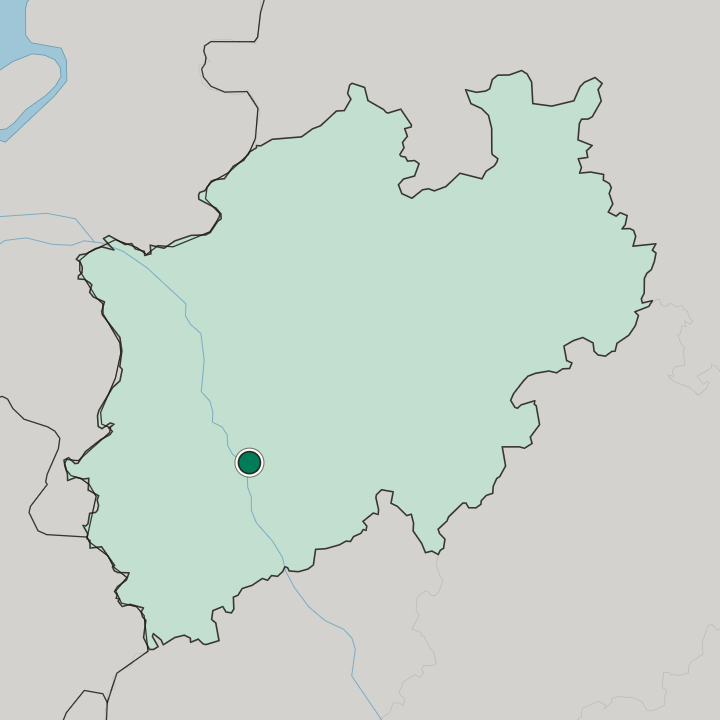
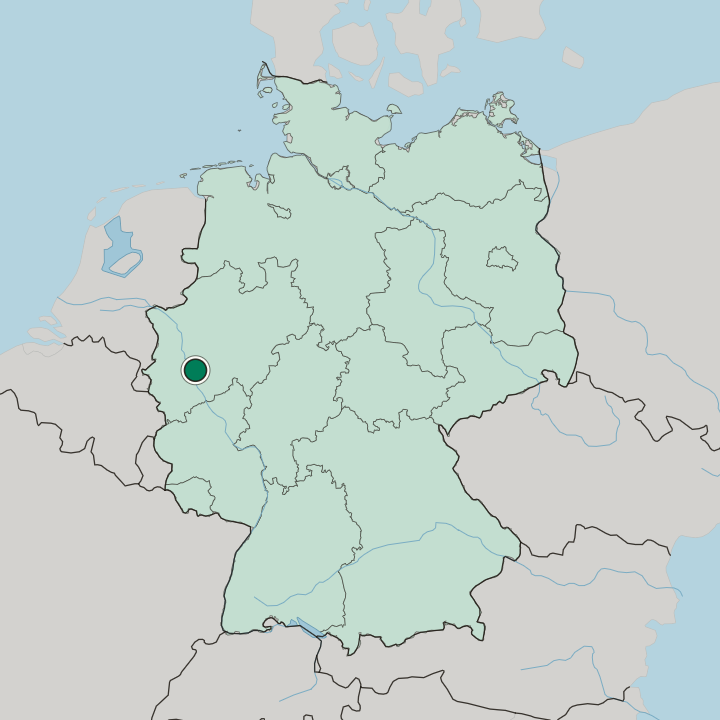
Leverkusen lies on the eastern bank of the Rhine in Nordrhein-Westfalen, on the low, flat plain of the Cologne Lowland. It borders Cologne to the south and reaches toward Düsseldorf to the north. The setting is riverine and level.
The Rhine forms its western edge, industrial land spreads along the water, and the Wildpark Reuschenberg preserves a patch of the woodland and meadow that once covered this stretch of the plain.
What is the climate of Leverkusen?
Leverkusen has a mild, damp lowland climate typical of the Rhine plain in Nordrhein-Westfalen. Winters are cool but rarely severe, softened by the low ground and the river. Rain is frequent through the year.
Summers turn warm without long extremes, and the flat setting between Cologne and Düsseldorf keeps the weather steady rather than sharp, with grey, humid spells more common than hard frost.
How do you get to Leverkusen?
Getting to Leverkusen is straightforward within the Rhine-Ruhr region. Rail and the autobahn network link the city directly to Cologne just south and Düsseldorf to the north, both a short ride away. Airports lie close on either side.
Travellers can reach Leverkusen quickly from the Cologne and Düsseldorf hubs, and local trains and buses connect the central district of Wiesdorf with the surrounding towns of Nordrhein-Westfalen along the eastern bank of the Rhine.
Good for
More cities in Nordrhein-Westfalen
Updated October 2026