Germany · Nordrhein-Westfalen
Where to Stay in Neuss, Nordrhein-Westfalen
Neuss sits on the west bank of the Rhine opposite Düsseldorf, a Roman foundation of 16 BCE that shares with Trier the title of Germany's oldest city.
Hotel links are affiliate links: booking through them may earn us a commission, at no extra cost to you. It never affects how places are ranked. How this works


Where to stay in Neuss
One neighbourhood here has its own guide — here's what it is best for.

 NeussGermany
Grimlinghausen
Grimlinghausen is a Stadtteil of Neuss at the mouth of the Erft on the Rhine, known in dialect as Hippelank for the goats once kept there.Where to stay →Hotel links are affiliate links: booking through them may earn us a commission, at no extra cost to you. It never affects how places are ranked. How this works
Find hotels in Neuss
Direct booking searches for these neighbourhoods.
Roman core
Castra Novaesium and the Samian Ware Discovery Site put the oldest layer of Neuss inside one walk, and the Clemens Sels Museum Neuss is close enough to fill the same afternoon.Find hotels in Roman coreEvenings looking across at DüsseldorfRhine bank
A room on the Neuss side of the Rhine trades the Obertorkapelle and the older inland lanes for open water and the lights of Düsseldorf opposite. Few places to stay nearby — book ahead.Find hotels in Rhine bankQuiet nights near Klarissenkloster NeussCloister quarters
Klarissenkloster Neuss and Marienborn Neuss give these streets their names, and a bed here stays well clear of the crowd the Neusser Bürger-Schützenfest brings in. Lodging is scarce in this area; reserve in advance.Find hotels in Cloister quartersHotel links are affiliate links: booking through them may earn us a commission, at no extra cost to you. It never affects how places are ranked. How this works
Things to do in Neuss
Ranked by global recognition; descriptions from Wikidata (CC0).
Museums & Galleries
2- Clemens Sels Museum Neuss
- Rheinisches Schützenmuseum Neuss
Churches & Religious Sites
8- Basilica of St. Quirinus Heritage
- Sankt Sakrament Heritage
- Christuskirche (Neuss) Heritage
- St. Sebastianus Heritage
- St. Cyriakus Heritage
Show 3 more →
- Obertorkapelle Heritage
- St. Josef Heritage
- St. Cornelius Heritage
Castles & Historic Sites
3- Castra Novaesium Heritage
- Marienborn Neuss Heritage
- Statue of Theodor Schwann Heritage
Landmarks & Notable Places
1- Jesuitenturm Heritage
worth knowingacross 4 categories in Neuss
About Neuss
Rome founded it.
What is Neuss known for?
The year 16 BCE gives Neuss a claim it shares with Trier alone, that of Germany's oldest city, and Castra Novaesium is the ground on which the claim rests. Marksmen carry the calendar. The Neusser Bürger-Schützenfest returns each year, and the Rheinisches Schützenmuseum Neuss keeps the tradition on display between festivals.
What are the main landmarks in Neuss?
Rome left the first mark. Castra Novaesium names the garrison ground, and the Samian Ware Discovery Site records what came out of it, while the Fossa Sanguinis carries a Latin name of its own. Churches come next.
The Basilica of St. Quirinus heads that list, with Sankt Sakrament, the Christuskirche, the Obertorkapelle and Holy Cross Church behind it, and the Jesuitenturm on the same register.
What is the history of Neuss?
The date is 16 BCE. Neuss counts its founding from that year and shares with Trier the title of Germany's oldest city, a claim the municipality marked with a two-thousandth anniversary in 1984. Castra Novaesium is the evidence.
The Samian Ware Discovery Site and the Fossa Sanguinis carry the other Roman names on the register, two entries that keep the garrison period visible long after the fort itself vanished from view. Monastic foundations followed. Klarissenkloster Neuss, Marienborn Neuss and the Neusser Alexianer record houses of different orders, and the Jesuitenniederlassung Neuss adds a later arrival to the same religious layer.
Names accumulate on the register. The Jesuitenturm, Haus Rottels, the Obertorkapelle and Sankt Sakrament all appear on it alongside the Christuskirche and Holy Cross Church, a list long enough to show how many separate foundations this one city on the Rhine accumulated. Two people are commemorated.
The Statue of Theodor Schwann and the Joseph-Kardinal-Frings-Denkmal stand for individuals rather than institutions, and the Jewish Memorial Stone records a community. Marksmen have their own record. The Neusser Bürger-Schützenfest is the living part of it, and the Rheinisches Schützenmuseum Neuss holds what the festival leaves behind, which is how a civic tradition becomes a collection.
Where is Neuss?
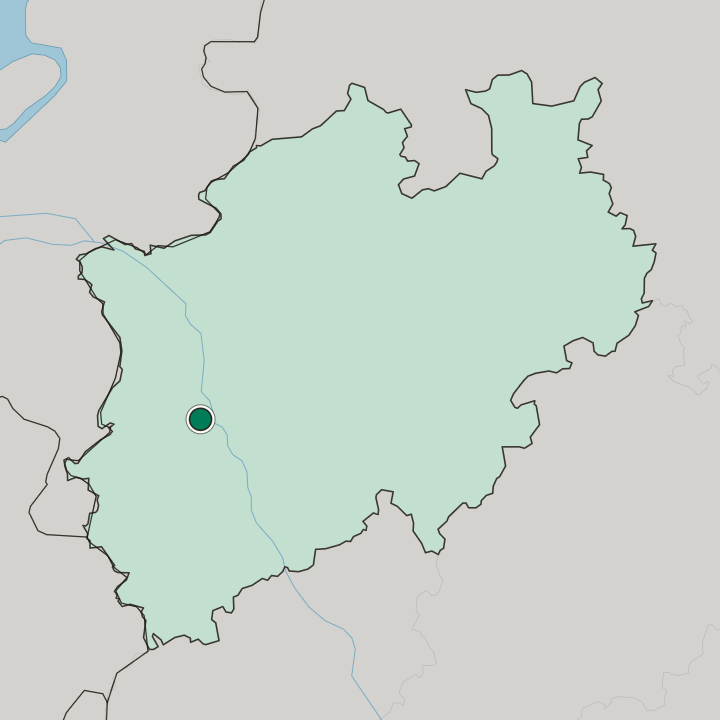
The Rhine draws the boundary. Neuss lies on the west bank, directly opposite Düsseldorf, and about a hundred square kilometres of municipality run inland from the water. Rhein-Kreis Neuss takes its name from here.
The city is the largest within that district, and its name carries across the whole administrative area between the Rhine and the country inland.
What is the climate of Neuss?
The Rhine keeps it even. A temperate band across this stretch of the river holds both extremes at a distance, so the walk from Castra Novaesium to the Clemens Sels Museum Neuss works in almost any month. Festival weather is a gamble.
The Neusser Bürger-Schützenfest fills its week whatever the sky does, and the Rheinisches Schützenmuseum Neuss waits indoors for the rest.
How do you get to Neuss?
Düsseldorf is across the water. Neuss sits on the opposite bank of the Rhine, so an approach from that side means a river crossing rather than a long journey, and the two cities work as near neighbours despite the water between them. The district wraps the rest.
Rhein-Kreis Neuss surrounds the city on its landward sides, which is where the roads from the surrounding towns come in.
Common questions
What is the best area to stay in Neuss?
Roman core: Visits built around Castra Novaesium. Rhine bank: Evenings looking across at Düsseldorf. Cloister quarters: Quiet nights near Klarissenkloster Neuss.
Good for
More cities in Nordrhein-Westfalen
Updated October 2026