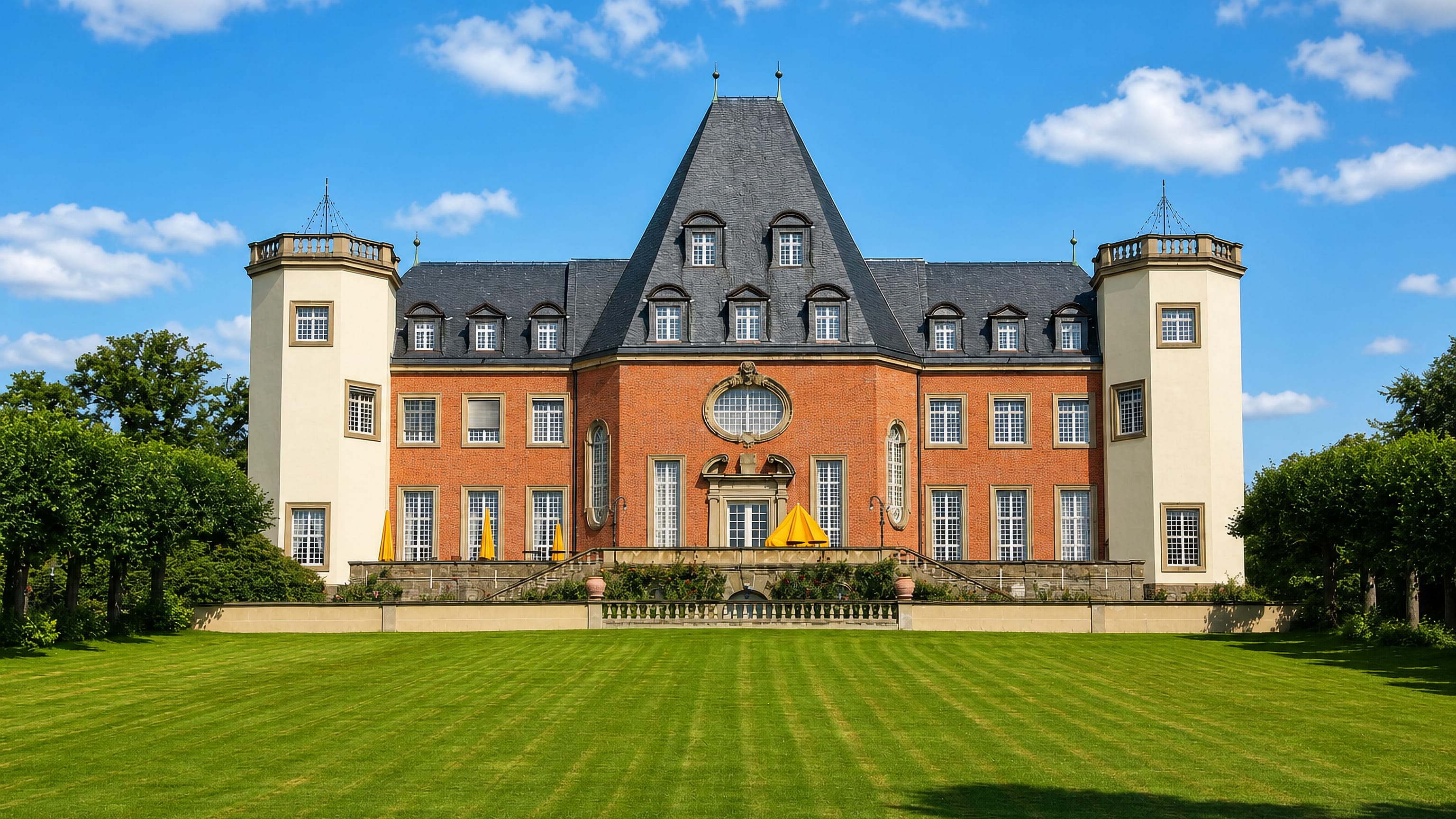
Germany · Nordrhein-Westfalen
Where to Stay in Sankt Augustin, Nordrhein-Westfalen
Sankt Augustin grew from a missionary monastery founded in 1913, eight kilometres north-east of Bonn in the Rhein-Sieg district.
Hotel links are affiliate links: booking through them may earn us a commission, at no extra cost to you. It never affects how places are ranked. How this works


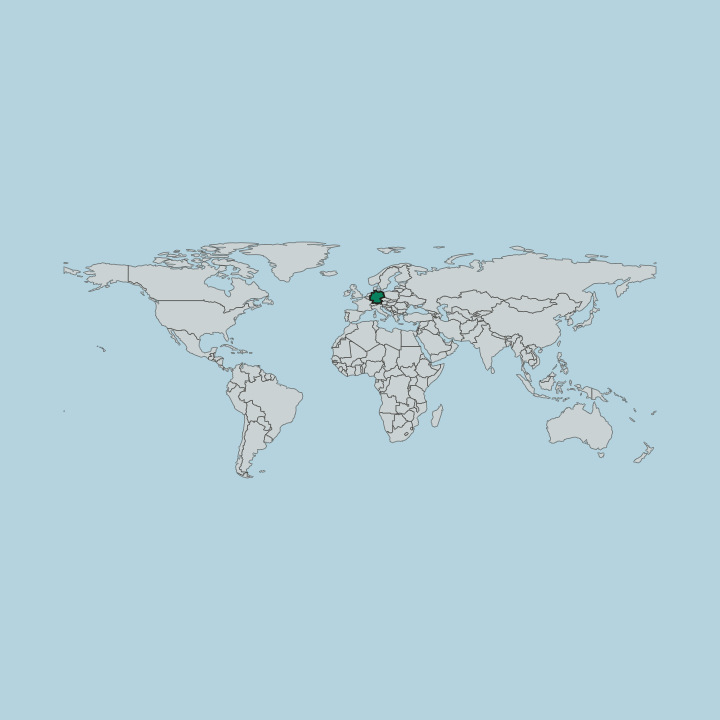
Where to stay in Sankt Augustin
The practical side of choosing where to sleep.
The centre grew around the monastery. Saint Augustine Monastery sits near the middle of Sankt Augustin, and a room in that part puts the Skulpturenweg Sankt Augustin, the shops and the everyday business of the town within one short walk. Bonn is eight kilometres away.
That closeness is the practical argument for a stay here, because the Bonn/Rhein-Sieg region works as one and a base in the smaller town still reaches the larger one quickly. Niederpleis is the older ground. The Niederpleiser Burg and the Niederpleiser Niederungsmotte both carry that name, and a stay on that side trades the newer streets of the centre for a castle site and a motte that predate the whole modern municipality.
Siegburg is the other neighbour. It lies eight kilometres away on the other side, and the Stadtmuseum Siegburg carries that town's name rather than this one's, so a museum trip means crossing the district rather than walking. Rooms are limited in all of it.
Sankt Augustin ranks second in the Rhein-Sieg district, and anyone who cannot find a bed in Menden, Niederpleis or the centre has Bonn and Siegburg within a short run either way.
Find hotels in Sankt Augustin
Direct booking searches for these neighbourhoods.
The monastery centre
The Saint Augustine Monastery and the Skulpturenweg Sankt Augustin mark the middle the town grew aroundFind hotels in The monastery centreNights beside the Niederpleiser Burg and its motteNiederpleis
The Niederpleiser Burg and the Niederpleiser Niederungsmotte hold ground older than the 1913 monastery. Lodging is scarce in this area; reserve in advance.Find hotels in NiederpleisQuiet nights at the Menden end with Bonn a short run awayMenden
The Evangelische Kirche Menden carries the Menden name onto the Sankt Augustin list, away from the monastery quarter. Beds are limited here, so book early.Find hotels in MendenHotel links are affiliate links: booking through them may earn us a commission, at no extra cost to you. It never affects how places are ranked. How this works
Things to do in Sankt Augustin
Ranked by global recognition; descriptions from Wikidata (CC0).
Museums & Galleries
1- Stadtmuseum Siegburg
Churches & Religious Sites
8- Missionshaus St. Augustin Heritage
- St. Augustinus Heritage
- St. Martinus (Niederpleis) Heritage
- Karmel Sankt Joseph Heritage
- Church of the Visitation of Mary Heritage
Show 3 more →
- Alte Kirche St. Augustinus Heritage
- St. Adelheidis (Pützchen) Heritage
- St. Maria Rosenkranzkönigin Heritage
Castles & Historic Sites
2- Niederpleiser Niederungsmotte Heritage
- Niederpleiser Burg Heritage
worth knowingacross 3 categories in Sankt Augustin
About Sankt Augustin
The name came from the missionaries.
What is Sankt Augustin known for?
Steyler missionaries founded the Saint Augustine Monastery near the present town centre in 1913, and the town that formed around it took the name of Saint Augustine of Hippo, their patron. Eighteen church buildings are counted on its list. Christ-König-Kirche, the Erlöserkirche and the Marienkapelle are among them, and the Karmel Sankt Joseph adds a Carmelite house to a municipality that already keeps a monastery at its core.
What are the main landmarks in Sankt Augustin?
Churches dominate by a wide margin. Eighteen church buildings are counted, from the Christuskirche and the Pauluskirche to the Erlöserkirche, the Marienkapelle and the Church of the Visitation of Mary. Older ground survives at Niederpleis.
The Niederpleiser Burg and the Niederpleiser Niederungsmotte are the two oldest sites named here, while the Skulpturenweg Sankt Augustin and the Ehrenmal Holzlar are the entries that answer to neither church nor castle.
What is the history of Sankt Augustin?
A motte came before the town. The Niederpleiser Niederungsmotte and the Niederpleiser Burg fix settlement at Niederpleis long before anyone drew a boundary around the modern municipality, and both still carry the Niederpleis name rather than the town's. 1913 changed the map. Steyler missionaries built the Saint Augustine Monastery near what is now the town centre, and they named it for Saint Augustine of Hippo, whose name the settlement then took as its own.
The municipality itself is recent. Sankt Augustin was established in 1969, and town privileges followed on 6 September 1977, which makes the legal town younger than most of the churches inside it. Bonn shaped what came next.
The town sits eight kilometres north-east of Bonn and eight kilometres south-west of Siegburg, and it belongs to the economic region of Bonn/Rhein-Sieg and to the scientific region of Bonn, which is a role no medieval charter would have predicted. Growth followed the region. Sankt Augustin ended as the second-largest town of the Rhein-Sieg district, with eighteen church buildings, the Karmel Sankt Joseph and the Skulpturenweg Sankt Augustin spread over thirty-four square kilometres.
Where is Sankt Augustin?
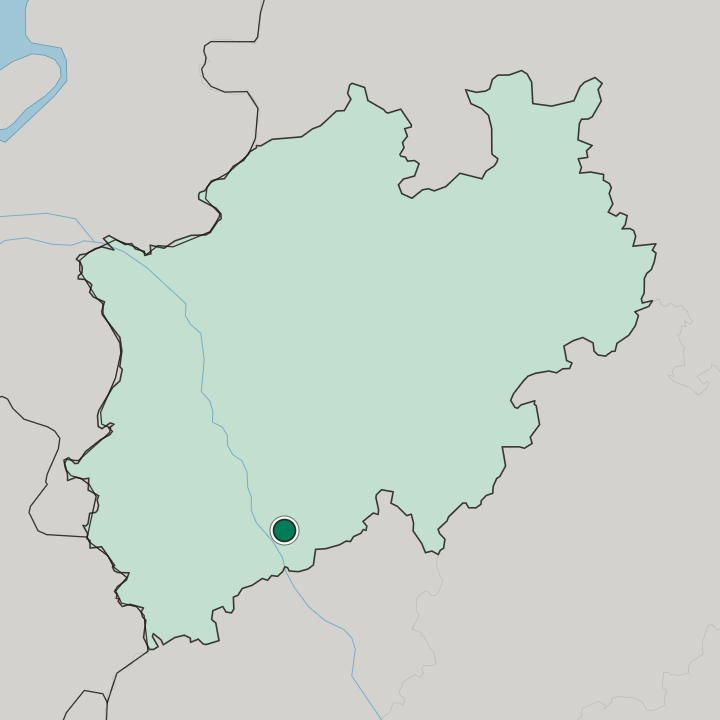
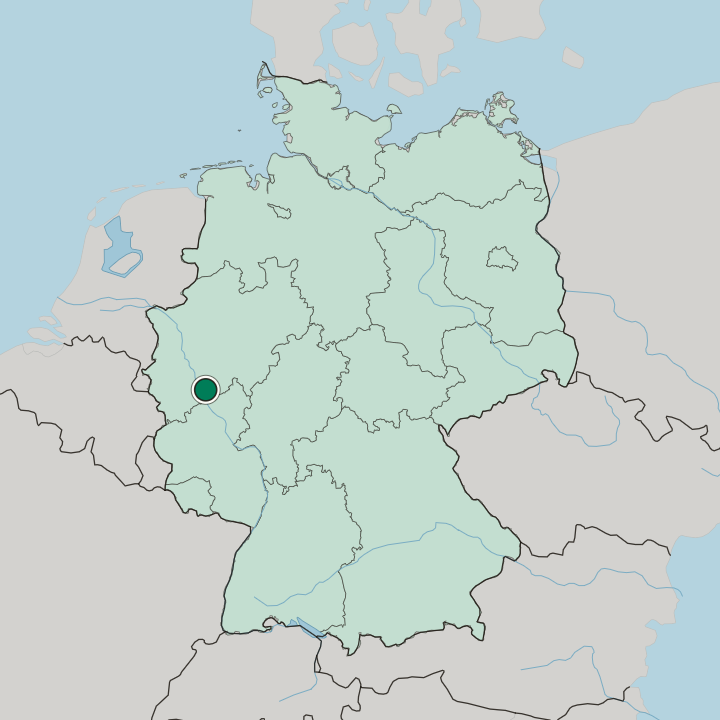
Thirty-four square kilometres hold the whole town. Sankt Augustin lies eight kilometres north-east of Bonn and the same distance south-west of Siegburg, which puts Niederpleis, Menden and the monastery quarter inside a municipality small enough to cross in minutes. The Rhein-Sieg district surrounds it, and Nordrhein-Westfalen is the state above that.
What is the climate of Sankt Augustin?
Winters here are wet rather than hard. Sankt Augustin shares the temperate weather of the Bonn/Rhein-Sieg region, and thirty-four square kilometres are too few to hold two climates, so Niederpleis and the centre get the same grey January and the same moderate July. Rain is spread through the year.
The Skulpturenweg Sankt Augustin is the walk that suffers most from it, and the eighteen church buildings are what remains when the weather closes in.
How do you get to Sankt Augustin?
Bonn and Siegburg are both eight kilometres off. Sankt Augustin sits between them, which makes the town easy to reach from either direction and explains why it functions as part of the Bonn/Rhein-Sieg region rather than as a destination of its own. The quarters are the complication.
Niederpleis, Menden and the monastery centre each hold a piece of the list, so a visitor working through the Niederpleiser Burg, the Marienkapelle and the Skulpturenweg Sankt Augustin covers three separate quarters in a single day.
Common questions
What is the best area to stay in Sankt Augustin?
The monastery centre: Stays within reach of the Saint Augustine Monastery and the Skulpturenweg Sankt Augustin. Niederpleis: Nights beside the Niederpleiser Burg and its motte. Menden: Quiet nights at the Menden end with Bonn a short run away.
Good for
More cities in Nordrhein-Westfalen
Updated October 2026